Loading...
Done
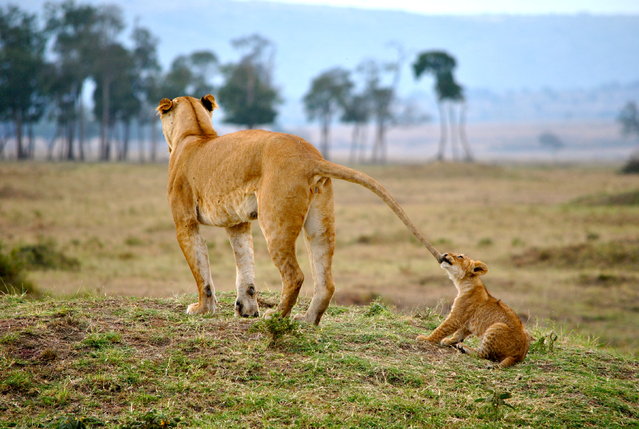
“A Mothers Tail”. A baby cub pulls on his mother's tail to get attention. Photo location: Masai Mara, Kenya. (Photo and caption by Tori Marsh/National Geographic Photo Contest)

“A Mothers Tail”. A baby cub pulls on his mother's tail to get attention. Photo location: Masai Mara, Kenya. (Photo and caption by Tori Marsh/National Geographic Photo Contest)
Details
21 Oct 2014 12:40:00
Rooftops of solar powered houses are pictured in Ota, 80 km northwest of Tokyo in this October 28, 2008 file photo. One by one, Japan is turning off the lights at the giant oil-fired power plants that propelled it to the ranks of the world's top industrialised nations. With nuclear power in the doldrums after the Fukushima disaster, it's solar energy that is becoming the alternative. (Photo by Yuriko Nakao/Reuters)

Rooftops of solar powered houses are pictured in Ota, 80 km northwest of Tokyo in this October 28, 2008 file photo. One by one, Japan is turning off the lights at the giant oil-fired power plants that propelled it to the ranks of the world's top industrialised nations. With nuclear power in the doldrums after the Fukushima disaster, it's solar energy that is becoming the alternative. Solar power is set to become profitable in Japan as early as this quarter, according to the Japan Renewable Energy Foundation (JREF), freeing it from the need for government subsidies and making it the last of the G7 economies where the technology has become economically viable. (Photo by Yuriko Nakao/Reuters)
Details
24 Nov 2015 08:04:00
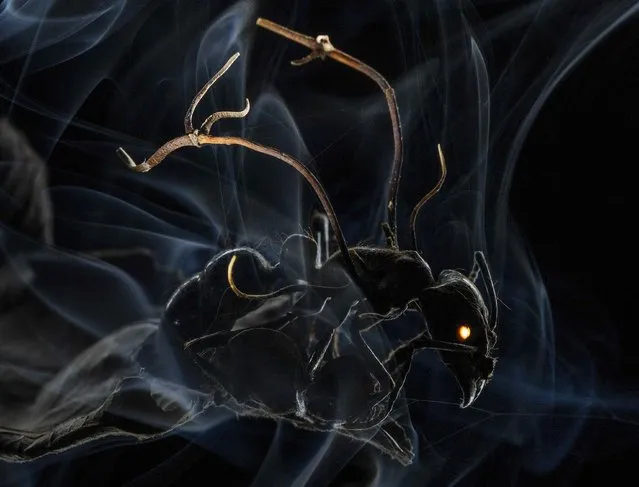
Anand Varma, a U.S. photographer working for the National Geographic, won the First Prize in the Nature Category, Stories, of the 2015 World Press Photo contest with his series of pictures, which includes this one of spores of a fungus landing on an ant, penetrating its exoskeleton and entering its brain, compelling the host to leave its normal habitat on the forest floor and scale a nearby tree, in this picture taken January 22, 2014 and released by the World Press Photo on February 12, 2015. (Photo by Anand Varma/Reuters/National Geographic/World Press Photo)

Anand Varma, a U.S. photographer working for the National Geographic, won the First Prize in the Nature Category, Stories, of the 2015 World Press Photo contest with his series of pictures, which includes this one of spores of a fungus landing on an ant, penetrating its exoskeleton and entering its brain, compelling the host to leave its normal habitat on the forest floor and scale a nearby tree, in this picture taken January 22, 2014 and released by the World Press Photo on February 12, 2015. (Photo by Anand Varma/Reuters/National Geographic/World Press Photo)

Details
15 Feb 2015 15:21:00
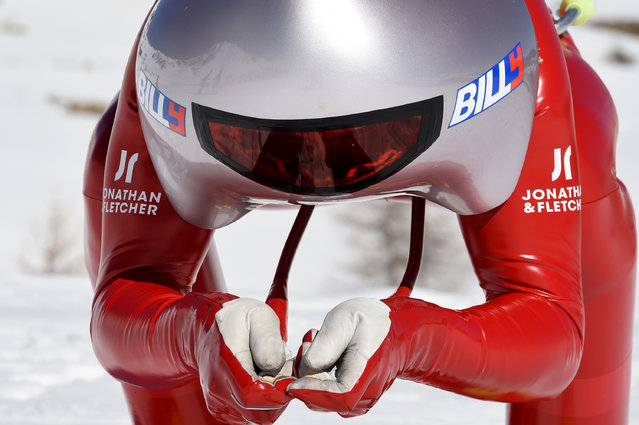
France's Simon Billy gets ready to practice speed skiing on the Chabriere ski slope in Vars, on March 29, 2017. (Photo by Jean-Pierre Clatot/AFP Photo)

France's Simon Billy gets ready to practice speed skiing on the Chabriere ski slope in Vars, on March 29, 2017. (Photo by Jean-Pierre Clatot/AFP Photo)
Details
30 Mar 2017 11:48:00
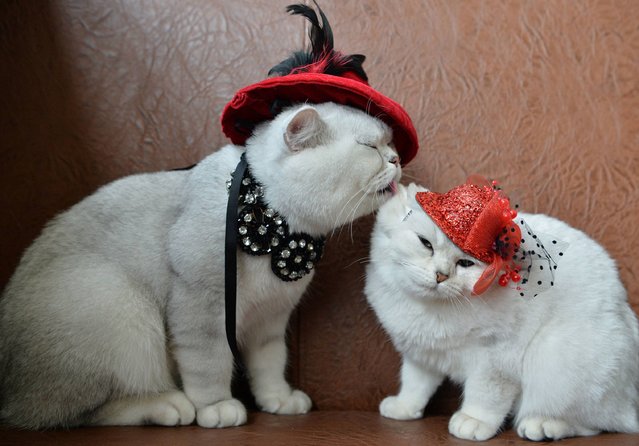
Two Scottish shorthair cats dressed with red hats are pictured during a cat exhibition in Bishkek, on October 16, 2016. Cat lovers from Kyrgyzstan, Kazakhstan and Uzbekistan took part in the exhibition. (Photo by Vyacheslav Oseledko/AFP Photo)

Two Scottish shorthair cats dressed with red hats are pictured during a cat exhibition in Bishkek, on October 16, 2016. Cat lovers from Kyrgyzstan, Kazakhstan and Uzbekistan took part in the exhibition. (Photo by Vyacheslav Oseledko/AFP Photo)
Details
17 Oct 2016 10:26:00
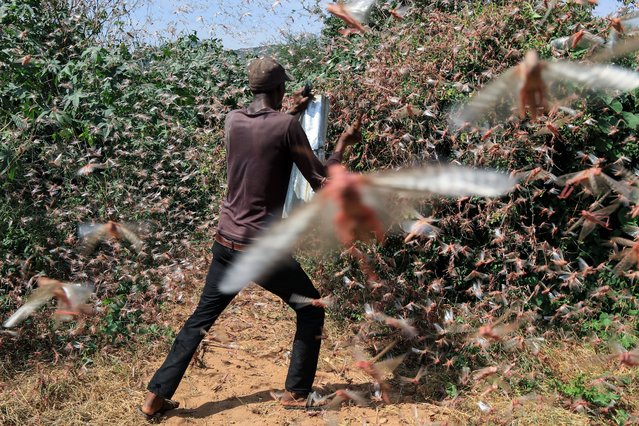
A man uses iron sheet to make noises, as a way of trying to disperse desert locusts that had invaded their farms during the second wave invasion in Kakongo village, in Nuu-Mwingi East, in Kitui, Kenya, 06 February 2021. The second wave invasion of the desert locusts in the country comes at a time where most famers are expecting to harvest their farm produce in the country. According to the United Nations Food and Agriculture Organization (FAO), on 04 February, warned numerous immature desert locust swarms persist in southern Ethiopia and Kenya. Some of the swarms are in community areas and therefore cannot be treated. In Kenya, immature swarms continue to spread westwards across northern and central counties where there are currently about 20 small swarms present, mostly about 50 hectares in size, it said. (Photo by Daniel Irungu/EPA/EFE)

A man uses iron sheet to make noises, as a way of trying to disperse desert locusts that had invaded their farms during the second wave invasion in Kakongo village, in Nuu-Mwingi East, in Kitui, Kenya, 06 February 2021. The second wave invasion of the desert locusts in the country comes at a time where most famers are expecting to harvest their farm produce in the country. (Photo by Daniel Irungu/EPA/EFE)
Details
25 Feb 2021 08:17:00
Kelley McMann, Gator Rebel, 2002. (Photo by Malcolm Lightner)

The Mile O' Mud is a 7/8-mile oval track with a 1/8-mile diagonal lane slashed through the center. The racing lanes are approximately 60 feet wide. On average, the muddy water is four to six feet deep, with three strategically placed holes. The largest hole, located in front of the grandstand, is the treacherous “Sippy Hole”, named for the legendary driver “Mississippi” Milton Morris, Swamp Buggy King 1955, who repeatedly got stuck in it. (Photo by Malcolm Lightner)
Details
19 May 2016 11:20:00
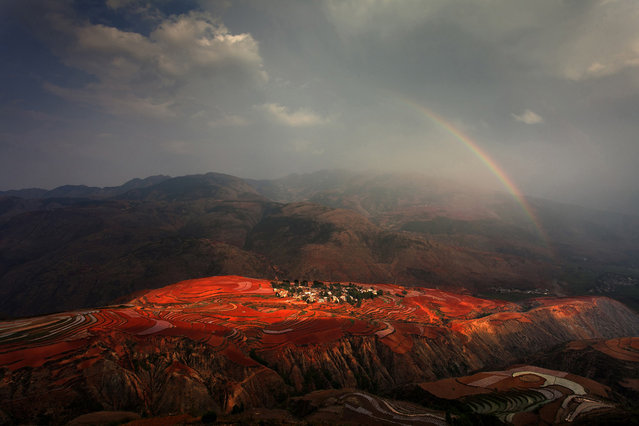
“Red Land: Sunset Cloud Village is one of the most picturesque places in Red Land, China. As its name indicates, it's best to see before sunset. The reddish brown soil turns redder after rainfall and after farmers plow the land”. (Photo and comment by Peng Jiang/National Geographic Photo Contest via The Atlantic)

“Red Land: Sunset Cloud Village is one of the most picturesque places in Red Land, China. As its name indicates, it's best to see before sunset. The reddish brown soil turns redder after rainfall and after farmers plow the land”. (Photo and comment by Peng Jiang/National Geographic Photo Contest via The Atlantic)


Details
05 Dec 2012 11:07:00