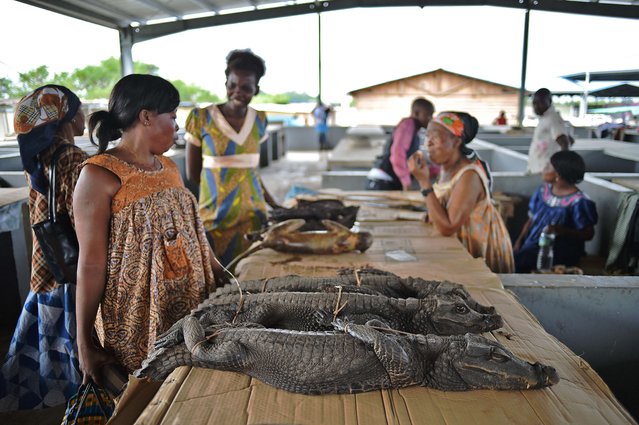
Shoppers walk past crocodiles for sale at a market in Bata on February 3, 2015. Markets in Equatorial Guinea sell a variety of animals including pangolins, monkeys and crocodiles as food. (Photo by Carl De Souza/AFP Photo)
In this Sunday, February 22, 2015 file photo, Matthias Mayer of Austria, the winner, is airborne during an alpine ski World Cup men's super-G event, in Saalbach Hinterglemm, Austria. (Photo by Giovanni Auletta/AP Photo)
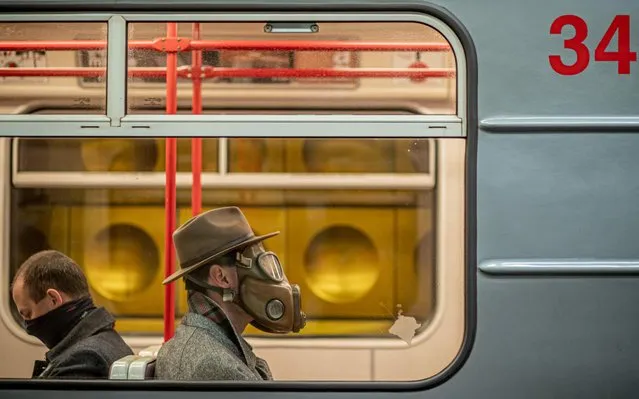
Men wear masks as they sit in the metro in Prague, Czech Republic, 17 March 2020. According to media reports, the Czech government decided to impose a two-week quarantine in the country on the evening of 15 March, and ban all international travel from 16 March 2020. Currently 383 cases of the coronavirus SARS-CoV-2, which causes the Covid-19 disease, have been officially confirmed in Czech Republic. (Photo by Martin Divisek/EPA/EFE)
Chinese actress Fan Bingbing poses on the champagne-colored red carpet during the Oscars arrivals at the 95th Academy Awards in Hollywood, Los Angeles, California, U.S., March 12, 2023. (Photo by Mario Anzuoni/Reuters)
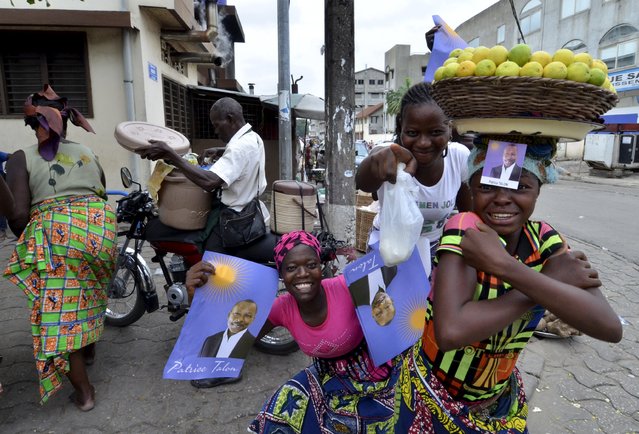
Street vendors hold campaign posters for presidential candidate Patrice Talon ahead of the second round of Benin's presidential election on Sunday in Cotonou, Benin, March 18, 2016. (Photo by Charles Placide Tossou/Reuters)
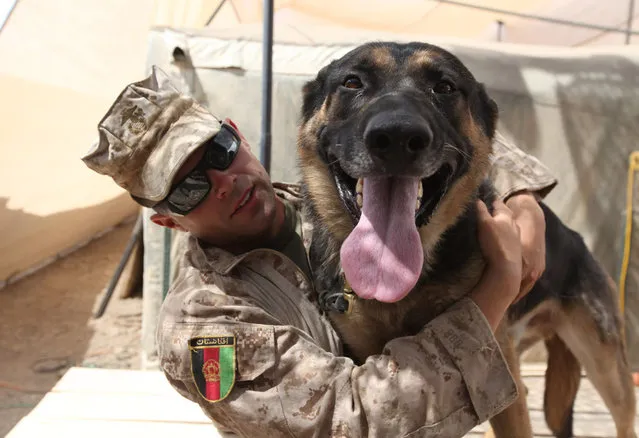
Throughout the course of the long war in Afghanistan, Coalition troops have relied on thousands of military working dogs to help keep them safe, and make their jobs easier. The dogs are trained to detect explosives, to find illegal drugs, to search for missing comrades, or target enemy combatants. Not only are they active on the front lines, but behind the lines they serve as therapy dogs, service dogs, and loyal companions. They also share the same risks as the ground troops, suffering injuries and sometimes death on the battlefields. Gathered here are images of these dogs and their handlers in Afghanistan and back home, from over the past several years, part of the ongoing series here on Afghanistan.