Loading...
Done


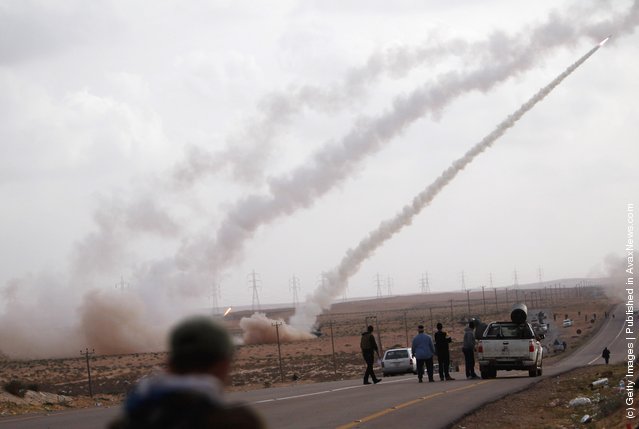
Libyan rebel soldiers watch as they fire rockets (background) toward Libyan government troops near front-line positions April 6, 2011 outside of Brega, Libya. Rebel militias fighting against Libyan government loyalist soldiers continued their stand-off in the eastern Libyan desert today, regaining ground toward a key oil port while awaiting further NATO airstrikes in their quest to unseat longtime Libyan ruler Muammar Gaddafi. (Photo by Chris Hondros/Getty Images)
Details
08 Apr 2011 10:27:00
An Iranian woman gestures as she celebrates in the streets following a nuclear deal with major powers, in Tehran July 14, 2015. (Photo by Reuters/TIMA)

An Iranian woman gestures as she celebrates in the streets following a nuclear deal with major powers, in Tehran July 14, 2015. Overcoming decades of hostility, Iran, the United States, and five other world powers struck a historic accord Tuesday to check Tehran's nuclear efforts short of building a bomb. The agreement could give Iran access to billions in frozen assets and oil revenue, stave off more U.S. military action in the Middle East and reshape the tumultuous region. (Photo by Reuters/TIMA)
Details
15 Jul 2015 10:42:00
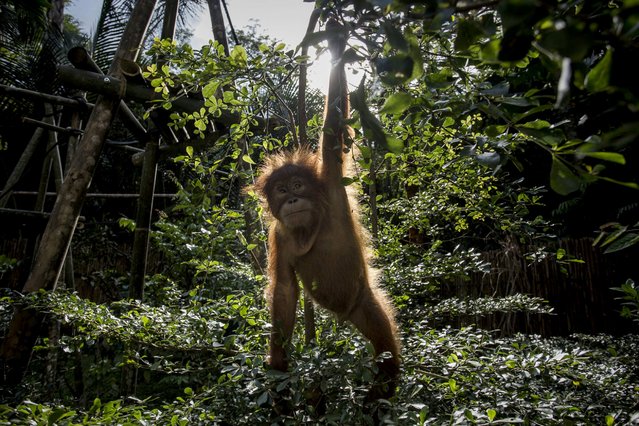
A Baby sumatran orangutan (Pongo abelii) plays around in a tree as they train at Sumatran Orangutan Conservation Programme's rehabilitation center on November 12, 2016 in Kuta Mbelin, North Sumatra, Indonesia. The Orangutans in Indonesia have been known to be on the verge of extinction as a result of deforestation and poaching. Found mostly in South-East Asia, where they live on the islands of Sumatra and Borneo, the endangered species continue to lose their habitat as a result of corporate expansion in a developing economy. Indonesia approved palm oil concessions on nearly 15 million acres of peatlands over the past years and thousands of square miles have been cleared for plantations, including the lowland areas that are the prime habitat for orangutans. (Photo by Ulet Ifansasti/Getty Images)

A Baby sumatran orangutan (Pongo abelii) plays around in a tree as they train at Sumatran Orangutan Conservation Programme's rehabilitation center on November 12, 2016 in Kuta Mbelin, North Sumatra, Indonesia. The Orangutans in Indonesia have been known to be on the verge of extinction as a result of deforestation and poaching. Found mostly in South-East Asia, where they live on the islands of Sumatra and Borneo, the endangered species continue to lose their habitat as a result of corporate expansion in a developing economy. Indonesia approved palm oil concessions on nearly 15 million acres of peatlands over the past years and thousands of square miles have been cleared for plantations, including the lowland areas that are the prime habitat for orangutans. (Photo by Ulet Ifansasti/Getty Images)
Details
16 Nov 2016 11:14:00
In this Thursday, December 1, 2016 photo, Cat Bigney, part of the Oglala Native American tribe, waits on the shore of the Cannonball river for travelers to arrive by canoe at the Oceti Sakowin camp where people have gathered to protest the Dakota Access oil pipeline in Cannon Ball, N.D. So far, those at the camp have shrugged off the heavy snow, icy winds and frigid temperatures. But if they defy next week's government deadline to abandon the camp, demonstrators know the real deep freeze lies ahead. Life-threatening wind chills and towering snow drifts could mean the greatest challenge is simple survival. (Photo by David Goldman/AP Photo)

In this Thursday, December 1, 2016 photo, Cat Bigney, part of the Oglala Native American tribe, waits on the shore of the Cannonball river for travelers to arrive by canoe at the Oceti Sakowin camp where people have gathered to protest the Dakota Access oil pipeline in Cannon Ball, N.D. So far, those at the camp have shrugged off the heavy snow, icy winds and frigid temperatures. But if they defy next week's government deadline to abandon the camp, demonstrators know the real deep freeze lies ahead. Life-threatening wind chills and towering snow drifts could mean the greatest challenge is simple survival. (Photo by David Goldman/AP Photo)
Details
06 Dec 2016 10:22:00
barbarian-art

To produce the images that convey his fatalistic and ironic approach to life, tinged with hope, he needed the environment and knowledge of Mother Russia, oiled with a bit of bribery to certain circus trainers. Enter the Great Russian Bear, the personification of Russia for the last several centuries, onto center stage and into his studio. The bear is recognized as both brutish and cute – Misha was the mascot for the 1980 Olympic Games – and has remained a symbol of Russia since Tsarist times. In 2009 it is the symbol of the United Russia Party.
Details
13 Apr 2015 09:10:00
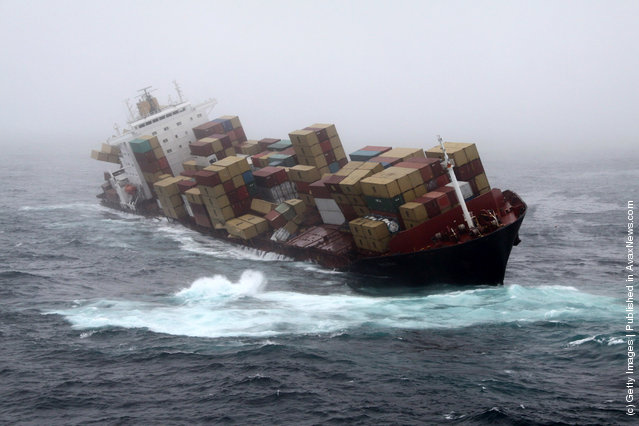
Authorities Fear MV Rena May Break-Up In Rough Seas

In this handout provided by Maritime New Zealand, MV Rena is battered by strong seas as it is stuck on Astrolabe Reef, on November 2, 2011 in Tauranga, New Zealand. The stricken vessel encountered a three metre swell, which led authorities to fear it may finally break up. Rena struck the reef on October 5, and has spilled 350 tonnes of oil, and almost 100 shipping containers. (Photo by Graeme Brown/Maritime New Zealand via Getty Images)
Details
02 Nov 2011 10:50:00
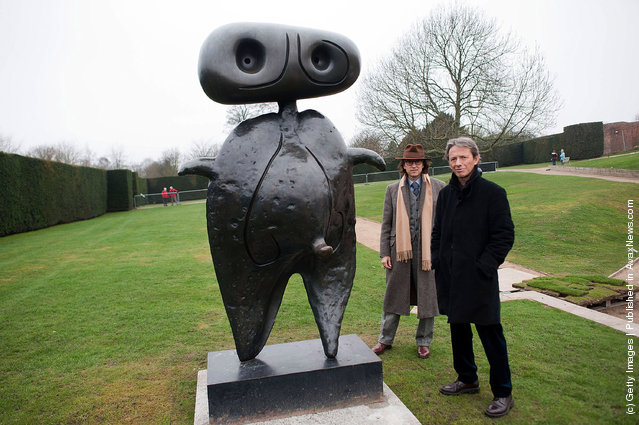
Joan Miro's, grandsons, Emilio Fernandez Miro and Joan Punyet Miro pose beside Personnage (1970) in the Yorkshire Sculpture park

“Joan Miro i Ferra (April 20, 1893 – December 25, 1983) was a Spanish Catalan painter, sculptor, and ceramicist born in Barcelona. Earning international acclaim, his work has been interpreted as Surrealism, a sandbox for the subconscious mind, a re-creation of the childlike, and a manifestation of Catalan pride. In numerous interviews dating from the 1930s onwards, Miro expressed contempt for conventional painting methods as a way of supporting bourgeois society, and famously declared an “assassination of painting” in favour of upsetting the visual elements of established painting”. – Wikipedia

Photo: Joan Miro's, grandsons, Emilio Fernandez Miro and Joan Punyet Miro pose beside Personnage (1970) in the Yorkshire Sculpture park on March 14, 2012 in Wakefield, England. Yorkshire Sculpture Park stages the first major UK survey of sculpture by Spanish artist Joan Miro. (Photo by Bethany Clarke/Getty Images)
Details
15 Mar 2012 13:47:00


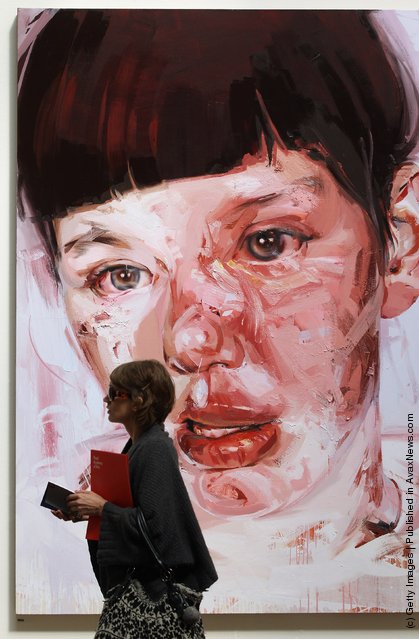
A woman walks past a painting by Jenny Saville entitled “Red Stare Head IV” on display in the Royal Academy of Arts' Summer Exhibition on June 2, 2011 in London, England. The Summer Exhibition is the world's largest open submission contemporary art show, now in its 243rd year, with over 12,000 entries received from 27 countries. The exhibition features over 1100 works of art including: painting, sculpture, photography, architecture and film, it officially opens to the public on June 7, 2011. (Photo by Oli Scarff/Getty Images)
Details
03 Jun 2011 08:34:00