Loading...
Done
Ukrainian President Petro Poroshenko gestures during a news conference in Kiev, Ukraine, June 5, 2015. REUTERS/Mykhailo Markiv/Ukrainian Presidential Press Service/Pool

Ukrainian President Petro Poroshenko gestures during a news conference in Kiev, Ukraine, June 5, 2015. REUTERS/Mykhailo Markiv/Ukrainian Presidential Press Service/Pool
Details
14 Jun 2015 12:36:00
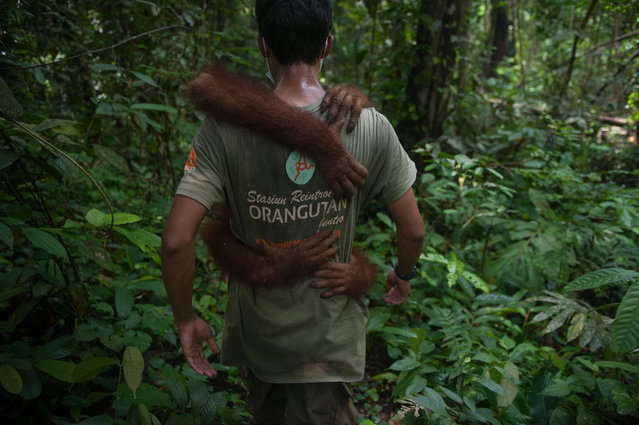
Leo, an orphaned Sumatran orangutan, is taken to the Sumatran Orangutan Conservation Programme rehabilitation centre. Leo will join other orangutans who have been reintroduced to the Pinus Jantho nature reserve. The SOCP has gradually formed a completely new wild population of species that have been threatened with extinction. (Photo by Sutanta Aditya/Barcroft Images)

Leo, an orphaned Sumatran orangutan, is taken to the Sumatran Orangutan Conservation Programme rehabilitation centre. Leo will join other orangutans who have been reintroduced to the Pinus Jantho nature reserve. The SOCP has gradually formed a completely new wild population of species that have been threatened with extinction. (Photo by Sutanta Aditya/Barcroft Images)
Details
10 Aug 2019 00:03:00
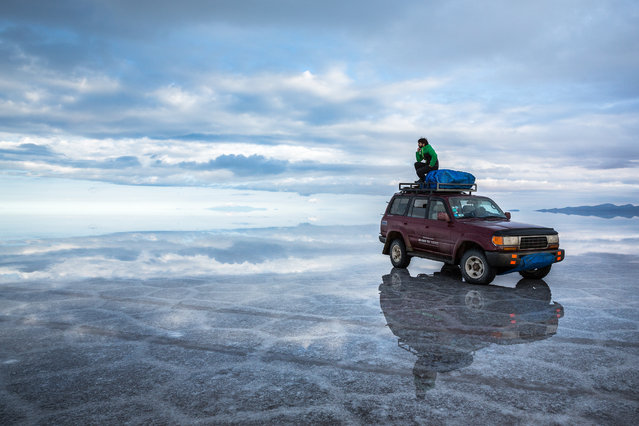
At 10,582 square kilometres, the Bolivian salt flats – otherwise known as Salar de Uyuni – are the largest on the planet and contain between 50 and 70% of the world’s lithium reserves. After exploring Chile and Argentina, photographer Joel Santos decided to travel to Bolivia in January 2017 to check the salt flats off his bucket list. With an electrical storm rolling in, Joel and his two travelling companions were the only souls left on the vast flats and captured the eerie flats without a person in sight. (Photo by Joel Santos/Barcroft Images)

At 10,582 square kilometres, the Bolivian salt flats – otherwise known as Salar de Uyuni – are the largest on the planet and contain between 50 and 70% of the world’s lithium reserves. After exploring Chile and Argentina, photographer Joel Santos decided to travel to Bolivia in January 2017 to check the salt flats off his bucket list. With an electrical storm rolling in, Joel and his two travelling companions were the only souls left on the vast flats and captured the eerie flats without a person in sight. (Photo by Joel Santos/Barcroft Images)
Details
12 Aug 2019 00:03:00
Members of the new BFEplus anti-terror unit of the German federal police holds a G36C automatic weapon after taking part in a capabilities demonstration at a police training facility on December 16, 2015 in Ahrensfelde, Germany. The BFEplus, whose acronym stands for Beweissicherungs und Festnahme Einheit, or Evidence Safeguarding and Arrest Unit, is to support the GSG9 police special forces unit in containing domestic terror threats. Germany is on high-alert following the November Paris terror attacks and a credible threat at the Germany vs. Holland football match in Hanover. (Photo by Sean Gallup/Getty Images)

Members of the new BFEplus anti-terror unit of the German federal police holds a G36C automatic weapon after taking part in a capabilities demonstration at a police training facility on December 16, 2015 in Ahrensfelde, Germany. The BFEplus, whose acronym stands for Beweissicherungs und Festnahme Einheit, or Evidence Safeguarding and Arrest Unit, is to support the GSG9 police special forces unit in containing domestic terror threats. Germany is on high-alert following the November Paris terror attacks and a credible threat at the Germany vs. Holland football match in Hanover. (Photo by Sean Gallup/Getty Images)
Details
18 Dec 2015 08:01:00
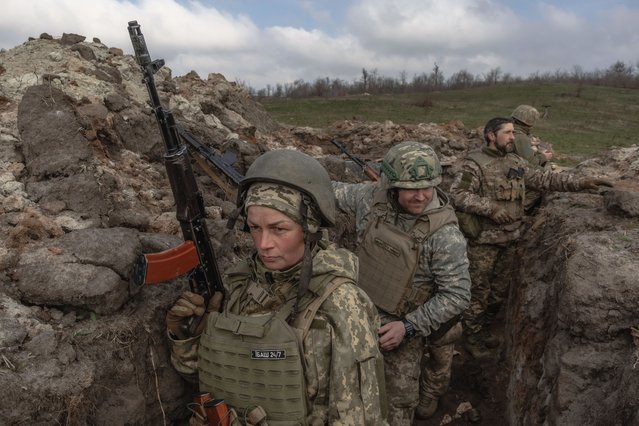
Natalia, 51, a mother of three, serving as a combat medic in the 24th Mechanized Brigade takes part in a field training exercise in an undisclosed location in the eastern region of Ukraine, on March 18, 2025, amid the Russian invasion of Ukraine. (Photo by Roman Pilipey/AFP Photo)

Natalia, 51, a mother of three, serving as a combat medic in the 24th Mechanized Brigade takes part in a field training exercise in an undisclosed location in the eastern region of Ukraine, on March 18, 2025, amid the Russian invasion of Ukraine. (Photo by Roman Pilipey/AFP Photo)
Details
24 Apr 2025 02:57:00
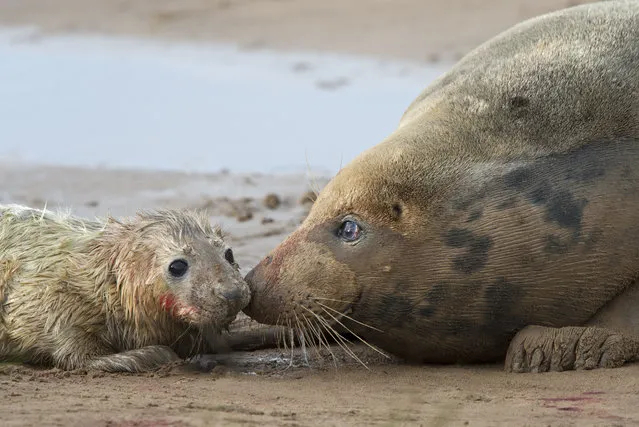
A newborn grey seal pup is tended by its mother at Donna Nook, a nature reserve on the county’s coastline managed by Lincolnshire Wildlife Trust in Lincolnshire, UK on November 23, 2015. (Photo by David Tipling/Rex Shutterstock)

A newborn grey seal pup is tended by its mother at Donna Nook, a nature reserve on the county’s coastline managed by Lincolnshire Wildlife Trust in Lincolnshire, UK on November 23, 2015. (Photo by David Tipling/Rex Shutterstock)
Details
30 Nov 2015 08:02:00
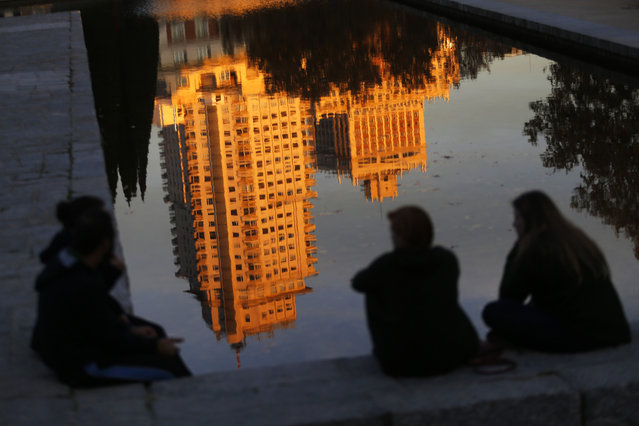
People sit next to a pool where the Tower of Madrid skyscraper is reflected at sunset in Madrid, Thursday, November 26, 2015. The tower was the tallest in Spain since it was finished in 1957 until 1982. (Photo by Francisco Seco/AP Photo)

People sit next to a pool where the Tower of Madrid skyscraper is reflected at sunset in Madrid, Thursday, November 26, 2015. The tower was the tallest in Spain since it was finished in 1957 until 1982. (Photo by Francisco Seco/AP Photo)
Details
28 Feb 2016 11:07:00
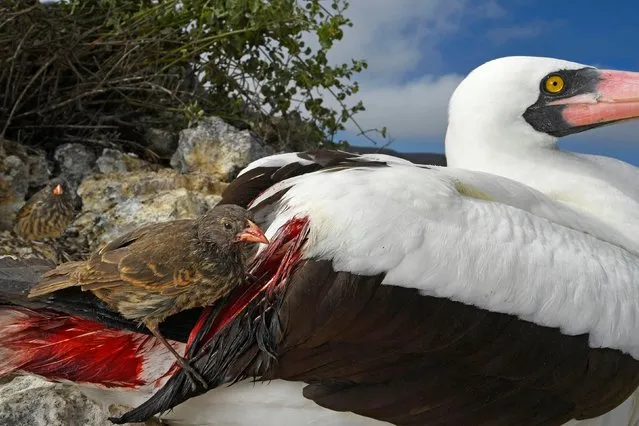
Bloodthirsty by Thomas P Peschak, Germany/South Africa — winner, Behaviour: birds. When rations run short on Wolf Island, in the remote northern Galápagos, the sharp-beaked ground finches become vampires. Their sitting targets are Nazca boobies and other large birds. The finches rely on a scant diet of seeds and insects, which regularly dries up, so they drink blood to survive. ‘I’ve seen more than half a dozen finches drinking from a single Nazca booby,’ says Tom. Rather than leave their nests the boobies tolerate the vampires, and the blood loss doesn’t seem to cause permanent harm. (Photo by Thomas P Peschak/2018 Wildlife Photographer of the Year)

Bloodthirsty by Thomas P. Peschak, Germany/South Africa — winner, Behaviour: birds. When rations run short on Wolf Island, in the remote northern Galápagos, the sharp-beaked ground finches become vampires. Their sitting targets are Nazca boobies and other large birds. The finches rely on a scant diet of seeds and insects, which regularly dries up, so they drink blood to survive. ‘I’ve seen more than half a dozen finches drinking from a single Nazca booby,’ says Tom. Rather than leave their nests the boobies tolerate the vampires, and the blood loss doesn’t seem to cause permanent harm. (Photo by Thomas P. Peschak/2018 Wildlife Photographer of the Year)

Details
19 Oct 2018 00:05:00