Loading...
Done
An injured Iraqi Emergency Response Division (ERD) soldier hit by a mortar is held by another officer as they wait for medics to arrive at the Islamic State occupied Mosul Airport in west Mosul, part of the offensive to retake the city some two years after it fell to the hardline jihadist group, February 23, 2017. Iraqi forces encountered stiff resistance with improvised explosives, heavy mortar fire and snipers hampering their advance before they successfully took the airport. (Photo by Martyn Aim/Getty Images)

An injured Iraqi Emergency Response Division (ERD) soldier hit by a mortar is held by another officer as they wait for medics to arrive at the Islamic State occupied Mosul Airport in west Mosul, part of the offensive to retake the city some two years after it fell to the hardline jihadist group, February 23, 2017. Iraqi forces encountered stiff resistance with improvised explosives, heavy mortar fire and snipers hampering their advance before they successfully took the airport. (Photo by Martyn Aim/Getty Images)
Details
27 Feb 2017 00:01:00
A man rides his loaded tricycle next to three schoolgirls in Shanghai on  December 11, 2015. (Photo by Johannes Eisele/AFP Photo)

A man rides his loaded tricycle next to three schoolgirls in Shanghai on December 11, 2015. (Photo by Johannes Eisele/AFP Photo)
Details
17 Dec 2015 08:05:00
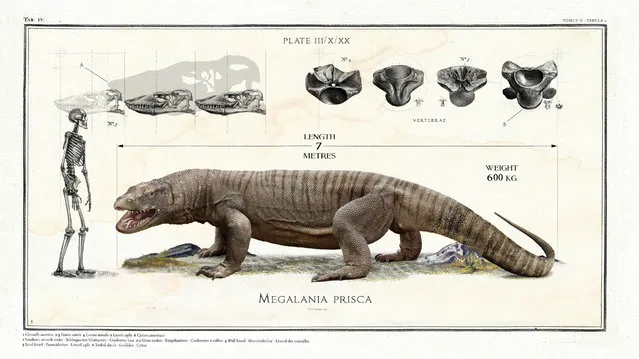
Fossil records indicate that this early lizard, Megalina prisca, was a whopping seven metres in length. (Photo by Sky TV/The Guardian)

Fossil records indicate that this early lizard, Megalania (Megalania prisca or Varanus priscus), was a whopping seven metres in length. They were part of a megafaunal assemblage that inhabited southern Australia during the Pleistocene. The youngest fossil remains date to around 50,000 years ago. The first aboriginal settlers of Australia might have encountered them and been a factor in their extinction. (Photo by Sky TV/The Guardian)
Details
12 Jun 2018 00:05:00
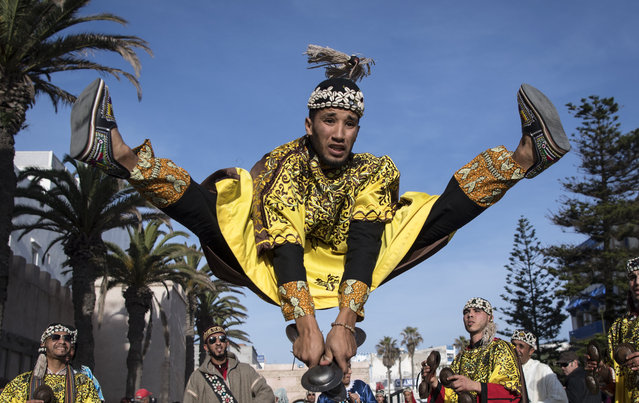
A Gnawa traditional group performs in the city of Essaouira on December 14, 2019, to celebrate the decision of adding the Gnawa culture to UNESCO's list of Intangible Cultural Heritage of Humanity. Gnawa culture, a centuries-old Moroccan practice rooted in music, African rituals and Sufi traditions, was added to UNESCO's list of Intangible Cultural Heritage of Humanity earlier in the week. Gnawa refers to a “set of musical productions, fraternal practices and therapeutic rituals where the secular mixes with the sacred”, according to the nomination submitted by Morocco. Often dressed in colourful outfits, Gnawa musicians play the guenbri, a type of lute with three strings, accompanied by steel castanets called krakebs. (Photo by Fadel Senna/AFP Photo)

A Gnawa traditional group performs in the city of Essaouira on December 14, 2019, to celebrate the decision of adding the Gnawa culture to UNESCO's list of Intangible Cultural Heritage of Humanity. Gnawa culture, a centuries-old Moroccan practice rooted in music, African rituals and Sufi traditions, was added to UNESCO's list of Intangible Cultural Heritage of Humanity earlier in the week. Gnawa refers to a “set of musical productions, fraternal practices and therapeutic rituals where the secular mixes with the sacred”, according to the nomination submitted by Morocco. Often dressed in colourful outfits, Gnawa musicians play the guenbri, a type of lute with three strings, accompanied by steel castanets called krakebs. (Photo by Fadel Senna/AFP Photo)
Details
18 Dec 2019 00:05:00
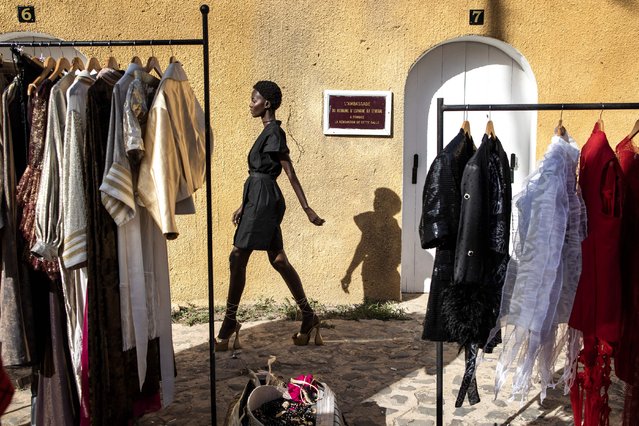
A model practices her walk ahead of Dakar fashion week on Goree Island in Dakar, Senegal, on December 03, 2022. The 20th anniversary of Dakar fashion week is held in a preserved colonial era fort on Goree island, which was one of Africas biggest slave trading centres during the 15th and 16th century. (Photo by John Wessels/AFP Photo)

A model practices her walk ahead of Dakar fashion week on Goree Island in Dakar, Senegal, on December 03, 2022. The 20th anniversary of Dakar fashion week is held in a preserved colonial era fort on Goree island, which was one of Africas biggest slave trading centres during the 15th and 16th century. (Photo by John Wessels/AFP Photo)
Details
15 Dec 2022 02:02:00
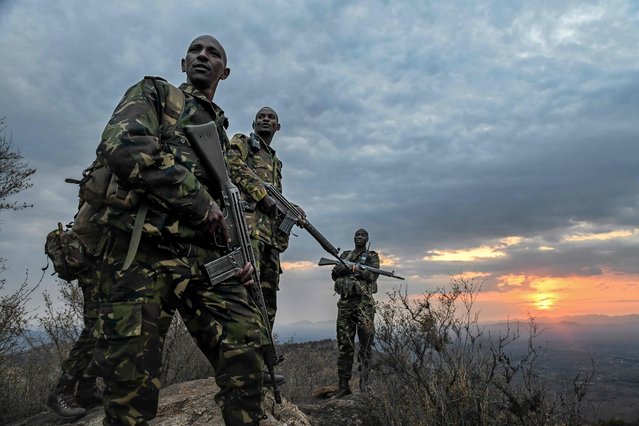
Armed officers of Lewa Wildlife Conservancy's (LWC) anti-poaching unit look out from a ridge at dawn in Meru, on July 31, 2021, as they wind up their nightly security patrol against poaching and illegal incursions into the conservancy. Despite the global condemnation of poaching and the resources that have been mobilised to safeguard endangered wildlife, well-funded and well-equipped poaching groups continue to pose a real threat to Africa’s wildlife. (Photo by Tony Karumba/AFP Photo)

Armed officers of Lewa Wildlife Conservancy's (LWC) anti-poaching unit look out from a ridge at dawn in Meru, on July 31, 2021, as they wind up their nightly security patrol against poaching and illegal incursions into the conservancy. Despite the global condemnation of poaching and the resources that have been mobilised to safeguard endangered wildlife, well-funded and well-equipped poaching groups continue to pose a real threat to Africa’s wildlife. (Photo by Tony Karumba/AFP Photo)
Details
19 Aug 2021 09:19:00
In this Monday, June 29, 2020 a man wearing a face mask to protect against coronavirus, walks past a hair product billboard on the street in Soweto, Johannesburg, South Africa. Africa now has more than a half-million confirmed coronavirus cases as the continent-wide total is now over 508,000 after South Africa recorded another day of more than 10,000 confirmed cases as a new global hot spot. (Photo by Themba Hadebe/AP Photo/File)

In this Monday, June 29, 2020 a man wearing a face mask to protect against coronavirus, walks past a hair product billboard on the street in Soweto, Johannesburg, South Africa. Africa now has more than a half-million confirmed coronavirus cases as the continent-wide total is now over 508,000 after South Africa recorded another day of more than 10,000 confirmed cases as a new global hot spot. (Photo by Themba Hadebe/AP Photo/File)
Details
14 Jul 2020 00:05:00
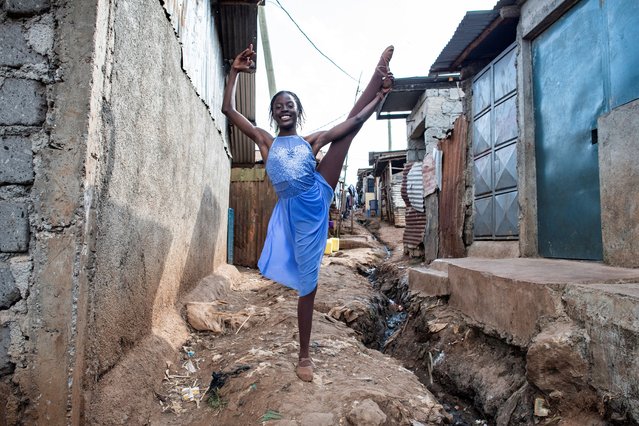
A ballet student from the Kibera based Project Elimu poses ahead of a public show in Kibera on August 14, 2024. Project Elimu, a community driven non profit organization, provides afterschool art, sport education programs for young people age 3 to 22. During school holidays the center holds street perfomances to encourage more students to join the dance center. Kibera is the largest slum in Nairobi, one of the largest in Africa. (Photo by Gordwin Odhiambo/AFP Photo)

A ballet student from the Kibera based Project Elimu poses ahead of a public show in Kibera on August 14, 2024. Project Elimu, a community driven non profit organization, provides afterschool art, sport education programs for young people age 3 to 22. During school holidays the center holds street perfomances to encourage more students to join the dance center. Kibera is the largest slum in Nairobi, one of the largest in Africa. (Photo by Gordwin Odhiambo/AFP Photo)
Details
19 Aug 2024 03:55:00