Loading...
Done
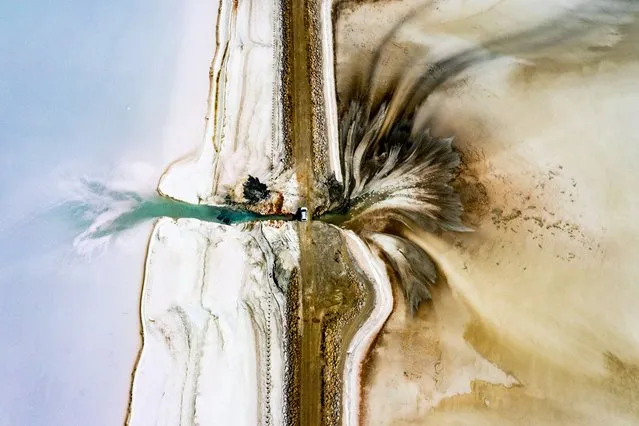
An aerial view of Lake Salt as teams conduct salt extraction works at lake which is a significant portion of Turkiye's salt need is met in Ankara, Turkiye on August 11, 2022. Salt extraction works lasts for about 3 months and continues with the recession of the waters in Lake Salt. The salt extracted from the lake, where salt is produced with a purity of 99 percent, is sent to more than 60 countries. (Photo by Emin Sansar/Anadolu Agency via Getty Images)

An aerial view of Lake Salt as teams conduct salt extraction works at lake which is a significant portion of Turkiye's salt need is met in Ankara, Turkiye on August 11, 2022. Salt extraction works lasts for about 3 months and continues with the recession of the waters in Lake Salt. The salt extracted from the lake, where salt is produced with a purity of 99 percent, is sent to more than 60 countries. (Photo by Emin Sansar/Anadolu Agency via Getty Images)
Details
05 Oct 2022 04:37:00
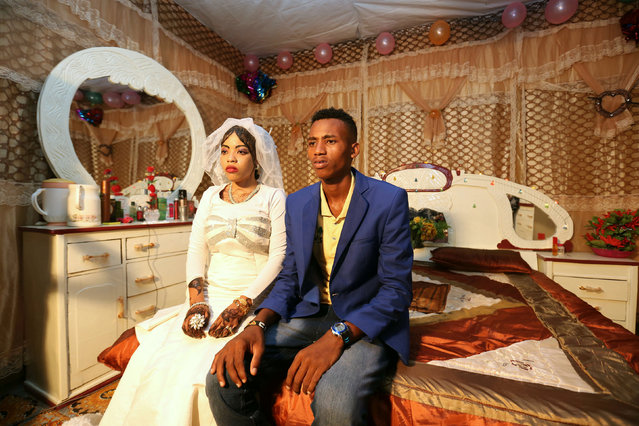
Somali couple Mohamed Noor (L) and Huda Omar pose for a photograph at their makeshift home during their wedding ceremony in Mogadishu's Rajo camp, Somalia August 17, 2016. Having met two years ago, the pair have just married at Rajo camp, where some 400 families live. Most, like Noor's parents, came here in the early 1990s to flee famine. They stayed on as years of conflict ravaged the Horn of Africa nation. As at any wedding, there is plenty of dancing and sweet treats for the young couple as they start married life in Noor's simple home, made of iron and plastic sheets. Noor works as a mason with his father. Others here are builders or sell sweets, nuts and stick toothbrushes to make money. Some beg around the seaside city, which like the rest of Somalia has been gripped by violence since the toppling of dictator Mohamed Siad Barre in 1991. (Photo by Feisal Omar/Reuters)

Somali couple Mohamed Noor (L) and Huda Omar pose for a photograph at their makeshift home during their wedding ceremony in Mogadishu's Rajo camp, Somalia August 17, 2016. Having met two years ago, the pair have just married at Rajo camp, where some 400 families live. Most, like Noor's parents, came here in the early 1990s to flee famine. (Photo by Feisal Omar/Reuters)
Details
14 Sep 2016 10:35:00
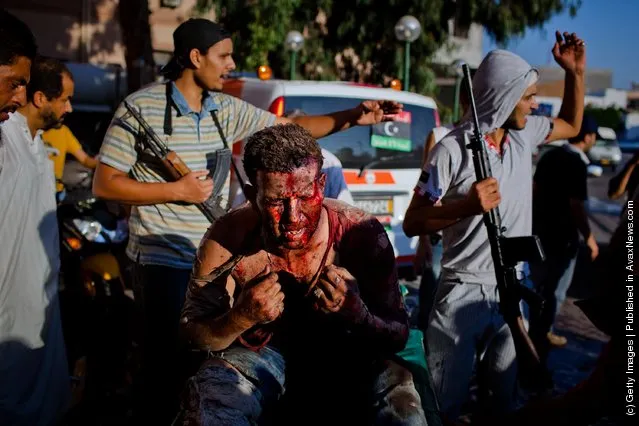
Libyan rebel fighters protect a pro-Gaddafi loyalist fighter from angry onlookers as he is brought in for medical attention to the Tripoli Central Hospital

Libyan rebel fighters protect a pro-Gaddafi loyalist fighter from angry onlookers as he is brought in for medical attention to the Tripoli Central Hospital on August 25, 2011 in Tripoli, Libya. Heavy fighting continues in the Libyan capital between Gaddafi's forces and the surging rebel presence. Rebels, who have issued a $1.7m reward for Gaddafi's capture “dead or alive”, are attempting to reach Colonel Gaddafi's hometown of Sirte but have met loyalist resistance. (Photo by Daniel Berehulak/Getty Images)
Details
26 Aug 2011 08:54:00
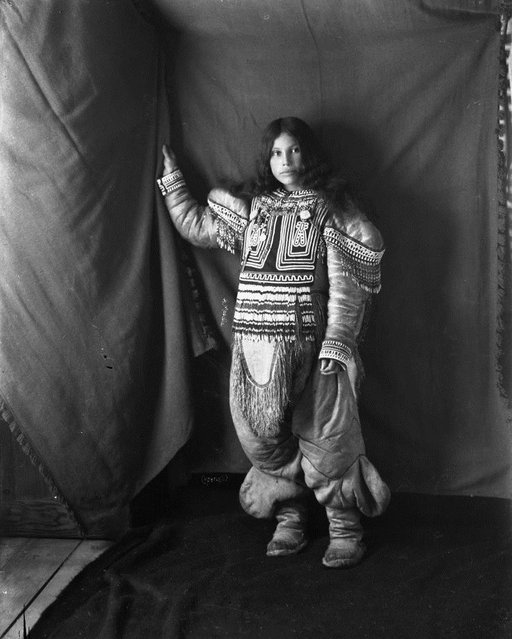
Moodie was born in 1854 in Toronto, and after a move to England she met and married John Douglas Moodie in 1878, and had six children. Here: Inuit woman, Kootucktuck, in her beaded attigi. Fullerton Harbour, Nunavut, February 1905. (Photo by Geraldine Moodie/The Guardian)

Geraldine Moodie overcame harsh conditions to become western Canada’s first professional female photographer, capturing beautiful images in the country’s most remote regions. An exhibition, “North of Ordinary: The Arctic Photographs of Geraldine and Douglas Moodie”, is at Glenbow, Calgary, 18 February – 10 September. Here: Inuit woman, Kootucktuck, in her beaded attigi. Fullerton Harbour, Nunavut, February 1905. (Photo by Geraldine Moodie/The Guardian)
Details
17 Feb 2017 00:04:00
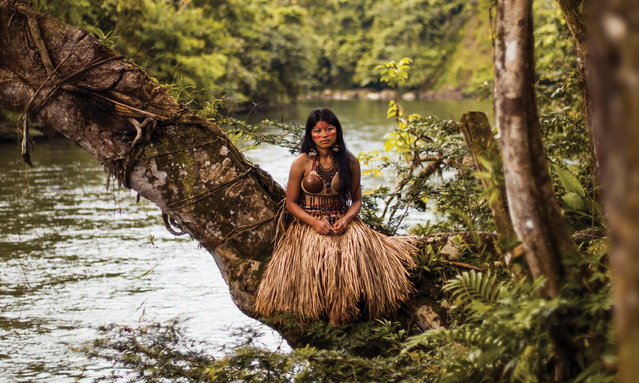
Ecuador: “More and more tribes of Amazonia are starting to adopt modern clothes for everyday life. But they are still keeping their traditional clothes for important events. I photographed this young woman in her wedding outfit”. (Photo by Mihaela Noroc/The Guardian)

Photographer Mihaela Noroc travelled the world from Ethiopia to the US and from Guatemala to France in search of natural and authentic beauty. She introduces some of the inspiring women she met on her journey. Here: Ecuador. “More and more tribes of Amazonia are starting to adopt modern clothes for everyday life. But they are still keeping their traditional clothes for important events. I photographed this young woman in her wedding outfit”. (Photo by Mihaela Noroc/The Guardian)
Details
27 Sep 2017 08:29:00
Guests arrive for the opening ceremony of the 23rd Life Ball in Vienna May 16, 2015. Life Ball is Europe's largest annual AIDS charity event and takes place in Vienna's city hall. (Photo by Leonhard Foeger/Reuters)

Guests arrive for the opening ceremony of the 23rd Life Ball in Vienna May 16, 2015. Life Ball is Europe's largest annual AIDS charity event and takes place in Vienna's city hall. The Life Ball is a charity gala to raise money for people living with HIV and AIDS. (Photo by Leonhard Foeger/Reuters)
Details
18 May 2015 12:19:00
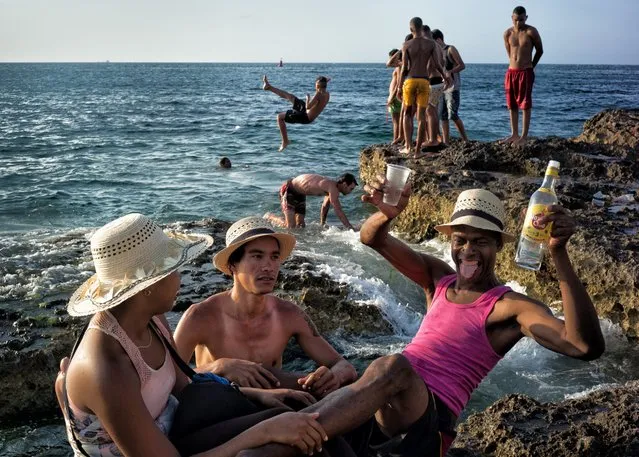
Saguy says that while portraits of Fidel Castro are still found everywhere, they coexist with plenty of foreign brands on subtle display: from Apple logo decals affixed to 1950s Chevys to young people wearing Adidas T-shirts and Converse shoes. Here: Several groups of locals relax on the Malecon in Old Havana, Cuba May 1, 2016. Some chat and drink rum while others dive into the warm Caribbean Sea. (Photo by Dotan Saguy)

Photographer Dotan Saguy visited Cuba expecting to find resentment toward Americans, but he says that, instead, “Every Cuban I met was warm and welcoming despite me being an American”. Here: Several groups of locals relax on the Malecon in Old Havana, Cuba May 1, 2016. Some chat and drink rum while others dive into the warm Caribbean Sea. (Photo by Dotan Saguy)
Details
27 May 2016 12:50:00
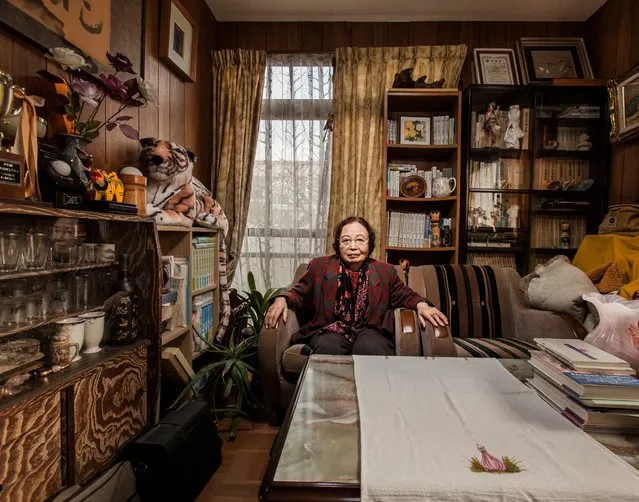
Takeoka Chisaka, Hiroshima, Japan. “One morning in August 1945, I was walking home from the night shift at a factory in Hiroshima. As I reached my door, there was a huge explosion. When I came to, my head was bleeding and I had been blasted 30m away”. (Photo and caption by Sasha Maslov)

Takeoka Chisaka, Hiroshima, Japan. “One morning in August 1945, I was walking home from the night shift at a factory in Hiroshima. As I reached my door, there was a huge explosion. When I came to, my head was bleeding and I had been blasted 30m away. The atomic bomb had detonated. When I found my mother, her eyes were badly burned. A doctor said they had to come out, but he didn’t have the proper tools so used a knife instead. It was hellish. I became a peace-worker after the war. In the 1960s, at a meeting at the UN, I met one of the people who created the atomic bomb. He apologised”. (Photo and caption by Sasha Maslov)
Details
11 May 2015 11:56:00