Loading...
Done
People take part in the “The Burial of the Sardine” funeral procession, which marks the end of carnival festivities, in Madrid, Spain, February 10, 2016. (Photo by Juan Medina/Reuters)

People take part in the “The Burial of the Sardine” funeral procession, which marks the end of carnival festivities, in Madrid, Spain, February 10, 2016. “Mourners” carry a coffin with a mock sardine through the streets to celebrate the countdown to Lent. Spanish painter Francisco de Goya's painting “El entierro de la sardina” (The Burial of the Sardine) was inspired by this tradition, which started in Madrid in the 18th century, around the time of Spanish King Carlos III. (Photo by Juan Medina/Reuters)
Details
11 Feb 2016 12:29:00
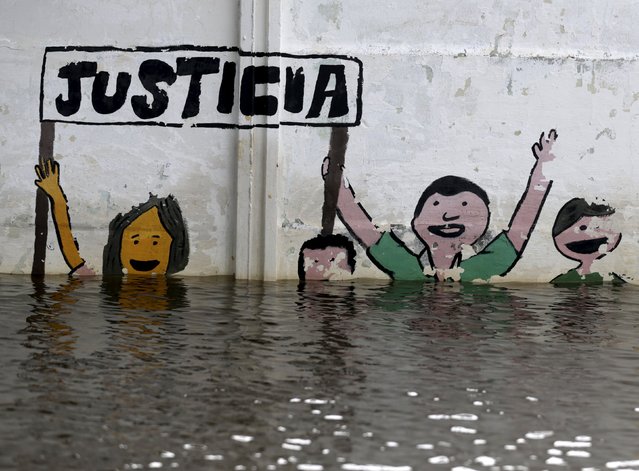
Graffiti saying “justice” partially seen above flood waters in Asuncion, December 27, 2015. (Photo by Jorge Adorno/Reuters)

Graffiti saying “justice” partially seen above flood waters in Asuncion, December 27, 2015. More than 100,000 people have had to evacuate from their homes in the bordering areas of Paraguay, Uruguay, Brazil and Argentina due to severe flooding in the wake of heavy summer rains brought on by El Nino, authorities said on Saturday. (Photo by Jorge Adorno/Reuters)
Details
29 Dec 2015 08:02:00
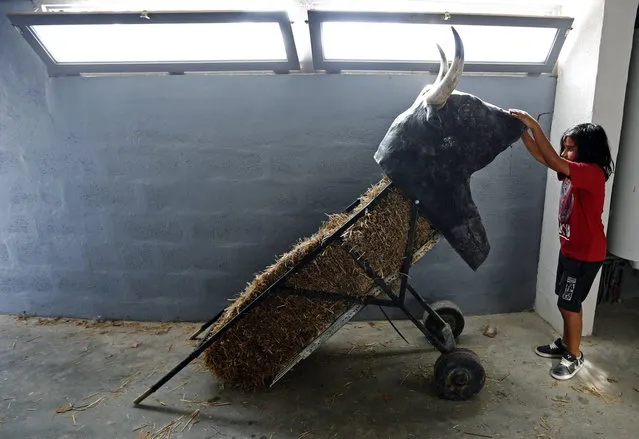
Nino, a ten-year-old toreador apprentice of the French Tauromachy Centre, nicknamed El Nino, touches a practice bull at the bullring of Garons, near Nimes, September 25, 2013. (Photo by Jean-Paul Pelissier/Reuters)

Nino, a ten-year-old toreador apprentice of the French Tauromachy Centre, nicknamed El Nino, touches a practice bull at the bullring of Garons, near Nimes, September 25, 2013. Since 1983, the French Tauromachy Centre in Nimes has trained some 1,000 youths in the art of bullfighting. Twenty of them have gone on to become professional matadors, facing fighting bulls in the arena. Twice a week, students take courses with a matador to learn the movements and gestures of the bullfighter in the ring, but without an animal present. Students train with calves in the surrounding fields during spring, and regularly participate in beginner's bullfights (becerradas) without killing calves. Solal has been taking courses for three years and Nino, for just a year now. Both are normally enrolled in French public schools, but have one thought in mind – bullfighting. They share a passion linked to the city of Nimes, famous for its ferias and bullring. (Photo by Jean-Paul Pelissier/Reuters)
Details
06 Nov 2013 10:12:00
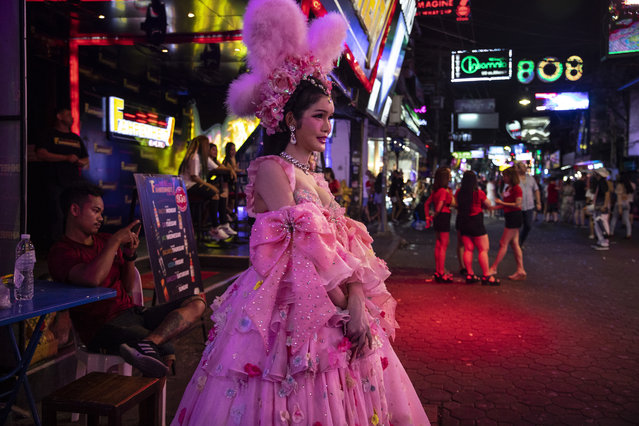
Scenes from the popular Walking Street normally packed with tourists filled with bars and restaurants in Pattaya, Thailand on March 10, 2020. Thailand depends on tourism, currently tourist arrivals have plunged more than 50% and are expected to continue for months ahead. According to the World Health Organization (WHO) in Thailand there has been 59 confirmed cases of Coronavirus ( COVID-19 ) with 6 new, only one death with around 1,903 persons under treatment. Latest information on the Novel Coronavirus has infected more than 118,000 people and killed close to 4,300. (Photo by Paula Bronstein/Getty Images)

Scenes from the popular Walking Street normally packed with tourists filled with bars and restaurants in Pattaya, Thailand on March 10, 2020. Thailand depends on tourism, currently tourist arrivals have plunged more than 50% and are expected to continue for months ahead. According to the World Health Organization (WHO) in Thailand there has been 59 confirmed cases of Coronavirus ( COVID-19 ) with 6 new, only one death with around 1,903 persons under treatment. Latest information on the Novel Coronavirus has infected more than 118,000 people and killed close to 4,300. (Photo by Paula Bronstein/Getty Images)
Details
16 Mar 2020 00:01:00
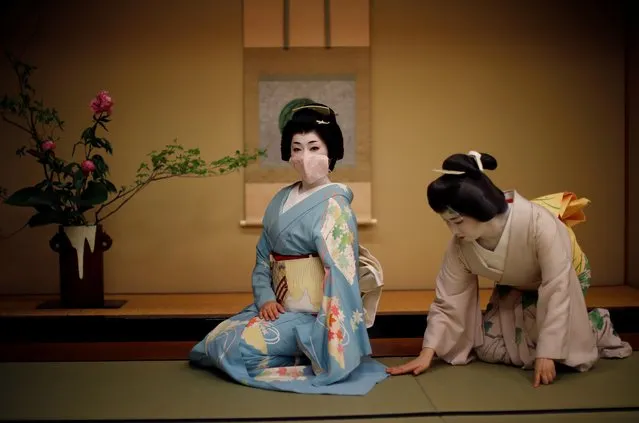
Mayu adjusts Koiku’s kimono, as Koiku wears a protective face mask while posing for a photograph, before they work at a party where they will entertain with other geisha at Japanese luxury restaurant Asada in Tokyo, Japan, June 23, 2020. The coronavirus pandemic has made Tokyo's geisha fear for their centuries-old profession as never before. Though the number of geisha - famed for their witty conversation, beauty and skill at traditional arts - has been falling for years, they were without work for months due to Japan's state of emergency and now operate under awkward social distancing rules. Engagements are down 95 percent, and come with new rules: no pouring drinks for customers or touching them even to shake hands, and sitting 2 meters apart. Masks are hard to wear with their elaborate wigs, so they mostly don't. “I was just full of anxiety”, said Mayu, 47. “I went through my photos, sorted my kimonos ... The thought of a second wave is terrifying”. (Photo by Kim Kyung-Hoon/Reuters)

Mayu adjusts Koiku’s kimono, as Koiku wears a protective face mask while posing for a photograph, before they work at a party where they will entertain with other geisha at Japanese luxury restaurant Asada in Tokyo, Japan, June 23, 2020. (Photo by Kim Kyung-Hoon/Reuters)
Details
23 Jul 2020 00:03:00
A Togolese policeman, disguised as a terrorist, brandishes his weapon on October 20, 2022 during an anti-terrorism exercise at the Peacekeeping Operations Training Center (CEOMP). (Photo by Yanick Folly/AFP Photo)

A Togolese policeman, disguised as a terrorist, brandishes his weapon on October 20, 2022 during an anti-terrorism exercise at the Peacekeeping Operations Training Center (CEOMP). Togo's military on Thursday carried out a simulated jihadist attack in the capital Lome on Thursday, practising countering an assault and hostage-taking at a restaurant. Togo and neighbouring West African coastal states like Ghana and Benin are preparing for growing spillover from jihadist conflicts across their northern borders in Niger and Burkina Faso. (Photo by Yanick Folly/AFP Photo)
Details
26 Oct 2022 05:26:00
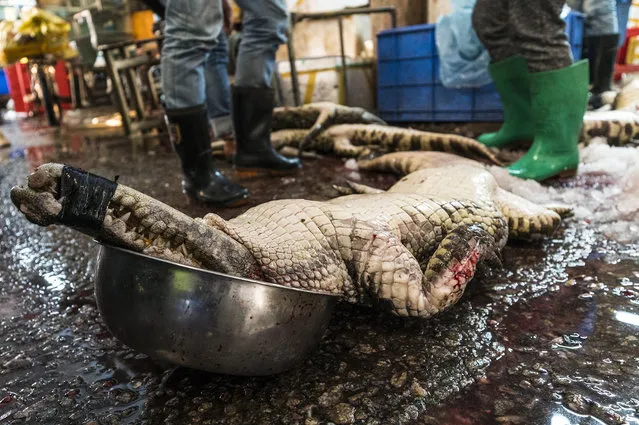
A dead crocodile is seen on Huangsha Seafood Market in Guangzhou, Guandong Province, China, 22 January 2018. Tsukiji Market of China or Huangsha Seafood Market is biggest one in Southern China and one of the biggest in China, as there are literally hundreds of different varieties of fish and seafood scattered throughout the market. Since the proximity of the fish market is so close to the Zhujiang River, it's quite easy for the large fishing vessels and fishermen to unload their fresh catch right at the market, which ensures that the fish and seafood remain fresh. Fish and other seafood are coming there from all around the globe. Seafood Market is full of different kinds of live fish, live shellfish, and live seafood on display in crystal clear tanks and it's common to see 5-star chefs, retailers and expats to source for fresh and high-quality seafood supplies for reasonable prices. While it is a wholesale fish market, since many Guangzhou restaurants and businesses come to purchase their seafood here, the public is welcome to come and even purchase. Many local Chinese have the vendors slice up fresh salmon fillets to take home or carry seafood into one of the nearby specialty restaurants, where they will cook if for them and serve it with vegetables and other side dishes of their choice. One of the biggest attractions for both, tourists and buyers, on market are crocodiles, which are brought there alive in wooden cases with taped jaws so they can?t accidentally bite. They are from crocodile farms from Guangdong, China and from Vietnam. Crocodile meat is popular in most Asian countries and it is consider as delicate one. Crocodiles weight from 10 to 25 kg and bigger ones are about 2 years old. They cost about 70 RMB (8.90 EURO) when bout as whole, or if you buy as parts most expensive and appreciated parts are paws 120 RMB (15.26 EURO) per kg, and tail 100 RMB (12.72 EURO) per kg. (Photo by Aleksandar Plavevski/EPA/EFE)

A dead crocodile is seen on Huangsha Seafood Market in Guangzhou, Guandong Province, China, 22 January 2018. Tsukiji Market of China or Huangsha Seafood Market is biggest one in Southern China and one of the biggest in China, as there are literally hundreds of different varieties of fish and seafood scattered throughout the market. (Photo by Aleksandar Plavevski/EPA/EFE)
Details
17 Apr 2020 00:05:00
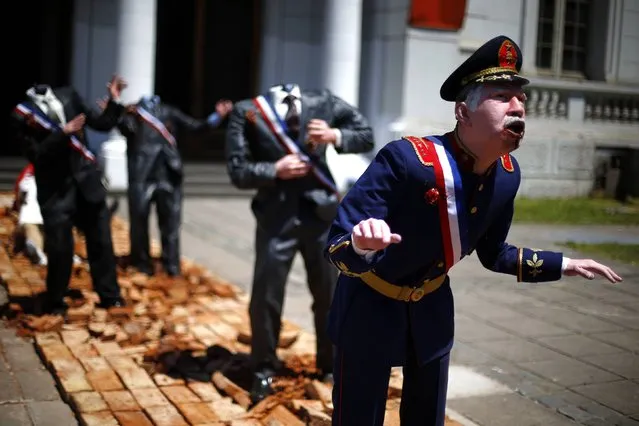
A sculptural artwork depicting former Chilean dictator Augusto Pinochet and headless presidents shot by a hooded high school student (not pictured) is seen at the Contemporary Art Museum in Santiago, December 2, 2014. (Photo by Ivan Alvarado/Reuters)

A sculptural artwork depicting former Chilean dictator Augusto Pinochet and headless presidents shot by a hooded high school student (not pictured) is seen at the Contemporary Art Museum in Santiago, December 2, 2014. The artwork, part of the “El ladrillo angular” (The angular brick) exhibition, portrays a student fighting against the ongoing continuity of dictatorship because of a political and economic system which has been impossible to destroy, according to “Papas Fritas” the artwork's creator. (Photo by Ivan Alvarado/Reuters)
Details
03 Dec 2014 14:45:00