Loading...
Done
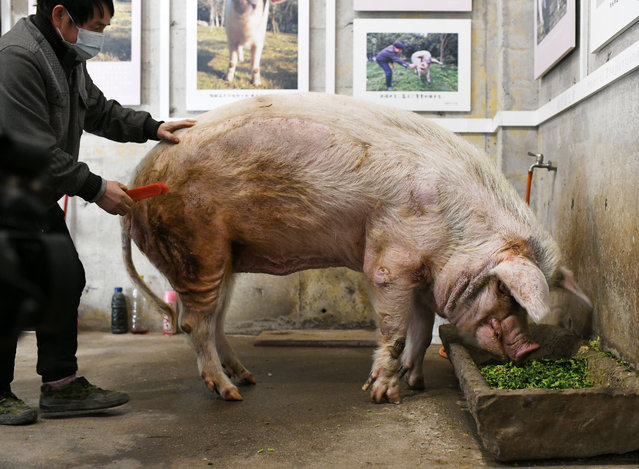
Zhu Jianqiang, or “strong-willed pig”, famous for surviving more than a month buried in the ruins after the magnitude-8.0 Wenchuan earthquake in 2008, feeds on food sent by admirers wishing it a safe winter in Jianchuan Museum, Chengdu city, southwest China's Sichuan province, 11 January 2021. (Photo by Rex Features/Shutterstock)

Zhu Jianqiang, or “strong-willed pig”, famous for surviving more than a month buried in the ruins after the magnitude-8.0 Wenchuan earthquake in 2008, feeds on food sent by admirers wishing it a safe winter in Jianchuan Museum, Chengdu city, southwest China's Sichuan province, 11 January 2021. (Photo by Rex Features/Shutterstock)
Details
19 Jan 2021 00:01:00
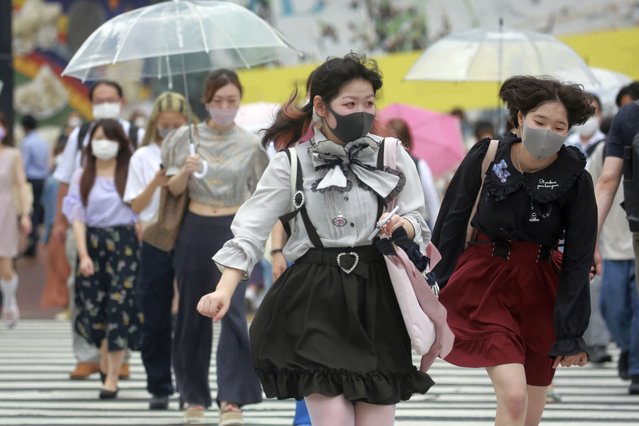
People wearing face masks to protect against the spread of the coronavirus walk on a crossing in Tokyo Tuesday, August 17, 2021. Japan’s coronavirus state of emergency will continue through Sept. 12 rather than finishing at the end of this month as initially planned, the government decided Monday. (Photo by Koji Sasahara/AP Photo)

People wearing face masks to protect against the spread of the coronavirus walk on a crossing in Tokyo Tuesday, August 17, 2021. Japan’s coronavirus state of emergency will continue through Sept. 12 rather than finishing at the end of this month as initially planned, the government decided Monday. (Photo by Koji Sasahara/AP Photo)
Details
18 Aug 2021 08:39:00
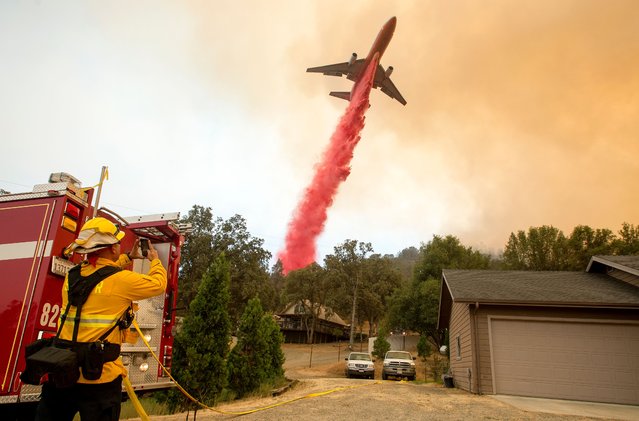
An air tanker drops fire retardant on flames as firefighters continue to battle against the Detwiler fire in Mariposa, California on July 19, 2017. The Detwiler fire is currently at 7 percent containment and has burned more than 45,000 acres and destroyed eight structures. (Photo by Josh Edelson/AFP Photo)

An air tanker drops fire retardant on flames as firefighters continue to battle against the Detwiler fire in Mariposa, California on July 19, 2017. The Detwiler fire is currently at 7 percent containment and has burned more than 45,000 acres and destroyed eight structures. (Photo by Josh Edelson/AFP Photo)
Details
22 Jul 2017 08:38:00
A female soldier takes part in a training for women at the Tolemaida Military Air Base in Tolemaida, Colombia, on May 16, 2023. The last time the Colombian Army enlisted women in their ranks was in 1993. Now, 30 years on, more than 1,200 women voluntarily joined the military service in the country. (Photo by Raúl Arboleda/AFP Photo)

A female soldier takes part in a training for women at the Tolemaida Military Air Base in Tolemaida, Colombia, on May 16, 2023. The last time the Colombian Army enlisted women in their ranks was in 1993. Now, 30 years on, more than 1,200 women voluntarily joined the military service in the country. (Photo by Raúl Arboleda/AFP Photo)
Details
17 Dec 2023 05:41:00
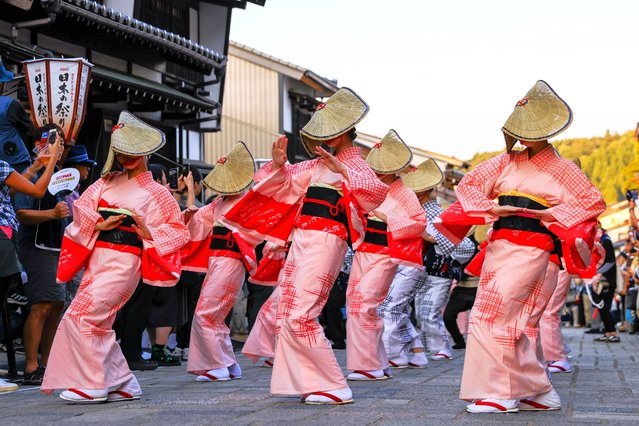
Women wearing braided straw hats dance as the Owara Kaze-no-Bon dance festival begins on September 1, 2025 in Toyama, Japan. The festival, believed to have more than 300 years history, continues till September 3. (Photo by The Asahi Shimbun via Getty Images)

Women wearing braided straw hats dance as the Owara Kaze-no-Bon dance festival begins on September 1, 2025 in Toyama, Japan. The festival, believed to have more than 300 years history, continues till September 3. (Photo by The Asahi Shimbun via Getty Images)
Details
20 Sep 2025 03:35:00
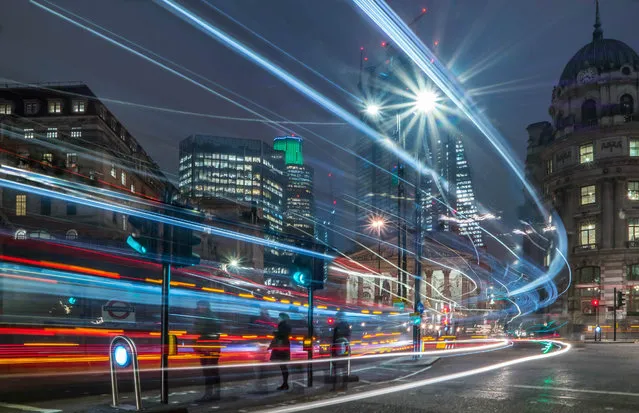
Runner-up. “The City of London, looking towards the Royal Exchange and the Bank of England. The ever-changing London skyline provides many excellent opportunities for cityscape photography, none more exciting than the ebb and flow of traffic at night”. MICK RYAN, JUDGE: “Sophisticated new camera sensors, sharp lenses and the ability to take hundreds of shots in a session and check your work have made night photography much easier than it ever used to be. The results, like this scene, can be spectacular”. (Photo by Mark Caldon/The Guardian)

Runner-up. “The City of London, looking towards the Royal Exchange and the Bank of England. The ever-changing London skyline provides many excellent opportunities for cityscape photography, none more exciting than the ebb and flow of traffic at night”. (Photo by Mark Caldon/The Guardian)
Details
10 Dec 2018 00:03:00
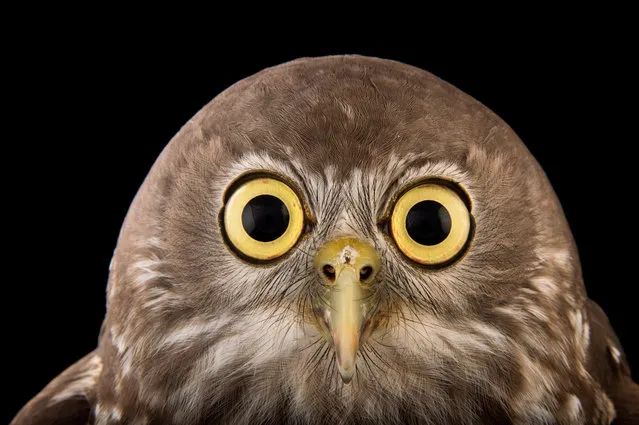
The National Geographic Photo Ark is a travelling exhibition of photographer Joel Sartore’s quest to create a photo archive of biodiversity around the world. So far, Sartore has captured studio portraits of more than 6,000 species – a number that he hopes to double. On 1 July, the ark will open at Melbourne zoo – the first time it has been exhibited in the southern hemisphere. More than 50 portraits will be on display, including many of Australian endangered animals being protected by programs at the zoo itself. These captions have been edited from text supplied by Melbourne zoo. Here: Barking owl. So-named because its call sounds like a barking dog, these birds are native to Australia, Indonesia and Papua New Guinea. In Victoria they are listed as an endangered species, and in 2003 there were estimated to be fewer than 50 breeding pairs. The main threat to the species in Victoria is loss of habitat, especially large trees with hollows in which they can nest and on which many of their prey depend. Apart from a bark, they may utter a chilling scream when they feel threatened. (Photo by Joel Sartore/National Geographic Photo Ark/The Guardian)

The National Geographic Photo Ark is a travelling exhibition of photographer Joel Sartore’s quest to create a photo archive of biodiversity around the world. So far, Sartore has captured studio portraits of more than 6,000 species – a number that he hopes to double. On 1 July, the ark will open at Melbourne zoo – the first time it has been exhibited in the southern hemisphere. More than 50 portraits will be on display, including many of Australian endangered animals being protected by programs at the zoo itself. These captions have been edited from text supplied by Melbourne zoo. Here: Barking owl. (Photo by Joel Sartore/National Geographic Photo Ark/The Guardian)
Details
01 Jul 2017 07:45:00
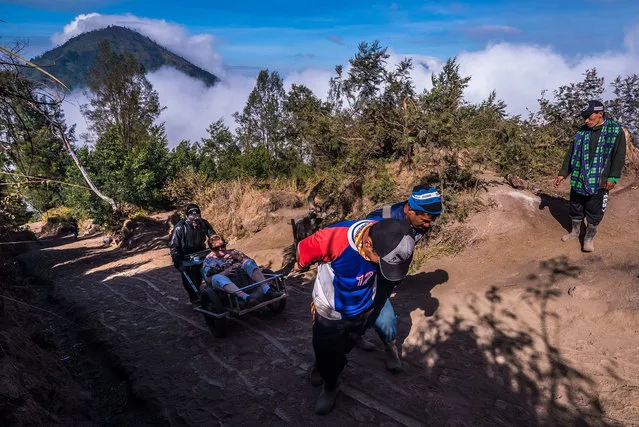
Miners pulling up lazy tourists to the rim of Kawah Ijen (Ijen Volcano), East Java, Indonesia on September 21, 2017. They will earn as much as they would bring down a load of sulfur. Nomadic Explorer, Cultural Lifestyle Photographer Claudio Sieber captured striking images of miners working at Ijen volcanic range in East Java, Indonesia. The sulphur miners risk their lives daily as they climb the active volcano carrying heavy loads, which they sell to sugar refineries. Shortly after midnight curious tourists are flocking in hundreds through the gate of Ijen's foothills to be right on time, driven by the images others took before them. Kawah Ijen is the one of the world's largest acidic volcanic crater lake; famous for its turquoise color as well as the unreal atmosphere it offers during darkness. A dusty path zigzags 3 kilometers up to the crater rim. This doesn't mean anything challenging; in particular, special sights have to be deserved anyway. The irritating smell of sulfur announces the near of the crater's existence. Arriving on the crater's rim the reward for the torture becomes visible. Blue fire darts its tongues through the fumes of sulfur dioxide. Somehow, the spectacle isn't as romantic as expected, since it is also the rough working space of approx. 150 sulfur miners who start their shift at 1 am. Lately, harvesting the abundance of devil's gold received international attention. This did obviously not really improve a miner's lifestyle; neither did it contribute to a better wage. (Photo by Claudio Sieber/Barcroft Images)

Miners pulling up lazy tourists to the rim of Kawah Ijen (Ijen Volcano), East Java, Indonesia on September 21, 2017. They will earn as much as they would bring down a load of sulfur. Nomadic Explorer, Cultural Lifestyle Photographer Claudio Sieber captured striking images of miners working at Ijen volcanic range in East Java, Indonesia. The sulphur miners risk their lives daily as they climb the active volcano carrying heavy loads, which they sell to sugar refineries. (Photo by Claudio Sieber/Barcroft Images)
Details
02 Oct 2017 08:31:00