Loading...
Done


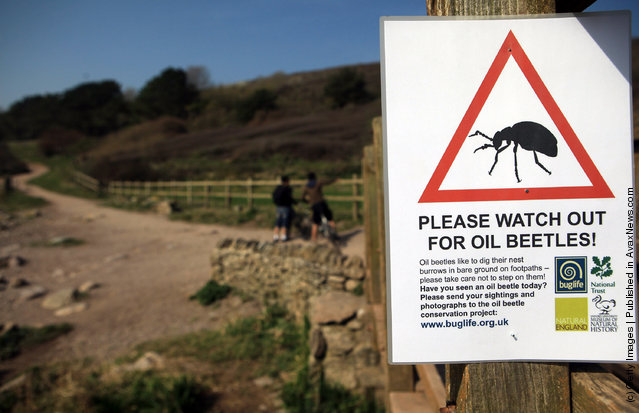
People enjoy the fine weather on the coast at Wembury during the first ever nationwide survey to map the location of the threatened and creatures on March 24, 2011 in near Plymouth, England. Often found on the coast, and particularly in the south west of England, the number of oil beetle species found in the UK has halved in the last 100 years and the survey will help establish the whereabouts of the remaining four species and boost efforts to secure their future. The survey is being launched today by Buglife: The Invertebrate Trust and the National Trust in partnership with Natural England and Oxford University Museum of Natural History. (Photo by Matt Cardy/Getty Images)
Details
25 Mar 2011 15:20:00
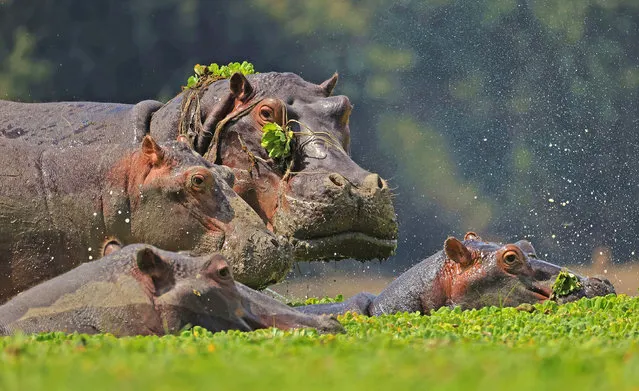
While many of us would pay good money for a spa mud bath, these fortunate hippos in South Luangwa National Park, Zambia, have nature to thank as they take a plunge in a lagoon in the second decade of February 2024. (Photo by Dimitar Nedelchev/Solent News)

While many of us would pay good money for a spa mud bath, these fortunate hippos in South Luangwa National Park, Zambia, have nature to thank as they take a plunge in a lagoon in the second decade of February 2024. (Photo by Dimitar Nedelchev/Solent News)
Details
10 Mar 2024 07:40:00
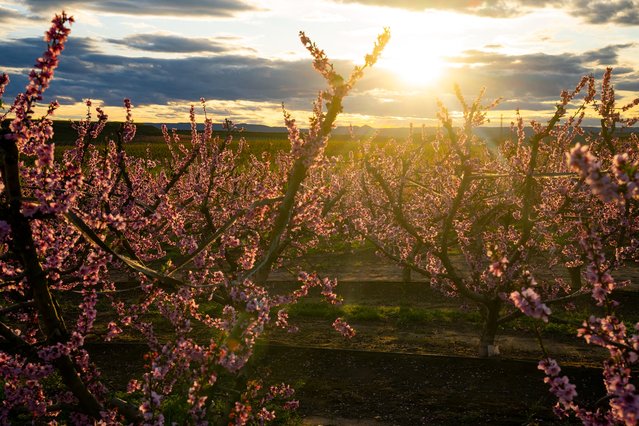
Rows of blossoming peach trees line the fields of Aitona, in the province of Lleida, north eastern Spain, on March 22, 2025. Every year in March the thousands of hectares of blossoming peach trees create a sort of nature tourism with hundreds of people visiting the area to take in the colorful blossoms. (Photo by Josep Lago/AFP Photo)

Rows of blossoming peach trees line the fields of Aitona, in the province of Lleida, north eastern Spain, on March 22, 2025. Every year in March the thousands of hectares of blossoming peach trees create a sort of nature tourism with hundreds of people visiting the area to take in the colorful blossoms. (Photo by Josep Lago/AFP Photo)
Details
20 Jun 2025 04:26:00
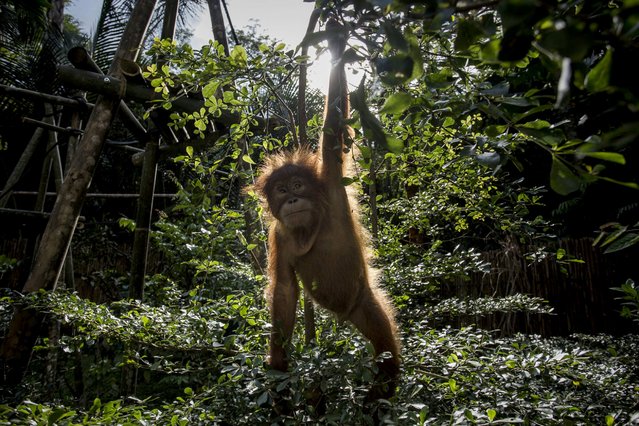
A Baby sumatran orangutan (Pongo abelii) plays around in a tree as they train at Sumatran Orangutan Conservation Programme's rehabilitation center on November 12, 2016 in Kuta Mbelin, North Sumatra, Indonesia. The Orangutans in Indonesia have been known to be on the verge of extinction as a result of deforestation and poaching. Found mostly in South-East Asia, where they live on the islands of Sumatra and Borneo, the endangered species continue to lose their habitat as a result of corporate expansion in a developing economy. Indonesia approved palm oil concessions on nearly 15 million acres of peatlands over the past years and thousands of square miles have been cleared for plantations, including the lowland areas that are the prime habitat for orangutans. (Photo by Ulet Ifansasti/Getty Images)

A Baby sumatran orangutan (Pongo abelii) plays around in a tree as they train at Sumatran Orangutan Conservation Programme's rehabilitation center on November 12, 2016 in Kuta Mbelin, North Sumatra, Indonesia. The Orangutans in Indonesia have been known to be on the verge of extinction as a result of deforestation and poaching. Found mostly in South-East Asia, where they live on the islands of Sumatra and Borneo, the endangered species continue to lose their habitat as a result of corporate expansion in a developing economy. Indonesia approved palm oil concessions on nearly 15 million acres of peatlands over the past years and thousands of square miles have been cleared for plantations, including the lowland areas that are the prime habitat for orangutans. (Photo by Ulet Ifansasti/Getty Images)
Details
16 Nov 2016 11:14:00
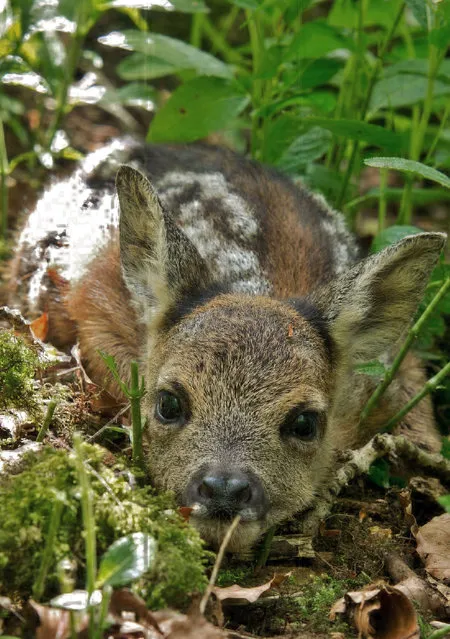
Young fawn shelters in the wood. He is so at one with nature that he knows how to call animals to him, and often gets within 30ft of them. (Photo by Adam Tatlow/BNPS)

Cotswold gamekeeper shoots amazing pictures of British wildlife – without the aid of long lenses and elaborate techniques. The photos may look like they have been shot from miles away – but amazingly Adam Tatlow is actually just feet away from his wild subjects. Photo: Young fawn shelters in the wood. He is so at one with nature that he knows how to call animals to him, and often gets within 30ft of them. (Photo by Adam Tatlow/BNPS)
Details
24 Sep 2013 08:31:00
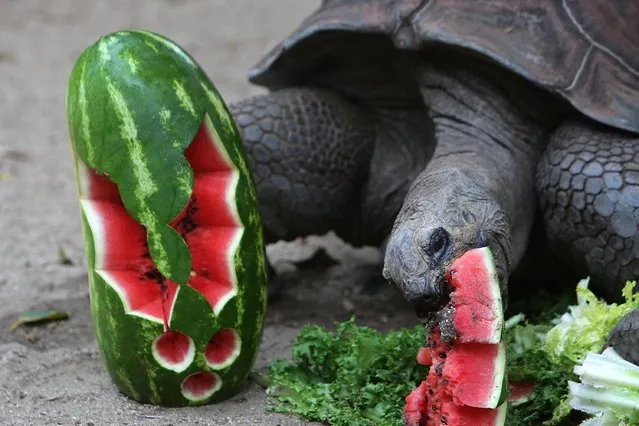
A Aldabra Tortoise receives a Christmas treat at Taronga Zoo on December 14, 2012 in Sydney, Australia. Taronga Zoo celebrated Christmas early giving Christmas-themed environmental activities to the Zoo's Giraffes, Sun Bears, Meerkats, Aldabra Tortoise and Cockatoos providing a wonderful natural display for Zoo visitors.  (Photo by Lisa Maree Williams)

A Aldabra Tortoise receives a Christmas treat at Taronga Zoo on December 14, 2012 in Sydney, Australia. Taronga Zoo celebrated Christmas early giving Christmas-themed environmental activities to the Zoo's Giraffes, Sun Bears, Meerkats, Aldabra Tortoise and Cockatoos providing a wonderful natural display for Zoo visitors. (Photo by Lisa Maree Williams)
Details
15 Dec 2012 09:37:00
Ocean_Gravity_Guillaume_Nery_Julie_Gautier_(Video)

Elements of nature are too powerful for humans to subdue, yet it didn’t stop the most courageous individuals from trying. Conquering air, land, fire, water, and even the very fabric of reality – this is the ultimate goal of humanity. For now, we can only marvel at the beauty and tremble in awe before the Mother Nature. A short film “Ocean Gravity,” written and directed by Julie Gautier and Guillaume Nery, reminds us of how small and insignificant a human body is, as it is being swept away by an ocean current. Nevertheless, it never stopped people from attempting to subjugate these unstoppable forces, and someday, maybe the humanity will come out victorious.
Details
26 Feb 2015 15:49:00
Peruvian shamans holding a figure of a Nino Jesus (Child Jesus) and a snake perform a ritual at the Rimac river to fight the negative effects of the Nino weather phenomena over Nature, in Lima, October 1, 2015. (Photo by Mariana Bazo/Reuters)

Peruvian shamans holding a figure of a Nino Jesus (Child Jesus) and a snake perform a ritual at the Rimac river to fight the negative effects of the Nino weather phenomena over Nature, in Lima, October 1, 2015. (Photo by Mariana Bazo/Reuters)
Details
03 Oct 2015 08:07:00