Loading...
Done
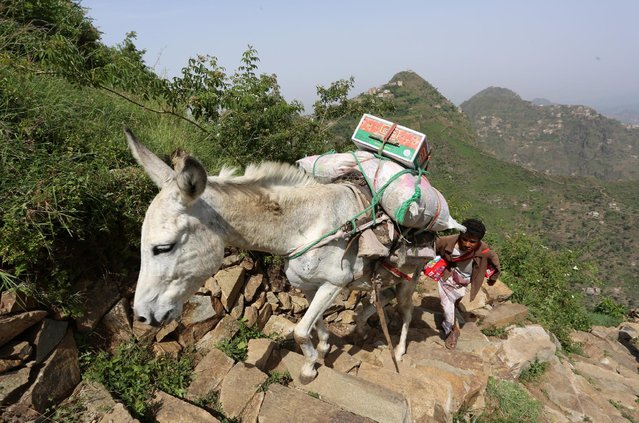
A man carries food supplies on a donkey to Dhalamlam Mountain in the Jafariya district of the western province of Raymah, Yemen June 2, 2016. (Photo by Abduljabbar Zeyad/Reuters)

A man carries food supplies on a donkey to Dhalamlam Mountain in the Jafariya district of the western province of Raymah, Yemen June 2, 2016. In villages perched high on a mountain in Western Yemen, residents are a safe distance from a conflict raging throughout most of the country but have had to turn the clock back on their lifestyles by centuries. (Photo by Abduljabbar Zeyad/Reuters)
Details
13 Sep 2016 09:23:00
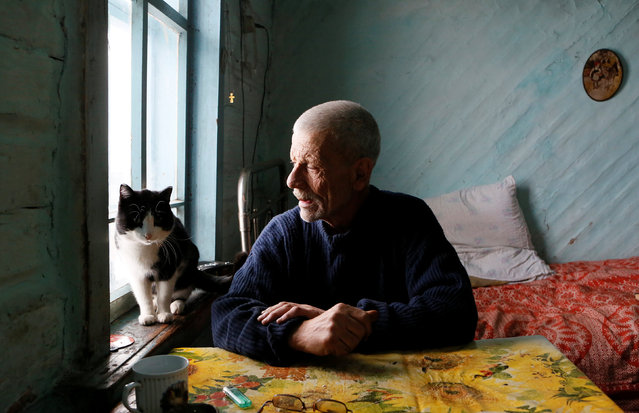
Mikhail Baburin, 66, talks to his cat Marquis at his house in the remote Siberian village of Mikhailovka, Krasnoyarsk region, Russia, December 5, 2016. (Photo by Ilya Naymushin/Reuters)

Mikhail Baburin, 66, talks to his cat Marquis at his house in the remote Siberian village of Mikhailovka, Krasnoyarsk region, Russia, December 5, 2016. Baburin, a former Navy man, barge worker and employee of a military plant in Krasnoyarsk, is the last inhabitant of Mikhailovka, which was founded in the 19th century by migrants from Russia's Mordovia region. He moved in 2000 to Mikhailovka where he was born and has lived there all alone for the last 10 years with only domestic animals. (Photo by Ilya Naymushin/Reuters)
Details
07 Dec 2016 12:22:00
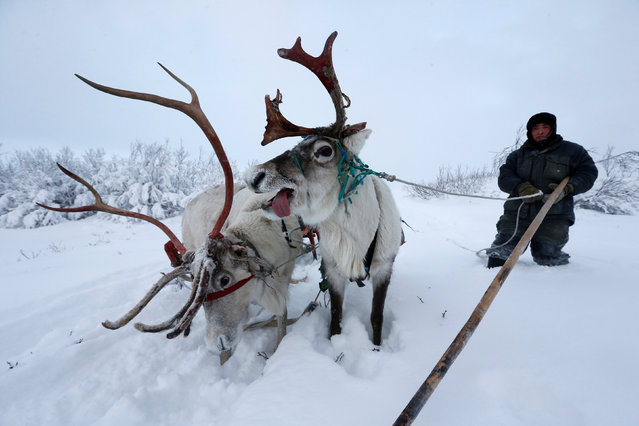
A herder stops for reindeers to have a rest while riding along the tundra area in Nenets Autonomous District, Russia, November 27, 2016. (Photo by Sergei Karpukhin/Reuters)

A herder stops for reindeers to have a rest while riding along the tundra area in Nenets Autonomous District, Russia, November 27, 2016. In Russia's remote Arctic regions reindeer herding has been a way of life for centuries. Each winter herders in Russia's sparsely populated Nenets Autonomous District corral their reindeers into open-air pens before selecting weak animals to be culled... (Photo by Sergei Karpukhin/Reuters)
Details
16 Dec 2016 10:41:00
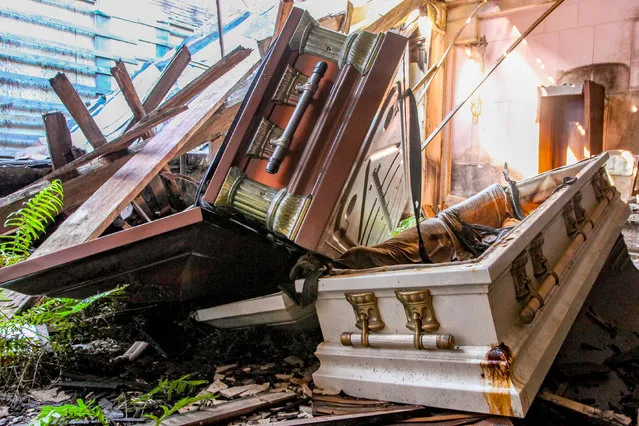
Urban Explorer Abandoned Southeast: “The place is pretty amazing, but I think my favorite part would be the upstairs storage area, where dozens of photos and books from the early 20th century were left behind”. (Photo by Abandoned Southeast/Caters News Agency)

The abandoned Moulton and Kyle Funeral Home in Jacksonville, Fla., which is more than 150 years old, was left to rot, with the premises eerily strewn with open caskets, a hearse and embalming chemicals. Much like the corpses that were laid to rest, the remains of this building too are slowly decomposing and decaying. Black mold has engulfed the walls, and chipped tiles from the collapsed ceilings cover many of the floors. (Photo by Abandoned Southeast/Caters News Agency)
Details
03 Apr 2018 00:03:00
Red Bull Flying Bach

Gengis “Lil Ceng” Ademoski (L) and Khaled “KC” Chaabi (R) of the four time world champion Berlin dance troupe “Flying Steps” strike a freeze on a piano played by muscian Jia Lim (C) of Singapore at the 17th century waterfront area of Nyhavn in build up to the Red Bull Flying Bach European Tour, a show that features the cultural clash of break dancing with the classical music of Johann Sebastian Bach, on August 30, 2011 in Copenhagen, Denmark. (Photo by Dean Treml/Red Bull via Getty Images)
Details
01 Sep 2011 12:21:00


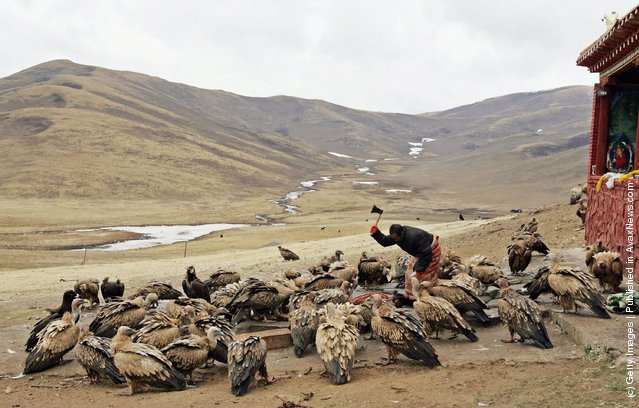
“Sky burial or ritual dissection was once a common funerary practice in Tibet wherein a human corpse is cut in specific locations and placed on a mountaintop, exposing it to the elements or the mahabhuta and animals – especially to birds of prey. The location of the sky burial preparation and place of execution are understood in the Vajrayana traditions as charnel grounds. In Tibet the practice is known as jhator, which literally means, «giving alms to the birds»”. – Wikipedia

Photo: A burial master chops bones of a body to feed vultures during a celestial burial ceremony on April 19, 2006 in Dari County of Guoluo Prefecture, Qinghai Province, northwest China. Celestial burial is a traditional funeral of Tibetan people, which began in the 7th century. (Photo by China Photos/Getty Images)
Details
18 Jun 2011 12:12:00
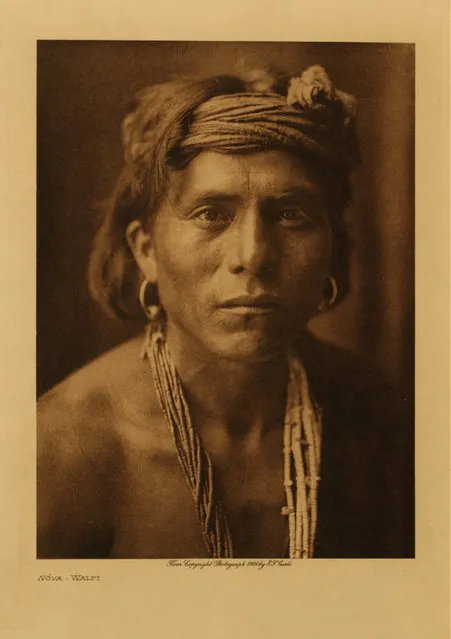
Nova, a Walpi, in 1906. (Photo by Edward S. Curtis)

At the beginning of the 20th century, Edward S. Curtis set out to document what he saw as a disappearing race: the Native American. From 1907 to 1930, Curtis took more than 2,000 photos of 80 tribes stretching from the Great Plains to the Pacific Northwest and Alaska. He then published and sold these photos, along with narrative text, in 20 volumes of work known as “The North American Indian”. It is one of the most significant collections of its kind, “probably the most important photographic document of its age and its topic,” said Jeffrey Garrett, associate university librarian for Special Libraries at Northwestern University. (Photo by Edward S. Curtis)
Details
07 Sep 2014 12:57:00
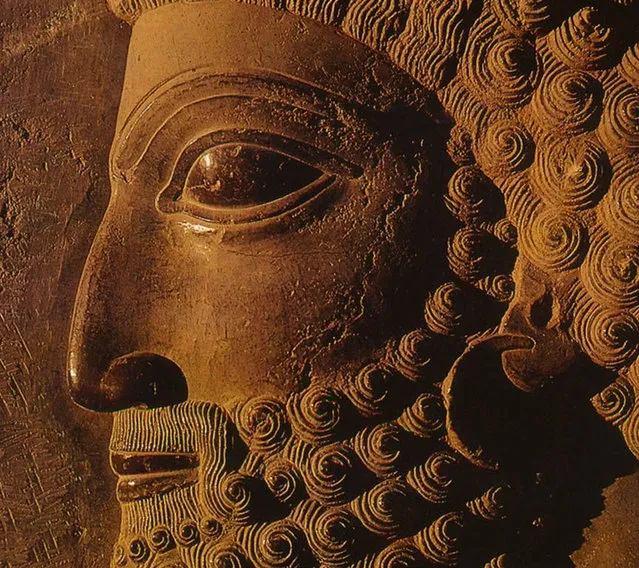
Persepolis, Takht-E-Jamshid Iran

Few people haven’t heard about the ancient city of Persepolis, which lies at the foot of the Mountain of Mercy (Kuh-I-Rahmat). In ancient times, Persepolis was the capital of the Achaemenid Empire. Regretfully, it was burned by the Greeks in 330 BC after they looted the immense treasure of this city. It is said that Greeks needed 5,000 camels and 20,000 mules to carry all the treasures from Persepolis. The only thing of Persepolis that has survived the wear of time is the ginormous stone terrace 530 by 330 meters adorned by elaborate stone sculptures. It is amazing how intricately detailed some of the sculptures are, despite the fact that they were created many centuries ago.
Details
26 Oct 2014 12:30:00