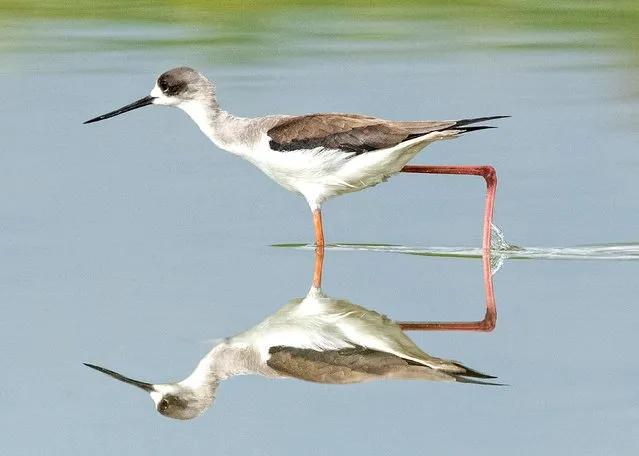
A black-winged stilt patrols a reservoir in Jezreel Valley in Israel early April 2023. Their eggs are a golden colour mottled with brown. (Photo by Itamar Procaccia/Solent News)
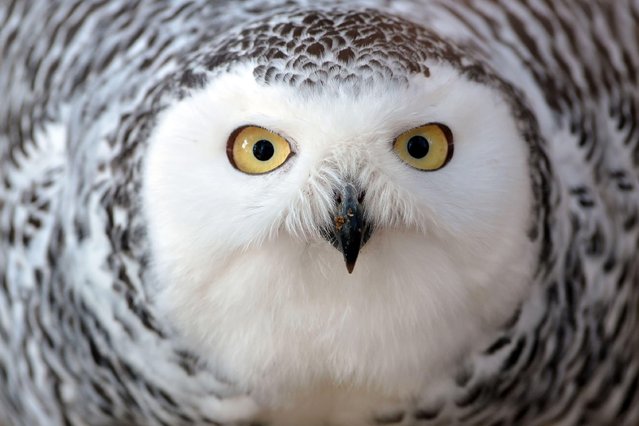
A snowy owl (Bubo scandiacus) raised by a falconer as part of a captive-breeding program, pictured in its enclosure in Vysocina, Czech Republic on October 22, 2025. (Photo by Slavek Ruta/ZUMA Press Wire via Alamy Live News)
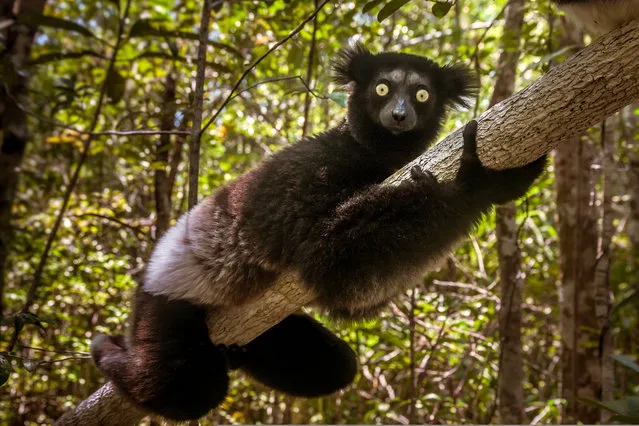
The secretive indri (Indri indri) of Madagascar, the largest living lemur. It is also critically endangered and highly evolutionarily distinct with no close relatives, which makes its branch one of most precarious on the mammal evolutionary tree. In the likely event that the indri goes extinct, we will lose 19m years of unique evolutionary history from the mammal tree of life. (Photo by Pierre-Yves Babelon/Aarhus University)
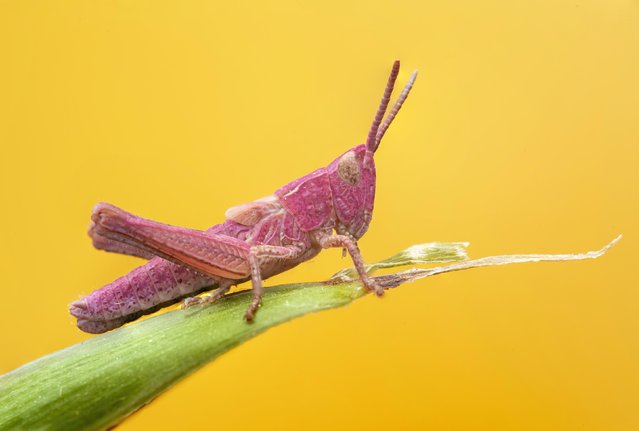
A pink grasshopper is spotted at the Messingham Sand Quarry in Scunthorpe, Lincolnshire, UK in the second decade of July 2023. The dazzling creature is incredibly rare, with experts estimating that a person has a chance of about 1 per cent of seeing one in their lifetime. (Photo by Calvin Taylor Lee/Animal News Agency)
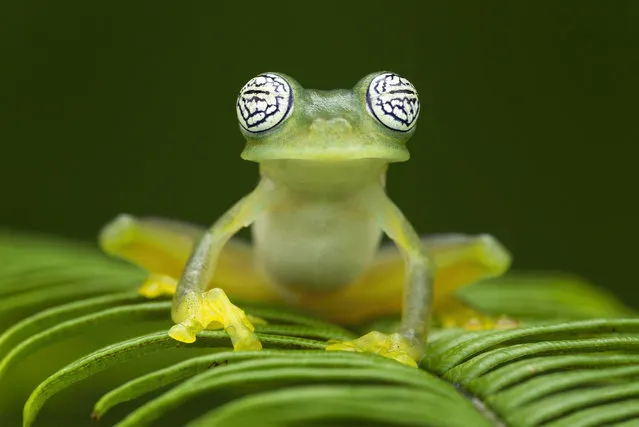
A ghost glass frog in the Chocó rainforest, Ecuador in November 2020. The marbled swirling “hypnotising” eyes are thought to be helpful in attracting a mate. (Photo by David Weiller/WENN)
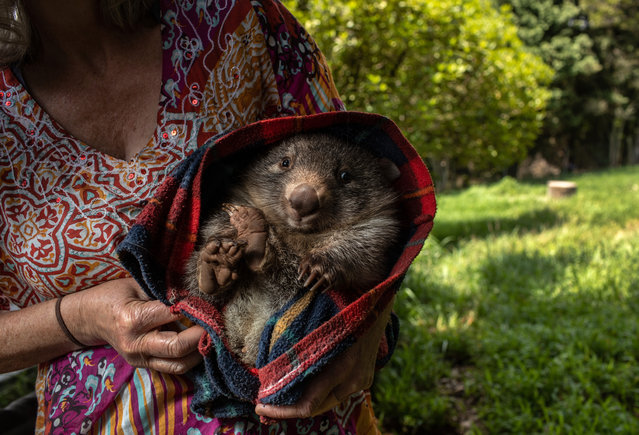
A wildlife caregiver holds an orphaned wombat at the Native Wildlife Rescue center on January 29, 2020 in Robertson, Australia. The center has taken in many burned kangaroos and wallabies injured in recent bushfires. Wombat orphans are often rescued from the pouch of their mothers struck by vehicles. (Photo by John Moore/Getty Images)
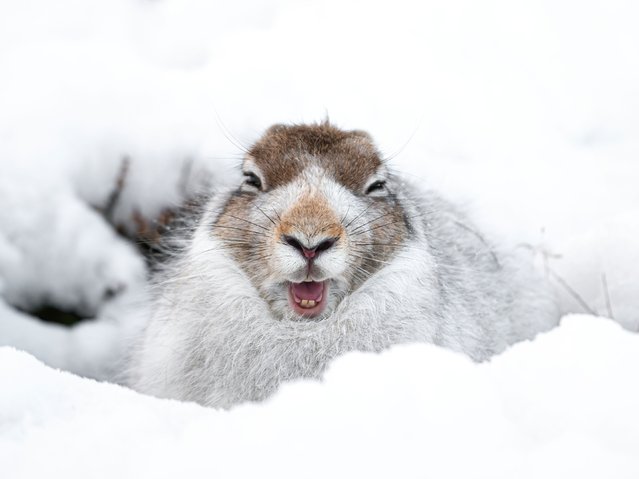
The hare was actually yawning and stretching but, looking back at the photos, it does look like it was laughing — probably at my husband and I as we had been sat there in the freezing conditions for about five hours just waiting for this kind of behaviour in Cairngorms, Scotland in the last decade of February 2025. (Photo by Michelle Coyle/Solent News & Photo Agency)