Loading...
Done
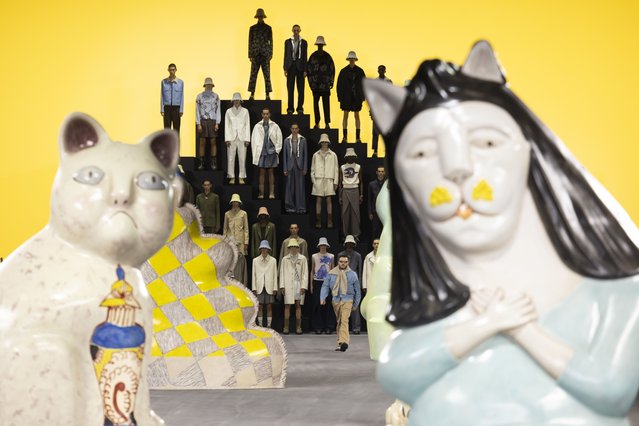
British designer Kim Jones  (C) walks the runway to greet the audience after the show of the Spring/Summer 2025 Menswear Collection for Dior fashion house during the Paris Fashion Week, in Paris, France, 21 June 2024. The presentation of the Men's collections runs from 18 to 23 June. (Photo by Andre Pain/EPA/EFE)

British designer Kim Jones (C) walks the runway to greet the audience after the show of the Spring/Summer 2025 Menswear Collection for Dior fashion house during the Paris Fashion Week, in Paris, France, 21 June 2024. The presentation of the Men's collections runs from 18 to 23 June. (Photo by Andre Pain/EPA/EFE)
Details
16 Oct 2025 05:15:00
Residents wrapped in blankets watch flames engulf bamboo scaffolding at Wang Fuk Court housing estate after a major fire broke out, in Tai Po, Hong Kong, China, on November 26, 2025. (Photo by Tyrone Siu/Reuters)

Residents wrapped in blankets watch flames engulf bamboo scaffolding at Wang Fuk Court housing estate after a major fire broke out, in Tai Po, Hong Kong, China, on November 26, 2025. (Photo by Tyrone Siu/Reuters)
Details
01 Dec 2025 05:25:00
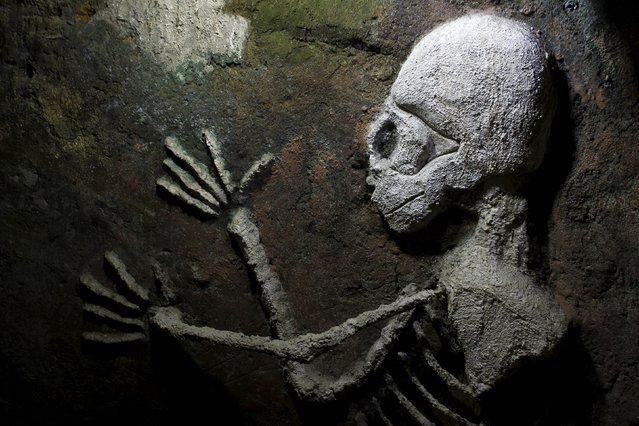
A figure of a skeleton is seen painted in a hallway of the house built underground by Manuel Barrantes in San Isidro de Perez Zeledon, Costa Rica, March 14, 2016. (Photo by Juan Carlos Ulate/Reuters)

A figure of a skeleton is seen painted in a hallway of the house built underground by Manuel Barrantes in San Isidro de Perez Zeledon, Costa Rica, March 14, 2016. Barrantes started digging through red soil and volcanic rock on his farm 12 years ago to build his subterranean house, between 15 and 63 feet (4.57 and 19.2m) underground. The dwelling, which Barrantes says provides a peaceful and comfortable home for him and his family away from noise pollution and the effects of climate change, now covers about 2,000 square feet (185.8 square metres). (Photo by Juan Carlos Ulate/Reuters)
Details
17 Mar 2016 15:34:00
An aerial view shows a sinkhole 3.5 km (2 miles) to the east of Solikamsk-2 mine in Perm region, November 20, 2014. Shares in Russia's Uralkali, the world's top potash producer, fell sharply for a second day on Wednesday after a mine accident that could reduce global supplies and push up prices of the crop nutrient worldwide. (Photo by Reuters/Press service of Uralkali company)

An aerial view shows a sinkhole 3.5 km (2 miles) to the east of Solikamsk-2 mine in Perm region, November 20, 2014. Shares in Russia's Uralkali, the world's top potash producer, fell sharply for a second day on Wednesday after a mine accident that could reduce global supplies and push up prices of the crop nutrient worldwide. Uralkali shares have fallen 28 percent since Tuesday when it suspended work at its Solikamsk-2 mine, which accounts for a fifth of the company's output and 3.5 percent of global capacity, following an inflow of water. A sinkhole, stretching 30 by 40 metres (yards), found at an abandoned mine 3.5 km (2 miles) to the east, increased concern about the future of the mine because an inflow of water and the resulting sinkhole in 2006 forced another Uralkali operation to shut permanently. (Photo by Reuters/Press service of Uralkali company)
Details
22 Nov 2014 13:51:00
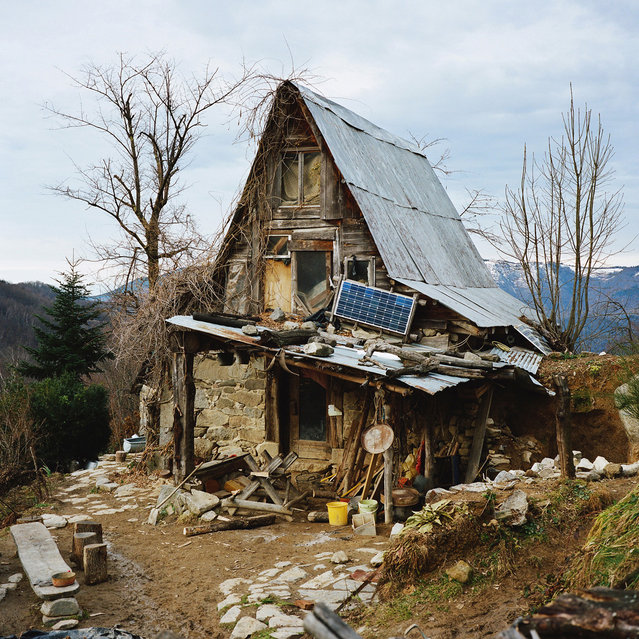
This property in the French Pyrenees is owned by a German man, who moved with his family here 25 years ago. He has since renovated the shack to be a completely self-sufficient house. There are no electrical appliances, but the solar panel powers small lights in the house. (Photo by Antoine Bruy)

Back in 2010, French photographer Antoine Bruy began hitchhiking around Europe without any fixed route. Along his travels, he met people who had entirely abandoned city life in favour of an isolated country existence they found more fulfilling. Bruy began seeking out people who lived off-the-grid. After three years on the road, staying in makeshift houses and on community farms, he has released Scrublands, a documentation of the lifestyle. While each living situation is different, Bruy found that all the people he met shared a common desire to escape the rat race and achieve a quieter life in harmony with nature. (Photo by Antoine Bruy)
Details
13 Aug 2014 09:45:00
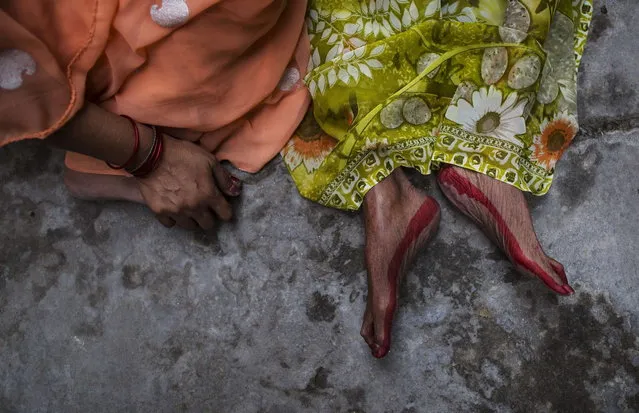
A relative (L) of Champa Devi, 88, sits next to her body, minutes after her death at Mukti Bhavan (Salvation House) at Varanasi, in the northern Indian state of Uttar Pradesh, June 21, 2014. (Photo by Danish Siddiqui/Reuters)

A relative (L) of Champa Devi, 88, sits next to her body, minutes after her death at Mukti Bhavan (Salvation House) at Varanasi, in the northern Indian state of Uttar Pradesh, June 21, 2014. The city of Varanasi, on the banks of the River Ganges, is widely considered Hinduism's holiest city and many Hindus believe that dying there and having their remains scattered in the Ganges allows their soul to escape a cycle of death and rebirth, attaining “moksha” or salvation. “Mukti Bhavan” or “Salvation House”, is a charity-run hostel that caters for people who wish to come to Varanasi to die. Guests can normally stay up to two weeks after which, if they haven't yet passed away, they are gently asked to leave. (Photo by Danish Siddiqui/Reuters)

Details
24 Jul 2014 12:32:00
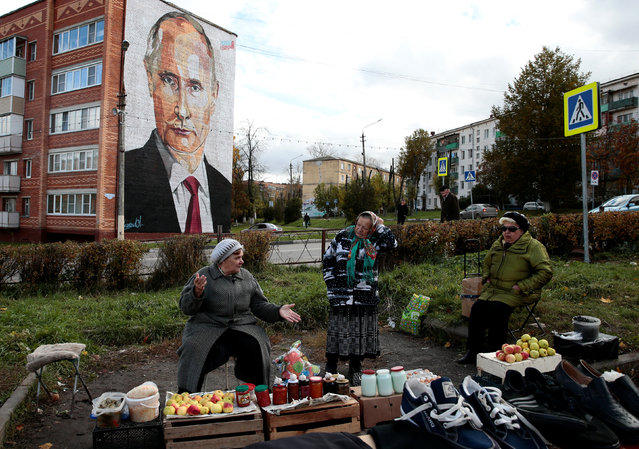
Elderly women wait for customers as they sell their self-made food products at a street market, with a graffiti depicting Russian President Vladimir Putin on the wall of a house seen in the background, in the town of Kashira, outside Moscow, Russia October 10, 2017. (Photo by Andrey Volkov/Reuters)

Elderly women wait for customers as they sell their self-made food products at a street market, with a graffiti depicting Russian President Vladimir Putin on the wall of a house seen in the background, in the town of Kashira, outside Moscow, Russia on October 10, 2017. (Photo by Andrey Volkov/Reuters)
Details
12 Oct 2017 08:56:00
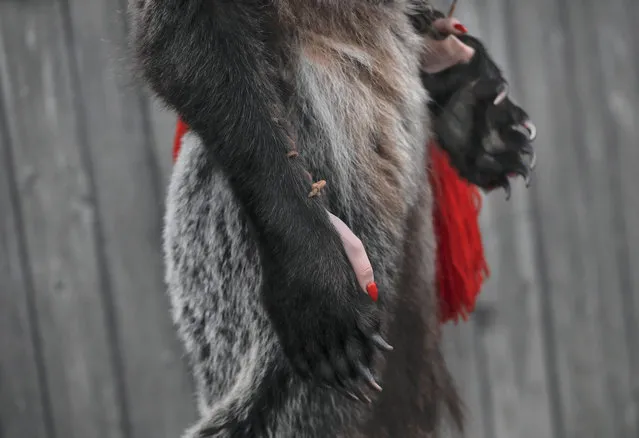
In this Saturday, December 30, 2017, picture a girl wearing a bear fur costume takes part in an annual bear parade in Comanesti, Romania. (Photo by Vadim Ghirda/AP Photo)

In this Saturday, December 30, 2017, picture a girl wearing a bear fur costume takes part in an annual bear parade in Comanesti, Romania. It's a tradition that originated in pre-Christian times, when dancers wearing colored costumes or animal furs went from house to house in villages, singing and dancing to ward off evil. (Photo by Vadim Ghirda/AP Photo)
Details
08 Jan 2018 07:05:00