Loading...
Done
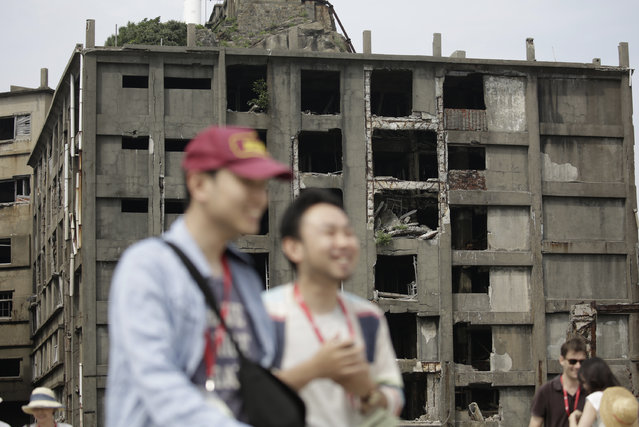
In this June 29, 2015 photo, forlorn buildings are seen at Hashima Island, commonly known as Gunkanjima, which means “Battleship Island”, off Nagasaki, Nagasaki Prefecture, southern Japan. (Photo by Eugene Hoshiko/AP Photo)

In this June 29, 2015 photo, forlorn buildings are seen at Hashima Island, commonly known as Gunkanjima, which means “Battleship Island”, off Nagasaki, Nagasaki Prefecture, southern Japan. The island is one of 23 old industrial facilities seeking UNESCO's recognition as world heritage “Sites of Japan's Meiji Industrial Revolution” meant to illustrate Japan's rapid transformation from a feudal farming society into an industrial power at the end of the 19th century. UNESCO's World Heritage Committee is expected to approve the proposal during a meeting being held in Bonn, Germany, through July 9. (Photo by Eugene Hoshiko/AP Photo)
Details
01 Jul 2015 13:41:00
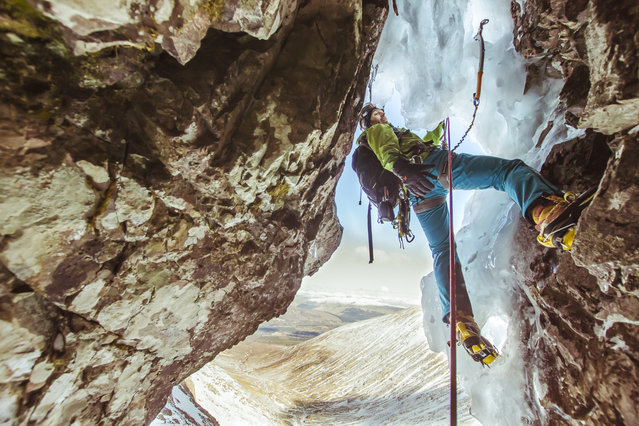
“Winter Climbing from inside Ben Nevis”. The view from inside the mountain, as a winter climber passes through the cave on Minus Three gully. Photo location: Ben Nevis, Fort William, Scotland. (Photo and caption by Daniel Wildey/National Geographic Photo Contest)

“Winter Climbing from inside Ben Nevis”. The view from inside the mountain, as a winter climber passes through the cave on Minus Three gully. Photo location: Ben Nevis, Fort William, Scotland. (Photo and caption by Daniel Wildey/National Geographic Photo Contest)
Details
24 Jun 2014 12:18:00
A picture made available on 13 May 2016 shows A Tiwa girl performing her traditional dance as they celebrated the Wanchuwa festival in Karbi Anglong District of Assam state, India, 11 May 2016. Wanchuwa is one of the most important festivals of the Tiwa tribal community living in the hills as it is related with agriculture which is the mainstay of their economy. Tiwas pray for a bountiful harvest during this festival and to protect their crops from pest and other natural calamities. (Photo by EPA/Stringer)

A picture made available on 13 May 2016 shows A Tiwa girl performing her traditional dance as they celebrated the Wanchuwa festival in Karbi Anglong District of Assam state, India, 11 May 2016. Wanchuwa is one of the most important festivals of the Tiwa tribal community living in the hills as it is related with agriculture which is the mainstay of their economy. Tiwas pray for a bountiful harvest during this festival and to protect their crops from pest and other natural calamities. Tiwa is a major tribe of Assam state who practice Jhum or shifting cultivation for their living in the hills. (Photo by EPA/Stringer)
Details
14 May 2016 11:45:00
“Day 139/365”

“365 days project: Day 139/365”. (Photo by Nizaad)
Details
09 Nov 2012 12:58:00
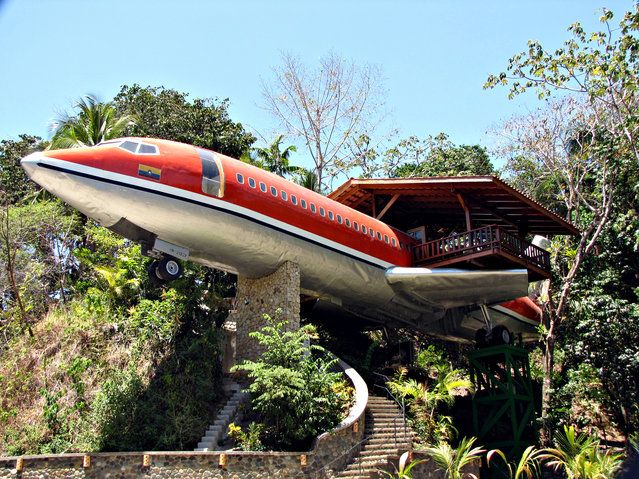
Boeing 727 Airplane Converted In Hotel - Costa Rica

The Costa Verde hotel. It is a fully outfitted two bedroom, Boeing 727 suite in Costa Rica. Located within tropical rainforest, Hotel Costa Verde’s rather unusual fuselage suite consists of a refurbished vintage 1965 Boeing 727 airframe. The aircraft was part of South-Africa Air in her previous life. Sitting atop a 50-foot pedestal just beyond a majestic national park, the remodelled jumbo jet’s interior is entirely Costa Rican teak panelling with Indonesian teak furniture and also features a private entrance up a river rock.
Details
29 Jun 2015 12:05:00
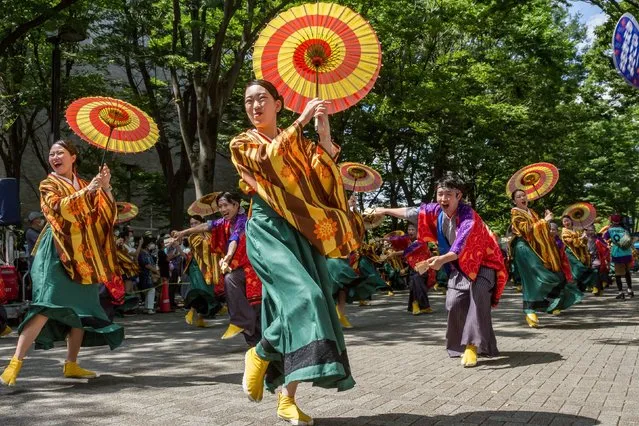
Dancers perform at the Harajuku Omotesando Super Yosakoi Dance festival in Shibuya, Tokyo on August 27, 2022. Super Yosakoi festival, is a two day festival that sees thousands of dancers, in hundreds of teams, energetically perform this unique Japanese dance style that combines traditional and more modern elements of movement and costume. (Photo by Damon Coulter/SOPA Images/Rex Features/Shutterstock)

Dancers perform at the Harajuku Omotesando Super Yosakoi Dance festival in Shibuya, Tokyo on August 27, 2022. Super Yosakoi festival, is a two day festival that sees thousands of dancers, in hundreds of teams, energetically perform this unique Japanese dance style that combines traditional and more modern elements of movement and costume. (Photo by Damon Coulter/SOPA Images/Rex Features/Shutterstock)
Details
07 Sep 2022 05:17:00


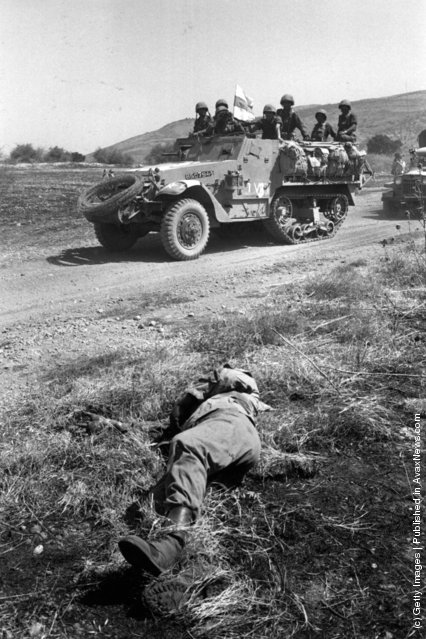
“The Six-Day War or June War, also known as the 1967 Arab-Israeli War or the Third Arab-Israeli War, was fought between June 5 and June 10, 1967, by Israel and the neighboring states of Egypt (known then as the United Arab Republic [UAR]), Jordan, and Syria. The war began with a large-scale surprise air strike by Israel on Egypt. The outcome was a swift and decisive Israeli victory. Israel took effective control of the Gaza Strip and the Sinai Peninsula from Egypt, the West Bank and East Jerusalem from Jordan, and the Golan Heights from Syria. Opinions are divided on whether Israel's attack was an act of aggression or a preemptive strike of a defensive nature”. – Wikipedia

Photo: The corpse of a soldier lying on the line of the Israeli advance into Syria during the Six-Day War. (Photo by Terry Fincher/Getty Images). 1967
Details
21 May 2011 08:29:00
Artist Joe Hill poses on his 3D artwork, from the “Joe and Max” project as part of an advertising campaign, during its presentation at a park in Moscow, Russia, July 4, 2015. (Photo by Sergei Karpukhin/Reuters)

Artist Joe Hill poses on his 3D artwork, from the “Joe and Max” project as part of an advertising campaign, during its presentation at a park in Moscow, Russia, July 4, 2015. (Photo by Sergei Karpukhin/Reuters)
Details
05 Jul 2015 11:12:00