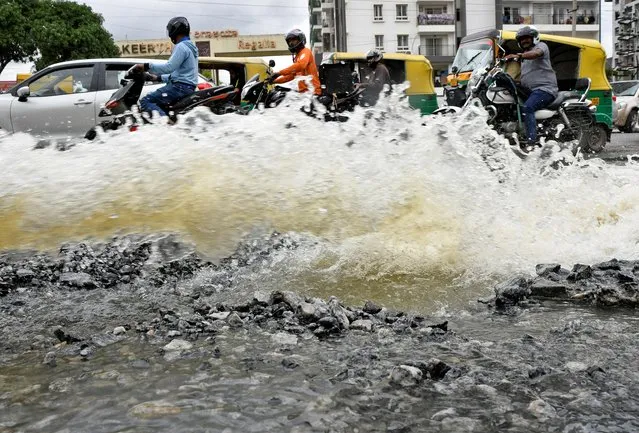
Traffic moves as water is pumped out of an inundated residential area following torrential rains in Bengaluru, India on September 7, 2022. (Photo by Samuel Rajkumar/Reuters)
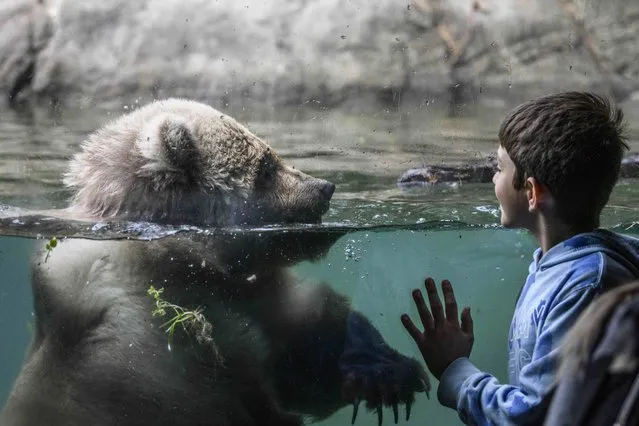
Boy says hello to a swimming bear in Seattle, Washington on October 4, 2022. Fall weather brings out the Animals' playful side as Attendees celebrate World Animal Day with a visit to Woodlawn Park Zoo. (Photo by Shane Srogi/ZUMA Press Wire/Rex Features/Shutterstock)
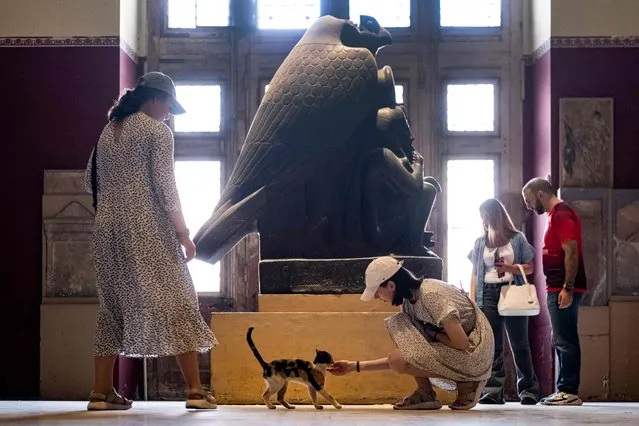
A tourist pets a cat before the “Horus protects Ramses II as a child”, dating to the reign of the Ancient Egyptian New Kingdom pharaoh (1303-1213 BC), at the Egyptian Museum in the centre of Egypt's capital Cairo on October 19, 2022. (Photo by Amir Makar/AFP Photo)
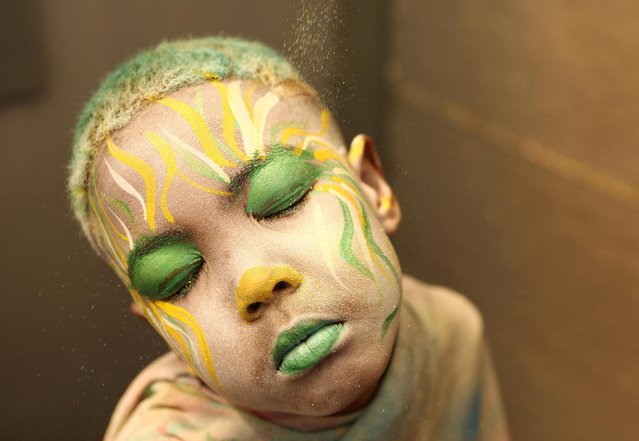
Junior Lambrechts has his face painted in preparation for the Cape Minstrel Carnival in Cape Town, South Africa on January 2, 2023. (Photo by Shelley Christians/Reuters)
Winner Jorge Prado of Spain in action during the first MXGP race at the 2023 FIM Motocross World Championship in Frauenfeld, Switzerland, 10 April 2023. (Photo by Gian Ehrenzeller/EPA)
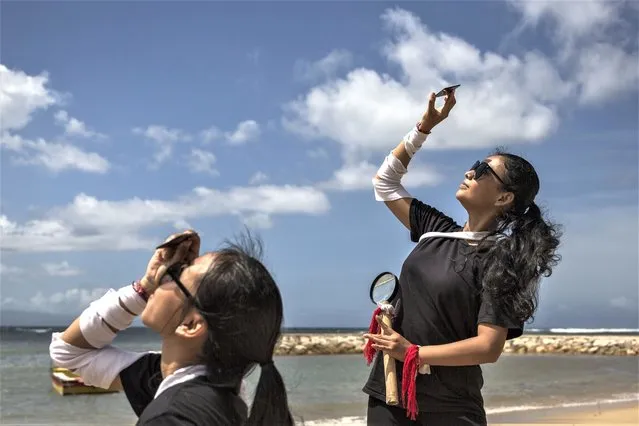
Balinese tries to see partial phase of hybrid solar eclipse using welding glass at Sanur Beach in Denpasar, Bali, Indonesia on April 20, 2023. Hybrid solar eclipse is when annular and total eclipse occurs on its path the across eastern Indonesian islands. However, in central and western part of Indonesia only partial eclipse phase can be observed. (Photo by Johannes P. Christo/Anadolu Agency via Getty Images)
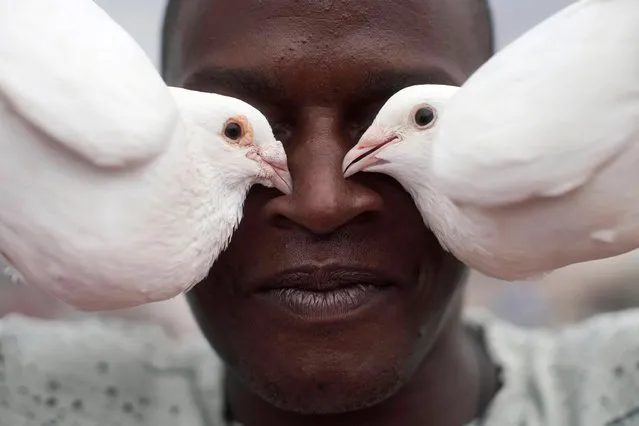
Pigeon fancier Yonisbel Santana poses for a photo at his rooftop in Havana, Cuba, May 18, 2021. Havana's pigeon keepers crane out of a window, intently watching the grey birds take flight. Mostly staying indoors due to the country's worst outbreak of COVID-19 since the coronavirus pandemic began in March last year, Cubans are increasingly breeding pigeons as a form of escape. (Photo by Alexandre Meneghini/Reuters)
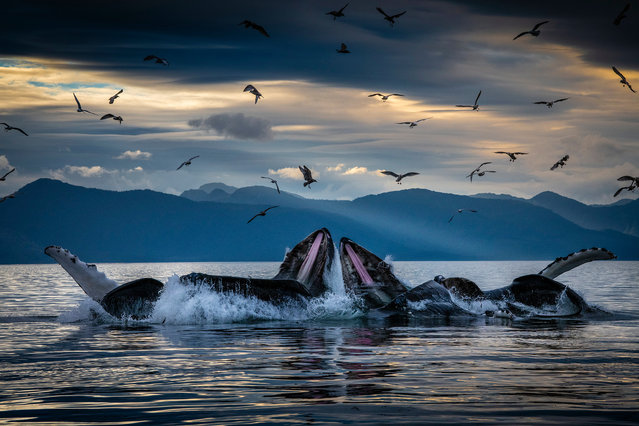
“Secrets of the Whales”. Skerry’s photographs celebrate the lives and culture of whales, illuminating recent research and their diverse behaviours. His latest work focuses on four key species: sperm whales, humpbacks, orca and beluga whales. Humpback whales bubble-net feeding off the coast of Alaska. They work cooperatively to feed on herring by blowing a perfect ring of bubbles underwater to form a net encircling the fish. The whales then swim up through the centre of the bubble net with their mouths open. (Photo by Brian Skerry/National Geographic Photo/Visa pour l'Image)