Loading...
Done
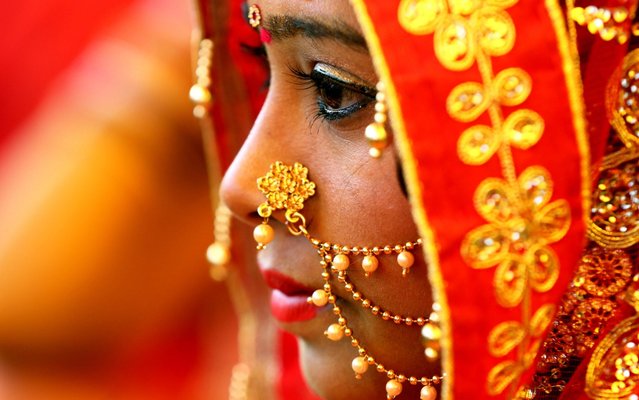
Indian bride takes part in a mass marriage ceremony under chief minister's welfare scheme (Mukhyamantri Kanyadan Yojna) on the occasion of the Basant Panchami festival, in Bhopal, India, 30 January 2020. Reports state, some 600 couples tied up the nuptial knot in various mass marriage ceremonies in Bhopal on Basant Panchami day, which is considered auspicious for marriages. Some communities undertake the responsibility of arranging mass marriages for couples belonging to the financially weaker caste of the society. (Photo by Sanjeev Gupta/EPA/EFE/Rex Features/Shutterstock)

Indian bride takes part in a mass marriage ceremony under chief minister's welfare scheme (Mukhyamantri Kanyadan Yojna) on the occasion of the Basant Panchami festival, in Bhopal, India, 30 January 2020. (Photo by Sanjeev Gupta/EPA/EFE/Rex Features/Shutterstock)
Details
10 Feb 2020 10:17:00
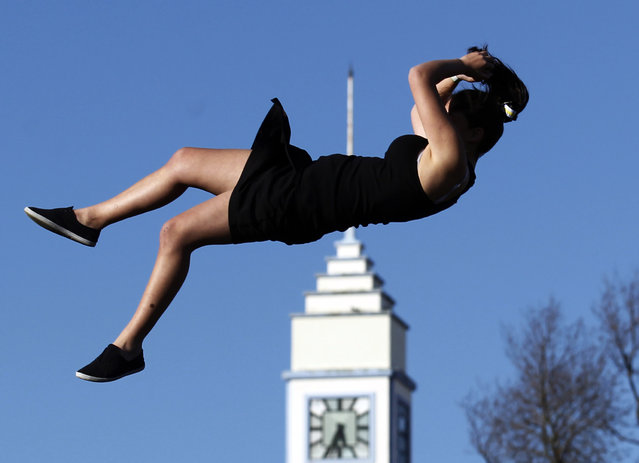
8. NEW ZEALAND: A woman dives from a platform into a giant air bed at a park in Palmerston North September 29, 2011. (Photo by Marcos Brindicci/Reuters)

The report, prepared by the Sustainable Development Solutions Network (SDSN) and the Earth Institute at Columbia University, showed Syria, Afghanistan and eight sub-Saharan countries as the 10 least happy places on earth to live. The top 10 this year were Denmark, Switzerland, Iceland, Norway, Finland, Canada, Netherlands, New Zealand, Australia, and Sweden. Denmark was in third place last year, behind Switzerland and Iceland. The bottom 10 were Madagascar, Tanzania, Liberia, Guinea, Rwanda, Benin, Afghanistan, Togo, Syria and Burundi. The United States came in at 13, the United Kingdom at 23, France at 32, and Italy at 50. Here: #8. NEW ZEALAND: A woman dives from a platform into a giant air bed at a park in Palmerston North September 29, 2011. (Photo by Marcos Brindicci/Reuters)
Details
26 Mar 2016 13:19:00
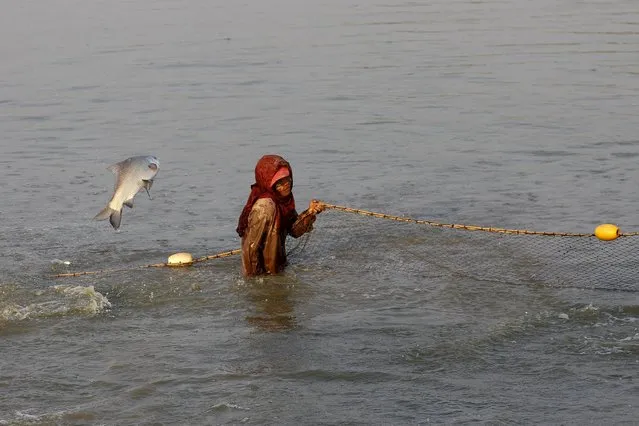
A fish jumps over a net as a boy works in a fish farm at Htantapin township, outside Yangon, Myanmar February 18, 2016. (Photo by Soe Zeya Tun/Reuters)

A fish jumps over a net as a boy works in a fish farm at Htantapin township, outside Yangon, Myanmar February 18, 2016. One in five children in Myanmar aged 10-17 go to work instead of school, according to figures from a census report on employment published last month, and the opening up of the economy since 2011 has triggered a spike in demand for labour. Many children work in fish farming and processing. At Yangon's San Pya fish market, the country's largest, girls and boys as young as nine clean and process fish and unload boats and trucks during 12-hour overnight shifts. (Photo by Soe Zeya Tun/Reuters)
Details
20 Apr 2016 12:18:00
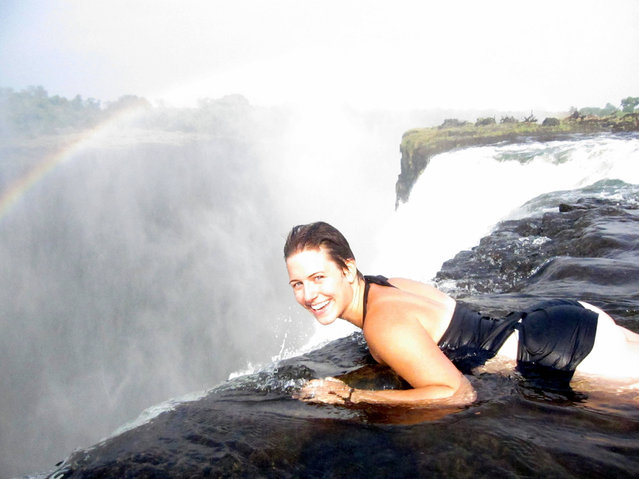
Devil's Pool – Victoria Falls, Zambia. (Photo by Siena College Study Abroad)

“The Victoria Falls or Mosi-oa-Tunya is a waterfall located in southern Africa on the Zambezi River between the countries of Zambia and Zimbabwe. A famous feature is a naturally formed pool known as the Devil's Pool, near the edge of the falls, accessed via Livingstone Island in Zambia. When the river flow is at a certain level, usually during the months of September to December, a rock barrier forms a pool with little current; some people swim in the pool. Occasional deaths have been reported when people slip over the edge of the rock barrier”. – Wikipedia

Photo: Devil's Pool – Victoria Falls, Zambia. (Photo by Siena College Study Abroad)
Details
13 Dec 2012 12:46:00
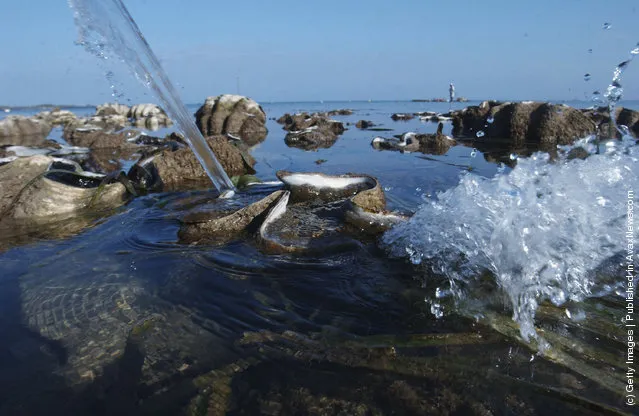
Tridacna Gigas, or Giant Clams

“The giant clam, Tridacna gigas (known as pā’ua in Cook Islands Māori), is the largest living bivalve mollusc. T. gigas is one of the most endangered clam species. It was mentioned as early as 1825 in scientific reports. One of a number of large clam species native to the shallow coral reefs of the South Pacific and Indian oceans, they can weigh more than 200 kilograms (440 lb) measure as much as 120 cm (47 in) across, and have an average lifespan in the wild of 100 years or more”. – Wikipedia

Photo: Tridacna Gigas, or Giant Clams spew water as a traditional fisherman passes by a small sanctuary on January 23, 2004 near Bolinao in the Northern Philippines. The clams, prime builders for coral reefs and providing shelter for spawning fish and other marine life, are exposed by low tides in the sanctuary. Overfishing and pollution throughout the country are not only threatening food security, but are also starting to choke one of the few working clam sanctuaries in the world. (Photo by David Greedy/Getty Images)
Details
01 Oct 2011 13:10:00
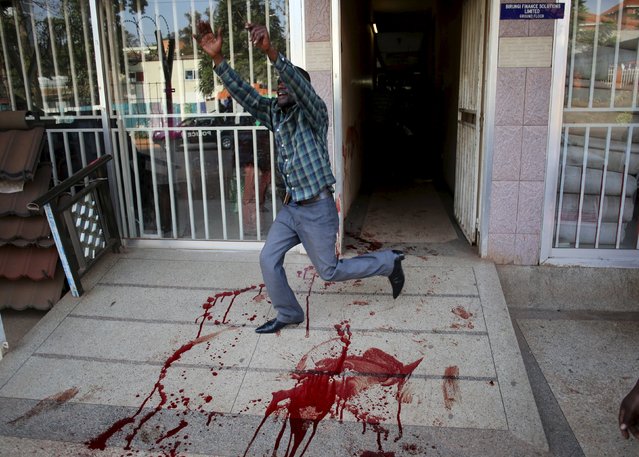
A protester gestures after he saw a dead protester in Kampala, Uganda February 15, 2016. (Photo by Goran Tomasevic/Reuters)

A protester gestures after he saw a dead protester in Kampala, Uganda February 15, 2016. At least one person has been killed in Uganda's capital Kampala as police clashed with opposition supporters after briefly detaining a top presidential candidate twice as he tried to hold campaign rallies days before a general election. Several people were wounded in the clashes as police fired bullets and tear gas while opposition supporters hurled rocks and erected street barricades in the capital's Wandegeya suburb, witnesses said according to a Reuters news agency report. (Photo by Goran Tomasevic/Reuters)
Details
16 Feb 2016 13:17:00
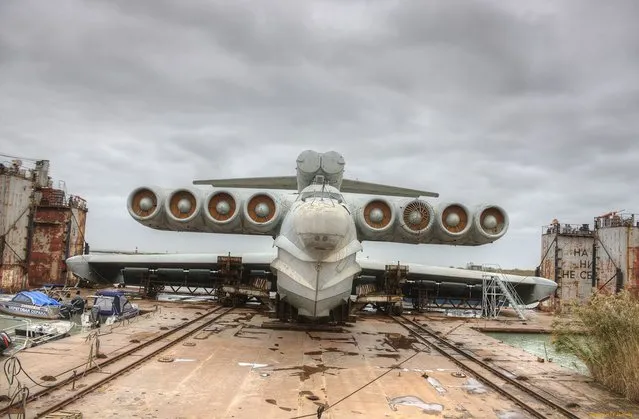
The Lun-class Ekranoplane was used by the Soviet Navy starting in 1987, and wasn't retired until the late 1990s, after the Soviet Union's fall. (Igor113)

“The Lun-class ekranoplan (NATO reporting name Duck) was a ground effect vehicle (GEV) designed by Rostislav Evgenievich Alexeev and used by the Soviet and Russian navies from 1987 until sometime in the late 1990s. It “flew” using the lift generated by the ground effect of its large wings when close to the surface of the water – about four metres or less. Although they might look similar and/or have related technical characteristics, ekranoplans like the Lun are not aircraft, seaplanes, hovercraft, or hydrofoils – ground effect is a separate technology altogether. The International Maritime Organization classifies these vehicles as maritime ships. The name Lun comes from the Russian for harrier”. – Wikipedia (Photo by Igor113)
Details
08 Aug 2014 10:51:00
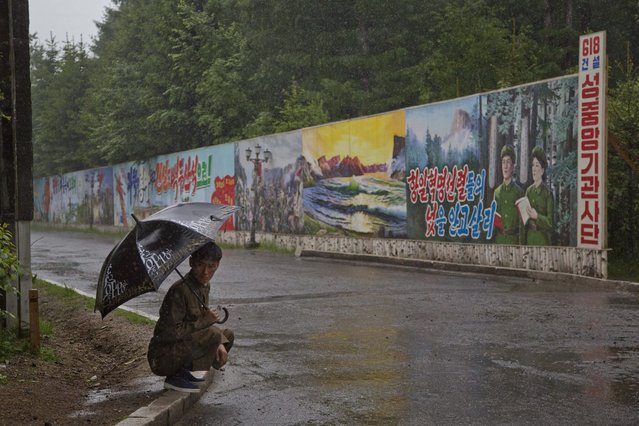
In this June 17, 2014 photo, a North Korean man takes shelter in the rain next to long propaganda billboards in the town of Samjiyon in North Korea's Ryanggang province. (Photo by David Guttenfelder/AP Photo)

In this June 17, 2014 photo, a North Korean man takes shelter in the rain next to long propaganda billboards in the town of Samjiyon in North Korea's Ryanggang province. The Associated Press was granted to embark on a weeklong road trip across North Korea to the country’s spiritual summit Mount Paektu. The trip was on North Korea's terms. An AP reporter and photographer couldn't interview ordinary people or wander off course, and government “minders” accompanied them the entire way. (Photo by David Guttenfelder/AP Photo)
Details
23 Oct 2014 11:51:00