Loading...
Done
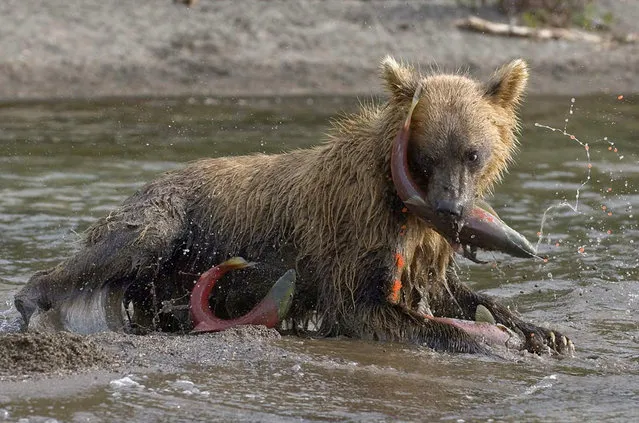
Hunting for a Salmon. Scene of action: Cape Grassy, Kuril lake, Kamchatka, Russia

Hunting for a Salmon (more precisely – Oncorhynchus nerka). Scene of action: Kuril lake, Kamchatka, Russia. Action time: October – end of November, 2012. (Photo by Sergey Gorshkov)
Details
21 Nov 2012 15:25:00


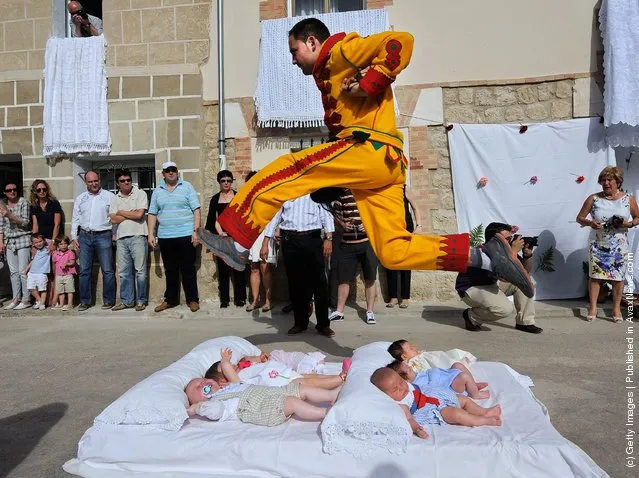
“Baby jumping (El Colacho) is a traditional Spanish practice dating back to 1620 that takes place annually to celebrate the Catholic feast of Corpus Christi in the village of Castrillo de Murcia near Burgos. During the act – known as El Salto del Colacho (the devil's jump) or simply El Colacho – men dressed as the Devil (known as the Colacho) jump over babies born during the previous twelve months of the year who lie on mattresses in the street. ... The festival has been rated as one of the most dangerous in the world”. – Wikipedia

Photo: A man representing the devil leaps over babies during the festival of El Colacho on June 26, 2011 in Castrillo de Murcia near Burgos, Spain. The festival, held on the first Sunday after Corpus Cristi, represents the devil taking away original sin from the newly born babies by leaping over them. (Photo by Denis Doyle/Getty Images)
Details
27 Jun 2011 09:20:00
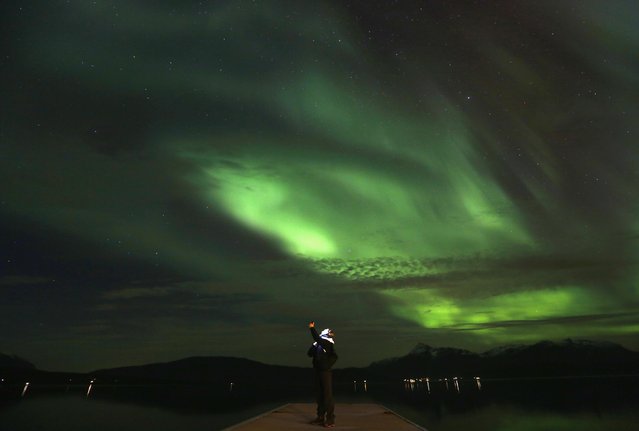
A tourist takes photos of an Aurora Borealis display (Northern Lights) over the Bals-Fiord north of the Arctic Circle, near the village of Mestervik late September 30, 2014. (Photo by Yannis Behrakis/Reuters)

A tourist takes photos of an Aurora Borealis display (Northern Lights) over the Bals-Fiord north of the Arctic Circle, near the village of Mestervik late September 30, 2014. (Photo by Yannis Behrakis/Reuters)
Details
01 Oct 2014 10:54:00
Chaos Computer Club 28th Congress

A participant works on a laptop on the first day of the 28th Chaos Communication Congress (28C3) – Behind Enemy Lines computer hacker conference on December 27, 2011 in Berlin, Germany. The Chaos Computer Club is Europe's biggest network of computer hackers and its annual congress draws up to 3,000 participants. (Photo by Adam Berry/Getty Images)
Details
28 Dec 2011 07:22:00
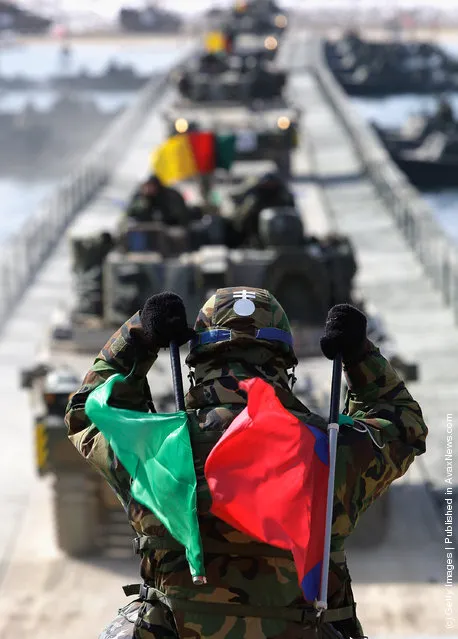
South Korean Army Operates Winter River Crossing Exercise

South Korean soldiers participate in a winter river crossing operation in preparation for a possible North Korean attack on February 8, 2012 in Yeoju, South Korea. The Korean peninsula is the world's last Cold War frontier as stalinist North Korea and pro-western South Korea have been technically at war since the 1950-53 conflict. (Photo by Chung Sung-Jun/Getty Images)
Details
08 Feb 2012 10:47:00
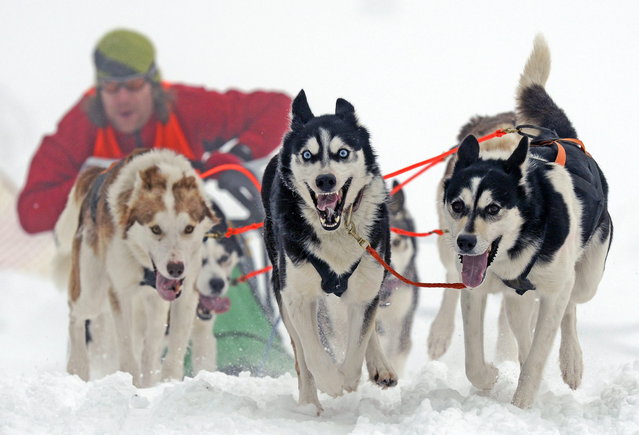
Musher Michael Ruopp of Germany starts with his sled dogs at the 23rd International Sled Dog Race in Oberhof, central Germany, Sunday, February 24, 2013.  (Photo by Jens Meyer/AP Photo)

Musher Michael Ruopp of Germany starts with his sled dogs at the 23rd International Sled Dog Race in Oberhof, central Germany, Sunday, February 24, 2013. (Photo by Jens Meyer/AP Photo)
Details
27 Feb 2013 13:00:00


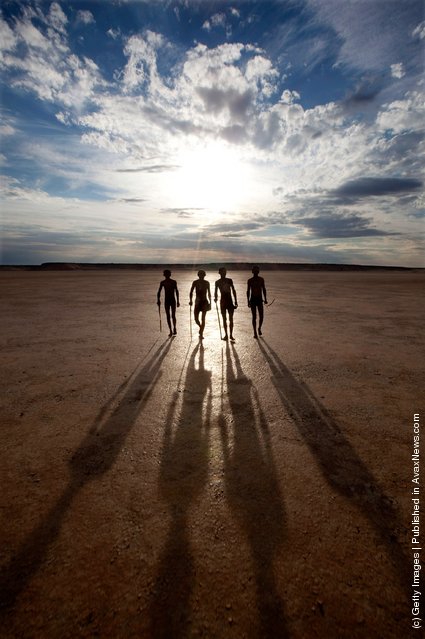
A group of San Bushmen from the Khomani San community practice their hunter-gatherer craft in the Southern Kalahari desert on October 15, 2009 in the Kalahari, South Africa. One of the largest studies of African genetics by an international team from the University of Pennsylvania, published in April 2009, revealed that the San of Southern Africa are the most genetically diverse on earth, and that the San homeland could be the spot where modern humanity began. (Photo by Dan Kitwood/Getty Images)
Details
07 May 2011 09:35:00
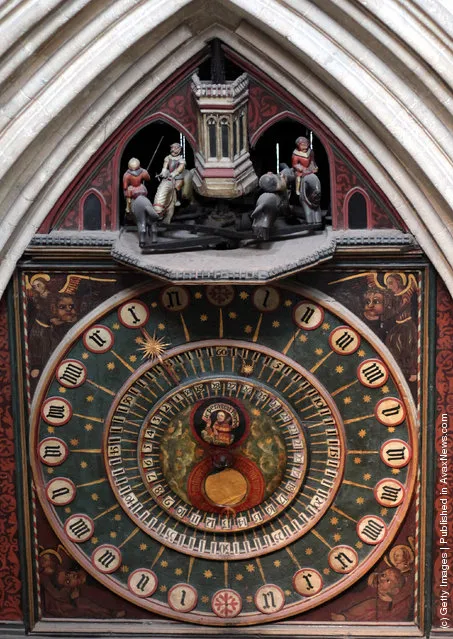
Wells Clock – World's Oldest Mechanical Clock

“Wells Cathedral is a Church of England cathedral in Wells, Somerset, England. Built between 1175 and 1490, Wells Cathedral has been described as “the most poetic of the English Cathedrals”. The Wells clock, an astronomical clock, is located in the north transept. The surviving mechanism, dated to between 1386 and 1392, was replaced in the 19th century, and was eventually moved to the Science Museum in London, where it continues to operate. It is the second-oldest surviving clock in England”. – Wikipedia

Photo: The clock face of world's oldest continually-working mechanical clock is seen as it is hand wound for the very last time on August 21, 2010 in Wells, England. (Photo by Matt Cardy/Getty Images)
Details
10 Aug 2011 11:23:00