
12 Sep 2013 08:28:00,post received
0 comments

Details
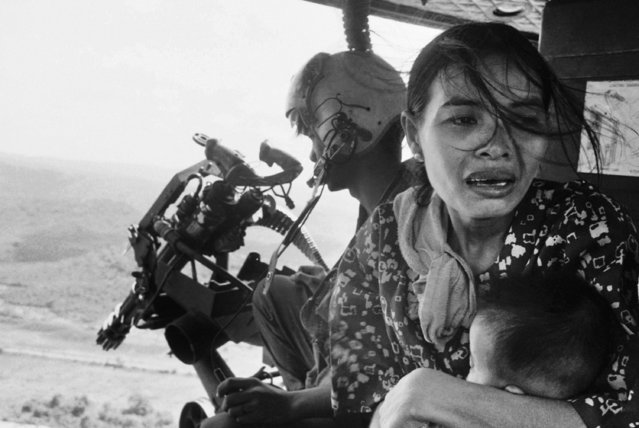
In this March 22, 1975 file photo, a refugee clutches a baby as a government helicopter gunship carries them away near Tuy Hoa, Vietnam, 235 miles northeast of Saigon. They were among thousands fleeing from Communist advances. AP Photographer Nick Ut will be retiring from the AP in March 2017 after 51 years of taking photographs from the front lines of the Vietnam War to the red carpets of Hollywood. (Photo by Nick Ut/AP Photo)
14 Mar 2017 00:02:00,post received
0 comments

1st Place in Wildlife: A male orangutan peers from behind a tree while crossing a river in Borneo, Indonesia. (Photo by Jayaprakash Joghee Bojan/National Geographic Nature Photographer of the Year contest 2017)
15 Dec 2017 06:34:00,post received
0 comments
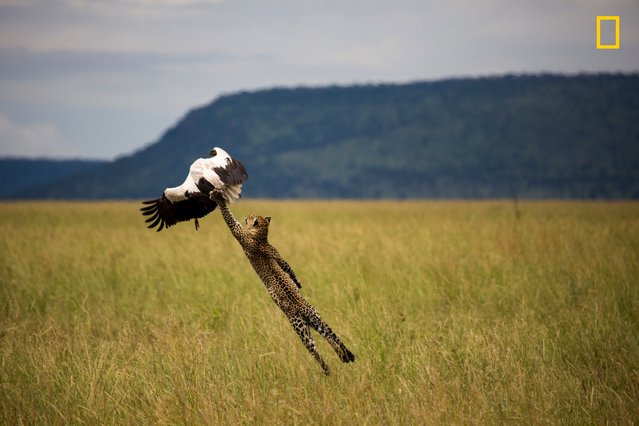
“Leopard Hunting a Stork”. “One-shot capture. I watched the leopard stalking the stork, I only had time to focus at 400mm, no time to change to high speed, I watched the stork, and as soon as it flapped its wings, I shot one shot”. (Photo by Paul Rifkin/National Geographic Travel Photographer of the Year Contest)
04 Jun 2018 00:03:00,post received
0 comments
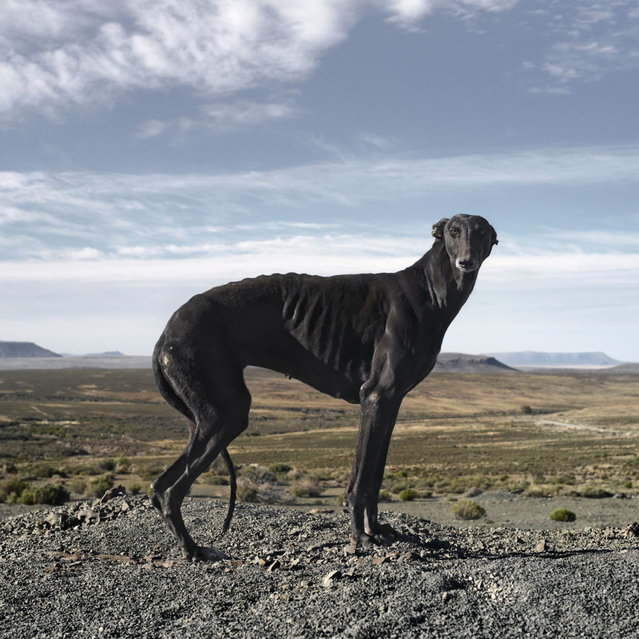
“The Africanis is a landrace of South African dogs. It is believed to be of ancient origin, directly descended from hounds and pariah dogs of ancient Africa, introduced into the Nile Valley from the Levant. The Swahili name for the breed is umbwa wa ki-shenzi meaning common or mongrel or “traditional dog”. Africanis is also an umbrella name for all the aboriginal dogs in southern Africa”. – Wikipedia. Photo: Africanis 18. Murraysburg, Western Cape, May 10, 2010. (Photo by Daniel Naudé)
19 May 2013 11:51:00,post received
0 comments
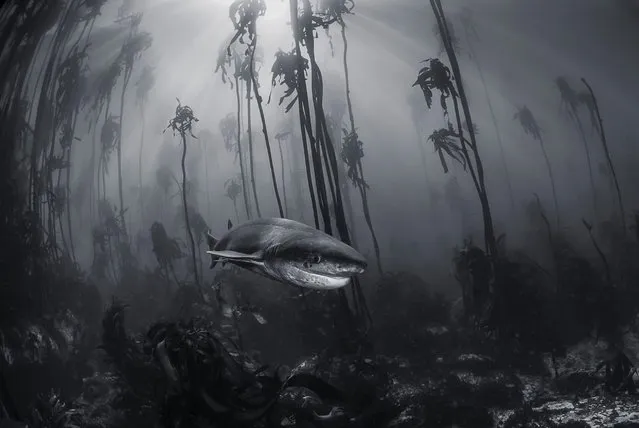
Mystical Forest. Tracey Jennings photographed this seven-gill shark in a kelp forest just off the shore of Simon's Town near Cape Town, South Africa. You don't need to travel far from cities to visit Narnia. This 7 gill shark was photographed in a kelp forest just off the shore of Simonstown near Cape Town, South Africa. (Photo by Tracey Jennings/National Geographic Travel Photographer of the Year Contest)
24 May 2016 09:32:00,post received
0 comments

A Scots soldier has won a top award for his photos vividly depicting Army life in Afghanistan. Corporal Jamie Peters took the overall first prize for his portfolio in the annual Army Photographic Competition. Photo: Jamie's overall winning image entitled “Celtic Warrior” and shows Private Ross Cunningham from 1 Scots cleaning his personal weapon. (Photo by Jamie Peters/PA Wire)
10 Oct 2013 11:59:00,post received
0 comments

An artist's impression of a growing supermassive black hole located in the early Universe is seen in this NASA handout illustration released on June 15, 2011. Using the deepest X-ray image ever taken, astronomers found the first direct evidence that massive black holes were common in the early universe. This discovery from NASA's Chandra X-Ray Observatory shows that very young black holes grew more aggressively than previously thought, in tandem with the growth of their host galaxies. (Photo by Reuters/NASA/Chandra X-Ray Observatory/A.Hobart)
11 Feb 2016 12:57:00,post received
0 comments