Loading...
Done
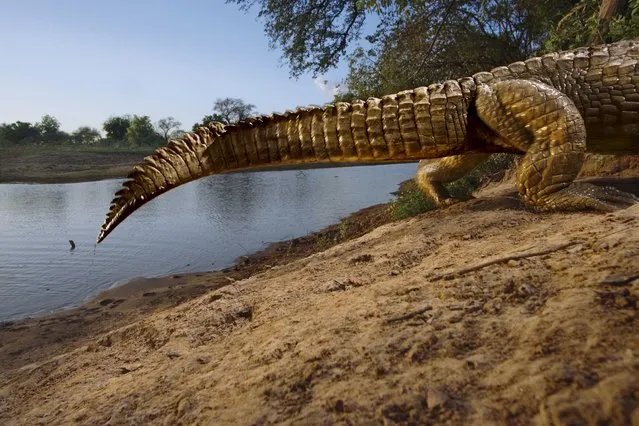
CT4 Crocodile cave on the Salamat river. Set up with Nathan Williamson last chip rain came while we were with the nomads. (Photo by Michael Nichols/National Geographic)

National Geographic has created “Air, Land & Sea: the 50 greatest wildlife photographs” exhibition. Here: CT4 Crocodile cave on the Salamat river. Set up with Nathan Williamson last chip rain came while we were with the nomads. (Photo by Michael Nichols/National Geographic)
Details
13 Sep 2018 00:03:00
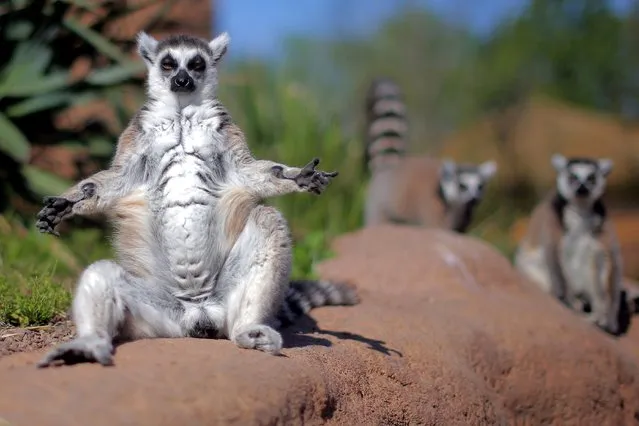
A ring-tailed lemur is pictured at Zoom Torino, a zoological park in Cumiana near Turin, on April 22, 2015. Zoom Torino is a new immersive zoological park, where animals can be seen without bars or cages, only natural barriers ensure the visit. (Photo by Marco Bertorello/AFP Photo)

A ring-tailed lemur is pictured at Zoom Torino, a zoological park in Cumiana near Turin, on April 22, 2015. Zoom Torino is a new immersive zoological park, where animals can be seen without bars or cages, only natural barriers ensure the visit. (Photo by Marco Bertorello/AFP Photo)
Details
25 Apr 2015 10:31:00
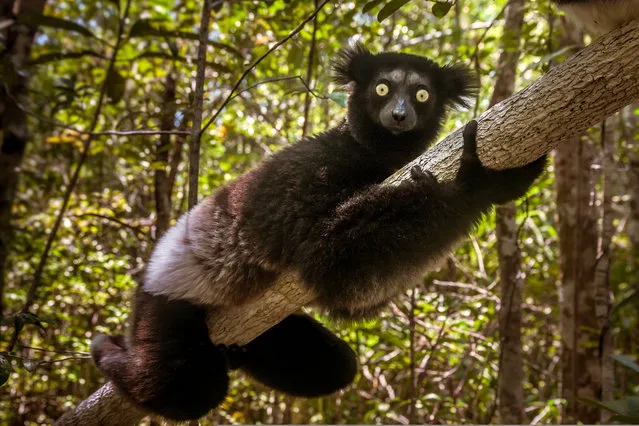
The secretive indri (Indri indri) of Madagascar, the largest living lemur. It is also critically endangered and highly evolutionarily distinct with no close relatives, which makes its branch one of most precarious on the mammal evolutionary tree. In the likely event that the indri goes extinct, we will lose 19m years of unique evolutionary history from the mammal tree of life. (Photo by Pierre-Yves Babelon/Aarhus University)

The secretive indri (Indri indri) of Madagascar, the largest living lemur. It is also critically endangered and highly evolutionarily distinct with no close relatives, which makes its branch one of most precarious on the mammal evolutionary tree. In the likely event that the indri goes extinct, we will lose 19m years of unique evolutionary history from the mammal tree of life. (Photo by Pierre-Yves Babelon/Aarhus University)
Details
18 Nov 2018 00:02:00
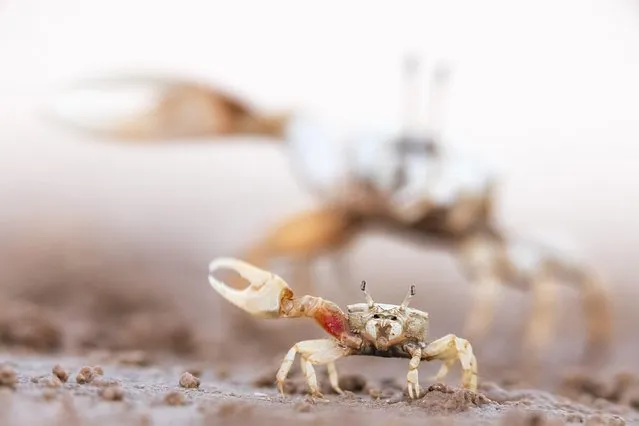
A young male fiddler crab is dwarfed by an older male of the same species, looming behind it at Morua estuary, in the Gulf of California, Mexico on January 4, 2022. Whereas female fiddler crabs have small claws of equal sizes, the males’ pincers can vary in size, with the small one used to pick up food and the larger to impress females. (Photo by Claudio Contreras/Solent News)

A young male fiddler crab is dwarfed by an older male of the same species, looming behind it at Morua estuary, in the Gulf of California, Mexico on January 4, 2022. Whereas female fiddler crabs have small claws of equal sizes, the males’ pincers can vary in size, with the small one used to pick up food and the larger to impress females. (Photo by Claudio Contreras/Solent News)
Details
16 Jan 2022 03:43:00
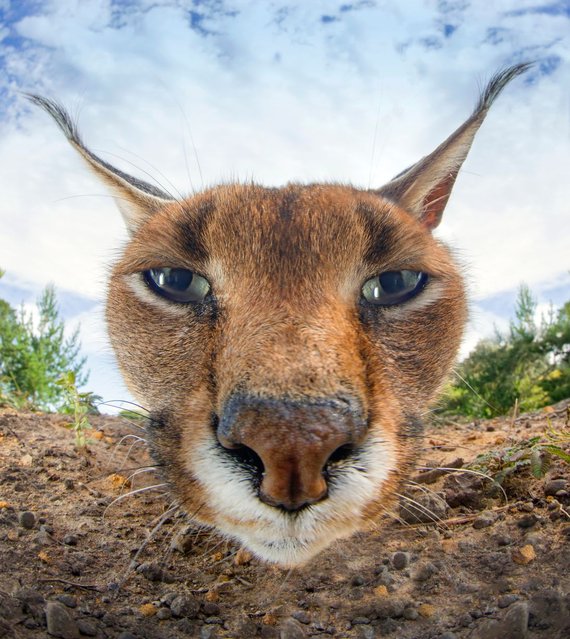
A close up of a caracal lynx's face looking into a camera on January 2014 in Western Cape, South Africa. (Photo by Dale Morris/Barcroft Media)

A close up of a caracal lynx's face looking into a camera on January 2014 in Western Cape, South Africa. (Photo by Dale Morris/Barcroft Media)
Details
30 Mar 2014 11:50:00
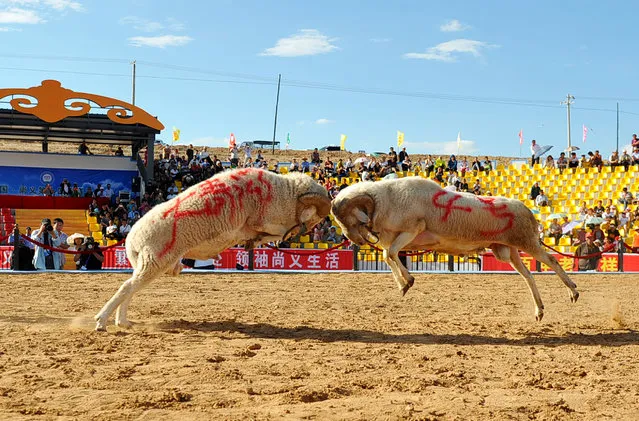
Two sheep fight in a competition in Zhangjiakou, Hebei province, China on August 1, 2017. (Photo by Reuters/China Stringer Network)

Two sheep fight in a competition in Zhangjiakou, Hebei province, China on August 1, 2017. (Photo by Reuters/China Stringer Network)
Details
06 Aug 2017 07:57:00
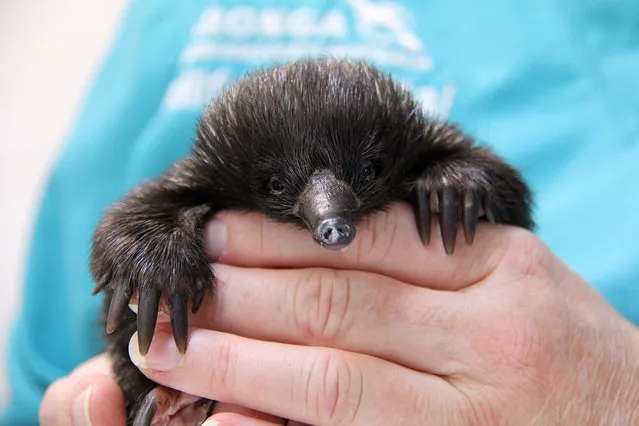
An undated handout picture made available on 29 April 2016 by the Toronga Zoo shows a baby echidna making a remarkable recovery after being attacked by chickens in a family's backyard at the Taronga Zoo in Sydney, Australia. (Photo by EPA/Taronga Zoo)

An undated handout picture made available on 29 April 2016 by the Toronga Zoo shows a baby echidna making a remarkable recovery after being attacked by chickens in a family's backyard at the Taronga Zoo in Sydney, Australia. (Photo by EPA/Taronga Zoo)
Details
01 May 2016 10:56:00
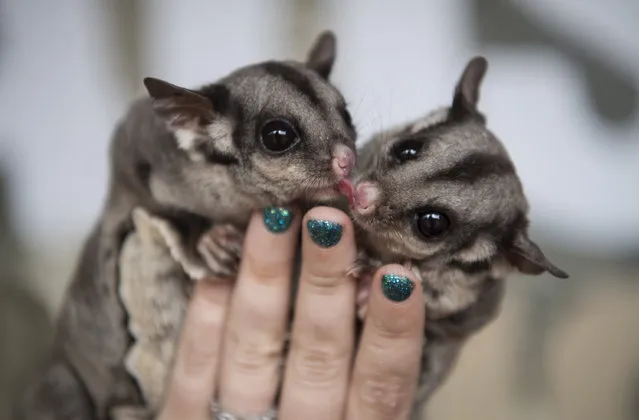
Sugar gliders, Candy and Popcorn, enjoy their favourite food, Nectar, at Wild Life Sydney Zoo on February 14, 2017 in Sydney, Australia. The treat made up of honey, high protein baby cereal and egg yolks is the human equivalent to chocolate to the Sugar Gliders. St. Valentine's Day or the Feast of Saint Valentine began as a celebration of the early Christian Saint Valentinus. From the 18th Century onwards it has steadily transformed into a celebration of romantic love and sentiment in many countries around the world. (Photo by James D. Morgan/Getty Images)

Sugar gliders, Candy and Popcorn, enjoy their favourite food, Nectar, at Wild Life Sydney Zoo on February 14, 2017 in Sydney, Australia. The treat made up of honey, high protein baby cereal and egg yolks is the human equivalent to chocolate to the Sugar Gliders. St. Valentine's Day or the Feast of Saint Valentine began as a celebration of the early Christian Saint Valentinus. From the 18th Century onwards it has steadily transformed into a celebration of romantic love and sentiment in many countries around the world. (Photo by James D. Morgan/Getty Images)
Details
19 Feb 2017 00:00:00