Loading...
Done
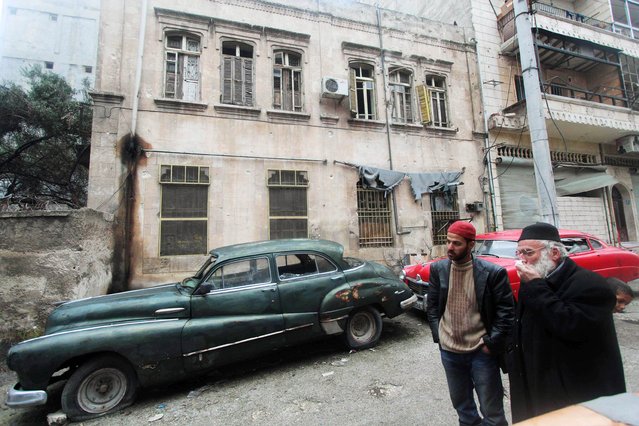
Mohamed Badr al-Din (R) stands in front of his vintage cars along a street where he keeps them, in the al-Shaar neighborhood of Aleppo January 31, 2015. The 66-year-old collector nicknamed Abu Omar inherited the hobby from his father and has a large collection of vintage cars, some of which he says belonged to former Syrian officials and were used in several movies and shows. (Photo by Abdalrhman Ismail/Reuters)

Mohamed Badr al-Din (R) stands in front of his vintage cars along a street where he keeps them, in the al-Shaar neighborhood of Aleppo January 31, 2015. The 66-year-old collector nicknamed Abu Omar inherited the hobby from his father and has a large collection of vintage cars, some of which he says belonged to former Syrian officials and were used in several movies and shows. Before the unrest, Abu Omar planned to open a museum to display his cars, which are guarded from pedestrians by a turkey that he owns. He hopes that the turmoil in the country will end so that he can pursue his hobby and repair his cars, which are heavily damaged from shelling. (Photo by Abdalrhman Ismail/Reuters)
Details
01 Feb 2015 10:34:00
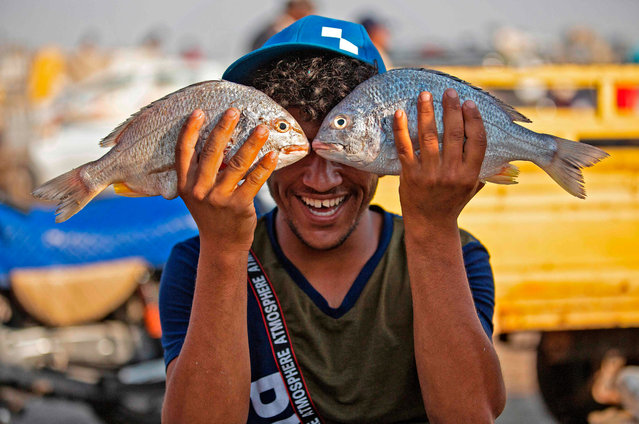
A youth poses while holding two fishes before his face in Iraq's southern port city of al-Faw, 90 kilometres south of Basra near the Shatt al-Arab and the Gulf, on May 18, 2020. In Iraq, a national lockdown to halt the COVID-19 coronavirus pandemic has found some unexpected fans: local businesses who no longer have to compete with Turkish, Iranian or Chinese imports. Those countries, as well as Saudi Arabia, Jordan and Kuwait, typically flood Iraqi markets with inexpensive products at prices local producers can't compete with. (Photo by Hussein Faleh/AFP Photo)

A youth poses while holding two fishes before his face in Iraq's southern port city of al-Faw, 90 kilometres south of Basra near the Shatt al-Arab and the Gulf, on May 18, 2020. In Iraq, a national lockdown to halt the COVID-19 coronavirus pandemic has found some unexpected fans: local businesses who no longer have to compete with Turkish, Iranian or Chinese imports. Those countries, as well as Saudi Arabia, Jordan and Kuwait, typically flood Iraqi markets with inexpensive products at prices local producers can't compete with. (Photo by Hussein Faleh/AFP Photo)
Details
02 Jul 2020 00:01:00
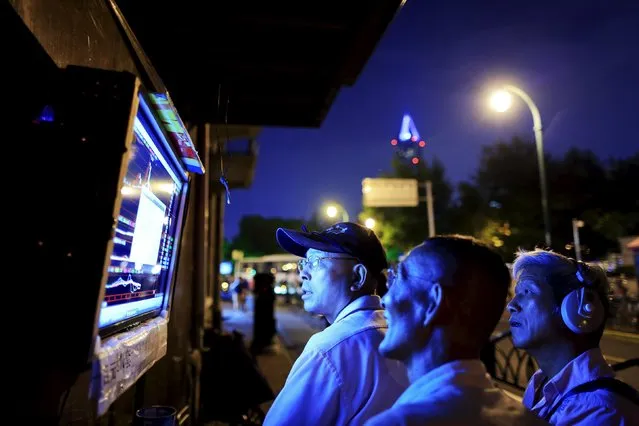
Shen Yuxi (L), introduces analysis software to investors at a “street stock salon” in central Shanghai, China, September 5, 2015. Shen carries a TV screen on his electronic bike to the "salon" every weekends where he sets it up on the wall outside a brokerage house. Shen's been selling analysis software at "the salon" for more than 10 years. (Photo by Aly Song/Reuters)

Some are in it just for the money, others to help buy a meal. Then there are those who trade for fun or to spend time among friends. Millions of investors – pensioners, security guards, high-school students – dominate China's stock markets, conducting about 80 percent of all trades. Retirees gather in brokerage houses dotted around China also to enjoy some company and savour the air conditioning on hot days. Some start as young as 13, trading from home with an eye on future careers in finance. Winning isn't guaranteed. This year, among the most turbulent in China's financial history, its stock markets more than doubled in the six months to May, only to crash amid concerns that growth in the country, which makes everything from cars to steel, is slowing faster than previously thought. (Photo by Aly Song/Reuters)
Details
13 Oct 2015 08:00:00
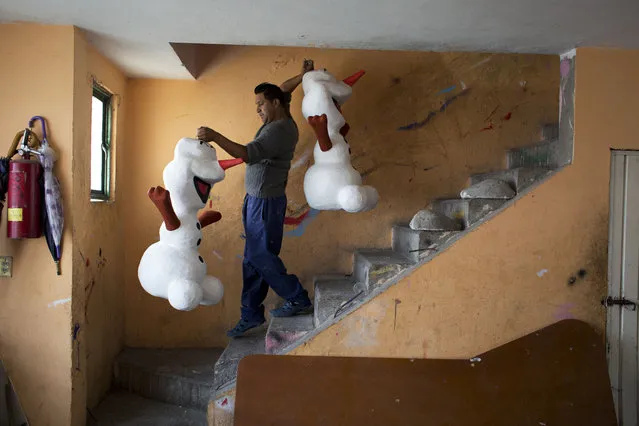
In this January 23, 2015 photo, Guillermo Luna Martinez, 36, carries freshly painted piñatas representing Disney's Frozen snowman character Olaf downstairs to where his wife Elvia Vicente Albarran will use paper to craft the character's eyes, teeth, and distinctive tuft of hair, at the family's workshop in the Iztapalapa neighborhood of Mexico City. (Photo by Rebecca Blackwell/AP Photo)

In this January 23, 2015 photo, Guillermo Luna Martinez, 36, carries freshly painted piñatas representing Disney's Frozen snowman character Olaf downstairs to where his wife Elvia Vicente Albarran will use paper to craft the character's eyes, teeth, and distinctive tuft of hair, at the family's workshop in the Iztapalapa neighborhood of Mexico City. Though Luna and his wife have chosen to work in the family business, they plan to let their children, Guillermo, 10, and Melissa, 9, decide for themselves. “Who knows if the business will last forever”, said Luna, “I'd prefer that they study and get a career, for them to have a better future”. (Photo by Rebecca Blackwell/AP Photo)
Details
01 Feb 2015 10:43:00
Pakistani brides attend a mass marriage ceremony in Karachi late March 26, 2013.  Some 110 couples participated in the mass wedding ceremony organised by a local charity welfare trust Al Ghousia. (Photo by Asif Hassan/AFP Photo)

Pakistani brides attend a mass marriage ceremony in Karachi late March 26, 2013. Some 110 couples participated in the mass wedding ceremony organised by a local charity welfare trust Al Ghousia. (Photo by Asif Hassan/AFP Photo)
Details
27 Mar 2013 08:54:00
In Omdurman, the largest city in Sudan, the Qadiriyya Sufi order meets every Friday outside Sheikh Hamed Al Nil mosque, which houses the tomb of their 19th century Sufi leader. (Photo by Ala Kheir, John Burns and Ibrahim Algrefwi/Brownbook)

In Omdurman, the largest city in Sudan, the Qadiriyya Sufi order meets every Friday outside Sheikh Hamed Al Nil mosque, which houses the tomb of their 19th century Sufi leader. (Photo by Ala Kheir, John Burns and Ibrahim Algrefwi/Brownbook)
Details
21 Feb 2016 11:47:00
Palestinian boy Mohammad al-Bana, 10, sells mints at a market in Gaza City March 29, 2016. Bana, whose father is unemployed, earns around 10 Shekels ($2.5) per day. The boy starts working after finishing school. He hopes to continue education and become an engineer in the future. (Photo by Mohammed Salem/Reuters)

Palestinian boy Mohammad al-Bana, 10, sells mints at a market in Gaza City March 29, 2016. Bana, whose father is unemployed, earns around 10 Shekels ($2.5) per day. The boy starts working after finishing school. He hopes to continue education and become an engineer in the future. (Photo by Mohammed Salem/Reuters)
Details
31 Mar 2016 11:06:00
Caretaker Khalifa Sajad feeds crocodiles at the Sufi shrine of Hasan-al-Maroof Sultan Manghopir, better known as the Crocodile Shrine, on the outskirts of Karachi, Pakistan October 11, 2015. Pakistani Sheedi pilgrims are once again flocking to the shrine in Karachi that has been shunned for years amid fears of Taliban attacks. (Photo by Akhtar Soomro/Reuters)

Caretaker Khalifa Sajad feeds crocodiles at the Sufi shrine of Hasan-al-Maroof Sultan Manghopir, better known as the Crocodile Shrine, on the outskirts of Karachi, Pakistan October 11, 2015. Pakistani Sheedi pilgrims are once again flocking to the shrine in Karachi that has been shunned for years amid fears of Taliban attacks. (Photo by Akhtar Soomro/Reuters)
Details
18 Oct 2015 08:00:00