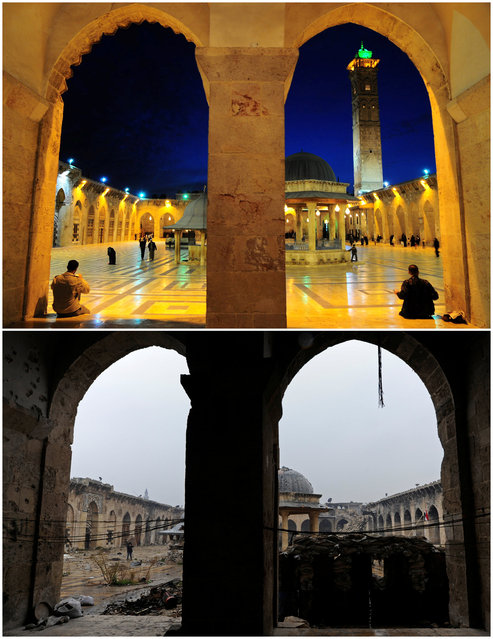
A combination picture shows Aleppo's Umayyad mosque, Syria, before it was damaged on March 12, 2009 (top) and after it was damaged (bottom) December 13, 2016. (Photo by Omar Sanadiki/Reuters)
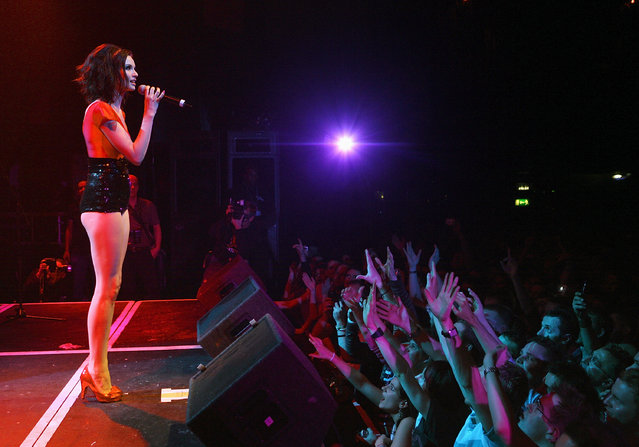
English singer, songwriter and model Sophie Ellis-Bextor performs at G-A-Y at The Astoria on February 17, 2007 in London, England. (Photo by Jo Hale/Getty Images)
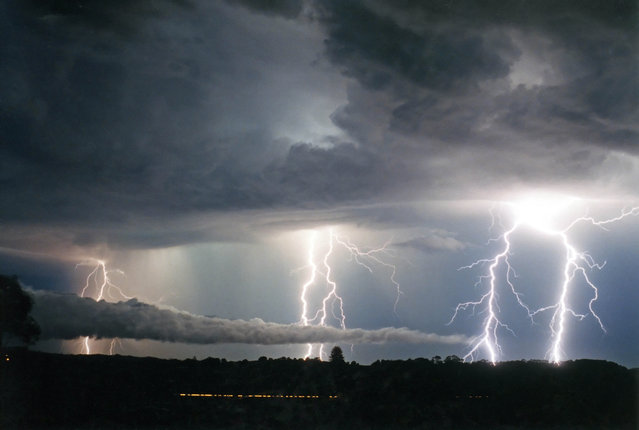
Michael Bath, from McLeans Ridges in New South Wales, Australia, estimates that in his lifetime he has taken more than 3,500 images of lightning bolts illuminating the sky. Photo: Alstonville, New South Wales, Australia – January 8, 2003. (Photo by Michael Bath/Caters News)
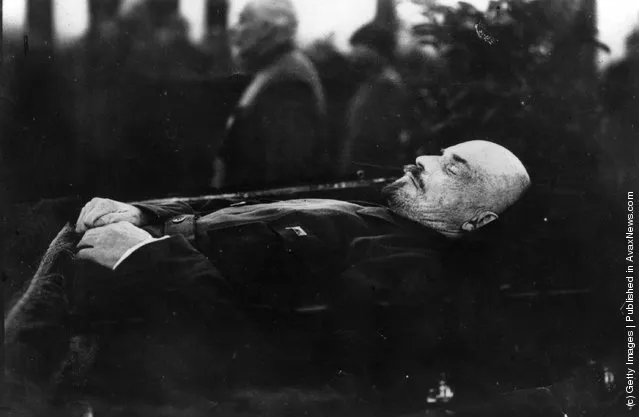
Photo: Vladimir Ilyich Lenin (1870 – 1924) lying in state in the Kremlin. (Photo by Hulton Archive/Getty Images). 1924
Important! For the same article in Russian language click here.
Something quite intriguing is happening within Russian-speaking internet during the last few – should you type a fully academic inquiry (at least, according to Russian academic requirements) in national search engines for "Lenin's mausoleum" – the first thing you get (even in top 10 searches) is website pages talking about black magic and occult. Website authors view this construction differently, but unconditionally agree on one thing: the mausoleum of the "leader of the world proletariat” – the essence of a magical artifact, a sort of “energy vampire”. It was built with a certain purpose: to drain the energy out of miserable Soviet citizens on one hand; and to poison the anthroposphere of one-sixth part of the earth with its vibes (the exact territory that was occupied by the former Soviet Union), depriving the Russian people of will to resist on the other hand. Complete nonsense? No doubt. Nevertheless, an intriguing one. Well, probably because some oddities do exist in mausoleum's history. These oddities are the thing we are going to discuss this time. First, let me refresh you memory on the subject.
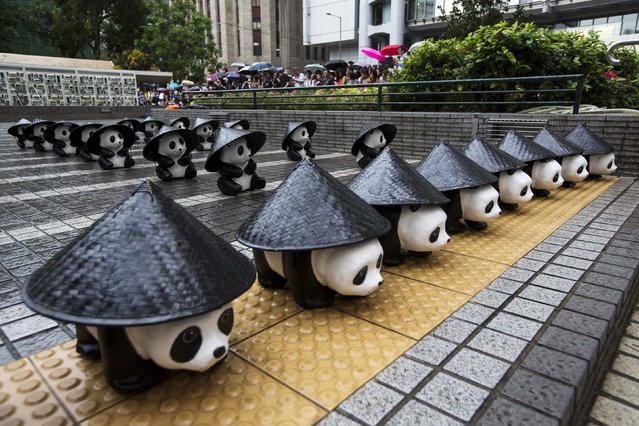
Papier-mache pandas, created by French artist Paulo Grangeon, are covered with conical hats as they are displayed under the rain at the financial Central district in Hong Kong June 21, 2014. The installation arrived in the city on Monday, launching the month-long “1600 Pandas World Tour in Hong Kong: Creativity meets Conservation” organized by a local art organiser, according to the official press release. (Photo by Tyrone Siu/Reuters)
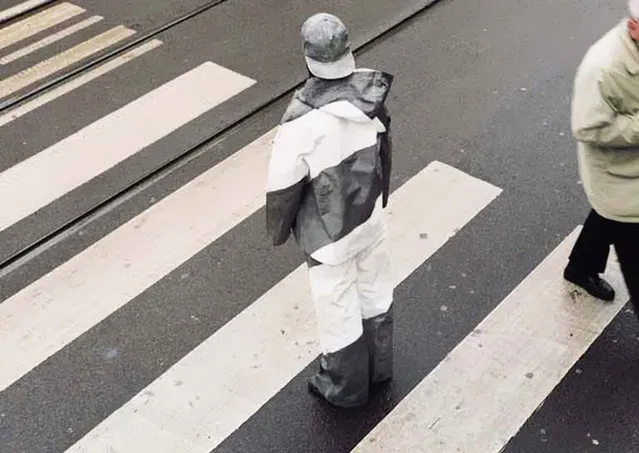
“The artist herself produces the camouflage suit. For each photo, for each environment of her choice, she designs a new suit, which again and again has to be made with the greatest precision, or the illusive effect will not work. By uniting the figure with the background, Desiree Palmen reaches a surprising visual effect that requests a special effort for the observing eye: it must disentangle what is flat and what is spatial.”
A portrait of Eric Abidal of Lyon prior to the UEFA Champions League Group D match between Olympique Lyonnais and Manchester United at the Municipal de Garland Stadium on September 15, 2004 in Lyon, France.