Loading...
Done
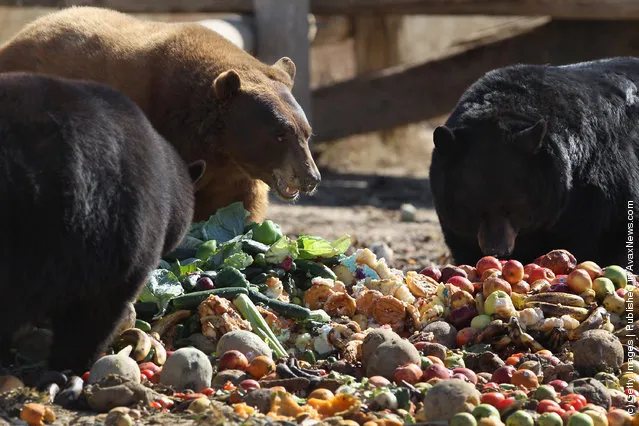
Rescued brown and black bears feed at The Wild Animal Sanctuary

“The Wild Animal Sanctuary is a U.S. organization that specializes in rescuing and caring for large predators which are being ill-treated, for which their owners can no longer care, or which might otherwise be euthanized. Created in 1980, The Wild Animal Sanctuary is situated on 720 acres (291 ha) of grassland near Keenesburg, Colorado North of Denver, and has helped over 1,000 animals since it first opened. As of 2010, it was home to over 290 animals”. – Wikipedia

Photo: Rescued brown and black bears feed at The Wild Animal Sanctuary on October 20, 2011 in Keenesburg, Colorado. (Photo by John Moore/Getty Images)
Details
27 Feb 2012 11:59:00
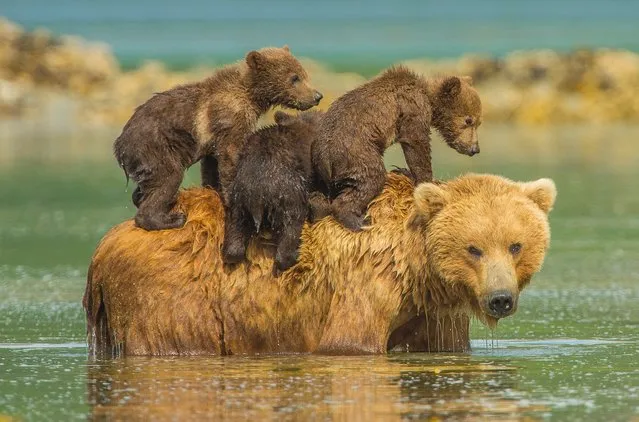
A mother bear takes a dip in the water to cool off in the warm summer sun but refuses to leave her three youngsters behind – so they climb aboard her back. (Photo by Jon Langeland/Solent News & Photo Agency)

A mother bear takes a dip in the water to cool off in the warm summer sun but refuses to leave her three youngsters behind – so they climb aboard her back. (Photo by Jon Langeland/Solent News & Photo Agency)
Details
13 Sep 2014 12:10:00
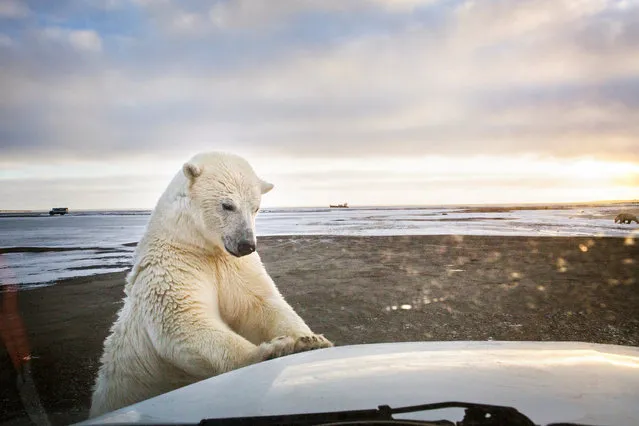
In late summer and early autumn polar bears flock to the native village of Kaktovik in the Alaskan Arctic to eat at “the boneyard” – the remains of whales annually hunted by the community. (Photo by Katie Orlinsky/Getty Images)

A selection of work by four photojournalists who have won grants of $10,000 and editorial support from the agency. Here: “Chasing Winter” by Katie Orlinksy. In late summer and early autumn polar bears flock to the native village of Kaktovik in the Alaskan Arctic to eat at “the boneyard” – the remains of whales annually hunted by the community. (Photo by Katie Orlinsky/Getty Images)
Details
02 Sep 2016 13:55:00
A woman walks past posters bearing the letter “Z” in the colours of the ribbon of Saint George, which has become a symbol of support for Russian military action in Ukraine, and reading “We are proud of Russia! We are not ashamed!” at a bus stop on Nevsky Prospekt in central Saint Petersburg on March 15, 2022. (Photo by AFP Photo/Stringer)

A woman walks past posters bearing the letter “Z” in the colours of the ribbon of Saint George, which has become a symbol of support for Russian military action in Ukraine, and reading “We are proud of Russia! We are not ashamed!” at a bus stop on Nevsky Prospekt in central Saint Petersburg on March 15, 2022. (Photo by AFP Photo/Stringer)
Details
17 Mar 2022 05:42:00
The US Navy Blue Angels numbers 5 and 6 fly below Sean Tucker (above) as he pilots the Oracle Challenger III over San Francisco, California as part of a practice run for Fleet Week on October 6, 2016. (Photo by Josh Edelson/AFP Photo)

The US Navy Blue Angels numbers 5 and 6 fly below Sean Tucker (above) as he pilots the Oracle Challenger III over San Francisco, California as part of a practice run for Fleet Week on October 6, 2016. (Photo by Josh Edelson/AFP Photo)
Details
10 Oct 2016 10:06:00
The AMECA robot from the manufacturer Engineered Arts is in the Deutsches Museum Nuremberg (Future Museum), Bavaria on May 3, 2022. AMECA is a humanoid robot that will be presented to the general public for the first time in Europe as part of the Blue Night on May 7, 2022 in Nuremberg. (Photo by Daniel Karmann/dpa/Alamy Live News)

The AMECA robot from the manufacturer Engineered Arts is in the Deutsches Museum Nuremberg (Future Museum), Bavaria on May 3, 2022. AMECA is a humanoid robot that will be presented to the general public for the first time in Europe as part of the Blue Night on May 7, 2022 in Nuremberg. (Photo by Daniel Karmann/dpa/Alamy Live News)
Details
04 May 2022 05:18:00
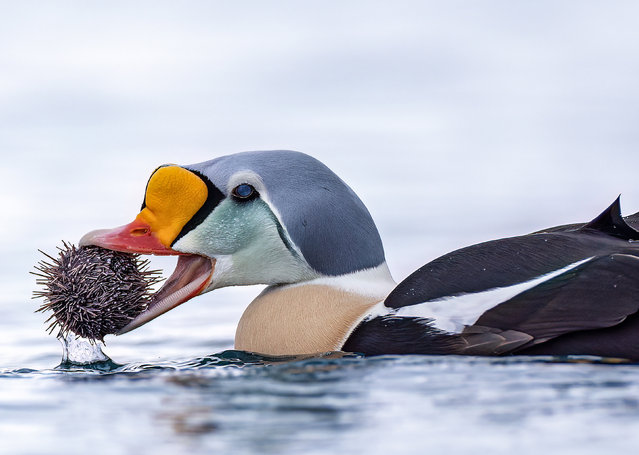
A king eider sea duck tackles a prickly dinner of sea urchin on a lake in Batsfjord, Norway in the last decade of August 2024. The drake’s breeding plumage consists of a distinctive powder-blue head and neck, orange frontal lobe and a red bill. (Photo by Mia Surakka/Solent News)

A king eider sea duck tackles a prickly dinner of sea urchin on a lake in Batsfjord, Norway in the last decade of August 2024. The drake’s breeding plumage consists of a distinctive powder-blue head and neck, orange frontal lobe and a red bill. (Photo by Mia Surakka/Solent News)
Details
01 Sep 2024 03:45:00
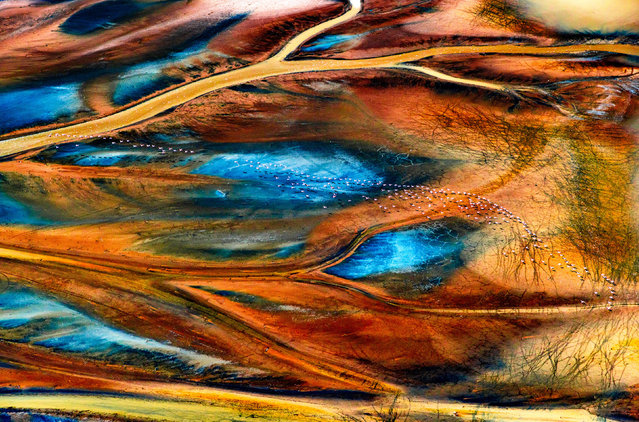
Hundreds of flamingos take flight in the Rift Valley in East Africa early September 2024. The birds gather in the region’s saline lakes to eat the blue-green algae that grows in abundance. The red-orange pigment in the algae is what gives them their distinctive pink plumage. They also use the site to breed. (Photo by Alexandre and Chloe Bes/Naturagency/Solent News)

Hundreds of flamingos take flight in the Rift Valley in East Africa early September 2024. The birds gather in the region’s saline lakes to eat the blue-green algae that grows in abundance. The red-orange pigment in the algae is what gives them their distinctive pink plumage. They also use the site to breed. (Photo by Alexandre and Chloe Bes/Naturagency/Solent News)
Details
23 Sep 2024 02:54:00