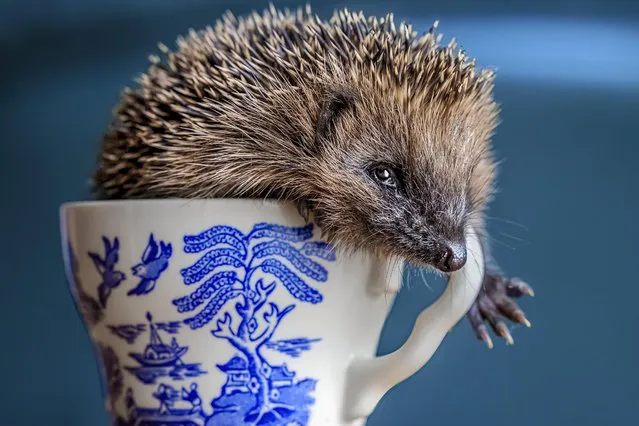
A two-week-old hoglet finds an unusual spot to sit at the Happy Hedgehogs rescue centre in Nidderdale, North Yorkshire in the second decade of September 2023. (Photo by James Glossop/The Times)
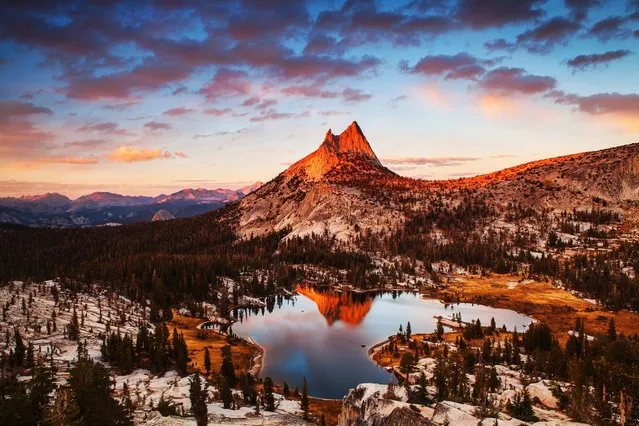
Of the epic landscape, the California-based photographer said: “It was an incredible moment and I'm just glad I decided that day to pick up my camera and give it a go because I don't know if I will ever get the chance again”. (Photo by Nolan Nitschke/Caters News)
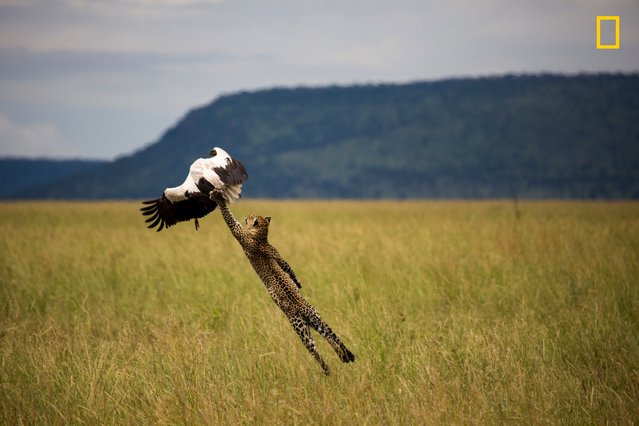
“Leopard Hunting a Stork”. “One-shot capture. I watched the leopard stalking the stork, I only had time to focus at 400mm, no time to change to high speed, I watched the stork, and as soon as it flapped its wings, I shot one shot”. (Photo by Paul Rifkin/National Geographic Travel Photographer of the Year Contest)
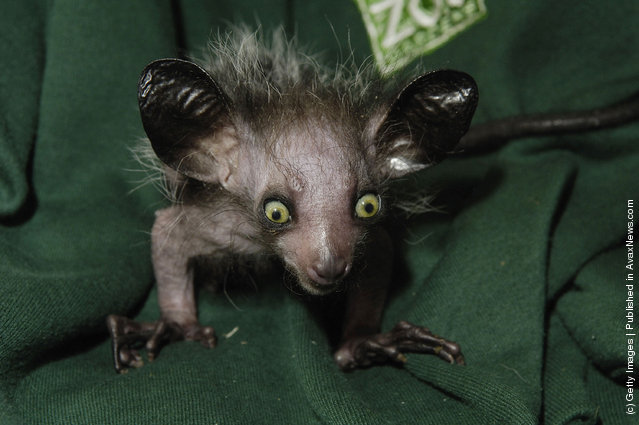
“The aye-aye (Daubentonia madagascariensis) is a lemur, a strepsirrhine primate native to Madagascar that combines rodent-like teeth and a special thin middle finger to fill the same ecological niche as a woodpecker. It is the world's largest nocturnal primate, and is characterized by its unusual method of finding food; it taps on trees to find grubs, then gnaws holes in the wood and inserts its narrow middle finger to pull the grubs out. The only other animal species known to find food in this way is the striped possum. From an ecological point of view the aye-aye fills the niche of a woodpecker as it is capable of penetrating wood to extract the invertebrates within”. – Wikipedia
Photo: In this handout image from Bristol Zoo is seen the first captive bred aye-aye in the UK named “Kintana” (meaning star in Malagasy) April 15, 2005 at Bristol Zoo Gardens, England. The zoo announced today only the second baby aye-aye to be hand-reared in the world (the first was in Jersey Zoo) and has now made his first public appearance since his birth on 11 February 2005. (Photo by Rob Cousins/Bristol Zoo via Getty Images)
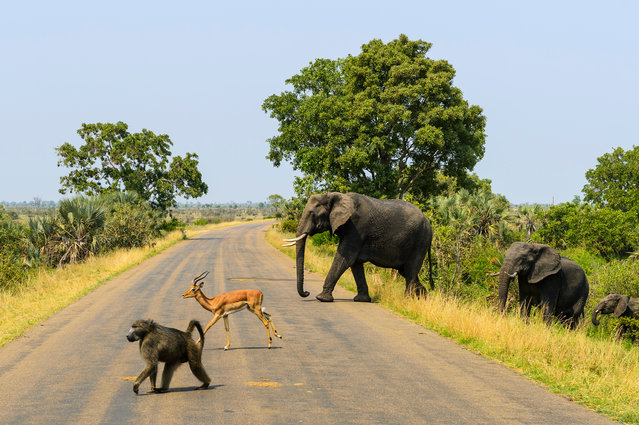
This month’s selection of travel imagery mixes quiet moments and superlative views. The overall 2018 prize is a West Greenland trip with Wild Photography Holidays. Here: “This was taken on a safari in Kruger national park, South Africa. The scene was like something straight out of a storybook: a wild baboon, impala and elephant crossing the road together, all lined up neatly in a row”. (Photo by Will Clarke/The Guardian)
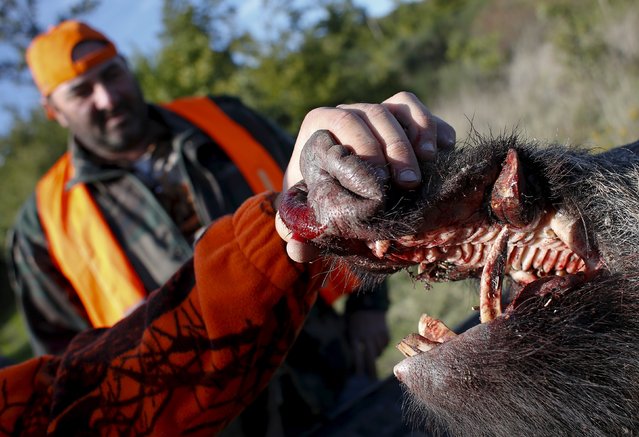
A dead wild boar is seen during a hunt in Castell'Azzara, Tuscany, central Italy, October 23, 2015. Extinct across much of the country by the end of the 1800s, the number of wild boar in Italy has almost doubled over the past decade and there are now about a million roaming the country, environmental and agricultural associations say. (Photo by Max Rossi/Reuters)