Loading...
Done
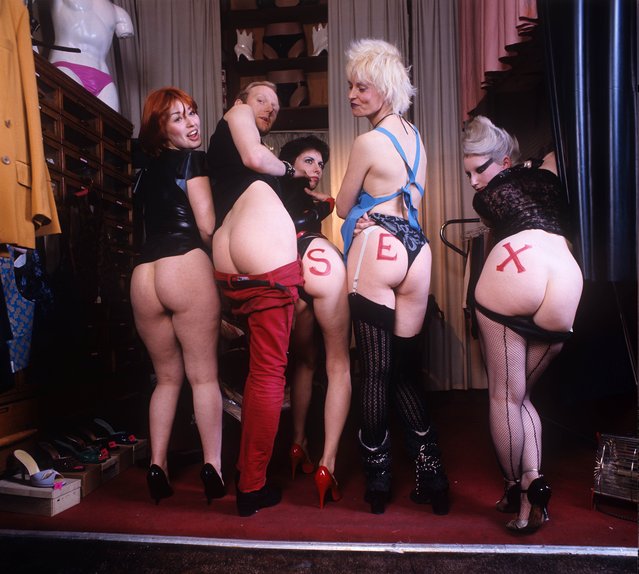
(L–R) Unknown, Alan Jones, Chrissie Hynde, Vivienne Westwood and punk fashion icon Jordan at Kings Road fashion shop «Sеx» run by Westwood and Malcolm McLaren in London, United Kingdom, 1976. (Photo by David Dagley/Rex Features/Shutterstock)

(L–R) Unknown, Alan Jones, Chrissie Hynde, Vivienne Westwood and punk fashion icon Jordan at Kings Road fashion shop «Sеx» run by Westwood and Malcolm McLaren in London, United Kingdom, 1976. (Photo by David Dagley/Rex Features/Shutterstock)
Details
04 Apr 2021 08:37:00
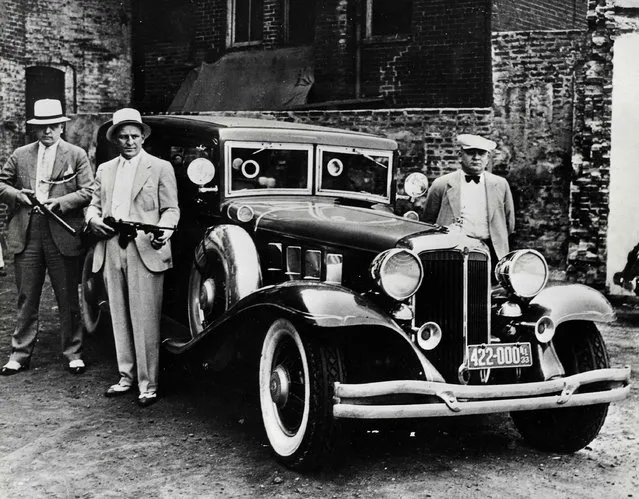
An armoured vehicle surrounded by Chicago cops at the time of the American depression, 1933. (Photo by Rolls Press/Popperfoto/Getty Images)

An armoured vehicle surrounded by Chicago cops at the time of the American depression, 1933. (Photo by Rolls Press/Popperfoto/Getty Images)
Details
10 Feb 2017 00:02:00
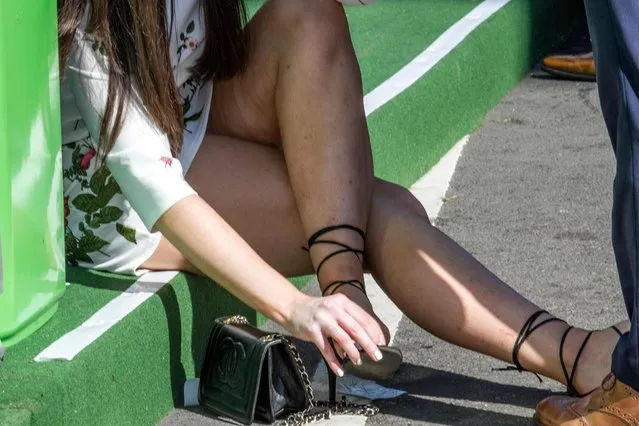
A woman already appears to be regretting her choice of heels for the day out during the Grand National Festival at Aintree Racecourse on April 8, 2017 in Liverpool, England. (Photo by Alamy Stock Photos)

A woman already appears to be regretting her choice of heels for the day out during the Grand National Festival at Aintree Racecourse on April 8, 2017 in Liverpool, England. (Photo by Alamy Stock Photos)
Details
09 Apr 2017 10:08:00
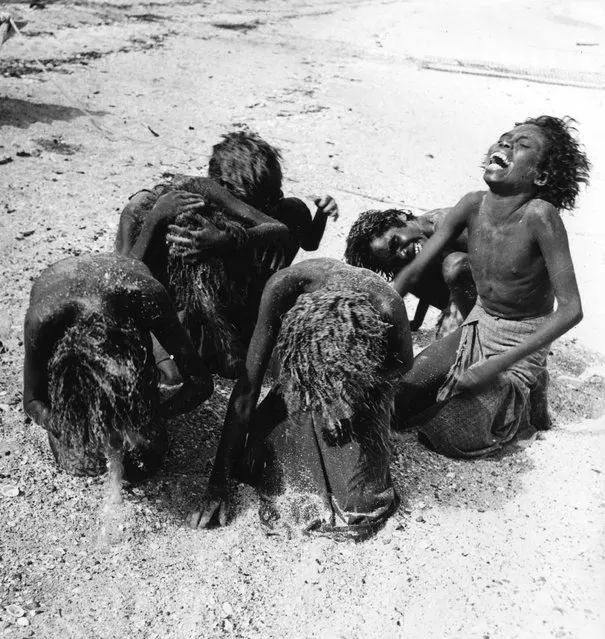
1st January 1950:  Aboriginal women washing their hair with sand at Arnhem land in the Northern Territory of Australia.  (Photo by Three Lions/Getty Images)

“Australian Aborigines are those people regarded as indigenous to the Australian continent. In the High Court of Australia, Australian Aborigines have been specifically identified as a group of people who share, in common, biological ancestry back to the original occupants of the continent”. – Wikipedia

Photo: Aboriginal women washing their hair with sand at Arnhem land in the Northern Territory of Australia. 1st January 1950. (Photo by Three Lions)
Details
02 Feb 2014 07:29:00
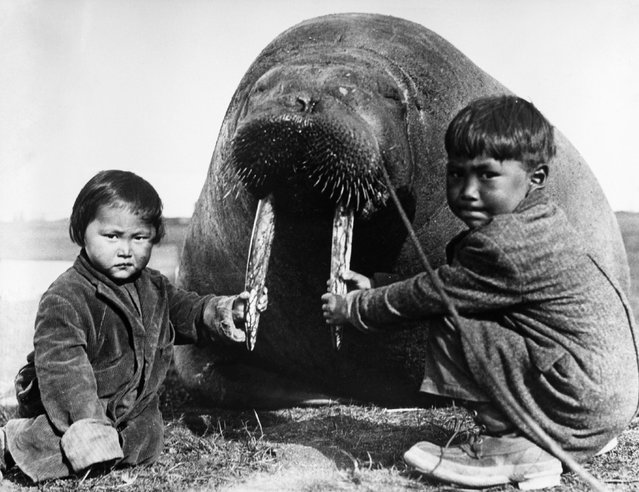
Two Inuit children at Point Barrow, Alaska, holding the tusks of a large walrus, probably killed for food, circa 1930. (Photo by General Photographic Agency/Getty Images)

Two Inuit children at Point Barrow, Alaska, holding the tusks of a large walrus, probably killed for food, circa 1930. (Photo by General Photographic Agency/Getty Images)
Details
04 Feb 2017 01:02:00
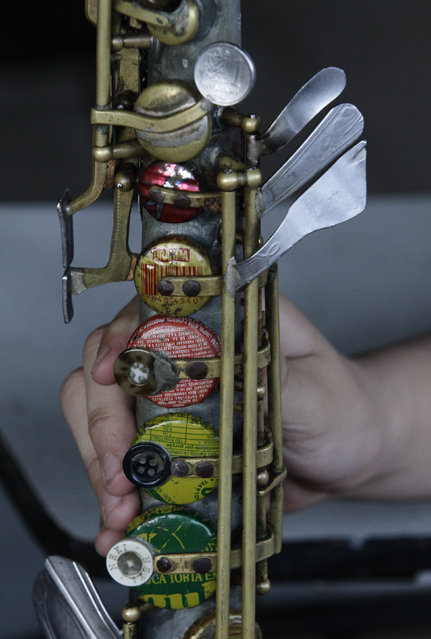
A student of the Orchestra of Recycled Instruments of Cateura holds an instrument made from recycled material by craftsman Nicolas Gomez, in Cateura, near Asuncion, May 9, 2013. The orchestra is the brainchild of its conductor Favio Chavez, who wanted to help the children of garbage pickers at the local landfill, and the instruments are made from salvaged materials by craftsman Gomez. (Photo by Jorge Adorno/Reuters)

A student of the Orchestra of Recycled Instruments of Cateura holds an instrument made from recycled material by craftsman Nicolas Gomez, in Cateura, near Asuncion, May 9, 2013. The orchestra is the brainchild of its conductor Favio Chavez, who wanted to help the children of garbage pickers at the local landfill, and the instruments are made from salvaged materials by craftsman Gomez. The orchestra now involves 30 schoolchildren who have toured countries in Latin America, North America and Europe to play music ranging from Beethoven and Mozart to the Beatles and Paraguayan folk songs. (Photo by Jorge Adorno/Reuters)

Details
12 Jul 2013 09:23:00
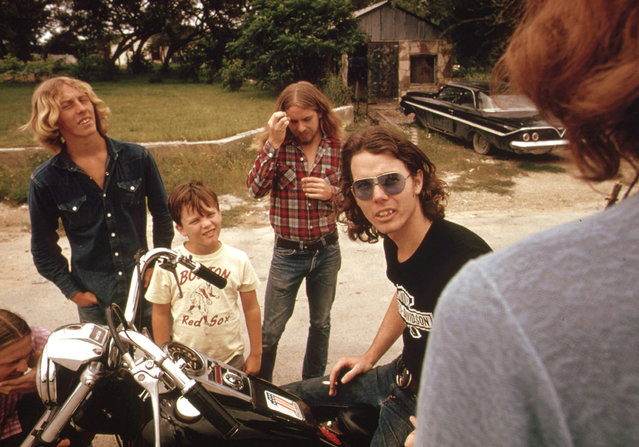
Motorcyclist loading his possessions onto a truck with the help of his friends in Leakey, May 1973. (Photo by Marc St. Gil/NARA via The Atlantic)

America in the 1970s: Texas. Motorcyclist loading his possessions onto a truck with the help of his friends in Leakey, May 1973. (Photo by Marc St. Gil/NARA via The Atlantic)
Details
01 Aug 2013 08:52:00
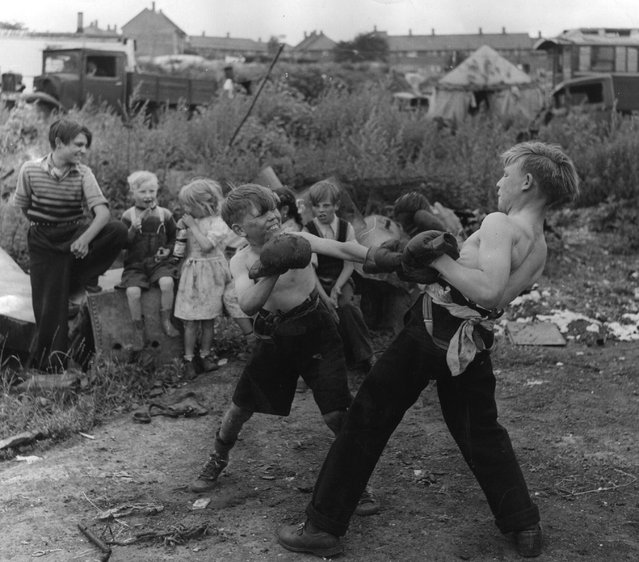
The unromantic gypsies. Children boxing in a gypsy camp in Kent, England on July 1, 1951. Like all boys these gypsy lads like to try their hand at boxing. Encouraged by their friends they fight it out on Corke's Meadow. Few Romanies now live a life of wandering romance. Most are like the three hundred squatters of Corke's Meadow, Kent, which is part of a “gypsy problem” that involves about 100,000 today. Of those about 25,000 can be rightly called gypsies, the rest are Mumpers and Posh-rats and Hobos. Corke's Meadow has both kinds. “Picture Post” cameraman Bert Hardy photographs the Corke's Meadow gypsies in their encampment. (Photo by Hulton-Deutsch Collection/Corbis via Getty Images)

The unromantic gypsies. Children boxing in a gypsy camp in Kent, England on July 1, 1951. Like all boys these gypsy lads like to try their hand at boxing. Encouraged by their friends they fight it out on Corke's Meadow. Few Romanies now live a life of wandering romance. Most are like the three hundred squatters of Corke's Meadow, Kent, which is part of a “gypsy problem” that involves about 100,000 today. Of those about 25,000 can be rightly called gypsies, the rest are Mumpers and Posh-rats and Hobos. Corke's Meadow has both kinds. “Picture Post” cameraman Bert Hardy photographs the Corke's Meadow gypsies in their encampment. (Photo by Hulton-Deutsch Collection/Corbis via Getty Images)
Details
12 Mar 2017 00:01:00