Loading...
Done
Hindu women worship the Sun god Surya in the polluted waters of the river Yamuna during the Hindu religious festival of Chatt Puja in New Delhi October 30, 2014. (Photo by Ahmad Masood/Reuters)

Hindu women worship the Sun god Surya in the polluted waters of the river Yamuna during the Hindu religious festival of Chatt Puja in New Delhi October 30, 2014. Hindu women fast for the whole day for the betterment of their family and the society during the festival. (Photo by Ahmad Masood/Reuters)
Details
30 Oct 2014 13:48:00
“To look into a whale’s eye is life-changing and humbling. Well, it’s the same with dolphins but they are mostly very fast in the water. A whale’s eye is unexpectedly looking, just like a human eye, kinda checking you out”. (Photo by Rita Kluge/The Guardian)

With the humpback calving season drawing to a close, here’s a look at some of Rita Kluge’s distinctive marine photos from the south Pacific. The Sydney-based photographer fell in love with whales after witnessing southern rights from the New South Wales coastline as they travelled to and from their feeding grounds in the Antarctic. She has since been to Tonga, where humpbacks breed and calf in winter months, to photograph them in the water. (Photo by Rita Kluge/The Guardian)
Details
26 Oct 2016 11:09:00
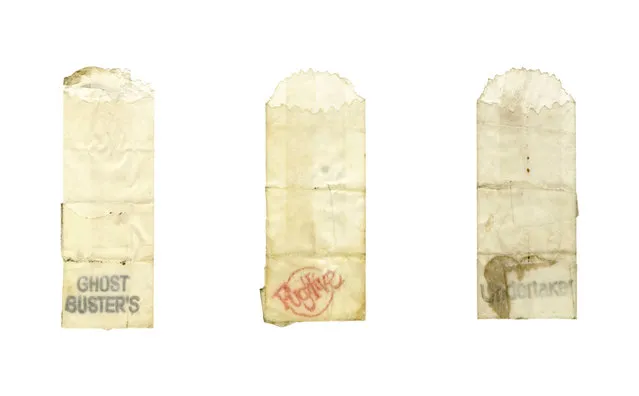
All In By Graham MacIndoe

In order to get a glimpse into the visual culture of drug trade in New York City, a British photographer Graham MacIndoe collected more than one hundred bags, which were used to sell heroin. These bags feature references to various movies, fast-food restaurants, and luxury brands. This could be a way to mark various purities of heroin, or maybe different drug dealers use different markers to distinguish between each other. We can only wonder where Graham has acquired all these heroin bags. Hopefully, he picked them up after their contents were emptied. (Photo by Graham MacIndoe)
Details
01 Dec 2014 14:15:00
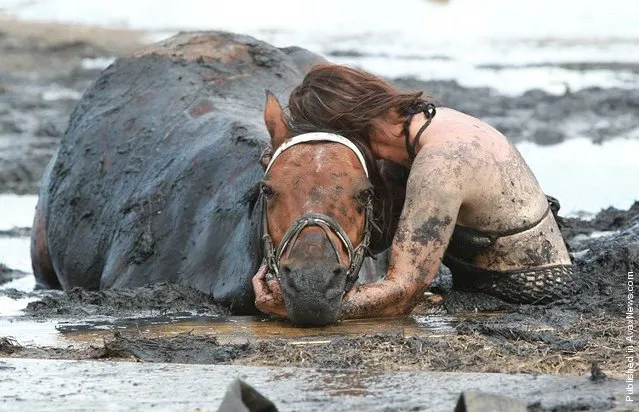
Owner Nicole Graham works with volunteers from CFA and SES tries to dig out her horse 'Astro' who became stuck up to his neck in mud at Avalon Beach

Owner Nicole Graham works with volunteers from CFA and SES tries to dig out her horse “Astro” who became stuck up to his neck in mud at Avalon Beach on February 26, 2012 in Geelong, Australia. The tide was fast-rising, but the rescuers managed to get him out in time. (Photo by Peter Ristevski/Newspix)
Details
01 Mar 2012 09:57:00
A Hindu holy man, or sadhu, sits beside a fire after smearing his body with ashes at the premises of Pashupatinath Temple, ahead of the Shivaratri festival in Kathmandu, Nepal February 21, 2017. (Photo by Navesh Chitrakar/Reuters)

A Hindu holy man, or sadhu, sits beside a fire after smearing his body with ashes at the premises of Pashupatinath Temple, ahead of the Shivaratri festival in Kathmandu, Nepal February 21, 2017. Hindus mark the Maha Shivratri festival by offering special prayers and fasting, with sadhus arriving at Pashupatinath to take part in the event, which takes place on February 24. (Photo by Navesh Chitrakar/Reuters)
Details
23 Feb 2017 00:01:00


“Maria Rosaria (Mara) Carfagna (born December 18, 1975 in Salerno) is an Italian politician and former showgirl and topless model. After obtaining a degree in law, Carfagna worked for several years on Italian television shows and as a model. She later entered politics and was elected to the Chamber of Deputies for Forza Italia party in 2006. On May 8, 2008, Prime Minister Silvio Berlusconi appointed her Minister for Equal Opportunity, a move that received international attention due to her background and her appearance. Carfagna has been called «The most beautiful minister in the world», and was ranked number one on Maxim's «World´s Hottest Politicians»”.

Photo: Minister Mara Carfagna attends a press conference for the Pink Box Project held at Palazzo Marino on November 24, 2008 in Milan, Italy. The Pink Box is a tracking device, designed to help women drivers in danger. (Photo by Vittorio Zunino Celotto/Getty Images). MILAN, ITALY – NOVEMBER 24 2008
Details
11 Mar 2011 12:09:00
Kawakanih Yawalapiti, 9, Upper Xingu region of Mato Grosso, Brazil, 2018: Kawakanih lives with her tribe, the Yawalapiti, in Xingu national park, a preserve in the Amazon basin of Brazil. The Yawalapiti collect seeds to preserve species unique to their ecosystem, which lies between the rain forest and savannah. Kawakanih’s diet is simple, consisting mainly of fish, cassava, porridge, fruit and nuts. “It takes five minutes to catch dinner”, says Kawakanih. “When you’re hungry, you just go to the river with your net”. (Photo by Gregg Segal/The Guardian)

Photographer Gregg Segal travelled the world to document children and the food they eat in a week. Partly inspired by the increasing problems of childhood obesity, he tracked traditional regional diets as yet unaffected by globalisation, and ironically, found that the healthiest diets were often eaten by the least well off. (Photo by Gregg Segal/The Guardian)
Details
03 Jul 2019 00:03:00
A year after hundreds of thousands of migrants and refugees snaked their way across southeastern Europe and onto television screens worldwide, the roads through the Balkans are now clear, depriving an arguably worsening tragedy of its poignant visibility. Europe's migrant crisis is at the very least numerically worse than it was last year. More people are arriving and more are dying. (Photo by Antonio Bronic/Reuters)

A year after hundreds of thousands of migrants and refugees snaked their way across southeastern Europe and onto television screens worldwide, the roads through the Balkans are now clear, depriving an arguably worsening tragedy of its poignant visibility. Reuters photographer, Antonio Bronic revisiting the people-packed locations where he and his colleagues captured last year's diaspora, found empty roads, unencumbered railway tracks and bucolic countryside. (Photo by Antonio Bronic/Reuters)


Details
12 Aug 2016 12:10:00