Loading...
Done
Animalistic Tendencies By Zarnala

Zarnala is a female illustrator with a knack for anthropomorphic illustration, combining human and animal elements to create something altogether new. Unlike other forms of anthropomorphic art one can find out there though, her work always retains a tasteful, professional edge similar to the feel I get from comics like Juanjo Garnido's take on Blacksad. With an awesome watercolor themed approach to all her illustration work and her use of graphic shapes to frame her characters, at times it gives her art a strangely retro look that reminds one of the works of Norman Rockwell and JC Leyendecker. Check out more of her work after the break!
Details
11 Dec 2013 11:08:00
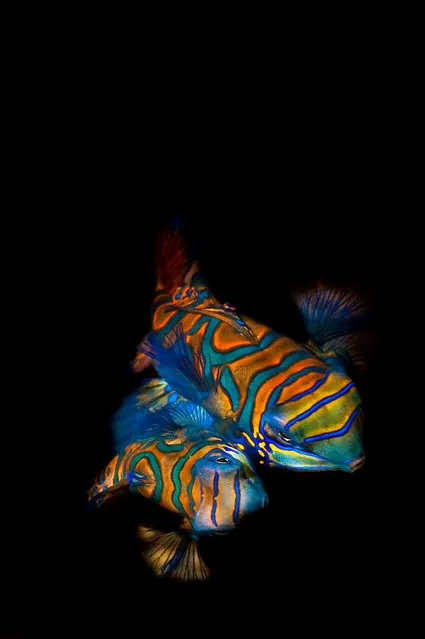
Mandarin Fish

The Mandarinfish or Mandarin dragonet (Synchiropus splendidus), is a small, brightly-colored member of the dragonet family, which is popular in the saltwater aquarium trade. The mandarinfish is native to the Pacific, ranging approximately from the Ryukyu Islands south to Australia.
Details
27 Nov 2012 10:02:00
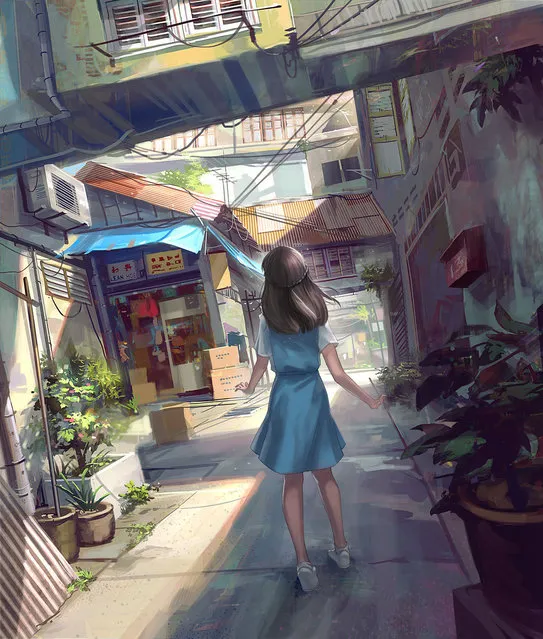
The Art Of FeiGiap

There's something inherently Ghibli-esque about Chong FeiGiap's beautiful paintings, capturing that sense of wonder typically present in the best animes the studio had to offer, as well as a dash of Tekkon Kinkreet's amazingly colorful, complex cities.
Details
03 Oct 2013 11:12:00
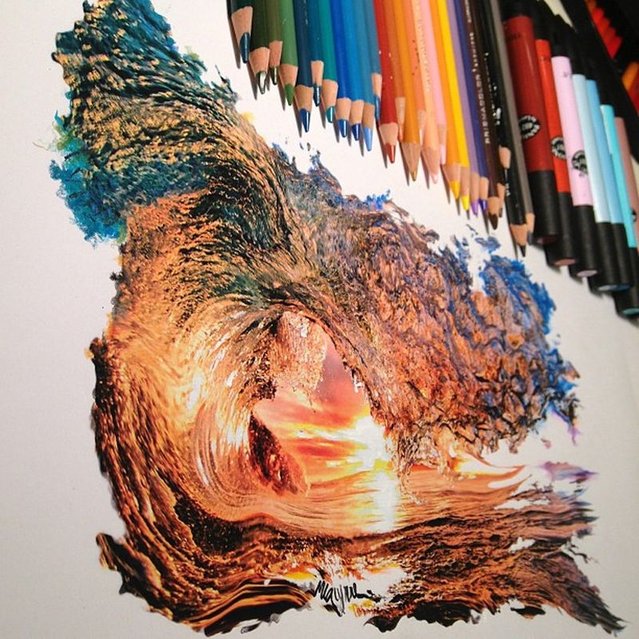
"Hyperrealism Drawings With Pencil By Karla Mialynne

Hyperrealism with pencil by Karla Mialynne. Her impressing paintings are mostly created with watercolor pencils, colored markers and acrylic paint.
Details
20 Nov 2013 10:13:00
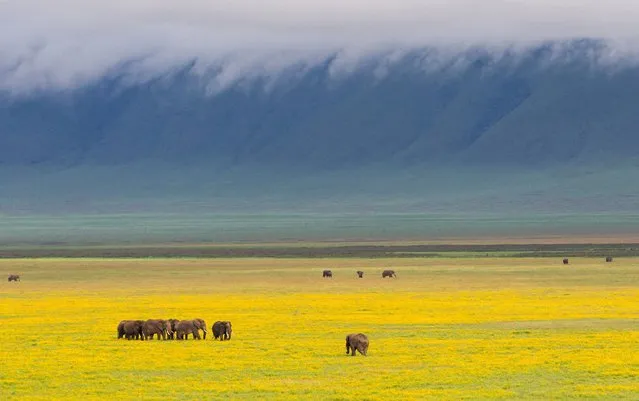
Ngorongoro Crater (Tanzania). At 610m deep and 260 sq km, this is the largest unflooded caldera in the world. A blue-green vision from above it's a haven for engangered wildlife and Maasai livestock. The crater was formed three million years ago when a giant volcano, which could have been as high as Kilimanjaro, exploded and collapsed. The caldera formed the concentric fractures in the crust cracked down to a magma reservoir deep underground. (Photo by John Bryant/Getty Images)

Ngorongoro Crater (Tanzania). At 610m deep and 260 sq km, this is the largest unflooded caldera in the world. A blue-green vision from above it's a haven for engangered wildlife and Maasai livestock. The crater was formed three million years ago when a giant volcano, which could have been as high as Kilimanjaro, exploded and collapsed. The caldera formed the concentric fractures in the crust cracked down to a magma reservoir deep underground. (Photo by John Bryant/Getty Images)
Details
28 Mar 2014 08:08:00
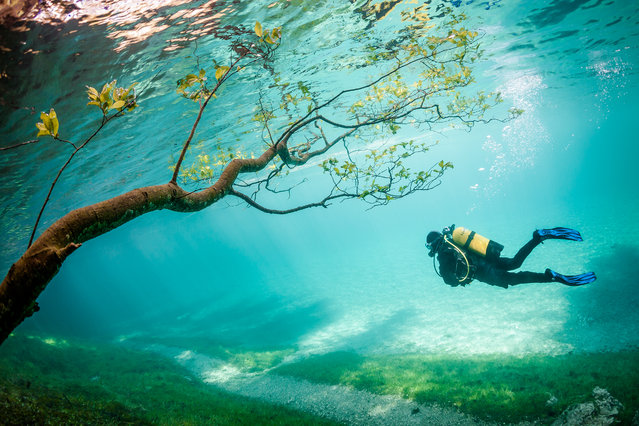
“Diver in Magic Kingdom”. Green Lake (Grüner See) is located Tragöss Austria. In spring snowmelt raises the lake level about 10 meters. This phenomenon, which lasts only a few weeks covering the hiking trails, meadows, trees. The result is magical to watch diving landscapes. Photo location: Grüner See at Tragöss, Austria. (Photo and caption by Marc Henauer/National Geographic Photo Contest)

“Diver in Magic Kingdom”. Green Lake (Grüner See) is located Tragöss Austria. In spring snowmelt raises the lake level about 10 meters. This phenomenon, which lasts only a few weeks covering the hiking trails, meadows, trees. The result is magical to watch diving landscapes. Photo location: Grüner See at Tragöss, Austria. (Photo and caption by Marc Henauer/National Geographic Photo Contest)
Details
22 Apr 2014 09:35:00
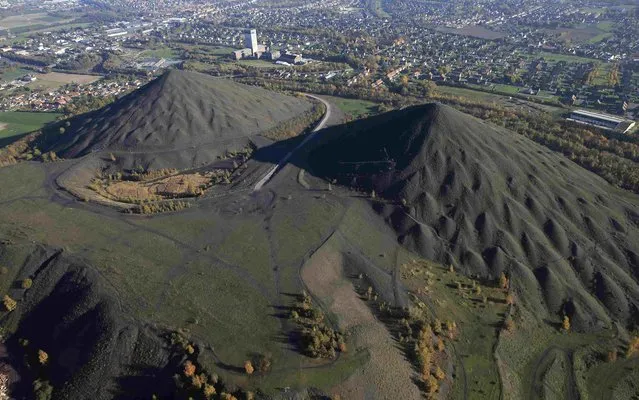
An aerial view shows the 11/19 pit and twin slag heaps at the former coal mine site in Loos-en-Gohelle, northern France, November 1, 2015. Loos-en-Gohelle, a town of 7000 inhabitants in the North of France, marked by the closure of coal mines in 1970, has demonstrated a successful transition from coal to a green economy. (Photo by Pascal Rossignol/Reuters)

An aerial view shows the 11/19 pit and twin slag heaps at the former coal mine site in Loos-en-Gohelle, northern France, November 1, 2015. Loos-en-Gohelle, a town of 7000 inhabitants in the North of France, marked by the closure of coal mines in 1970, has demonstrated a successful transition from coal to a green economy. (Photo by Pascal Rossignol/Reuters)
Details
07 Nov 2015 08:01:00
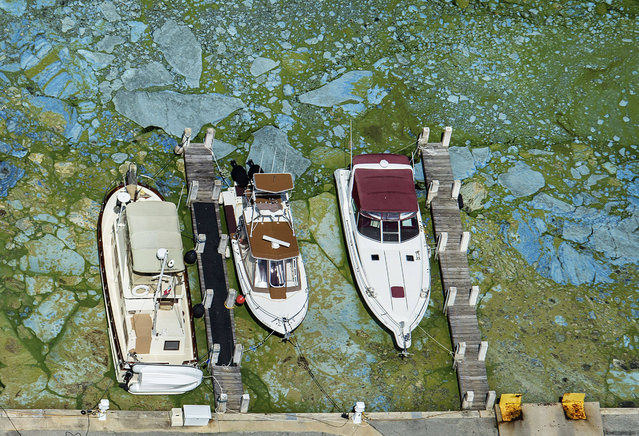
In this June 29, 2016 file photo, boats docked at Central Marine in Stuart, Fla., are surrounded by blue green algae. The 153-mile-long Indian River Lagoon has been plagued by harmful algae blooms. Water quality testing data analyzed by the AP showed the average phosphorous level – a byproduct of fertilizers and human waste that algae thrive on, rose nearly 75 percent between 2000 and 2016. (Photo by Greg Lovett/The Palm Beach Post via AP Photo)

In this June 29, 2016 file photo, boats docked at Central Marine in Stuart, Fla., are surrounded by blue green algae. The 153-mile-long Indian River Lagoon has been plagued by harmful algae blooms. Water quality testing data analyzed by the AP showed the average phosphorous level – a byproduct of fertilizers and human waste that algae thrive on, rose nearly 75 percent between 2000 and 2016. (Photo by Greg Lovett/The Palm Beach Post via AP Photo)
Details
11 May 2017 07:26:00