Loading...
Done
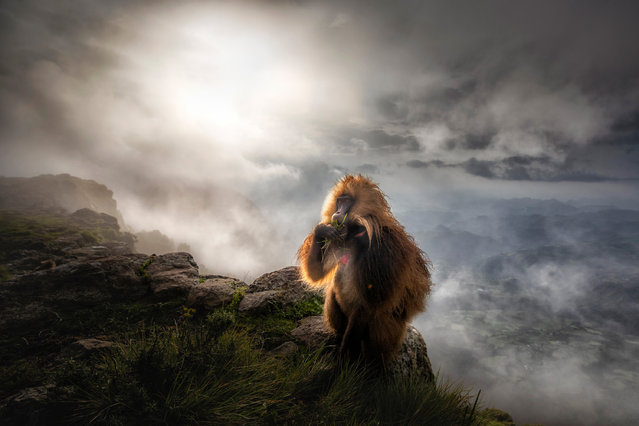
Highly commended, mammals: Gelada after the storm – Marco Gaiotti (Italy). “Gelada baboons are the only monkey species in the world that feed on grasses. They are native to the tableland of Ethiopia. Every morning large family groups wander from their sleeping places in the steep rock face, up to 1,000 metres high, to the feeding grounds at the tablelands. This image clearly depicts their feeding strategy: they pull out bunches of grass, sort the stalks and then lift them to their mouth. This shot was taken towards the end of the rainy season after a heavy storm”. (Photo by Marco Gaiotti/2019 GDT European Wildlife Photographer of the Year)

Highly commended, mammals: Gelada after the storm – Marco Gaiotti (Italy). “Gelada baboons are the only monkey species in the world that feed on grasses. They are native to the tableland of Ethiopia. Every morning large family groups wander from their sleeping places in the steep rock face, up to 1,000 metres high, to the feeding grounds at the tablelands. This image clearly depicts their feeding strategy: they pull out bunches of grass, sort the stalks and then lift them to their mouth. This shot was taken towards the end of the rainy season after a heavy storm”. (Photo by Marco Gaiotti/2019 GDT European Wildlife Photographer of the Year)
Details
31 Oct 2019 00:03:00
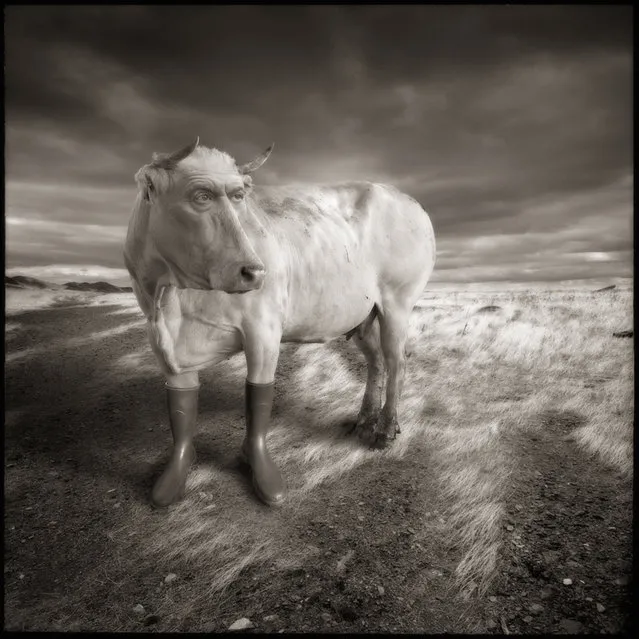
Darwin's theory. Photo Art by Yves Lecoq

“Darwin's theory”, 2011. (Photo by Yves Lecoq)
Details
23 Jul 2012 08:38:00
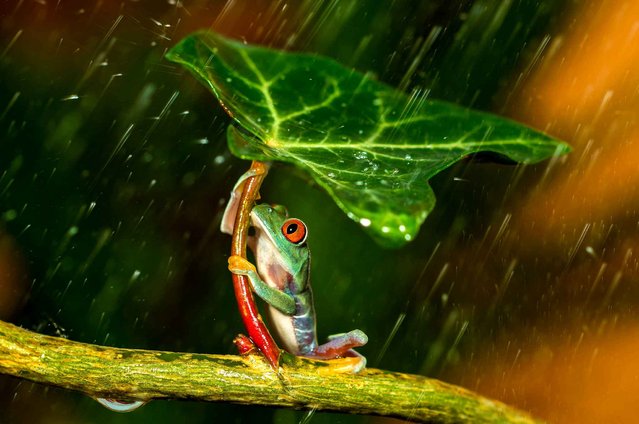
“Ohh no :( Raining”. (Photo by Kutub Uddin)

This photo was caught on camera by amateur photographer Kutub Uddin, 27, and was taken in his back garden in Bognor Regis, West Sussex. The red-eyed tree frogs have been Mr Uddin's pets for four months and he often lets them out to roam around his garden. Photo: “Ohh no :( Raining”. (Photo by Kutub Uddin)
Details
30 Jan 2014 08:42:00
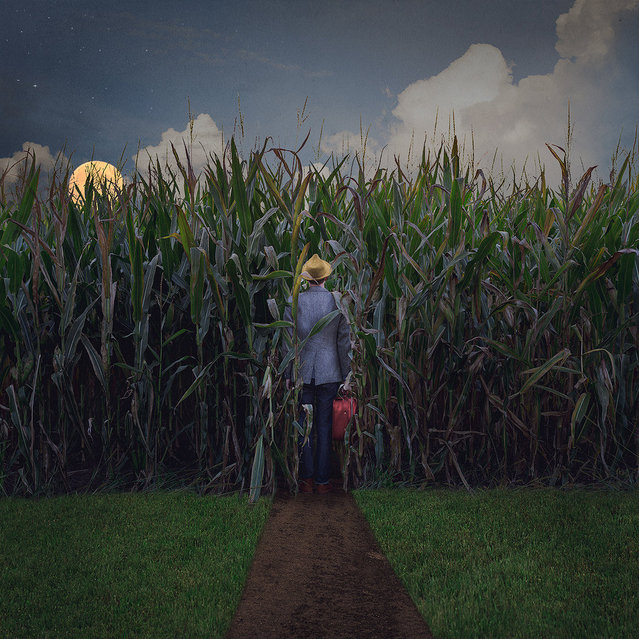
Photographer Logan Zillmer took this photo of the harvest moon above a corn field as part of his “Traveler” series on Flickr. (Photo by Logan Zillmer)

Photographer Logan Zillmer took this photo of the harvest moon above a corn field as part of his “Traveler” series on Flickr. (Photo by Logan Zillmer)
Details
22 Sep 2013 14:22:00
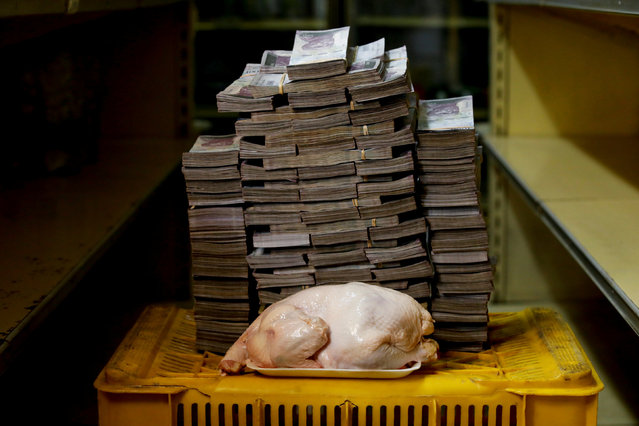
A 2.4 kg chicken is pictured next to 14,600,000 bolivars, its price and the equivalent of 2.22 USD, at a mini-market in Caracas, Venezuela August 16, 2018. It was the going price at an informal market in the low-income neighborhood of Catia. (Photo by Carlos Garcia Rawlins/Reuters)

A 2.4 kg chicken is pictured next to 14,600,000 bolivars, its price and the equivalent of 2.22 USD, at a mini-market in Caracas, Venezuela on August 16, 2018. It was the going price at an informal market in the low-income neighborhood of Catia. (Photo by Carlos Garcia Rawlins/Reuters)
Details
21 Aug 2018 00:01:00
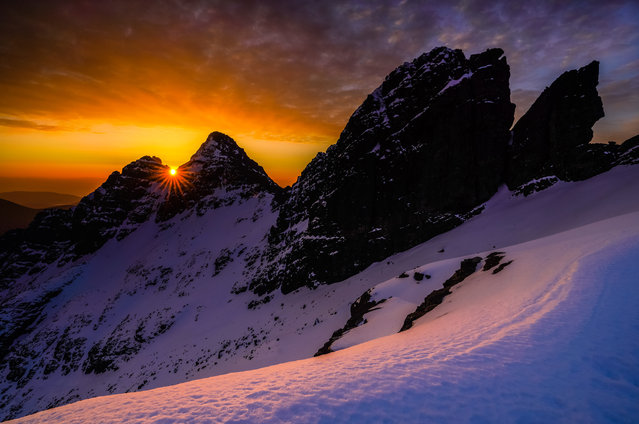
The sun rises between Sgurr nan Gillean and Knight’s Peak, Black Cuillin, Isle of Skye. (Photo by Adrian Trendall/Mountain Photo of the Year)

The sun rises between Sgurr nan Gillean and Knight’s Peak, Black Cuillin, Isle of Skye. (Photo by Adrian Trendall/Mountain Photo of the Year)
Details
13 Jan 2023 02:09:00
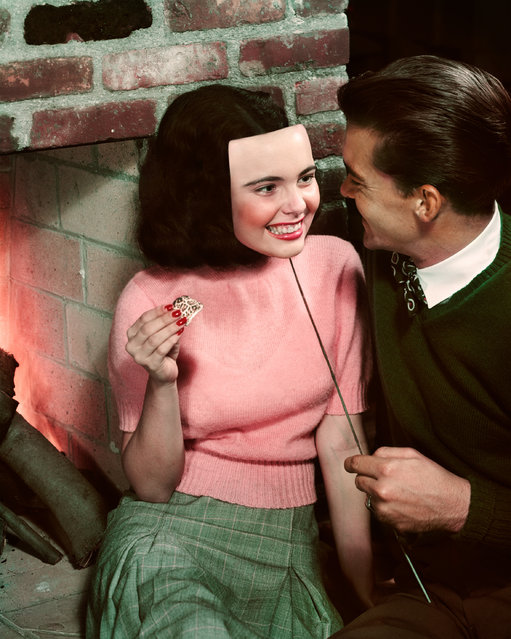
“Untitled #5”. “Family scenes, vacation souvenirs, everyday life, suspended anywhere between truth and fiction. It is hard to figure out whether they are spontaneous or entirely staged”. (Photo by Weronika Gęsicka/The Guardian)

In Weronika Gęsicka’s unsettling images, American archive photography gets distorted into scenes that are both nightmarish yet somehow entirely plausible. Gęsicka is a guest artist at the Circulations festival for young European photographers, Paris, until 5 March. Here: “Untitled #5”. (Photo by Weronika Gęsicka/The Guardian)
Details
23 Jan 2017 10:15:00
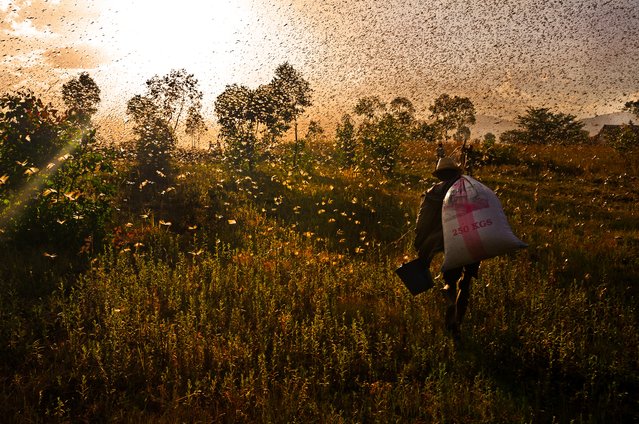
“Locusts & Men”. Oppression, interaction, collaboration. In the life cycle of nature nothing is lost, but the coexistence of different species is sometimes difficult. In Madagascar periodically returns the archaic antagonism between man and the migratory locust, in a circle of life where the two species are looking for space and food for their survival. Photo location: Madagascar, 2013. (Photo and caption by Michele Martinelli/National Geographic Photo Contest)

“Locusts & Men”. Oppression, interaction, collaboration. In the life cycle of nature nothing is lost, but the coexistence of different species is sometimes difficult. In Madagascar periodically returns the archaic antagonism between man and the migratory locust, in a circle of life where the two species are looking for space and food for their survival. At the end of the day a man walks home carrying on his shoulders the heavy bag which contains the locusts captured during the day. The insects provide nutritious meals for the man and his family. Photo location: Madagascar, 2013. (Photo and caption by Michele Martinelli/National Geographic Photo Contest)

ATTENTION! All pictures are presented in high resolution. To see Hi-Res images – just TWICE click on any picture. In other words, click small picture – opens the BIG picture. Click BIG picture – opens VERY BIG picture.
Details
03 Dec 2013 10:59:00