Loading...
Done
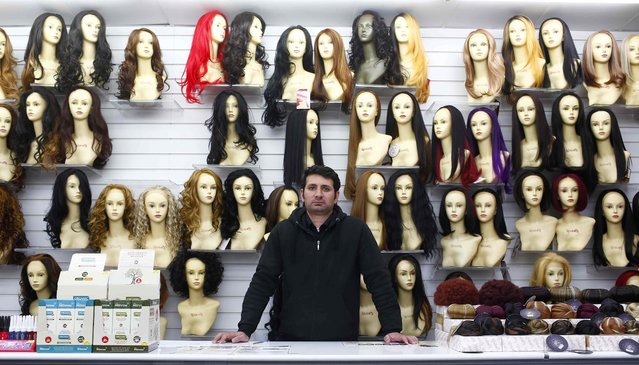
Kashir Mir, 34, poses for a photograph at his workplace, Juliet Wig Shop, in the London constituency of Brent Central, Britain, April 13, 2015. Mir, who was born in Pakistan, said: “I will vote but it's a secret. I also hope they can manage immigration better as I have been stopped and interviewed for hours returning from Pakistan. I'm an honest man, working here and paying my tax”. (Photo by Eddie Keogh/Reuters)

Kashir Mir, 34, poses for a photograph at his workplace, Juliet Wig Shop, in the London constituency of Brent Central, Britain, April 13, 2015. Mir, who was born in Pakistan, said: “I will vote but it's a secret. I also hope they can manage immigration better as I have been stopped and interviewed for hours returning from Pakistan. I'm an honest man, working here and paying my tax”. Brent, a northwest London neighbourhood that's home to Wembley football stadium, is among the most ethnically diverse areas in the United Kingdom. As the country approaches a closely fought election on May 7, Reuters photographer Eddie Keogh visited shopkeepers to get their views on the poll. (Photo by Eddie Keogh/Reuters)
Details
29 Apr 2015 06:30:00
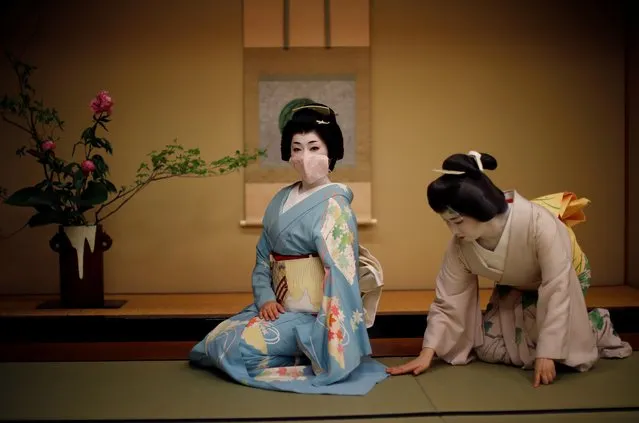
Mayu adjusts Koiku’s kimono, as Koiku wears a protective face mask while posing for a photograph, before they work at a party where they will entertain with other geisha at Japanese luxury restaurant Asada in Tokyo, Japan, June 23, 2020. The coronavirus pandemic has made Tokyo's geisha fear for their centuries-old profession as never before. Though the number of geisha - famed for their witty conversation, beauty and skill at traditional arts - has been falling for years, they were without work for months due to Japan's state of emergency and now operate under awkward social distancing rules. Engagements are down 95 percent, and come with new rules: no pouring drinks for customers or touching them even to shake hands, and sitting 2 meters apart. Masks are hard to wear with their elaborate wigs, so they mostly don't. “I was just full of anxiety”, said Mayu, 47. “I went through my photos, sorted my kimonos ... The thought of a second wave is terrifying”. (Photo by Kim Kyung-Hoon/Reuters)

Mayu adjusts Koiku’s kimono, as Koiku wears a protective face mask while posing for a photograph, before they work at a party where they will entertain with other geisha at Japanese luxury restaurant Asada in Tokyo, Japan, June 23, 2020. (Photo by Kim Kyung-Hoon/Reuters)
Details
23 Jul 2020 00:03:00
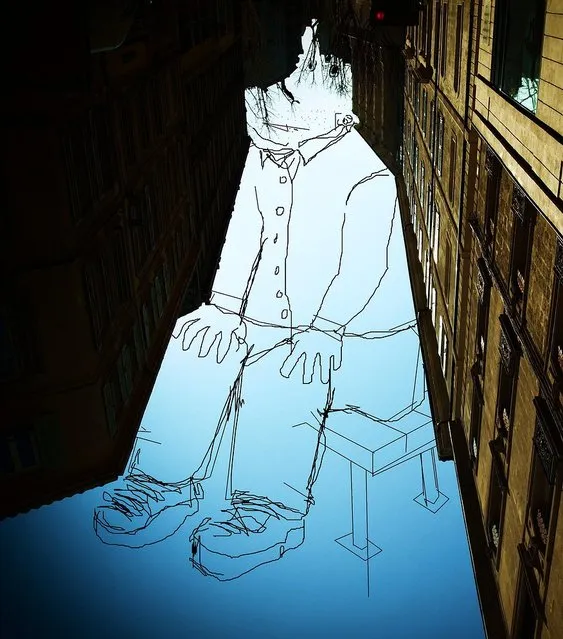
Whimsical Sky Art by Thomas Lamadieu

French artist Thomas Lamadieu, also know as Roots Art, must really love looking at the sky. Every time he looks up, Thomas sees a potential canvas where the building rooftops frame the sky. He photographs it and uses the odd sky shapes to create whimsical line drawings. “My artistic aim is to show a different perception of urban architecture and the everyday environment around us, what we can construct with a boundless imagination,” says Thomas. (Photo by Thomas Lamadieu)
Details
22 Apr 2013 05:17:00
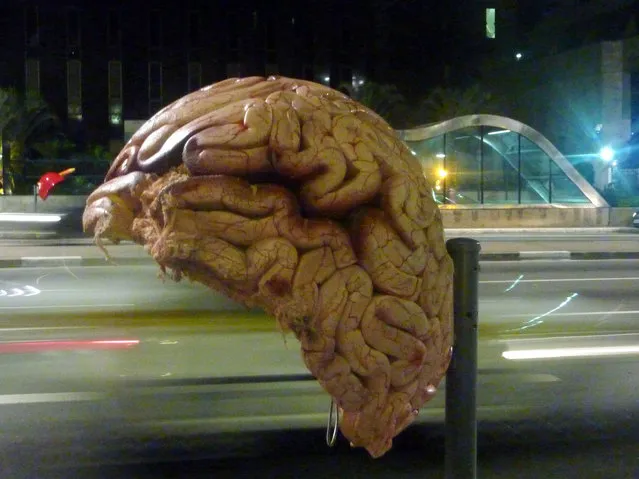
Call Paradei In Sao Paulo

Call Parade is an ongoing public art project in São Paulo sponsored by Brazilian telecommunications firm Vivo, that paired 100 artists with 100 street-side phone booths giving them free reign to transform the peculiar hooded fixtures into anything imaginable. The exhibition has proven to be extremely popular and Brazilian photographer Mariane Borgomani set out to capture a number of the phones, my favorite of which is the painted day/night treatment above by artist Maramgoní.
Details
26 Jun 2015 07:41:00
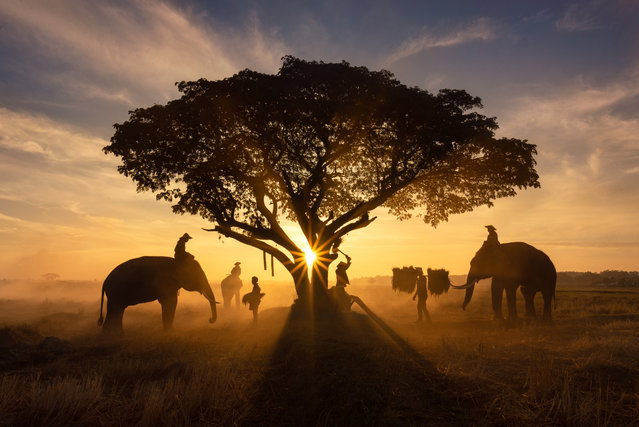
These eye-catching photographs capture the special relationship between a group of farmers and elephants – with a gorgeous sunset in the background. Vithun Khamsong, a civil engineer, shot the images earlier this year while visiting Surin, Thailand. Khamsong said: “My favorite is the one where the sunset can be seen behind the man and the elephant. I was impressed and wanted to capture this lifestyle for other people see it”. (Photo by Vithun Khamsong/Caters News Agency)

These eye-catching photographs capture the special relationship between a group of farmers and elephants – with a gorgeous sunset in the background. Vithun Khamsong, a civil engineer, shot the images earlier this year while visiting Surin, Thailand. (Photo by Vithun Khamsong/Caters News Agency)
Details
11 Sep 2019 00:03:00
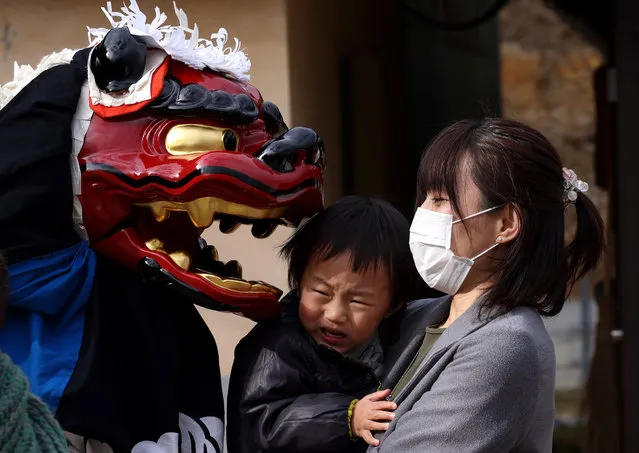
A performer wearing a lion mask performs the Ise Daikagura lion dance at the remote village of Yamanawa on February 08, 2021 in Ryuo, Japan. Ise Daikagura is a group of traditional Lion Dance performers who pray in front of farmers houses and businesses for good grain harvests and disease-free lives. Performers play sacred music using drums and flutes with two lion mask dancers. A lion mask is considered a symbol of God, who enters the house and performs in front of the Shinto God, a statue placed inside the house, mostly in the kitchen. These prayers are called “Kamodo Barai”. After the prayers, they are gifted with money, rice, sake and Japanese sweets from the householders. A group can travel for more than one hundred days to thousands of households and businesses throughout rural-villages in western Japan, and pray to those who are unable to visit the country’s most sacred shrine, the Grand Ise Shrine in Mie Prefecture. The group started its performance in the Edo era between 1603 to 1868 according to Japanese history. The Japanese government designated it as an important folk cultural national property in 1981. (Photo by Buddhika Weerasinghe/Getty Images)

A performer wearing a lion mask performs the Ise Daikagura lion dance at the remote village of Yamanawa on February 08, 2021 in Ryuo, Japan. Ise Daikagura is a group of traditional Lion Dance performers who pray in front of farmers houses and businesses for good grain harvests and disease-free lives. (Photo by Buddhika Weerasinghe/Getty Images)
Details
18 Feb 2021 09:27:00
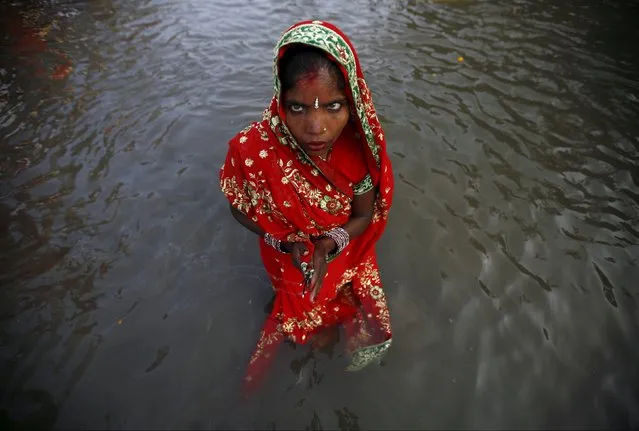
A devotee offers prayers to the setting sun during the "Chhat" festival at Bagmati river in Kathmandu, Nepal November 17, 2015. (Photo by Navesh Chitrakar/Reuters)

A devotee offers prayers to the setting sun during the "Chhat" festival at Bagmati river in Kathmandu, Nepal November 17, 2015. Hindus in Nepal celebrate "Chhat", a four-day festival that honours the sun god, by praying at sunrise and sunset, and seek blessings for one's family by giving offerings. (Photo by Navesh Chitrakar/Reuters)
Details
19 Nov 2015 08:01:00
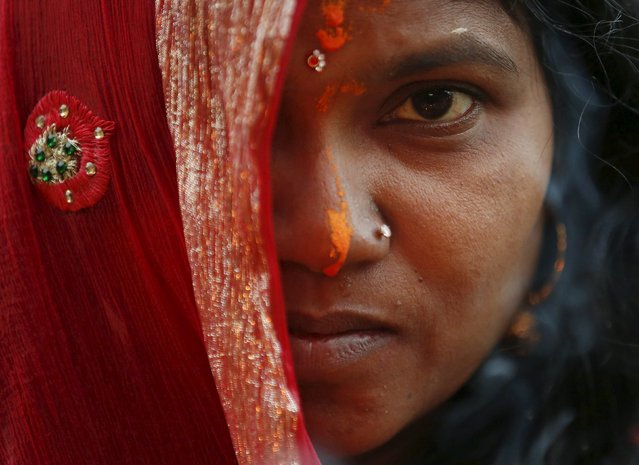
A face of a devotee covered with her cloth is pictured as she offers prayers to the rising sun during the "Chhat" festival in Kathmandu, Nepal November 18, 2015. (Photo by Navesh Chitrakar/Reuters)

A face of a devotee covered with her cloth is pictured as she offers prayers to the rising sun during the "Chhat" festival in Kathmandu, Nepal November 18, 2015. Hindus in Nepal celebrate "Chhat", a four-day festival that honours the sun god by praying at sunrise and sunset and seeking blessings for ones family by giving offerings. (Photo by Navesh Chitrakar/Reuters)
Details
20 Nov 2015 08:00:00