Loading...
Done
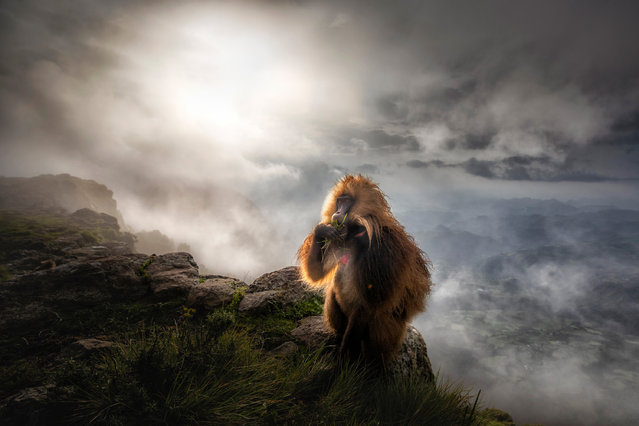
Highly commended, mammals: Gelada after the storm – Marco Gaiotti (Italy). “Gelada baboons are the only monkey species in the world that feed on grasses. They are native to the tableland of Ethiopia. Every morning large family groups wander from their sleeping places in the steep rock face, up to 1,000 metres high, to the feeding grounds at the tablelands. This image clearly depicts their feeding strategy: they pull out bunches of grass, sort the stalks and then lift them to their mouth. This shot was taken towards the end of the rainy season after a heavy storm”. (Photo by Marco Gaiotti/2019 GDT European Wildlife Photographer of the Year)

Highly commended, mammals: Gelada after the storm – Marco Gaiotti (Italy). “Gelada baboons are the only monkey species in the world that feed on grasses. They are native to the tableland of Ethiopia. Every morning large family groups wander from their sleeping places in the steep rock face, up to 1,000 metres high, to the feeding grounds at the tablelands. This image clearly depicts their feeding strategy: they pull out bunches of grass, sort the stalks and then lift them to their mouth. This shot was taken towards the end of the rainy season after a heavy storm”. (Photo by Marco Gaiotti/2019 GDT European Wildlife Photographer of the Year)
Details
31 Oct 2019 00:03:00
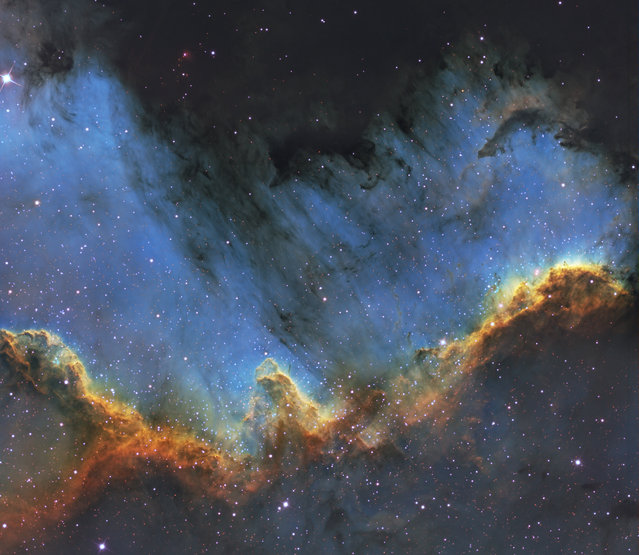
The Cygnus Wall is in the southern  area of NGC7000 also known as the North America Nebula. It is approximately 1800 light years from Earth, and is in the constellation Cygnus. The Wall is an energized shock front and contains the most concentrated star formations in the nebula. The size of the North America Nebula is about 4 full moons. (Bill Snyder)

Amateur astronomer Bill Snyder has been involved with astrophotography since 2007. Photo: The Cygnus Wall is in the southern area of NGC7000 also known as the North America Nebula. It is approximately 1800 light years from Earth, and is in the constellation Cygnus. The Wall is an energized shock front and contains the most concentrated star formations in the nebula. The size of the North America Nebula is about 4 full moons. (Photo and caption by Bill Snyder)
Details
30 Oct 2013 09:15:00
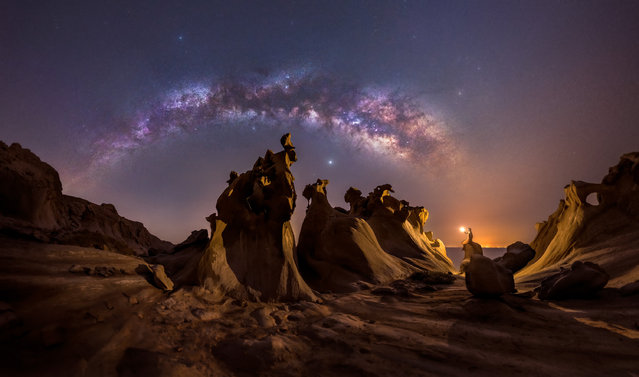
Night lovers; Hormozgan province, Iran. “In this picture, you can see the Milky Way rising on a fascinating spring night on the Persian Gulf coast. The stunning cliffs of this area make every viewer imagine and even talk to them! The light pollution from a faraway city was quite strong, so it was a challenging post-processing process. I’m a nightscaper who tries to achieve an artistic look in my images, and in this image, I tried to convey and capture the magic of this location”. (Photo by Mohammad Hayati/Milky Way Photographer of the Year)

Night lovers; Hormozgan province, Iran. “In this picture, you can see the Milky Way rising on a fascinating spring night on the Persian Gulf coast. The stunning cliffs of this area make every viewer imagine and even talk to them! The light pollution from a faraway city was quite strong, so it was a challenging post-processing process. I’m a nightscaper who tries to achieve an artistic look in my images, and in this image, I tried to convey and capture the magic of this location”. (Photo by Mohammad Hayati/Milky Way Photographer of the Year)
Details
01 Jun 2021 09:42:00
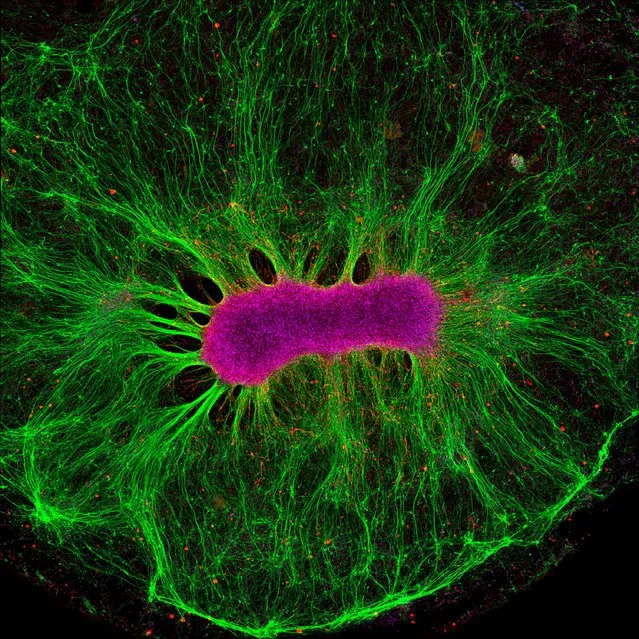
Brain-on-a-chip. Dazzling in green and magenta this image shows the nerve fibres (in green) produced by neural stem cells (in magenta) as they grow on a synthetic gel. Captured by a technique known as confocal microscopy, the image is part of research shedding light on how tinkering with the environment can affect the way in which nerve fibres grow. (Photo by Collin Edington and Iris Lee/Massachusetts Institute of Technology/Wellcome Images)

Brain-on-a-chip. Dazzling in green and magenta this image shows the nerve fibres (in green) produced by neural stem cells (in magenta) as they grow on a synthetic gel. Captured by a technique known as confocal microscopy, the image is part of research shedding light on how tinkering with the environment can affect the way in which nerve fibres grow. (Photo by Collin Edington and Iris Lee/Massachusetts Institute of Technology/Wellcome Images)
Details
17 Mar 2017 00:01:00
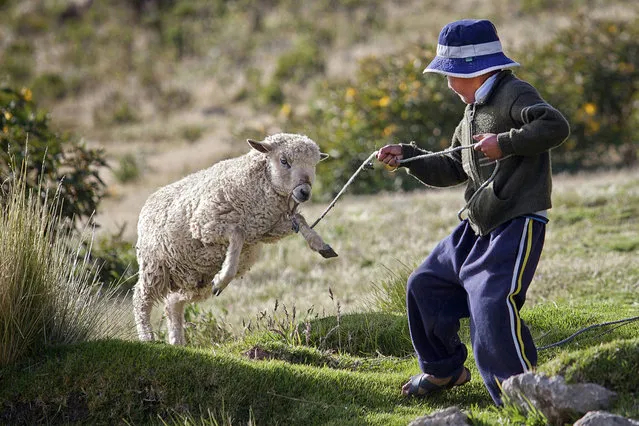
“The Challenge!” Young boy relishes in a game of tug of war before school. Photo location:  Lake Titicaca, Peru. (Photo and caption by Paul Heyman/National Geographic Photo Contest)

“The Challenge!” Young boy relishes in a game of tug of war before school. Photo location: Lake Titicaca, Peru. (Photo and caption by Paul Heyman/National Geographic Photo Contest)
Details
18 Jun 2014 12:40:00
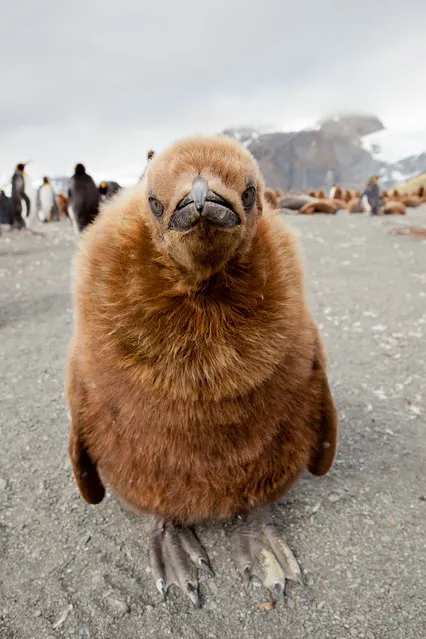
“Cub”. In the colony of penguins in South Georgia. (Photo and caption by Ondrej Zaruba/National Geographic Traveler Photo Contest)

“Cub”. In the colony of penguins in South Georgia. (Photo and caption by Ondrej Zaruba/National Geographic Traveler Photo Contest)

ATTENTION! All pictures are presented in high resolution. To see Hi-Res images – just TWICE click on any picture. In other words, click small picture – opens the BIG picture. Click BIG picture – opens VERY BIG picture.
Details
28 Jun 2013 12:32:00
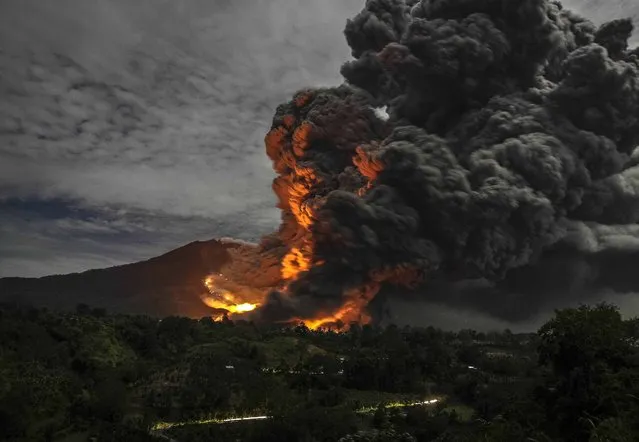
Mount Sinabung volcano erupts, as seen from Tiga Pancur village, Karo Regency in Indonesia's North Sumatra province October 8, 2014. (Photo by Y. T. Haryono/Reuters)

Mount Sinabung volcano erupts, as seen from Tiga Pancur village, Karo Regency in Indonesia's North Sumatra province October 8, 2014. (Photo by Y. T. Haryono/Reuters)
Details
11 Oct 2014 13:23:00
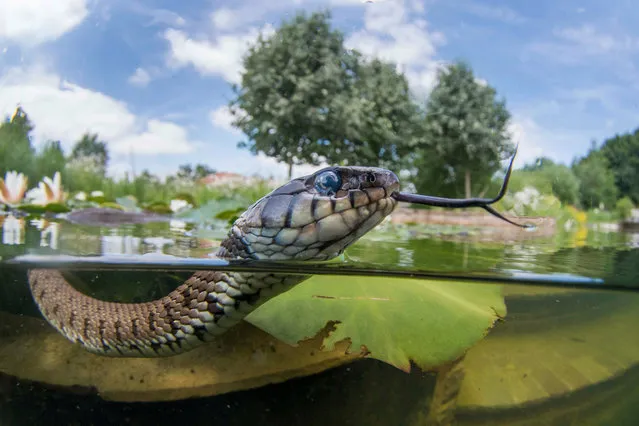
British Waters Wide Angle category runner-up. Grass snake swimming along a garden pond by Jack Perks (UK)in Nottinghamshire, UK. “I’m always on the lookout for unusual freshwater subjects and grass snakes are a species I’ve been after for years. I was told about a pond where the odd grass snake hangs around the lilly pads for frogs. I put my drysuit on and got into the water and could see one slithering along the surface. Slowly making my way towards it with my head only just poking above I got the spilt shot”. (Photo by Jack Perks/Underwater Photographer of the Year 2019)

British Waters Wide Angle category runner-up. Grass snake swimming along a garden pond by Jack Perks (UK)in Nottinghamshire, UK. “I’m always on the lookout for unusual freshwater subjects and grass snakes are a species I’ve been after for years. I was told about a pond where the odd grass snake hangs around the lilly pads for frogs. I put my drysuit on and got into the water and could see one slithering along the surface. Slowly making my way towards it with my head only just poking above I got the spilt shot”. (Photo by Jack Perks/Underwater Photographer of the Year 2019)
Details
28 Feb 2019 00:03:00