Loading...
Done
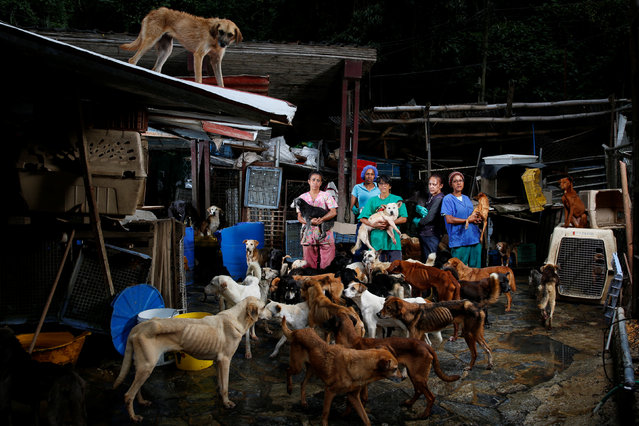
(L-R) Maria Silva, Milena Cortes, Maria Arteaga, Jackeline Bastidas and Gissy Abello pose for a picture at the Famproa dogs shelter where they work, in Los Teques, Venezuela, August 25, 2016. Venezuelans struggling to feed their families let alone their pets are dumping animals on the streets, in parks and at makeshift homes overrun with scrawny animals amid an economic crisis. An hour from Caracas in Los Teques, hundreds of dogs bark and run around the streets scavenging for food outside a makeshift shelter. People come by every few hours to hand over scrawny dogs which are fed by volunteers every day. Venezuela is undergoing a major economic and social crisis, with shortages of basic foods and medicines. Triple digit inflation is hitting everybody hard, including those who own pets. (Photo by Carlos Garcia Rawlins/Reuters)

(L-R) Maria Silva, Milena Cortes, Maria Arteaga, Jackeline Bastidas and Gissy Abello pose for a picture at the Famproa dogs shelter where they work, in Los Teques, Venezuela, August 25, 2016. Venezuelans struggling to feed their families let alone their pets are dumping animals on the streets, in parks and at makeshift homes overrun with scrawny animals amid an economic crisis. An hour from Caracas in Los Teques, hundreds of dogs bark and run around the streets scavenging for food outside a makeshift shelter. (Photo by Carlos Garcia Rawlins/Reuters)
Details
08 Sep 2016 10:01:00
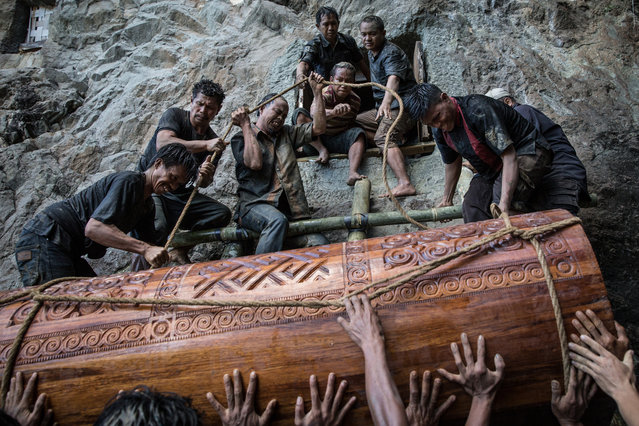
It is said that Torajans are people who “live to die”. For this Indonesian ethnic group, funerals are such extravagant events that they sometimes attract tourists. Families can postpone burials years (and the deceased are considered sick and hosted at home until the funeral) until the family can raise enough money and gather as many relatives as possible. And then it’s a jubilant multiday social event with a parade, dances and animal sacrifices. Agung Parameswara photographed these funerary practices when he traveled to South Sulawesi province, where the Torajans live. But often, their funeral isn’t the last time the dead are seen. In August, crypts are opened, coffins are slid back out and bodies delicately unsheathed. This tender ritual is known as Ma’Nene, which is customarily performed every few years. (Photo by Agung Parameswara/The Washington Post)

It is said that Torajans are people who “live to die”. For this Indonesian ethnic group, funerals are such extravagant events that they sometimes attract tourists. Families can postpone burials years (and the deceased are considered sick and hosted at home until the funeral) until the family can raise enough money and gather as many relatives as possible. And then it’s a jubilant multiday social event with a parade, dances and animal sacrifices. Agung Parameswara photographed these funerary practices when he traveled to South Sulawesi province, where the Torajans live. (Photo by Agung Parameswara/The Washington Post)
Details
06 Oct 2016 09:15:00
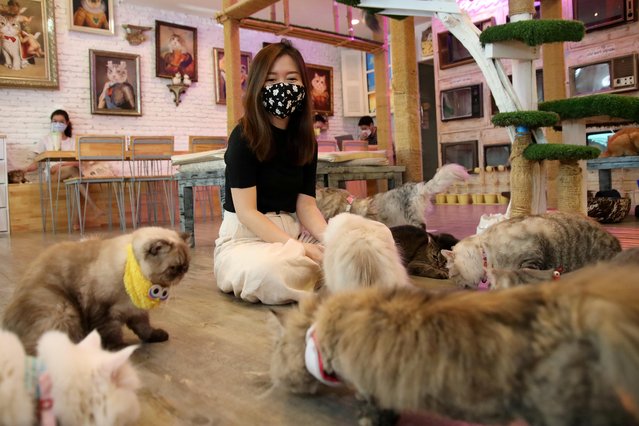
Customers play with cats to find comfort at the Caturday Cat cafe after the government started opening some restaurants outside shopping malls, parks and barbershops, during the coronavirus disease (COVID-19) outbreak in Bangkok, Thailand on May 7, 2020. (Photo by Juarawee Kittisilpa/Reuters)

Customers play with cats to find comfort at the Caturday Cat cafe after the government started opening some restaurants outside shopping malls, parks and barbershops, during the coronavirus disease (COVID-19) outbreak in Bangkok, Thailand on May 7, 2020. (Photo by Juarawee Kittisilpa/Reuters)
Details
19 May 2020 00:05:00
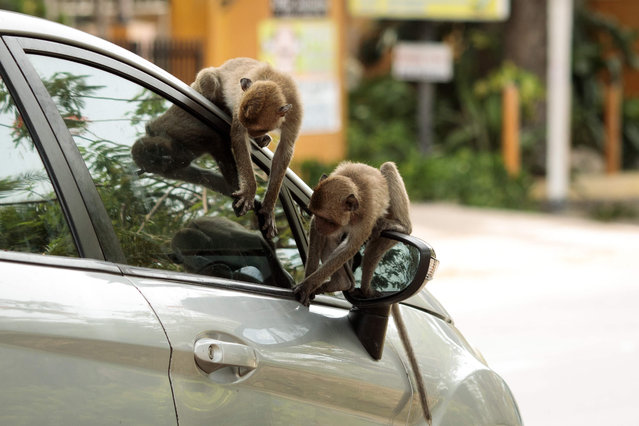
Macaque monkeys sit on a car in Hua Hin on May 29, 2020, as low tourist numbers due to the ongoing COVID-19 novel coronavirus situation have resulted in a decrease in the number of people feeding them. The monkeys in the town are going hungry as a consequence of the drop in tourism as a result of the COVID-19 coronavirus pandemic. (Photo by Jack Taylor/AFP Photo)

Macaque monkeys sit on a car in Hua Hin on May 29, 2020, as low tourist numbers due to the ongoing COVID-19 novel coronavirus situation have resulted in a decrease in the number of people feeding them. The monkeys in the town are going hungry as a consequence of the drop in tourism as a result of the COVID-19 coronavirus pandemic. (Photo by Jack Taylor/AFP Photo)
Details
22 Jun 2020 00:05:00
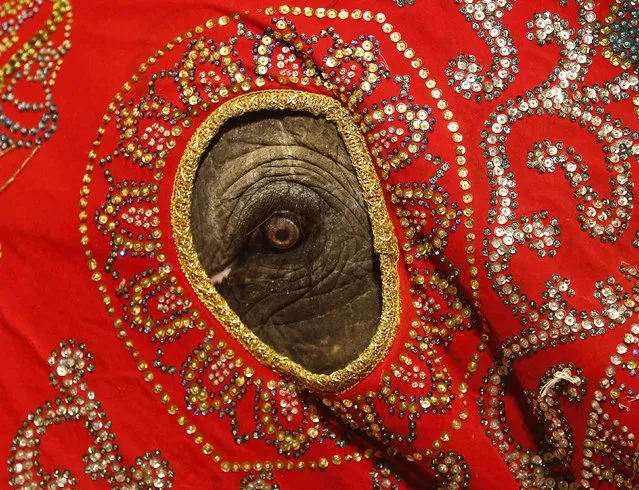
A decorated elephant march at the Navam Perahera, a Buddhist pageant of elephants, dancers and drummers, in Colombo February 3, 2015. (Photo by Dinuka Liyanawatte/Reuters)

A decorated elephant march at the Navam Perahera, a Buddhist pageant of elephants, dancers and drummers, in Colombo February 3, 2015. Over 50 elephants participated in the street parade for Gangaramaya temple's annual Perahera festival, along with a nightly procession of traditional dancers, fire twirlers and traditional musicians. (Photo by Dinuka Liyanawatte/Reuters)
Details
05 Feb 2015 12:49:00
Francisco Domingo Joaquim Has the World’s Largest Mouth

Known as the Angolan Jaw of Awe, 20-year-old Francisco Domingo Joaquim has earned the title of “world’s widest mouth”.
Details
07 Oct 2014 15:32:00
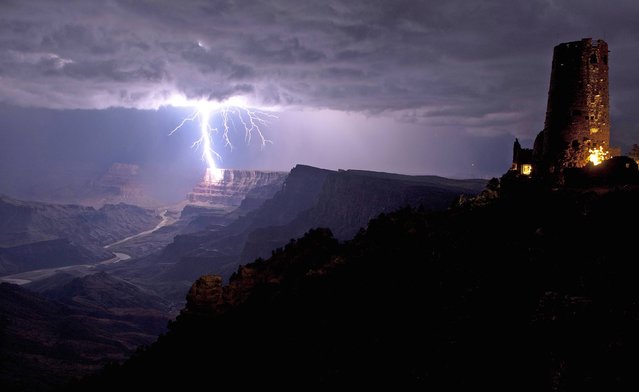
This is the incredible moment a fierce lightning bolt crashed against the Grand Canyon illuminating the steep canyon walls. Shrouded in darkness, the breath-taking landscape was shocked into life as mother nature sent the bolt storming down to Earth. (Photo by Travis Roe/U.S. Dept. of the Interior/Caters News)

This is the incredible moment a fierce lightning bolt crashed against the Grand Canyon illuminating the steep canyon walls. Shrouded in darkness, the breath-taking landscape was shocked into life as mother nature sent the bolt storming down to Earth. As it cracked against the rocks the bright blue bolt illuminated the South Rim of the canyon, considered one of the Seven Natural Wonders of the World. With just the Desert View Watchtower in the foreground, the lightning was perfectly framed by the canyon which is located in Arizona, USA. (Photo by Travis Roe/U.S. Dept. of the Interior/Caters News)
Details
14 May 2013 11:00:00
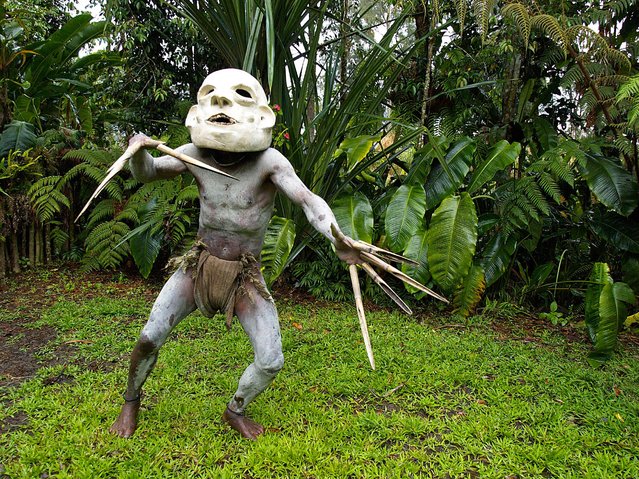
The mudmen come from the country’s western highlands, where there are virtually no roads, cars, electricity or shops. (Photo by Jeremy Hunter/Exclusivepix Media)

For centuries the Highlands peoples of Papua New Guinea fought over land, women and pigs. Sorcery and battle skills could elevate a clan to Bigmanship, where the bigger the “presentation”, the bigger the man. Clans therefore would paint their bodies and create fearsome masks as part of their psy. Here: These are the terrifying tribe of “mudmen” from a remote part of Papua New Guinea. (Photo by Jeremy Hunter/Exclusivepix Media)
Details
08 May 2017 08:12:00