Loading...
Done
A reveler dances during the Carmelitas street party in Rio de Janeiro, Brazil, Friday, March 1, 2019. Much of the appeal of Rio street parties is the variety of themes and that people can dress up in costumes or not. (Photo by Leo Correa/AP Photo)

A reveler dances during the Carmelitas street party in Rio de Janeiro, Brazil, Friday, March 1, 2019. Much of the appeal of Rio street parties is the variety of themes and that people can dress up in costumes or not. (Photo by Leo Correa/AP Photo)
Details
03 Mar 2019 00:07:00
Nora Mork of Norway celebrates scoring a goal during the women's bronze medal handball match between Norway and Sweden of the Tokyo 2020 Olympic Games at the Yoyogi National Stadium in Tokyo on August 8, 2021. (Photo by Susana Vera/Reuters)

Nora Mork of Norway celebrates scoring a goal during the women's bronze medal handball match between Norway and Sweden of the Tokyo 2020 Olympic Games at the Yoyogi National Stadium in Tokyo on August 8, 2021. (Photo by Susana Vera/Reuters)
Details
09 Aug 2021 08:38:00
A reveler takes part of the Light Festival parade in San Jose, Costa Rica on December 14, 2019. (Photo by Ezequiel Becerra/AFP Photo)

A reveler takes part of the Light Festival parade in San Jose, Costa Rica on December 14, 2019. (Photo by Ezequiel Becerra/AFP Photo)
Details
17 Dec 2019 00:07:00
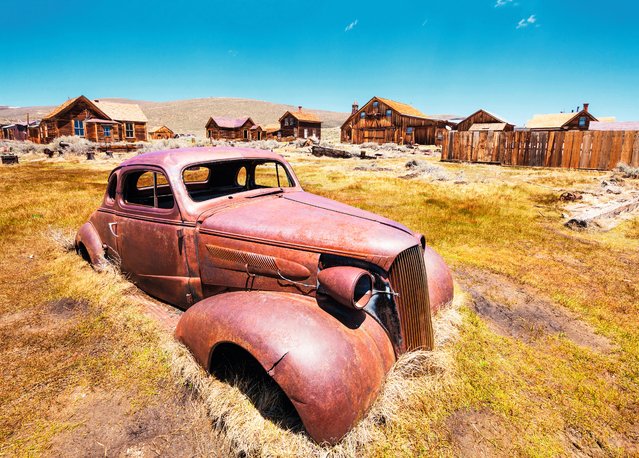
Bodie, Mono County, California. Gold was discovered at Bodie in 1859 (just after the initial California gold rush) and it went from mining camp to boomtown. Its decline began in 1880, when word spread of new boomtowns elsewhere. The Standard Consolidated Mine closed in 1913, and four years later the Bodie Railway was abandoned. By 1940 the population was down to 40. Today, Bodie is maintained in a state of arrested decay as a visitor attraction. (Photo by Alamy Stock Photo)

Kieron Connolly’s new book of photographs of more than 100 once-busy and often elegant buildings gives an idea of how the world might look if humankind disappeared. Here: Bodie, Mono County, California. Gold was discovered at Bodie in 1859 (just after the initial California gold rush) and it went from mining camp to boomtown. Its decline began in 1880, when word spread of new boomtowns elsewhere. The Standard Consolidated Mine closed in 1913, and four years later the Bodie Railway was abandoned. By 1940 the population was down to 40. Today, Bodie is maintained in a state of arrested decay as a visitor attraction. (Photo by Alamy Stock Photo)
Details
07 Sep 2016 09:50:00
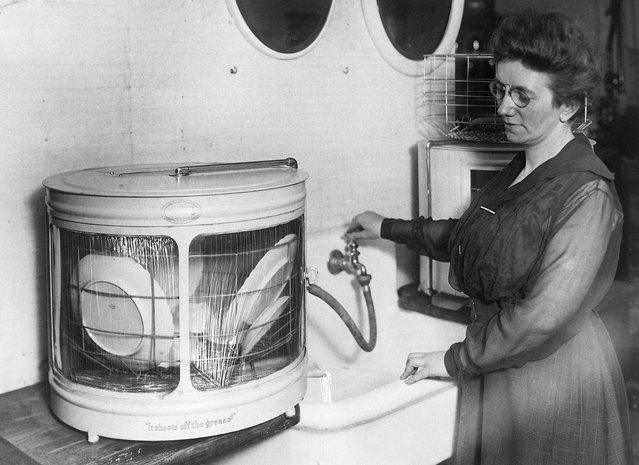
All the drugery of dishwashing in this three-times -a day task, which comes to the house wife who does her own house work, has been eliminated by the new dish washer shown in the photograph on April 25, 1921. It is the invention of a Cincinnati school teacher, who sought to make things a bit more pleasant for his wife. Incedently, his idea was worth 12,00 to him, for a manufacturing concern thought so much of the “dish-washer” they purchased the rights and will seek to add a little joy to thousands of other housewives. With the aid of only hot water, dishes placed in a wire rack and set into the drum are made clean and spotless in two minutes. (Photo by Bettmann Archive/Getty Images)


All the drugery of dishwashing in this three-times -a day task, which comes to the house wife who does her own house work, has been eliminated by the new dish washer shown in the photograph on April 25, 1921. It is the invention of a Cincinnati school teacher, who sought to make things a bit more pleasant for his wife. Incedently, his idea was worth 12,00 to him, for a manufacturing concern thought so much of the “dish-washer” they purchased the rights and will seek to add a little joy to thousands of other housewives. With the aid of only hot water, dishes placed in a wire rack and set into the drum are made clean and spotless in two minutes. (Photo by Bettmann Archive/Getty Images)

Details
08 Jul 2021 10:25:00
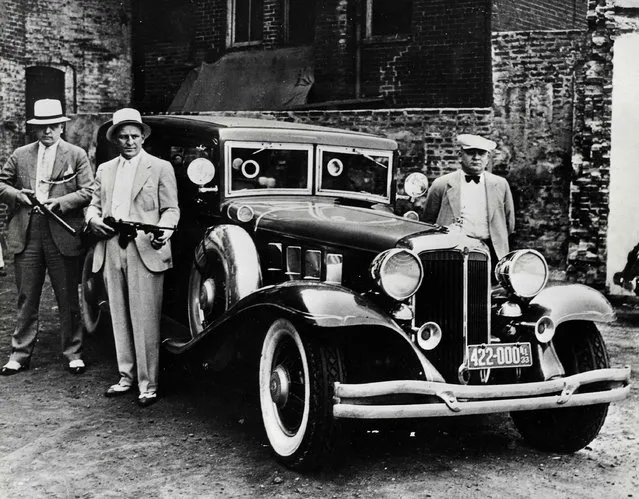
An armoured vehicle surrounded by Chicago cops at the time of the American depression, 1933. (Photo by Rolls Press/Popperfoto/Getty Images)

An armoured vehicle surrounded by Chicago cops at the time of the American depression, 1933. (Photo by Rolls Press/Popperfoto/Getty Images)
Details
10 Feb 2017 00:02:00
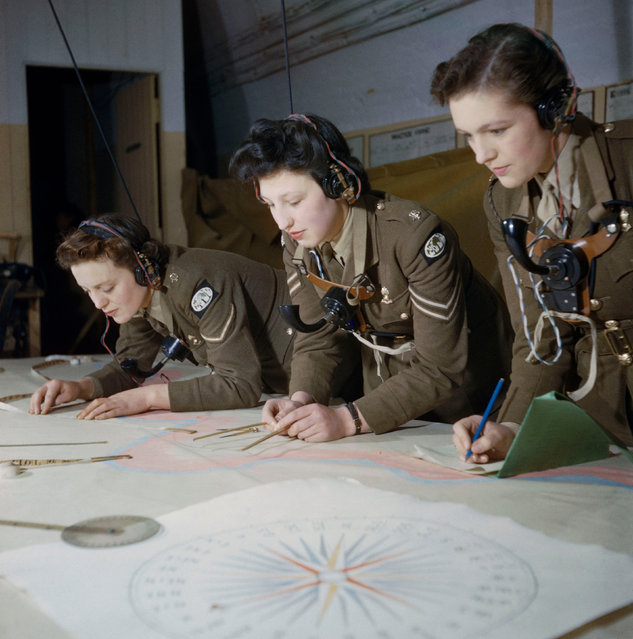
Auxiliary Territorial Service (ATS) plotters at work at Coastal Artillery Headquarters in Dover, December 1942. (Photo by Ted Dearberg/IWM/PA Wire)

Auxiliary Territorial Service (ATS) plotters at work at Coastal Artillery Headquarters in Dover, December 1942. The Auxiliary Territorial Service was the women's branch of the British Army during the Second World War. It was formed on 9 September 1938, initially as a women's voluntary service, and existed until 1 February 1949, when it was merged into the Women's Royal Army Corps. The ATS had its roots in the Women's Auxiliary Army Corps (WAAC), which was formed in 1917 as a voluntary service. During the First World War its members served in a number of jobs including clerks, cooks, telephonists and waitresses. The WAAC was disbanded after four years in 1921. (Photo by Ted Dearberg/IWM/PA Wire)
Details
13 Jul 2017 07:52:00
Female indigenous players vie for the ball during the final match of Peladao, the amateur football tournament, in Manaus, Amazonas state, Brazil, on November 24, 2013. Peladao is known as the biggest amateur football tournament in the world, with more than 1000 teams competing in various categories since 1973. The indigenous category was created in 2005 and eight teams participated this year. (Photo by Yasuyoshi Chiba/AFP Photo)

Female indigenous players vie for the ball during the final match of Peladao, the amateur football tournament, in Manaus, Amazonas state, Brazil, on November 24, 2013. Peladao is known as the biggest amateur football tournament in the world, with more than 1000 teams competing in various categories since 1973. The indigenous category was created in 2005 and eight teams participated this year. (Photo by Yasuyoshi Chiba/AFP Photo)
Details
01 Dec 2013 10:37:00