Loading...
Done
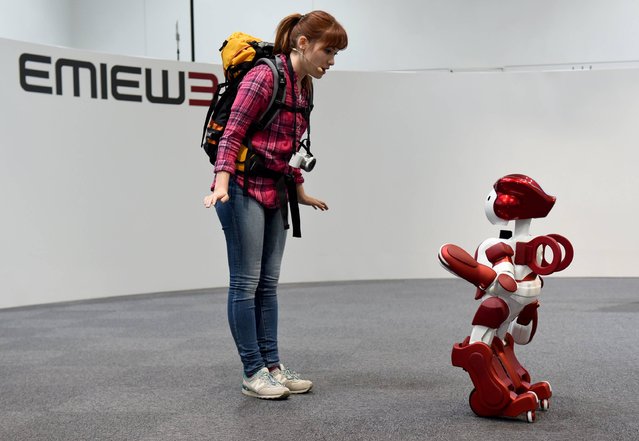
The “EMIEW3” robot (R) demonstrates communicating with a visitor during a press preview in Tokyo on April 8, 2016. Japanese electronics giant Hitachi unveiled its humanoid customer service and guidance robot “EMIEW3” and “remote brain” robotics IT platform. (Photo by Toshifumi Kitamura/AFP Photo)

The “EMIEW3” robot (R) demonstrates communicating with a visitor during a press preview in Tokyo on April 8, 2016. Japanese electronics giant Hitachi unveiled its humanoid customer service and guidance robot “EMIEW3” and “remote brain” robotics IT platform. (Photo by Toshifumi Kitamura/AFP Photo)
Details
08 Apr 2016 15:26:00


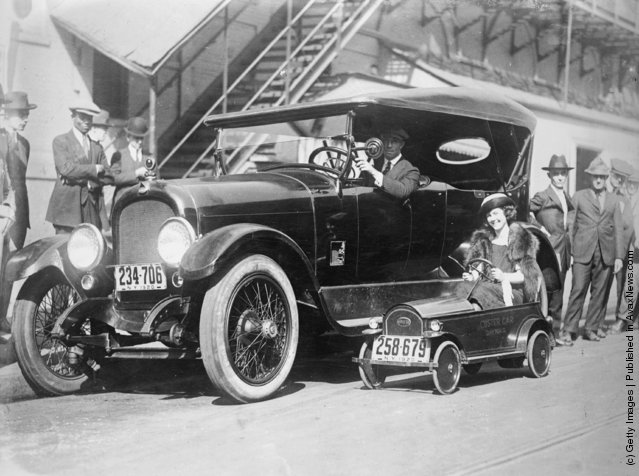
“Custer” the smallest car in the US. (Photo by Topical Press Agency/Getty Images). 1920
Details
28 Mar 2011 14:10:00
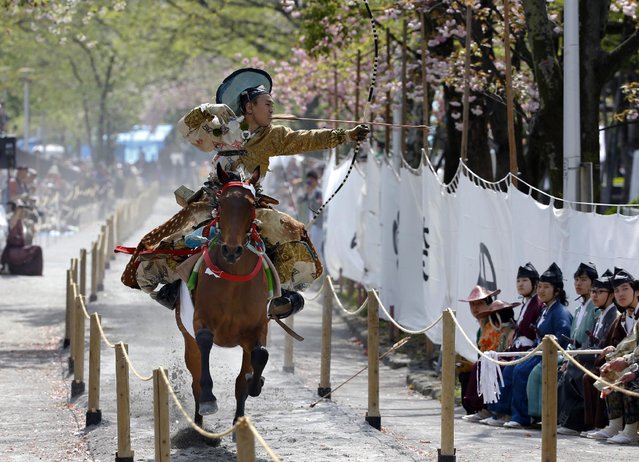
An archer in a samurai warrior costume aims at a target in the Asakusa Yabusame horseback archery event at Sumida Park in Tokyo, Saturday, April 18, 2015. (Photo by Shizuo Kambayashi/AP Photo)

An archer in a samurai warrior costume aims at a target in the Asakusa Yabusame horseback archery event at Sumida Park in Tokyo, Saturday, April 18, 2015. (Photo by Shizuo Kambayashi/AP Photo)
Details
25 Apr 2015 10:17:00
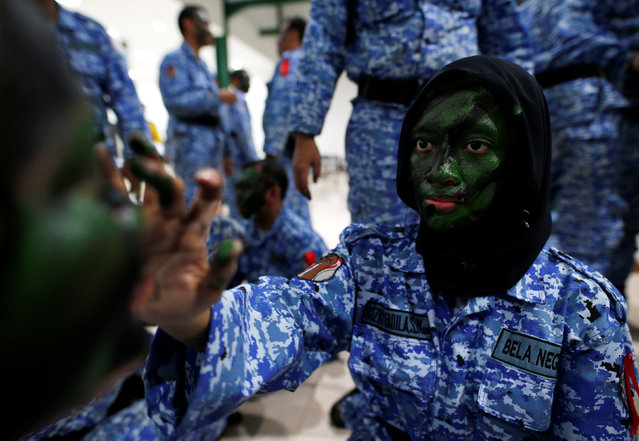
A female participant of the Bela Negara – “defend the nation” – programme applies camouflage face paint on another participant's face at a training centre in Rumpin, Bogor, West Java, Indonesia June 2, 2016. (Photo by Darren Whiteside/Reuters)

A female participant of the Bela Negara – “defend the nation” – programme applies camouflage face paint on another participant's face at a training centre in Rumpin, Bogor, West Java, Indonesia June 2, 2016. (Photo by Darren Whiteside/Reuters)
Details
08 Jun 2016 10:26:00
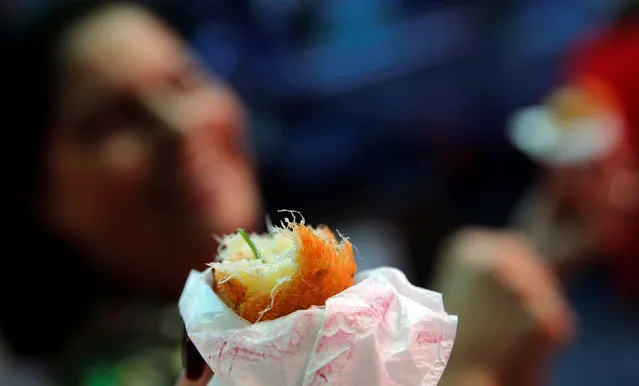
A view of traditional bolinhos de bacalhau (fried codfish balls) in Rio de Janeiro, Brazil, May 7, 2016. (Photo by Sergio Moraes/Reuters)

If the most popular foods of Rio de Janeiro have one thing in common, it is their informality. You can find fine restaurants in the city, but they do not set Rio apart from other places. What does set it apart, and what invariably brings its residents, known as "Cariocas," together is the unpretentious food they eat in bright, loud, crowded bars and restaurants, on busy street corners, or after a day at the beach. Here: A view of traditional bolinhos de bacalhau (fried codfish balls) in Rio de Janeiro, Brazil, May 7, 2016. (Photo by Sergio Moraes/Reuters)
Details
05 Aug 2016 13:20:00
Transgender Kendra Ferrari, 21, performs during Miss Night Queen beauty contest in Guatemala City, Friday, June 15, 2012. Ferrari won the pageant and will represent the transgender community for one year. (Photo by Rodrigo Abd/AP Photo)

Transgender Kendra Ferrari, 21, performs during Miss Night Queen beauty contest in Guatemala City, Friday, June 15, 2012. Ferrari won the pageant and will represent the transgender community for one year. (Photo by Rodrigo Abd/AP Photo)
Details
18 Aug 2014 09:20:00
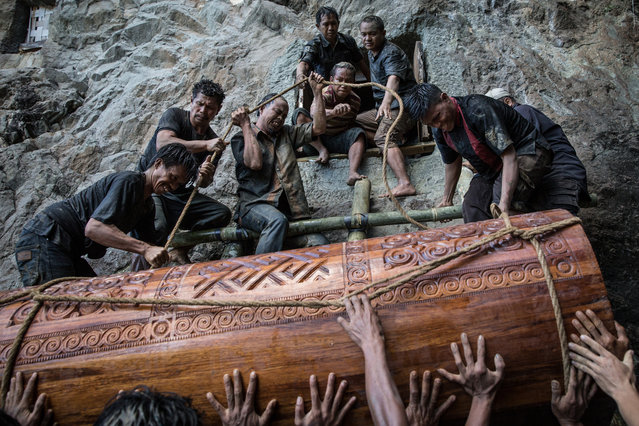
It is said that Torajans are people who “live to die”. For this Indonesian ethnic group, funerals are such extravagant events that they sometimes attract tourists. Families can postpone burials years (and the deceased are considered sick and hosted at home until the funeral) until the family can raise enough money and gather as many relatives as possible. And then it’s a jubilant multiday social event with a parade, dances and animal sacrifices. Agung Parameswara photographed these funerary practices when he traveled to South Sulawesi province, where the Torajans live. But often, their funeral isn’t the last time the dead are seen. In August, crypts are opened, coffins are slid back out and bodies delicately unsheathed. This tender ritual is known as Ma’Nene, which is customarily performed every few years. (Photo by Agung Parameswara/The Washington Post)

It is said that Torajans are people who “live to die”. For this Indonesian ethnic group, funerals are such extravagant events that they sometimes attract tourists. Families can postpone burials years (and the deceased are considered sick and hosted at home until the funeral) until the family can raise enough money and gather as many relatives as possible. And then it’s a jubilant multiday social event with a parade, dances and animal sacrifices. Agung Parameswara photographed these funerary practices when he traveled to South Sulawesi province, where the Torajans live. (Photo by Agung Parameswara/The Washington Post)
Details
06 Oct 2016 09:15:00


“Kumbh Mela is a mass Hindu pilgrimage in which Hindus gather at the Ganges river. The normal Kumbh Mela is celebrated every 3 years, the Ardh (half) Kumbh Mela is celebrated every six years at Haridwar and Prayag, the Purna (complete) Kumbh takes place every twelve years, at four places (Prayag (Allahabad), Haridwar, Ujjain, and Nashik). The Maha (great) Kumbh Mela which comes after 12 “Purna Kumbh Melas”, or 144 years, is held at Allahabad.

The last Ardh Kumbh Mela was held over a period of 45 days beginning in January 2007, more than 70 million Hindu pilgrims took part in the Ardh Kumbh Mela at Prayag, and on January 15, the most auspicious day of the festival of Makar Sankranti, more than 5 million participated. The previous Maha Kumbh Mela, held in 2001, was attended by around 60 million people, making it at the time the largest gathering anywhere in the world in recorded history”. – Wikipedia

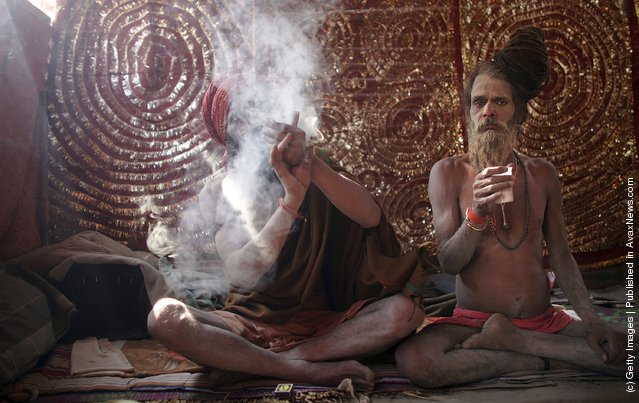
Photo: Sadhus (holy men) smoke at their camp near the ritual site at Sangam, the confluence of the Ganges, Yamuna and mythical Saraswati rivers during the Ardh Kumbh Mela festival (Half Pitcher festival) January 18, 2007 in Allahabad, India. Millions of Hindu pilgrims have flocked to the largest religious gathering in the world which lasts for 45 days in northern India. The festival commemorates the mythical conflict between gods and demons over a pitcher filled with the “nectar of immortality”. Devotees believe that taking a holy dip in the Ganges at this time washes away their sins and paves the path to salvation. (Photo by Mario Tama/Getty Images)

Details
30 Jun 2011 10:27:00