Loading...
Done
In this picture taken on October 28, 2017, former Japanese p*rn star Mana Izumi checks her new tattoo at a tattoo studio in Tsurugashima, Saitama prefecture. (Photo by Behrouz Mehri/AFP Photo)

In this picture taken on October 28, 2017, former Japanese p*rn star Mana Izumi checks her new tattoo at a tattoo studio in Tsurugashima, Saitama prefecture. Tattoos still provoke deep-rooted suspicion in Japan as the country prepares to host the 2020 Tokyo Olympics. People with body ink are refused entry to public swimming pools, bathing spots, beaches and often gyms, while visible body art can be harmful to job prospects. (Photo by Behrouz Mehri/AFP Photo)
Details
10 Jan 2019 00:05:00
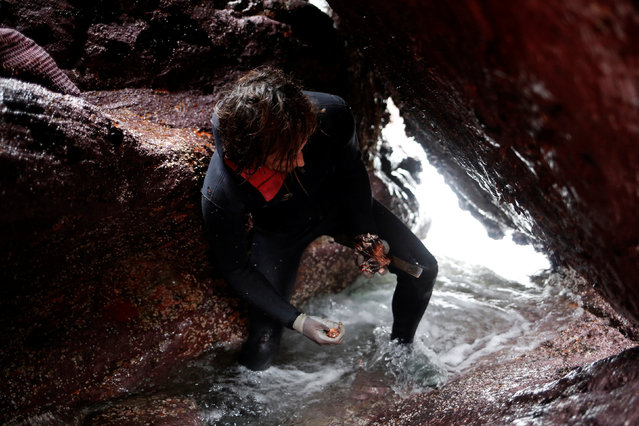
Santi Diaz Mosquera, 41, a “percebeiro” (barnacle fisherman), collects barnacles on rocks on the coast of Ferrol, in the northwestern Spanish region of Galicia, December 15, 2016. (Photo by Nacho Doce/Reuters)

Santi Diaz Mosquera, 41, a “percebeiro” (barnacle fisherman), collects barnacles on rocks on the coast of Ferrol, in the northwestern Spanish region of Galicia, December 15, 2016. (Photo by Nacho Doce/Reuters)
Details
28 Dec 2016 06:51:00
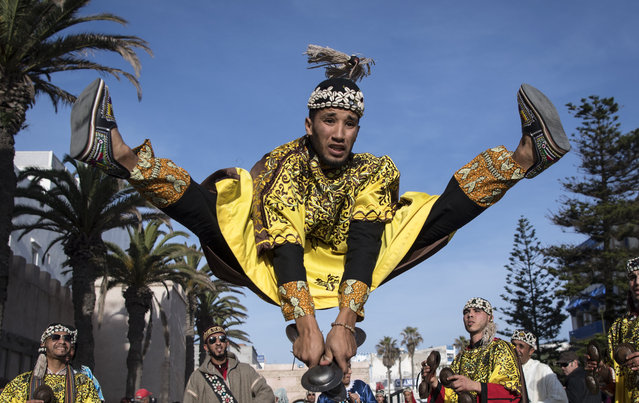
A Gnawa traditional group performs in the city of Essaouira on December 14, 2019, to celebrate the decision of adding the Gnawa culture to UNESCO's list of Intangible Cultural Heritage of Humanity. Gnawa culture, a centuries-old Moroccan practice rooted in music, African rituals and Sufi traditions, was added to UNESCO's list of Intangible Cultural Heritage of Humanity earlier in the week. Gnawa refers to a “set of musical productions, fraternal practices and therapeutic rituals where the secular mixes with the sacred”, according to the nomination submitted by Morocco. Often dressed in colourful outfits, Gnawa musicians play the guenbri, a type of lute with three strings, accompanied by steel castanets called krakebs. (Photo by Fadel Senna/AFP Photo)

A Gnawa traditional group performs in the city of Essaouira on December 14, 2019, to celebrate the decision of adding the Gnawa culture to UNESCO's list of Intangible Cultural Heritage of Humanity. Gnawa culture, a centuries-old Moroccan practice rooted in music, African rituals and Sufi traditions, was added to UNESCO's list of Intangible Cultural Heritage of Humanity earlier in the week. Gnawa refers to a “set of musical productions, fraternal practices and therapeutic rituals where the secular mixes with the sacred”, according to the nomination submitted by Morocco. Often dressed in colourful outfits, Gnawa musicians play the guenbri, a type of lute with three strings, accompanied by steel castanets called krakebs. (Photo by Fadel Senna/AFP Photo)
Details
18 Dec 2019 00:05:00
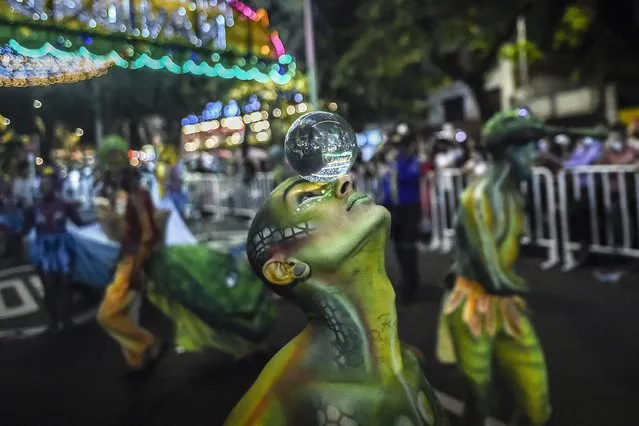
Revelers perform during the Myths and Legends parade in Medellin, Antioquia department, Colombia on December 8, 2021. (Photo by Joaquin Sarmiento/AFP Photo)

Revelers perform during the Myths and Legends parade in Medellin, Antioquia department, Colombia on December 8, 2021. (Photo by Joaquin Sarmiento/AFP Photo)
Details
10 Dec 2021 09:12:00
People pose for pictures on the banks of Yangtze River on New Year's Eve in Wuhan, in China’s central Hubei province on December 31, 2020. (Photo by Noel Celis/AFP Photo)

People pose for pictures on the banks of Yangtze River on New Year's Eve in Wuhan, in China’s central Hubei province on December 31, 2020. (Photo by Noel Celis/AFP Photo)
Details
06 Jan 2021 00:07:00
Los Angeles Kings left wing Warren Foegele, left, trips San Jose Sharks center Macklin Celebrini, center, during the third period of an NHL hockey game Monday, November 25, 2024, in San Jose, Calif. (Photo by Godofredo A. Vásquez/AP Photo)

Los Angeles Kings left wing Warren Foegele, left, trips San Jose Sharks center Macklin Celebrini, center, during the third period of an NHL hockey game Monday, November 25, 2024, in San Jose, Calif. (Photo by Godofredo A. Vásquez/AP Photo)
Details
11 Dec 2024 04:14:00
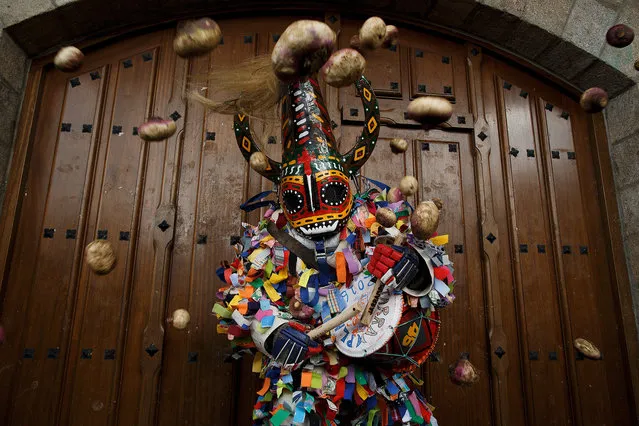
People throw turnips at the Jarramplas as he comes out from the church beating his drum during the Jarramplas Festival on January 20, 2016 in Piornal, Caceres province, Spain. The centuries old Jarramplas festival takes place annually every January 19-20 on Saint Sebastian Day and this year they expect to use more than 20 thousand kilogrames of turnips. Even though the exact origins of the festival are not known, various theories exist including the mythological punishment of Caco by Hercules. (Photo by Pablo Blazquez Dominguez/Getty Images)

People throw turnips at the Jarramplas as he comes out from the church beating his drum during the Jarramplas Festival on January 20, 2016 in Piornal, Caceres province, Spain. The centuries old Jarramplas festival takes place annually every January 19-20 on Saint Sebastian Day and this year they expect to use more than 20 thousand kilogrames of turnips. Even though the exact origins of the festival are not known, various theories exist including the mythological punishment of Caco by Hercules, a relation to ceremonies celebrated by the American Indians that were seen by the first conquerors, to a cattle thief ridiculed and expelled by his village neighbours. It is generally believed to symbolize the expulsion of everything bad. (Photo by Pablo Blazquez Dominguez/Getty Images)
Details
21 Jan 2016 13:21:00
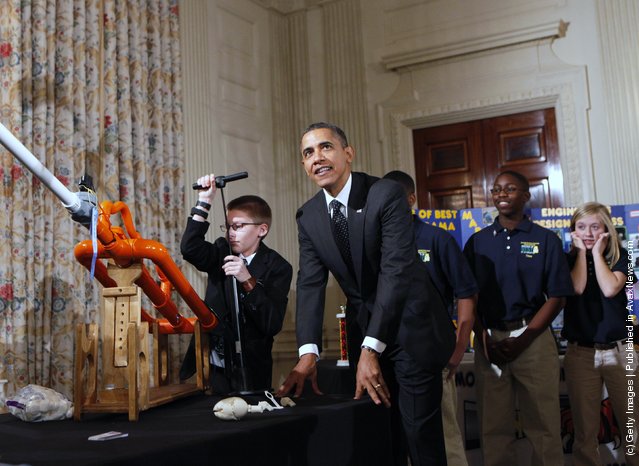
President Barack Obama watches as Joey Hudy (L), 14, from Phoenix, Arizona pumps the Extreme Marshmallow Cannon he invented, while touring student science fair projects on exhibit in the State Dining Room at the White House

President Barack Obama watches as Joey Hudy (L), 14, from Phoenix, Arizona pumps the Extreme Marshmallow Cannon he invented, while touring student science fair projects on exhibit in the State Dining Room at the White House February 7, 2012 in Washington, DC. Obama hosted the second White House Science Fair celebrating the student winners of science, technology, engineering and math (STEM) competitions from across the country. (Photo by Molly Riley-Pool/Getty Images)
Details
08 Feb 2012 10:33:00