Loading...
Done
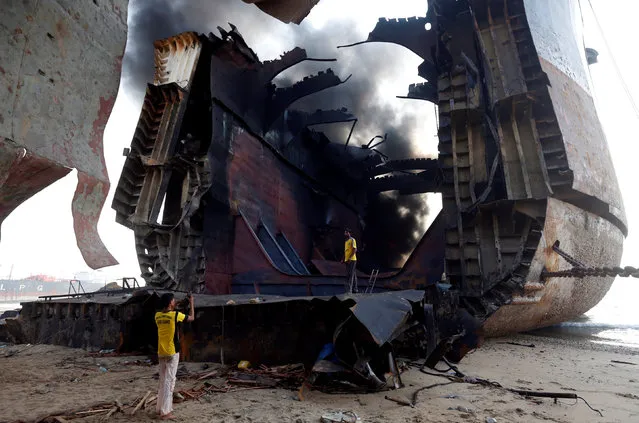
A man takes photo of his colleague with a mobile phone on the burning oil tanker at the ship-breaking yard in Gaddani, Pakistan, November 2, 2016. (Photo by Akhtar Soomro/Reuters)

A man takes photo of his colleague with a mobile phone on the burning oil tanker at the ship-breaking yard in Gaddani, Pakistan, November 2, 2016. Reports state that at least eighteen workers were killed and more than 100 were wounded in a blast at Gaddani ship breaking yard near Karachi on 01 November. Initial reports suggest the blast occurred when a gas cylinder exploded inside an oil tanker being broken up for scrap. (Photo by Akhtar Soomro/Reuters)
Details
04 Nov 2016 12:44:00
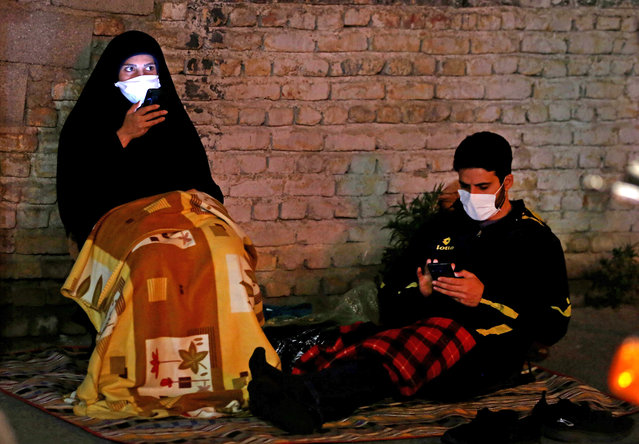
Iranians wearing face masks against the Covid-19 coronavirus attends Laylat al-Qadr prayers, one of the holiest nights during the Muslim fasting month of Ramadan, outside a mosque in the Tehran, on May 13, 2020. (Photo by Atta Kenare/AFP Photo)

Iranians wearing face masks against the Covid-19 coronavirus attends Laylat al-Qadr prayers, one of the holiest nights during the Muslim fasting month of Ramadan, outside a mosque in the Tehran, on May 13, 2020. (Photo by Atta Kenare/AFP Photo)
Details
28 May 2020 00:01:00
A vendor prepares paan, a betel nut-based chewable stimulant at a flower market in Kolkata, India, January 18, 2016. (Photo by Rupak De Chowdhuri/Reuters)

A vendor prepares paan, a betel nut-based chewable stimulant at a flower market in Kolkata, India, January 18, 2016. (Photo by Rupak De Chowdhuri/Reuters)
Details
04 Feb 2016 11:29:00
Brazilian navy soldiers watch a woman as they patrol the area at the Copacabana Beach before carnival festivities in Rio de Janeiro, Brazil February 14, 2017. (Photo by Sergio Moraes/Reuters)

Brazilian navy soldiers watch a woman as they patrol the area at the Copacabana Beach before carnival festivities in Rio de Janeiro, Brazil February 14, 2017. (Photo by Sergio Moraes/Reuters)
Details
15 Feb 2017 10:00:00
A man dressed as a devil performs during a Krampus parade in Kaprun, Austria on December 5, 2017. Krampus is a mythical creature that, according to legend, accompanies Saint Nicholas during the festive season. Instead of giving gifts to good children, he punishes the bad ones. (Photo by APA-PictureDesk GmbH/Rex Features/Shutterstock)

A man dressed as a devil performs during a Krampus parade in Kaprun, Austria on December 5, 2017. Krampus is a mythical creature that, according to legend, accompanies Saint Nicholas during the festive season. Instead of giving gifts to good children, he punishes the bad ones. (Photo by APA-PictureDesk GmbH/Rex Features/Shutterstock)
Details
09 Dec 2017 02:20:00
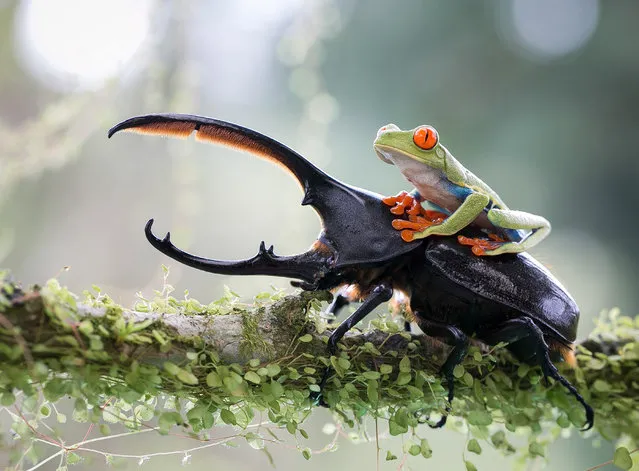
“The knight and his steed”. This picture was taken in a natural but controlled environment. There are pictures that can not be done in nature or that would imply a very high cost of both time and money, thats why photography workshops are run conducted at strategic locations and bringing EVERYONE who is interested, the basic notions (lighting, camera handling, composition, etc...) or the specimens, and afford them the opportunity to take pictures like this. (Photo and caption by Nicolas Reusens Boden (Sweden)/2014 Sony World Photography Awards)

“The knight and his steed”. This picture was taken in a natural but controlled environment. There are pictures that can not be done in nature or that would imply a very high cost of both time and money, thats why photography workshops are run conducted at strategic locations and bringing EVERYONE who is interested, the basic notions (lighting, camera handling, composition, etc...) or the specimens, and afford them the opportunity to take pictures like this. Although controlled, this shot was not prepared at all, I was performing a workshop with the agalychnis callidryas treefrog from Costa Rica when the frog managed to jump to the branch where this huge titan was sleeping... I had my gear ready so I only had to change a few settings and shoot... the rest is history. (Photo and caption by Nicolas Reusens Boden (Sweden)/2014 Sony World Photography Awards)
Details
10 Dec 2013 07:23:00
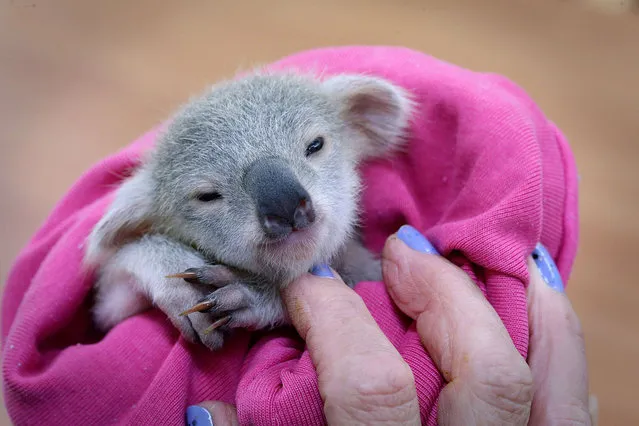
An adorable baby koala is seen enjoying a snooze after a traumatic start to life. The baby koala, nicknamed “Blondie Bumstead”, is being cared for by a volunteer from the Ipswich Koala protection society in Queensland after her mother was killed by a dog. (Photo by Jamie Hanson/Newspix/REX Features)

An adorable baby koala is seen enjoying a snooze after a traumatic start to life. The baby koala, nicknamed “Blondie Bumstead”, is being cared for by a volunteer from the Ipswich Koala protection society in Queensland after her mother was killed by a dog. Blondie, who was named for her light fur, was given just a 50-50 chance of pulling through after the attack. But after a course of antibiotics and some tender loving car from volunteer Marilyn Spletter she has now been given a clean bill of health. According to Marilyn she has hand-reared around 40 baby koalas but says that Blondie, who will be released back into the wild after 15 months, is one of her favourites. She said: “She's got a little character all of her own and she knows what she wants and what she doesn't. When she's stressed I kiss her on the nose or I rub my nose on hers and it relaxes her”. (Photo by Jamie Hanson/Newspix/REX Features)
Details
07 Aug 2014 10:26:00
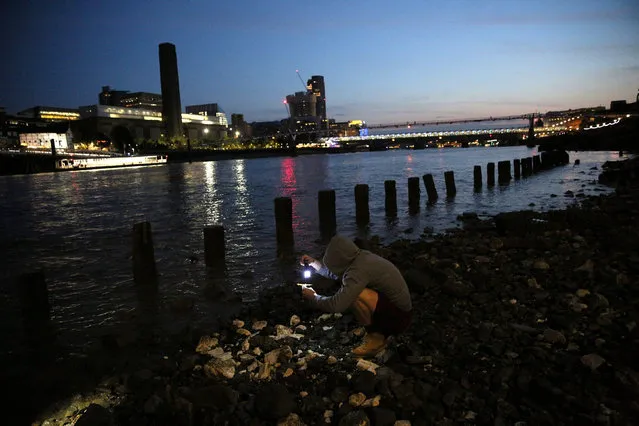
A mudlark uses a torch to look for items on the bank of the River Thames in London, Britain June 06, 2016. Mudlarking is believed to trace its origins to the 18th and 19th century, when scavengers searched the Thames' shores for items to sell. These days, history and archaeology fans are the ones hoping to find old relics such as coins, ceramics, artifacts or everyday items from across centuries. They wait for the low tide and then scour specific areas of exposed shores. "If you're in a field you could be out all day long, with the river you're restricted to about two or three hours," mudlark Nick Stevens said. While many just use the naked eye for their searches, others rely on metal detectors for which a permit from the Port of London Authority is needed. Digging also requires consent. (Photo by Neil Hall/Reuters)

A mudlark uses a torch to look for items on the bank of the River Thames in London, Britain June 06, 2016. Mudlarking is believed to trace its origins to the 18th and 19th century, when scavengers searched the Thames' shores for items to sell. These days, history and archaeology fans are the ones hoping to find old relics such as coins, ceramics, artifacts or everyday items from across centuries. their finds with the Portable Antiquities Scheme. Any item over 300 years old must be recorded. (Photo by Neil Hall/Reuters)
Details
27 Aug 2016 10:43:00