Loading...
Done
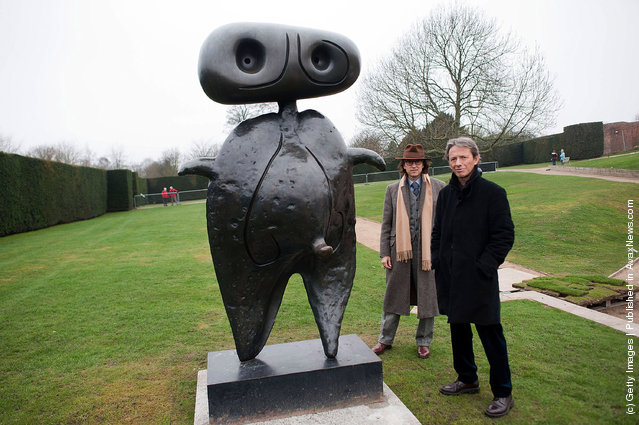
Joan Miro's, grandsons, Emilio Fernandez Miro and Joan Punyet Miro pose beside Personnage (1970) in the Yorkshire Sculpture park

“Joan Miro i Ferra (April 20, 1893 – December 25, 1983) was a Spanish Catalan painter, sculptor, and ceramicist born in Barcelona. Earning international acclaim, his work has been interpreted as Surrealism, a sandbox for the subconscious mind, a re-creation of the childlike, and a manifestation of Catalan pride. In numerous interviews dating from the 1930s onwards, Miro expressed contempt for conventional painting methods as a way of supporting bourgeois society, and famously declared an “assassination of painting” in favour of upsetting the visual elements of established painting”. – Wikipedia

Photo: Joan Miro's, grandsons, Emilio Fernandez Miro and Joan Punyet Miro pose beside Personnage (1970) in the Yorkshire Sculpture park on March 14, 2012 in Wakefield, England. Yorkshire Sculpture Park stages the first major UK survey of sculpture by Spanish artist Joan Miro. (Photo by Bethany Clarke/Getty Images)
Details
15 Mar 2012 13:47:00
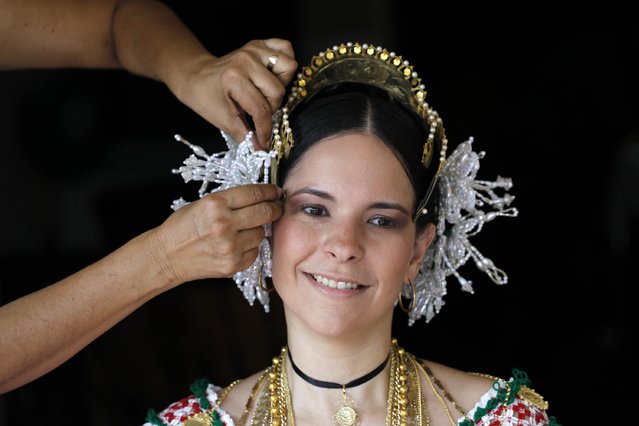
A woman is helped with adorning her hair with jewelry, part of the traditional clothing known as “Pollera”, before the annual Thousand Polleras parade in Las Tablas, in the province of Los Santos January 10, 2015. According to local residents, the Pollera dates back to the 18th century and was worn by the Spanish lower classes. (Photo by Carlos Jasso/Reuters)

A woman is helped with adorning her hair with jewelry, part of the traditional clothing known as “Pollera”, before the annual Thousand Polleras parade in Las Tablas, in the province of Los Santos January 10, 2015. According to local residents, the Pollera dates back to the 18th century and was worn by the Spanish lower classes. Today, it has become the Panamanian national costume. The dress is made entirely by hand and the jewellery worn is pure gold and worth thousands of dollars. (Photo by Carlos Jasso/Reuters)
Details
12 Jan 2015 15:46:00
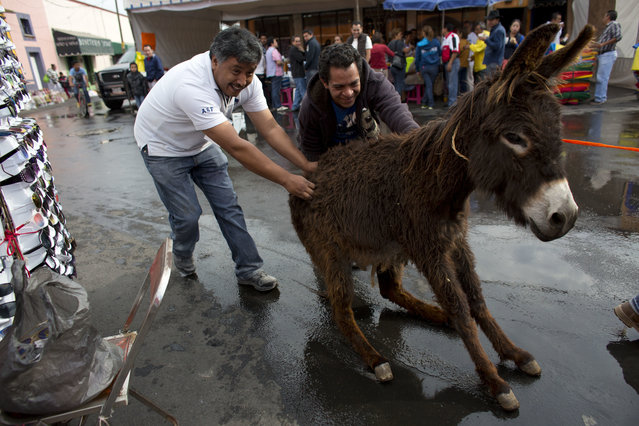
In this May 1, 2016 photo, a reluctant donkey is alternately pushed and pulled and enticed with carrots toward town hall in order to be dressed for the costume competition at the annual donkey festival in Otumba, Mexico state, Mexico. Otumba was an important donkey market during Spanish colonial times, standing at the crossroads of major roads leading to Mexico City, where the beasts pulled heavy loads and carried travelers. Today, however, farmers use tractors and pickup trucks, and the donkey population is in decline. (Photo by Rebecca Blackwell/AP Photo)

In this May 1, 2016 photo, a reluctant donkey is alternately pushed and pulled and enticed with carrots toward town hall in order to be dressed for the costume competition at the annual donkey festival in Otumba, Mexico state, Mexico. Otumba was an important donkey market during Spanish colonial times, standing at the crossroads of major roads leading to Mexico City, where the beasts pulled heavy loads and carried travelers. Today, however, farmers use tractors and pickup trucks, and the donkey population is in decline. (Photo by Rebecca Blackwell/AP Photo)
Details
04 May 2016 11:55:00
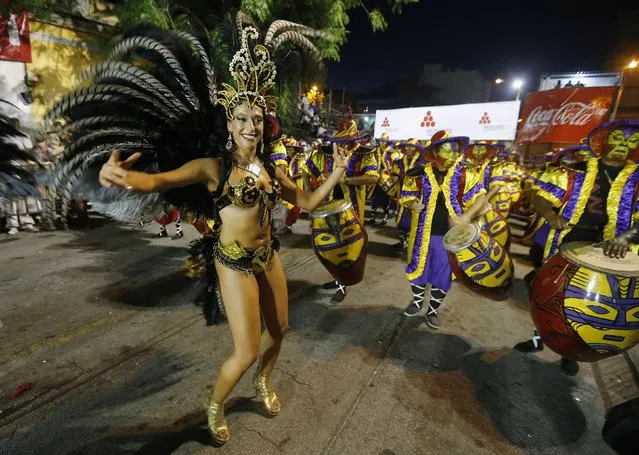
A member of a comparsa, a Uruguayan carnival group, dances during the Llamadas parade in Montevideo February 5, 2015. Thousands of people crowd the capital's Barrio Sur as costumed drummers and dancers kick off the street fiesta known as Llamadas which has traditional Afro-Uruguayan roots. The fiesta, also known in Spanish as “The Calls”, started during the colonial period as a slave parade on the city streets. (Photo by Andres Stapff/Reuters)

A member of a comparsa, a Uruguayan carnival group, dances during the Llamadas parade in Montevideo February 5, 2015. Thousands of people crowd the capital's Barrio Sur as costumed drummers and dancers kick off the street fiesta known as Llamadas which has traditional Afro-Uruguayan roots. The fiesta, also known in Spanish as “The Calls”, started during the colonial period as a slave parade on the city streets. (Photo by Andres Stapff/Reuters)
Details
08 Feb 2015 11:44:00
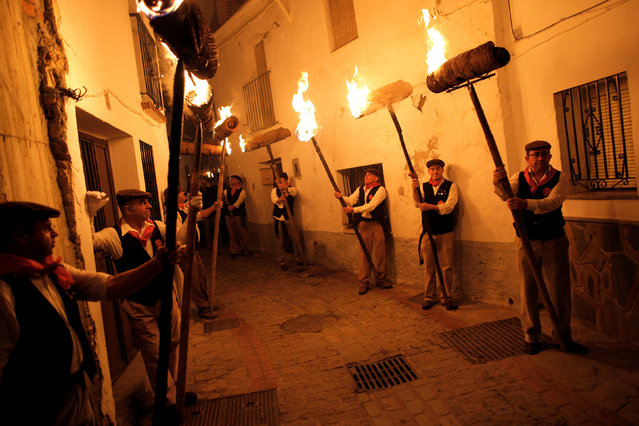
Villagers hold torches during the Divina Pastora procession, as part of a festival to honour the Virgin of Los Rondeles, in the southern Spanish village of Casarabonela, near Malaga, late December 12, 2016. Villagers celebrate the festival on the eve of St. Lucia's Day and hold torches during the procession to represent light and vision. St. Lucia is the patron saint of vision. (Photo by Jon Nazca/Reuters)

Villagers hold torches during the Divina Pastora procession, as part of a festival to honour the Virgin of Los Rondeles, in the southern Spanish village of Casarabonela, near Malaga, late December 12, 2016. Villagers celebrate the festival on the eve of St. Lucia's Day and hold torches during the procession to represent light and vision. St. Lucia is the patron saint of vision. (Photo by Jon Nazca/Reuters)
Details
15 Dec 2016 08:49:00
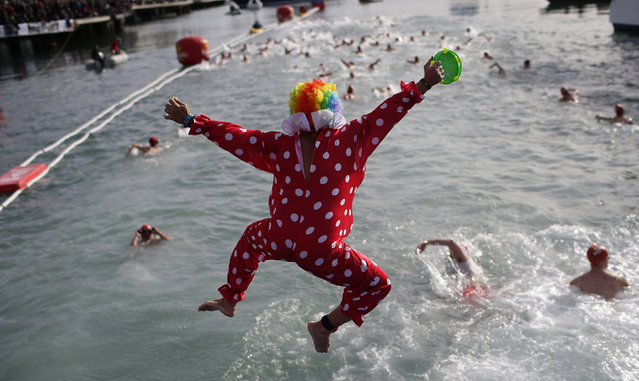
An athlete dressed as a clown jumps into the Mediterranean sea as he takes part in the Copa Nadal in the Spanish port of Barcelona in Barcelona, Spain, Sunday, December 25, 2016. The Copa Nadal (Christmas Cup) is a traditional swimming competition that takes place in Barcelona every December 25th, where participants swim 200 meters in the open sea in the port of Barcelona. (Photo by Manu Fernandez/AP Photo)

An athlete dressed as a clown jumps into the Mediterranean sea as he takes part in the Copa Nadal in the Spanish port of Barcelona in Barcelona, Spain, Sunday, December 25, 2016. The Copa Nadal (Christmas Cup) is a traditional swimming competition that takes place in Barcelona every December 25th, where participants swim 200 meters in the open sea in the port of Barcelona. (Photo by Manu Fernandez/AP Photo)
Details
26 Dec 2016 10:52:00
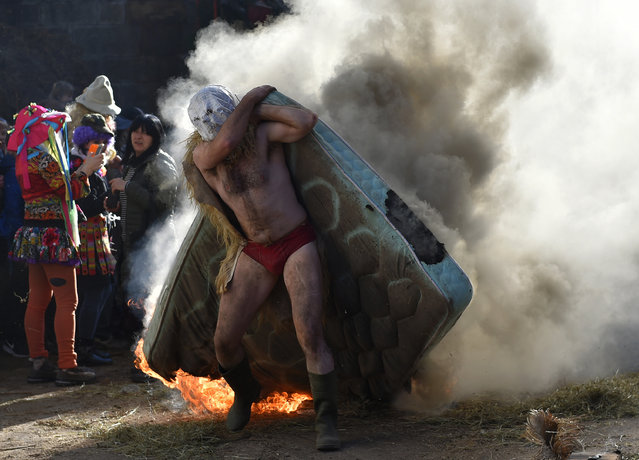
A masked participant carries a burning matress during the ancient carnival of Zubieta, in the northern Spanish Navarra province on January 30, 2018. The yearly three day festivities, revolving mainly around agriculture and principally sheep hearding, run on the last Sunday, Monday and Tuesday of January where Navarra Valley locals from two villages dress up and participate in a variety of activites as they perform a pilgrimage through each village. (Photo by Ander Gillenea/AFP Photo)

A masked participant carries a burning matress during the ancient carnival of Zubieta, in the northern Spanish Navarra province on January 30, 2018. The yearly three day festivities, revolving mainly around agriculture and principally sheep hearding, run on the last Sunday, Monday and Tuesday of January where Navarra Valley locals from two villages dress up and participate in a variety of activites as they perform a pilgrimage through each village. (Photo by Ander Gillenea/AFP Photo)
Details
01 Feb 2018 08:52:00
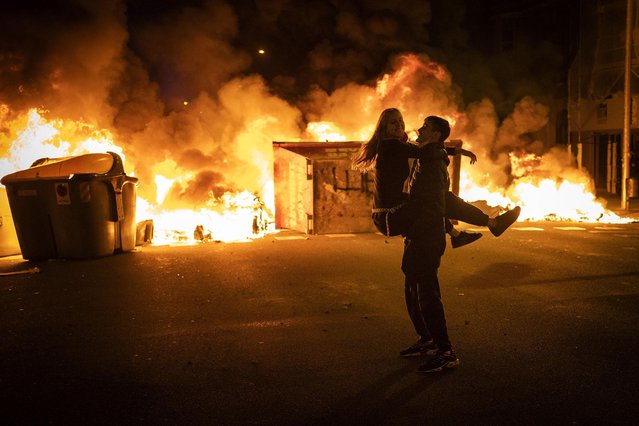
Demonstrators made barricades during clashes with police following a protest condemning the arrest of rap artist Pablo Hasél in Barcelona, Spain, Thursday, February 18, 2021. The imprisonment of a rap artist for his music praising terrorist violence and insulting the Spanish monarchy has set off a powder keg of pent-up rage this week in Spain. The arrest of Pablo Hasél has brought thousands to the streets for different reasons. The majority march under the banner of freedom of speech, but Hasél's lyrics also tap into a debate about the role of Spain's parliamentary monarchy after financial scandals involving the royal house. (Photo by Emilio Morenatti/AP Photo)

Demonstrators made barricades during clashes with police following a protest condemning the arrest of rap artist Pablo Hasél in Barcelona, Spain, Thursday, February 18, 2021. The imprisonment of a rap artist for his music praising terrorist violence and insulting the Spanish monarchy has set off a powder keg of pent-up rage this week in Spain. (Photo by Emilio Morenatti/AP Photo)
Details
04 Jul 2021 09:43:00