Loading...
Done
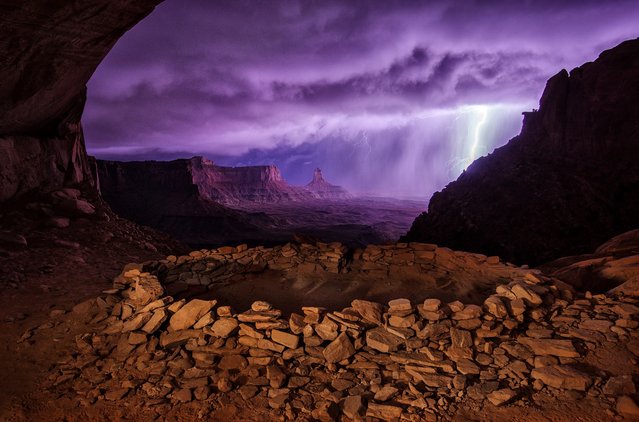
Second Place Winner: “Thunderstorm at False Kiva”. I hiked out to these ruins at night hoping to photograph them with the Milky Way, but instead a thunderstorm rolled through, creating this dramatic image. – Max Seigal. (Photo and caption by Max Seigal/National Geographic Traveler Photo Contest)

Second Place Winner: “Thunderstorm at False Kiva”. I hiked out to these ruins at night hoping to photograph them with the Milky Way, but instead a thunderstorm rolled through, creating this dramatic image. – Max Seigal. National Geographic Traveler Director of Photography Dan Westergren, one of this year's judges, shares his thoughts on the second place winner: “This photo combines two different scenes into one: the small kiva in a cliff dwelling and the grand vista of Canyonlands National Park across the valley. I really like the two different color palettes – warm inside and purple outside. This two-for-one scene was caused by the lightning storm outside the dwelling, which lit up the landscape like it was a huge electronic flash. Looking at this picture I can imagine what a wonderful sight it must have been for the ancient people who lived here. It doesn't seem too amazing now in our modern world, but might have been mind-blowing for the prehistoric residents”. Location: Utah. (Photo and caption by Max Seigal/National Geographic Traveler Photo Contest)
Details
02 Aug 2013 06:16:00
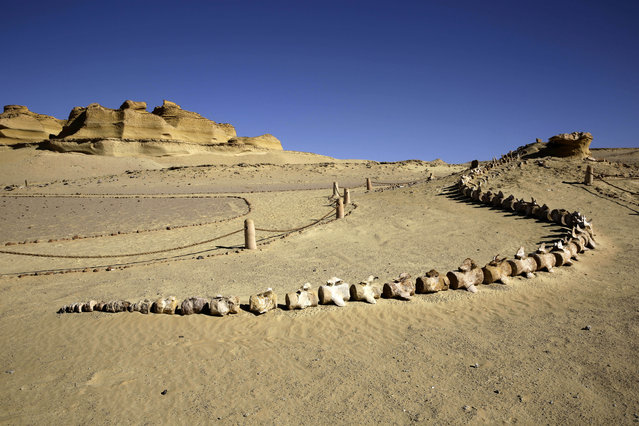
Fossilized whale bones are on display  outside the Wati El Hitan Fossils and Climate Change Museum, a UNESCO natural World Heritage site, on the opening day, in the Fayoum oasis, Egypt, Thursday, January 14, 2016. Egypt has cut the ribbon on the Middle East's first fossil museum housing the world's largest intact skeleton of a "walking whale" in an attempt to attract much-needed tourists driven off by recent militant attacks. The construction of the much-hyped Fossils and Climate Change Museum was covered a 2 billion euros (2. 17 billion dollars) grant from Italy, according to Italian Ambassador Maurizio Massari. (Photo by Thomas Hartwell/AP Photo)

Fossilized whale bones are on display outside the Wati El Hitan Fossils and Climate Change Museum, a UNESCO natural World Heritage site, on the opening day, in the Fayoum oasis, Egypt, Thursday, January 14, 2016. Egypt has cut the ribbon on the Middle East's first fossil museum housing the world's largest intact skeleton of a "walking whale" in an attempt to attract much-needed tourists driven off by recent militant attacks. The construction of the much-hyped Fossils and Climate Change Museum was covered a 2 billion euros (2. 17 billion dollars) grant from Italy, according to Italian Ambassador Maurizio Massari. Its centerpiece is an intact, 37-million-year-old and 20-meter-long skeleton of a legged form of whale that testifies to how modern-day whales evolved from land mammals. The sand-colored, dome-shaped museum is barely discernible in the breathtaking desert landscape that stretches all around. (Photo by Thomas Hartwell/AP Photo)
Details
16 Jan 2016 08:06:00
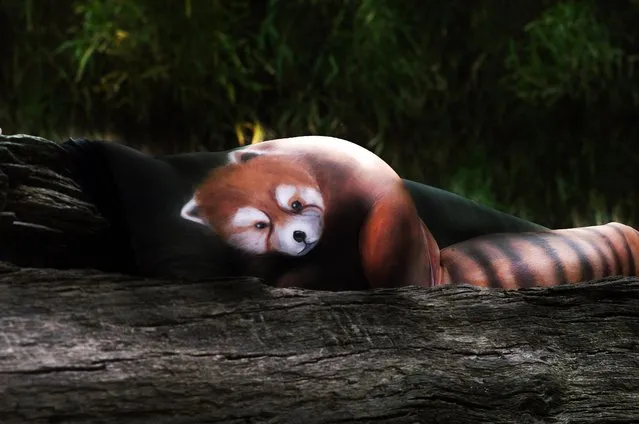
Using body paint and a woodland like location, Gesine appears to have created a model to look just like a red panda, Dortmund, Germany, October, 2016. An artist brings animals to life using body paint and contorted models. At first glance, these images could be mistaken for portraits of wildlife in their natural habitat were created with paper and paint. However, they are actually the incredible works of illusion by talented body painter Gesine Marwedel, who paints models to creates realistic animals. Marwedel, 29, from Dortmund, Germany has always been fascinated by the concept of transferring her designs to human bodies and her latest project features models posing in contorted positions. One image appears to show an elegant swan in a park pond, whilst another picture shows a mother penguin and its chick in a snowy landscape. (Photo by Gesine Marwedel/Barcroft Images)

Using body paint and a woodland like location, Gesine appears to have created a model to look just like a red panda, Dortmund, Germany, October, 2016. An artist brings animals to life using body paint and contorted models. At first glance, these images could be mistaken for portraits of wildlife in their natural habitat were created with paper and paint. However, they are actually the incredible works of illusion by talented body painter Gesine Marwedel, who paints models to creates realistic animals. (Photo by Gesine Marwedel/Barcroft Images)
Details
20 Dec 2016 12:53:00
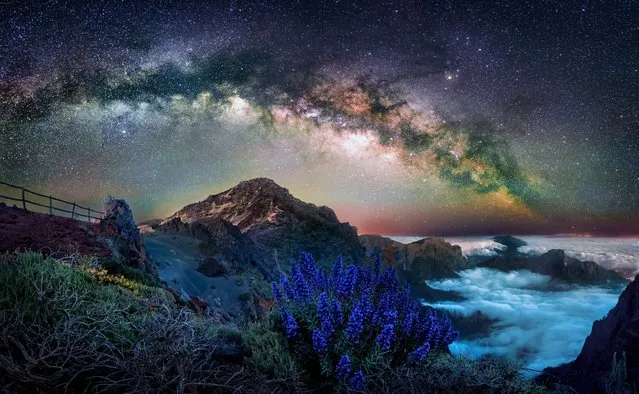
Tony North; First place, Breathing Spaces; Overall Winner; Blue Tajinaste, La Palma, Canary Islands, Spain. “Echium thyrsiflorum is endemic to the mountains of La Palma island – from high up, there was a magnificent view of both the caldera below, and the stars above. The Unesco La Palma biosphere reserve encompasses the entire island, with the Caldera de Taburiente containing mountains with a highest peak of 2,426 metres – the Roque de los Muchachos”. (Photo by Tony North/IGPOTY)

Tony North; First place, Breathing Spaces; Overall Winner; Blue Tajinaste, La Palma, Canary Islands, Spain. “Echium thyrsiflorum is endemic to the mountains of La Palma island – from high up, there was a magnificent view of both the caldera below, and the stars above. The Unesco La Palma biosphere reserve encompasses the entire island, with the Caldera de Taburiente containing mountains with a highest peak of 2,426 metres – the Roque de los Muchachos”. (Photo by Tony North/IGPOTY)
Details
10 Feb 2023 04:41:00
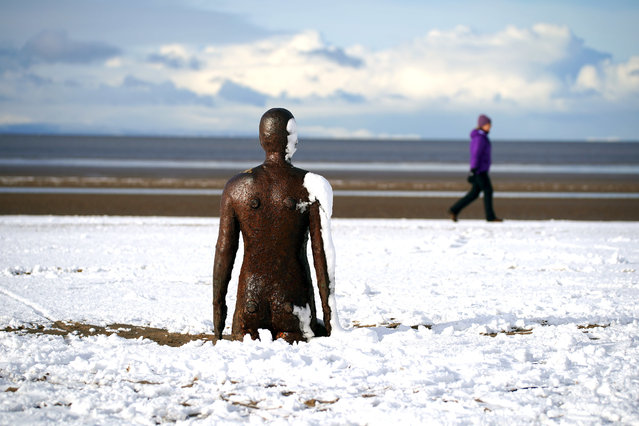
Snow surrounds one of the Anthony Gormley statues called Another Place at Crosby Beach Merseyside, United Kingdom on Friday, March 10, 2023. (Photo by Peter Byrne/PA Images via Getty Images)

Snow surrounds one of the Anthony Gormley statues called Another Place at Crosby Beach Merseyside, United Kingdom on Friday, March 10, 2023. (Photo by Peter Byrne/PA Images via Getty Images)
Details
21 Mar 2023 04:20:00
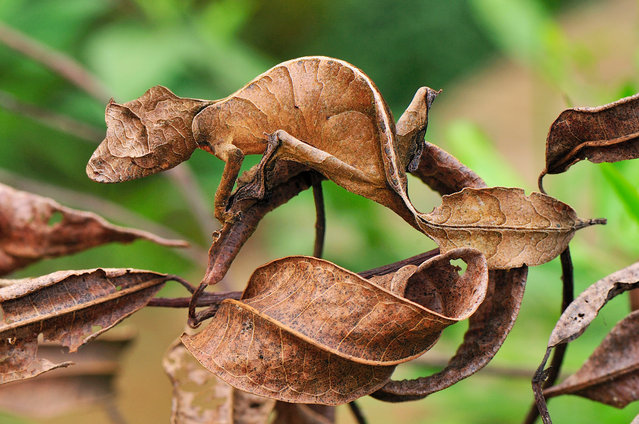
Is it a leaf? Is it tree bark? No, it’s the Satanic leaf-tailed gecko. Cleverly disguised as a rotting leaf, Madagascar’s camouflage king has red eyes, pointy horns and a taste for night hunting: it’s nature’s most devilish deceiver. (Photo by Thomas Marent/ARDEA)

Is it a leaf? Is it tree bark? No, it’s the Satanic leaf-tailed gecko. Cleverly disguised as a rotting leaf, Madagascar’s camouflage king has red eyes, pointy horns and a taste for night hunting: it’s nature’s most devilish deceiver. The twisted body and veiny skin echo the detail of a dry leaf, which ensures the gecko blends in with its forest home. The mottled tail appears to have sections missing, as though it has withered over time. This mini-monster epitomises survival of the fittest, having adapted gradually to become today’s extraordinary leaf impersonator. (Photo by Thomas Marent/ARDEA)
Details
20 Nov 2015 08:03:00
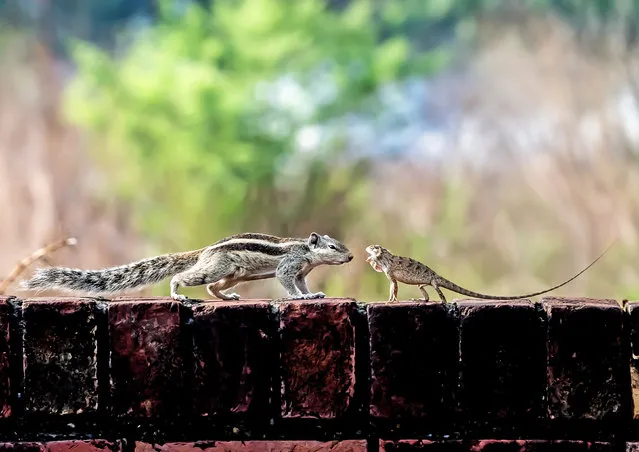
A squirrel and lizard both refuse to give way in an unlikely standoff on a wall in Mohali, India in the first decade of February 2024. (Photo by Anuj Jain/Solent news)

A squirrel and lizard both refuse to give way in an unlikely standoff on a wall in Mohali, India in the first decade of February 2024. (Photo by Anuj Jain/Solent news)
Details
03 Mar 2024 06:31:00
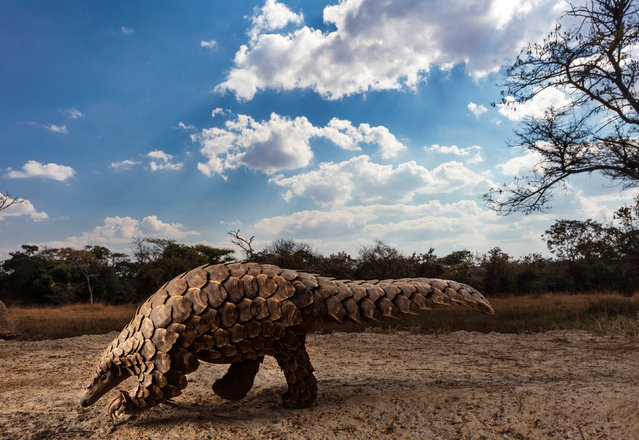
Pangolins in Crisis: Brent Stirton, South Africa; 1st place, Natural world and wildlife. “Pangolins are the world’s most illegally trafficked mammals, with an estimated one million trafficked to Asia in the last 10 years. Their scales are used in traditional Chinese and Vietnamese medicine, and their meat is sold as a high-priced delicacy. As a result, pangolins are listed as critically endangered and anyone who trades or consumes them is breaking the law. This body of work exposes the trade, while exploring aspects of illegality and celebrating the people who are trying to save these animals”. (Photo by Brent Stirton/Sony World Photography Awards 2020)

Pangolins in Crisis: Brent Stirton, South Africa; 1st place, Natural world and wildlife. “Pangolins are the world’s most illegally trafficked mammals, with an estimated one million trafficked to Asia in the last 10 years. Their scales are used in traditional Chinese and Vietnamese medicine, and their meat is sold as a high-priced delicacy. As a result, pangolins are listed as critically endangered and anyone who trades or consumes them is breaking the law. This body of work exposes the trade, while exploring aspects of illegality and celebrating the people who are trying to save these animals”. (Photo by Brent Stirton/Sony World Photography Awards 2020)
Details
11 Jun 2020 00:05:00