Ernie Lotinga, looking terrified as a gun is pointed in his face, in a scene from the play “My Wife's Family”, at the Garrick Theatre, London. (Photo by Sasha/Getty Images). 24th February 1941
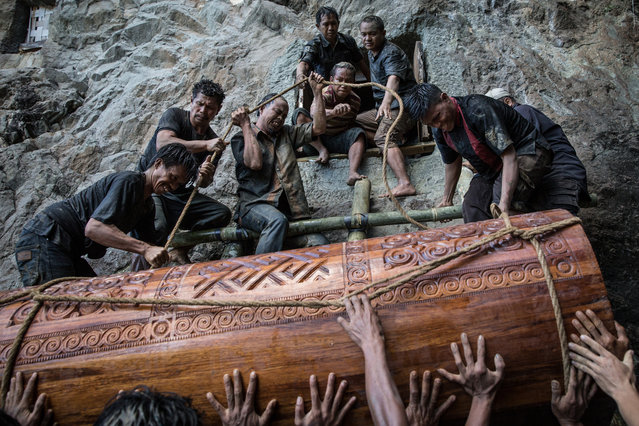
It is said that Torajans are people who “live to die”. For this Indonesian ethnic group, funerals are such extravagant events that they sometimes attract tourists. Families can postpone burials years (and the deceased are considered sick and hosted at home until the funeral) until the family can raise enough money and gather as many relatives as possible. And then it’s a jubilant multiday social event with a parade, dances and animal sacrifices. Agung Parameswara photographed these funerary practices when he traveled to South Sulawesi province, where the Torajans live. (Photo by Agung Parameswara/The Washington Post)
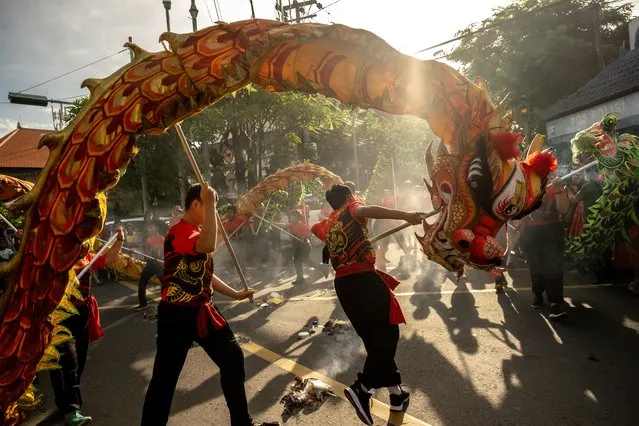
Balis Chinese community perform the dragon dance during Chinese New Year called Ngelawang ceremony on January 21, 2023 in Kuta, Bali, Indonesia. The Chinese diaspora of Southeast Asia is celebrating Lunar New Year, as COVID-19 restrictions have been removed, it is traditionally a time for people to meet their relatives and take part in celebrations with families. In Indonesia, ethnic Chinese families visited temples to celebrate the Year of the Rabbit on January 22. (Photo by Agung Parameswara/Getty Images)
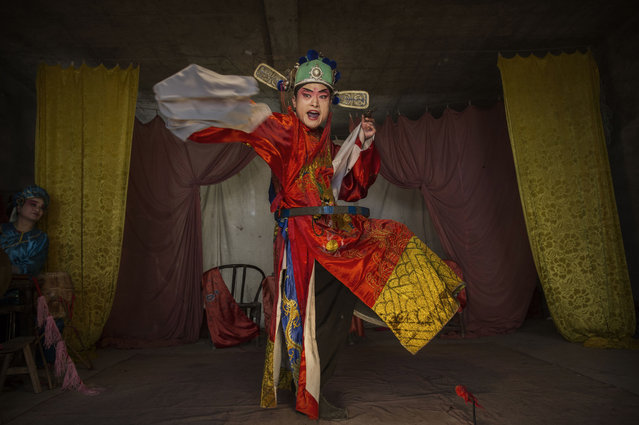
Sichuan Opera performer Wu Yonghong, 26 years, of the Jinyuan Opera Company performs for villagers at the Dongyue Temple on May 2, 2016 in Cangshan, Sichuan province, China. Sichuan opera is a vibrant, centuries-old tradition that showcases the joys and challenges of daily life in rural China with tales of love, tradition, and family honor. Photo by Kevin Frayer/Getty Images)
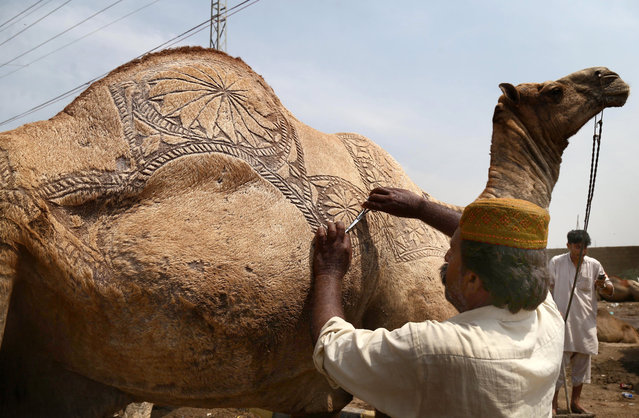
A vendor decorates a sacrificial camel ahead of the Eid al-Adha festival, in Karachi, Pakistan, 23 August 2016. Eid al-Adha is the holiest of the two Muslims holidays celebrated each year, with this year will be celebrated on 02nd September. Eid al-Adha marks the yearly Muslim pilgrimage (Hajj) to visit Mecca, the holiest place in Islam. Muslims slaughter a sacrificial animal and split the meat into three parts, one for the family, one for friends and relatives, and one for the poor and needy. (Photo by Rehan Khan/EPA)
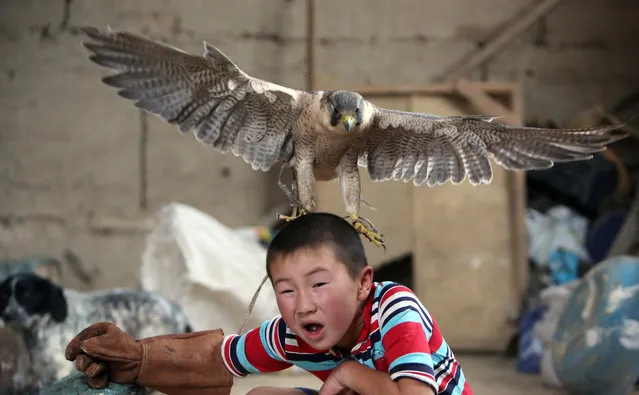
Azat Shajbyrov reacts with a baby falcon on his head in a village of Bokonbaevo, Issyk-Kul area (270 km from Bishkek), Kyrgyzstan, 22 June 2016, as he dreams of continuing a family tradition of golden eagle hunting. Eagle and falcon hunting is an old Kyrgyz tradition. With their birds, Kyrgyz berkutchy hunt in the mountains and participate in the hunting festival “Salburun”. (Photo by Igor Kovalenko/EPA)
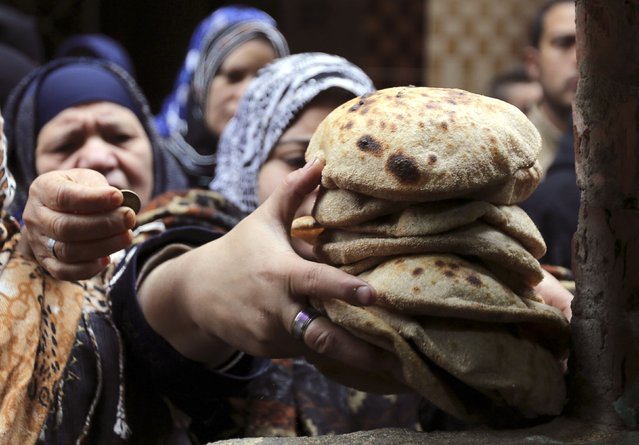
A woman buys bread at a bakery in Cairo, January 8, 2015. The successful roll-out so far of a new “smart card” system to distribute subsidised bread has been a major achievement for Egypt's government, saving money while earning praise from families who no longer have to wake early to fight for loaves. (Photo by Mohamed Abd El Ghany/Reuters)
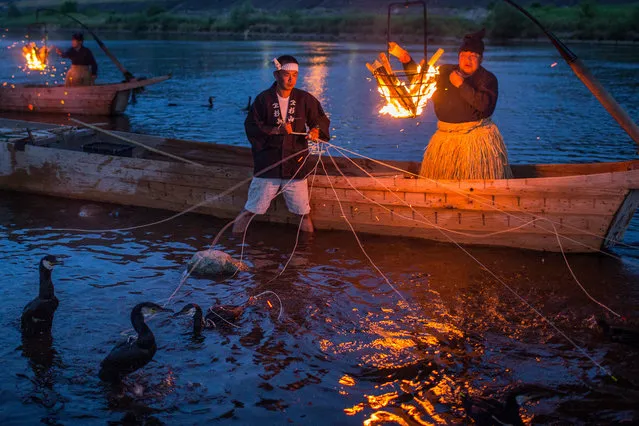
Cormorant masters and boatmen prepare sea cormorants for the nights “Ukai” on July 2, 2014 in Gifu, Japan. In this traditional fishing art “ukai”, a cormorant master called “usho” manages cormorants to capture ayu or sweetfish. The ushos of River Nagara have been the official staff of the Imperial Household Agency of Japan since 1890. Currently six imperial fishermen of Nagara River conduct special fishing to contribute to the Imperial family eight times a year, on top of daily fishing from mid-May to mid-October. (Photo by Chris McGrath/Getty Images)