Loading...
Done
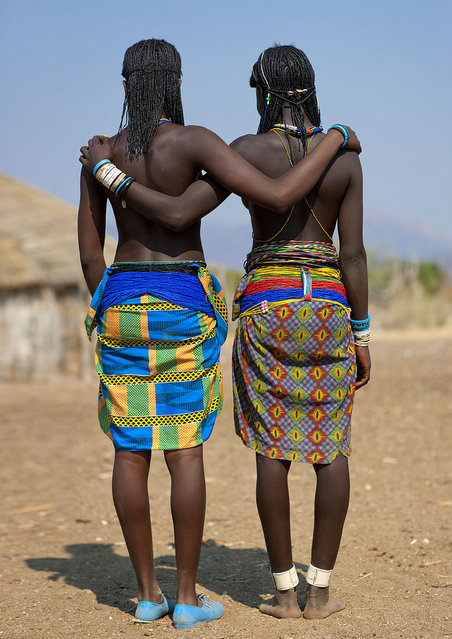
“Show us our butts! Mucawana tribe – Angola. In Soba village, the Muhacaona (Mucawana) tribe, perhaps the best place i have visited. They use cow dung and fat to make this so nice haircut, and love the beads. They asked me to make pictures of their backs... and butts to see on the camera screen if everything was perfect!”. (Eric Lafforgue)

“Show us our butts! Mucawana tribe – Angola. In Soba village, the Muhacaona (Mucawana) tribe, perhaps the best place i have visited. They use cow dung and fat to make this so nice haircut, and love the beads. They asked me to make pictures of their backs... and butts to see on the camera screen if everything was perfect!”. (Photo and comments by Eric Lafforgue)
Details
09 Nov 2012 15:04:00
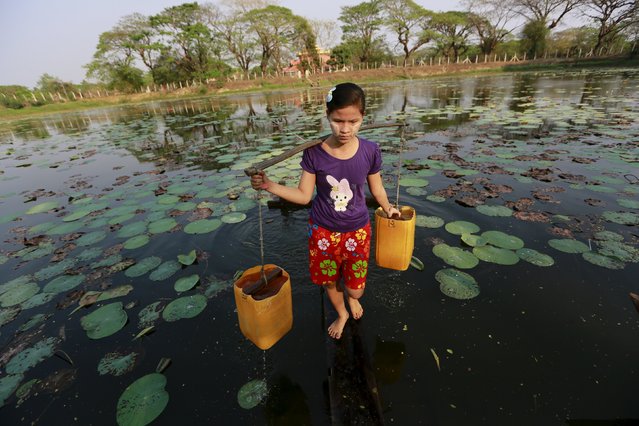
A girl collects drinking water at Dala river outside Yangon, Myanmar March 3, 2016. (Photo by Soe Zeya Tun/Reuters)

A girl collects drinking water at Dala river outside Yangon, Myanmar March 3, 2016. Some 650 million people, or one in 10 of the world's population, have no access to safe water, putting them at risk of infectious diseases and premature death. Dirty water and poor sanitation can cause severe diarrhoeal diseases in children, killing 900 under-five a day across the world, according to United Nations estimates. (Photo by Soe Zeya Tun/Reuters)
Details
18 Mar 2016 12:27:00
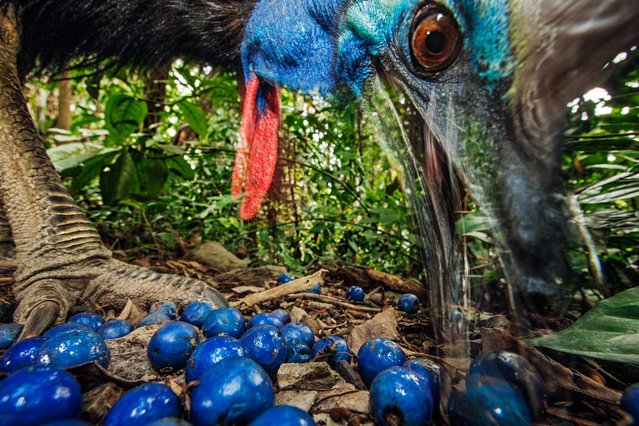
“Cassowaries are large, flightless birds related to emus and (more distantly) to ostriches, rheas, and kiwis”, writes Olivia Judson in the September issue of National Geographic magazine. (Photo by Christian Ziegler/National Geographic)

“Cassowaries are large, flightless birds related to emus and (more distantly) to ostriches, rheas, and kiwis”, writes Olivia Judson in the September issue of National Geographic magazine. How large? People-size: Adult males stand well over five foot five and top 110 pounds. Females are even taller, and can weigh more than 160 pounds. Dangerous when roused, they’re shy and peaceable when left alone. But even birds this big and tough are prey to habitat loss. The dense New Guinea and Australia rain forests where they live have dwindled. Today cassowaries might number 1,500 to 2,000. And because they help shape those same forests – by moving seeds from one place to another – “if they vanish”, Judson writes, “the structure of the forest would gradually change” too. (Photo by Christian Ziegler/National Geographic)

Details
06 Jan 2014 12:21:00
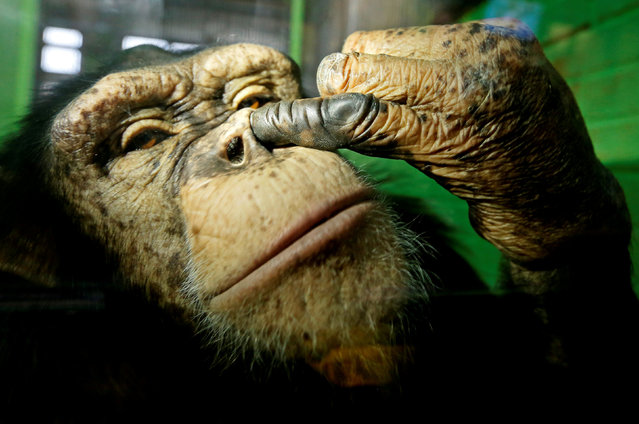
Anfisa, a twelve-year-old female chimpanzee, picks its nose at the Royev Ruchey Zoo in a suburb of the Siberian city of Krasnoyarsk, Russia October 18, 2017. (Photo by Ilya Naymushin/Reuters)

Anfisa, a twelve-year-old female chimpanzee, picks its nose at the Royev Ruchey Zoo in a suburb of the Siberian city of Krasnoyarsk, Russia on October 18, 2017. (Photo by Ilya Naymushin/Reuters)
Details
22 Oct 2017 06:42:00
A girl broadcasts at live streaming talent agency Three Minute TV in Beijing, China on April 12, 2017. Three Minute TV also arranges cosmetic surgery at partner hospitals for its anchors, arranges small bank loans for the surgery, photographs and markets the anchors and helps them find acting opportunities Deng said. (Photo by Damir Sagolj/Reuters)

A girl broadcasts at live streaming talent agency Three Minute TV in Beijing, China on April 12, 2017. Three Minute TV also arranges cosmetic surgery at partner hospitals for its anchors, arranges small bank loans for the surgery, photographs and markets the anchors and helps them find acting opportunities Deng said. (Photo by Damir Sagolj/Reuters)
Details
16 Apr 2017 10:43:00
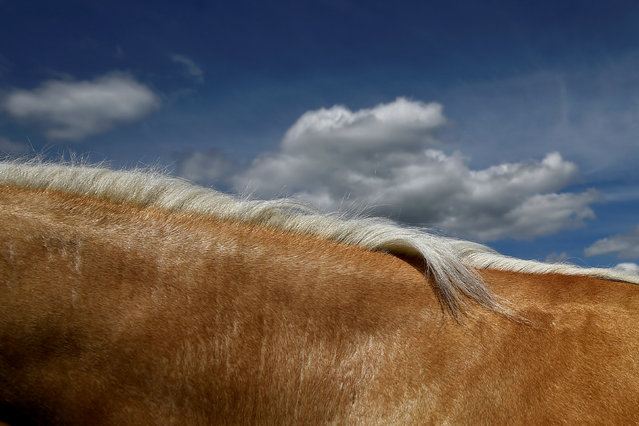
A palomino horse's mane is seen against the sky at Spancil Hill horse fair in Spancil Hill, Ireland June 23, 2018. (Photo by Clodagh Kilcoyne/Reuters)

A palomino horse's mane is seen against the sky at Spancil Hill horse fair in Spancil Hill, Ireland June 23, 2018. (Photo by Clodagh Kilcoyne/Reuters)
Details
01 Jul 2018 00:03:00
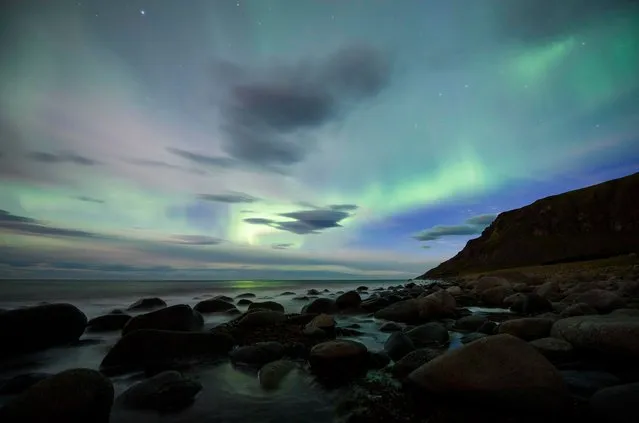
The northern lights, or aurora borealis, illuminate the sky over Flakstad beach on Lofoten Islands in the Arctic Circle on September 5, 2017. (Photo by Jonathan Nackstrand/AFP Photo)

The northern lights, or aurora borealis, illuminate the sky over Flakstad beach on Lofoten Islands in the Arctic Circle on September 5, 2017. (Photo by Jonathan Nackstrand/AFP Photo)
Details
15 Aug 2018 00:01:00
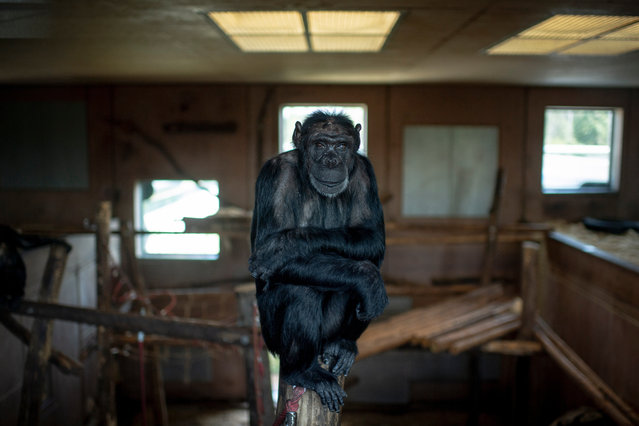
A chimpanzee looks in the direction of a camera at the Gut Aiderbichl Sanctuary for Traumatized Chimpanzees and other Primates in Gaenserndorf, near Vienna, 17 September 2018. 34 former laboratory chimpanzees of former Austrian pharmaceutical company Immuno AG spend their lives at the Gut Aiderbichl Sanctuary for Traumatized Chimpanzees and other Primates since 2009. U.S.-based Baxter International Inc. took over the Immuno AG in 1996, banned experiments with primates and rebuilt a former safari park for the Gut Aiderbichl Sanctuary for Traumatized Chimpanzees and other Primates. After three decades in captivity in too small cages, the chimpanzees, most of them came from Sierra Leone as cubs, have species-appropriate indoor and outdoor enclosures. The financial support by Baxter International Inc. and Austrian officials will end by 2019. (Photo by Christian Bruna/EPA/EFE)

A chimpanzee looks in the direction of a camera at the Gut Aiderbichl Sanctuary for Traumatized Chimpanzees and other Primates in Gaenserndorf, near Vienna, 17 September 2018. 34 former laboratory chimpanzees of former Austrian pharmaceutical company Immuno AG spend their lives at the Gut Aiderbichl Sanctuary for Traumatized Chimpanzees and other Primates since 2009. (Photo by Christian Bruna/EPA/EFE)
Details
23 Sep 2018 00:03:00