Loading...
Done
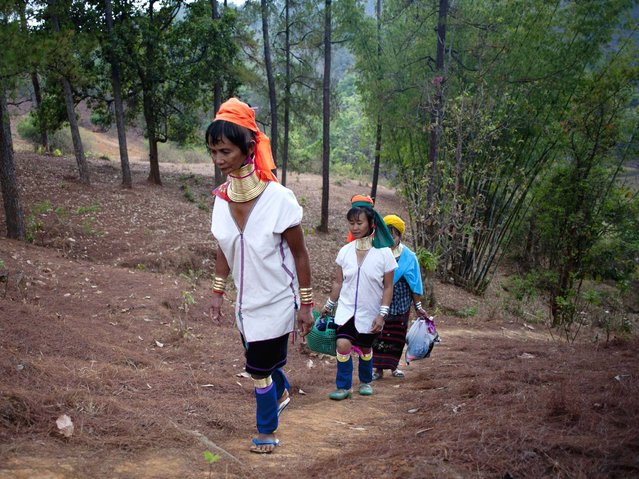
One of the theories says that the coils originate from the desire to look more attractive by exaggerating sexual dimorphism, as women have more slender necks than men. (Photo by Ye Aung Thu/AFP Photo)

This photo taken on April 16, 2014 shows ethnic Kayan women wearing traditional clothes and bronze rings around tbeir neck in Panpet village, Demoso township in Kayah state, eastern Myanmar. Some ethnic Kayan women, also known as Padaung, begin wearing the bronze rings on their neck and legs from a young age. Usually they start wearing six to ten rings when they are five to ten-years-old and then they put on one more ring a year for years after then. (Photo by Ye Aung Thu/AFP Photo)
Details
23 Apr 2014 08:56:00
A model showcases designs by Eko Tjandra during JF3 Jakarta Fashion Festival at La Piazza Fashion tent Summarecon Mall Kelapa Gading on July 27, 2024 in Jakarta, Indonesia. (Photo by Robertus Pudyanto/Getty Images)

A model showcases designs by Eko Tjandra during JF3 Jakarta Fashion Festival at La Piazza Fashion tent Summarecon Mall Kelapa Gading on July 27, 2024 in Jakarta, Indonesia. (Photo by Robertus Pudyanto/Getty Images)
Details
19 Aug 2024 04:08:00
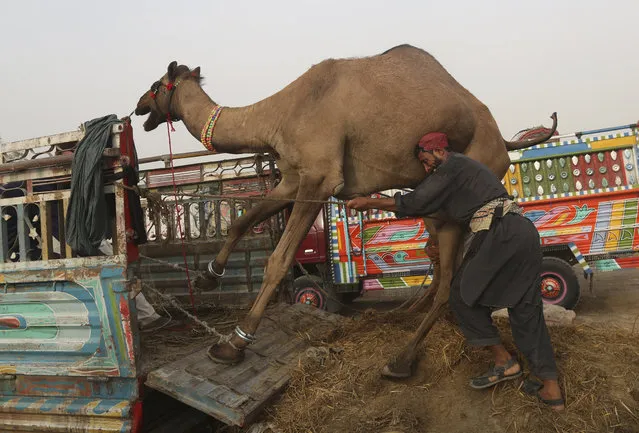
A Pakistani owner tries to load camel on a truck at a cattle market set up for the upcoming Muslim festival Eid al-Adha in Karachi, Pakistan, Friday, August 17, 2018. Eid al-Adha, or Feast of Sacrifice, most important Islamic holiday marks the willingness of the Prophet Ibrahim (Abraham to Christians and Jews) to sacrifice his son. (Photo by Shakil Adil/AP Photo)

A Pakistani owner tries to load camel on a truck at a cattle market set up for the upcoming Muslim festival Eid al-Adha in Karachi, Pakistan, Friday, August 17, 2018. Eid al-Adha, or Feast of Sacrifice, most important Islamic holiday marks the willingness of the Prophet Ibrahim (Abraham to Christians and Jews) to sacrifice his son. (Photo by Shakil Adil/AP Photo)
Details
20 Sep 2018 00:01:00
A woman reacts with Samoyed puppies as she performs yoga on International Yoga Day, in Bangkok, Thailand, on June 21, 2025. (Photo by Chalinee Thirasupa/Reuters)

A woman reacts with Samoyed puppies as she performs yoga on International Yoga Day, in Bangkok, Thailand, on June 21, 2025. (Photo by Chalinee Thirasupa/Reuters)
Details
29 Jul 2025 03:16:00
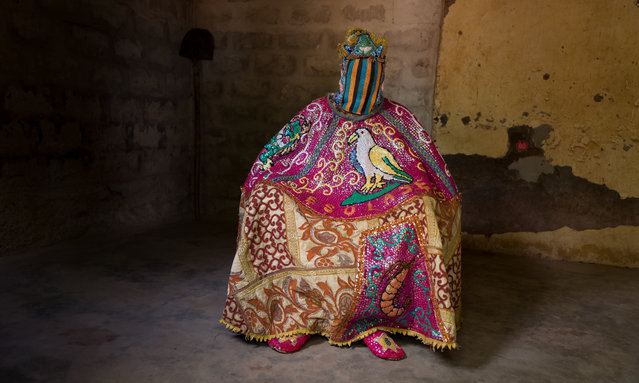
A member of an Egungun masquerade group, his identity obscured under his ornate costume in Ouidah, Benin on March 13, 2019. The exclusively male practitioners, found across Yoruba culture, use dance and spinning in the belief that they will summon the spirits of ancestors. (Photo by Massimo Rumi/Barcroft Images)

A member of an Egungun masquerade group, his identity obscured under his ornate costume in Ouidah, Benin on March 13, 2019. The exclusively male practitioners, found across Yoruba culture, use dance and spinning in the belief that they will summon the spirits of ancestors. (Photo by Massimo Rumi/Barcroft Images)
Details
26 Mar 2019 00:01:00
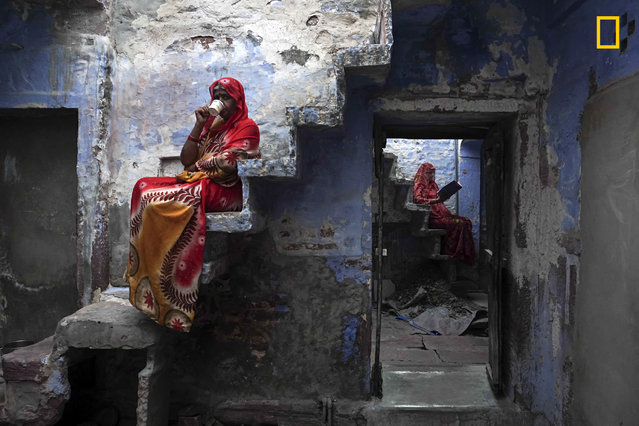
“These Rajasthani sisters were sitting on the staircase inside their house relaxing and enjoy a cup of masala chai”. (Photo by Firdaus Hadzri/National Geographic Travel Photographer of the Year Contest)

“These Rajasthani sisters were sitting on the staircase inside their house relaxing and enjoy a cup of masala chai”. (Photo by Firdaus Hadzri/National Geographic Travel Photographer of the Year Contest)
Details
13 Apr 2018 00:01:00
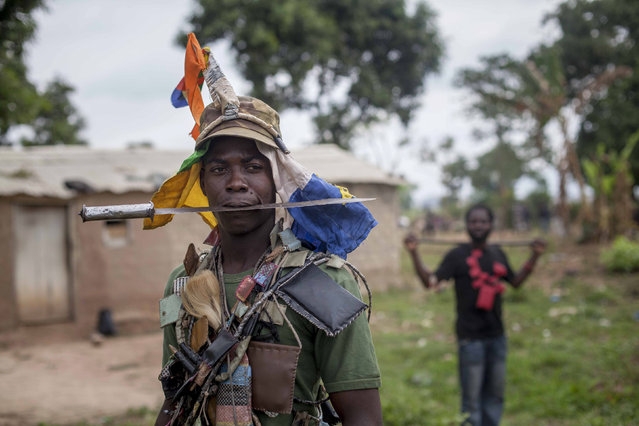
Anti-balaka fighters from the town of Bossembele patrol in the Boeing district of Bangui, Central African Republic, February 24, 2014. (Photo by Camille Lepage/Reuters)

“Camille Lepage, a 26-year-old French photojournalist who had spent months documenting deadly conflict in Central African Republic has been killed, the French presidency said Tuesday, May 13. Lepage, a freelance photographer whose work was published in major French and American newspapers, died in western Central African Republic not far from the border with Cameroon, authorities said”. – Associated Press. Photo: Anti-balaka fighters from the town of Bossembele patrol in the Boeing district of Bangui, Central African Republic, February 24, 2014. (Photo by Camille Lepage/Reuters)
Details
18 May 2014 08:54:00
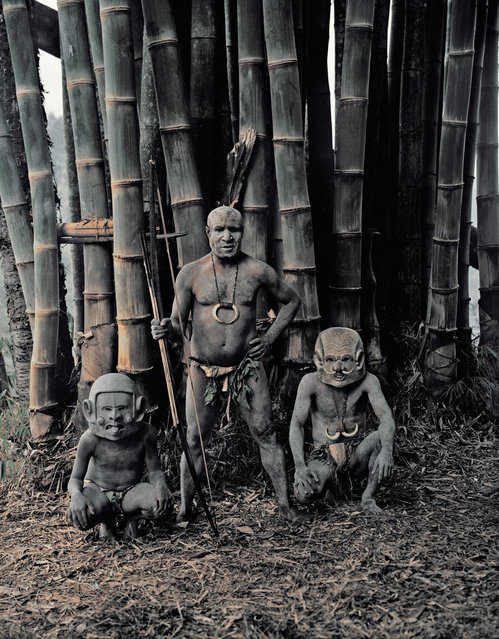
“Asaro from the Eastern Highlands”. The mudmen could not cover their faces with mud because the people of Papua New Guinea thought that the mud from the Asaro river was poisonous. So instead of covering their faces with this alleged poison, they made masks from pebbles that they heated and water from the waterfall, with unusual designs such as long or very short ears either going down to the chin or sticking up at the top, long joined eyebrows attached to the top of the ears, horns and sideways mouths. (Jimmy Nelson)

“Asaro from the Eastern Highlands”. The mudmen could not cover their faces with mud because the people of Papua New Guinea thought that the mud from the Asaro river was poisonous. So instead of covering their faces with this alleged poison, they made masks from pebbles that they heated and water from the waterfall, with unusual designs such as long or very short ears either going down to the chin or sticking up at the top, long joined eyebrows attached to the top of the ears, horns and sideways mouths. (Photo and caption by Jimmy Nelson)
Details
20 Oct 2013 08:54:00