Loading...
Done
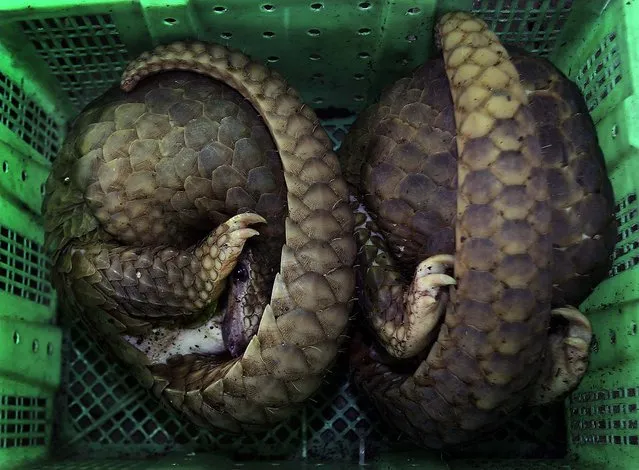
Two rescued pangolins sit in a basket during a news conference in Bangkok on June 7, 2012

Two rescued pangolins sit in a basket during a news conference in Bangkok on June 7, 2012. Thai customs rescued 110 pangolins worth about $35,500 that they say were to be sold outside the country as exotic food. The animals, hidden in a pickup truck, were seized at a customs checkpoint in Prachuap Khiri Khan province, south of Bangkok. (Photo by Sakchai Lalit/Associated Press)
Details
09 Jun 2012 12:20:00
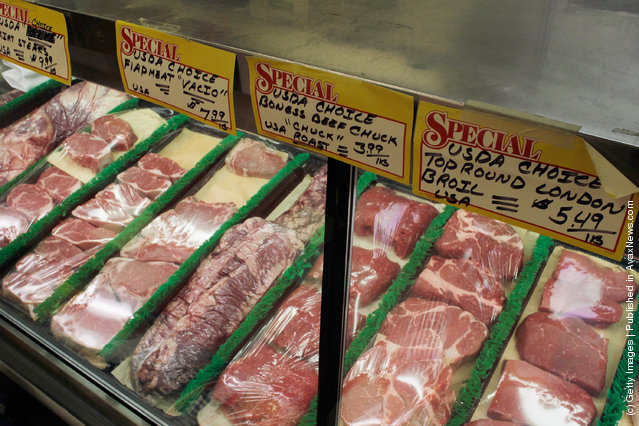
Meat is seen for sale at Laurenzo's Italian Center in North Miami Beach, Florida

Meat is seen for sale at Laurenzo's Italian Center on January 9, 2012 in North Miami Beach, Florida. The store tries to keeps costs down but across the country grocery bills are going up due to factors including higher commodity and energy prices, along with regions of the world having experienced natural disasters that have hurt the food supply. (Photo by Joe Raedle/Getty Images)
Details
10 Jan 2012 12:49:00
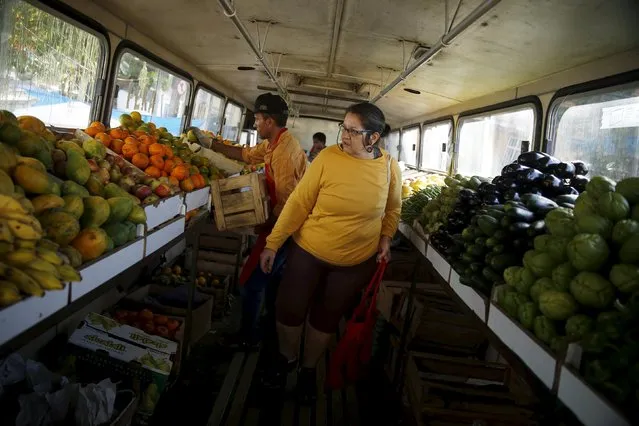
A woman looks for fruits to buy inside a bus called Sacolao in Santa Teresa neighborhood in Rio de Janeiro, Brazil, July 7, 2015. (Photo by Pilar Olivares/Reuters)

A woman looks for fruits to buy inside a bus called Sacolao in Santa Teresa neighborhood in Rio de Janeiro, Brazil, July 7, 2015. The bus, which began operating as a municipal initiative but has been taken over by a private enterprise, arrives every week in some neighborhoods to facilitate families with their grocery shopping and sells food at an affordable price, according to sellers. (Photo by Pilar Olivares/Reuters)
Details
08 Jul 2015 11:52:00
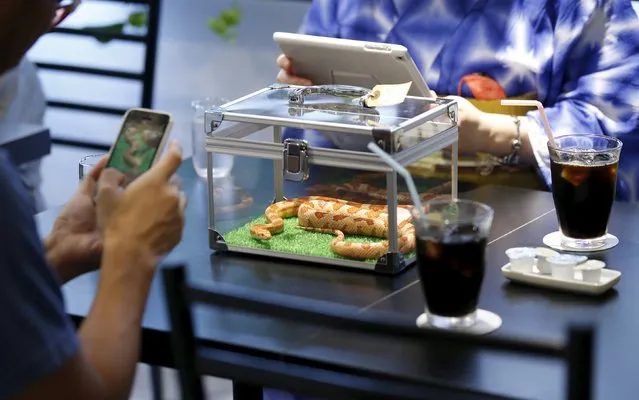
Customers take photos of a snake at the Tokyo Snake Center, a snake cafe, in Tokyo's Harajuku shopping district  August 14, 2015. (Photo by Toru Hanai/Reuters)

Customers take photos of a snake at the Tokyo Snake Center, a snake cafe, in Tokyo's Harajuku shopping district August 14, 2015. The cafe has on display 35 non-venomous snakes of 20 different breeds. Open six days a week, the cafe allows customers to enjoy food and beverages while watching a small snake slither around in a cage on their table for a 1,000 yen (8.04 dollars). By paying an additional fee, customers get to hold and pet the snake. (Photo by Toru Hanai/Reuters)
Details
15 Aug 2015 11:42:00
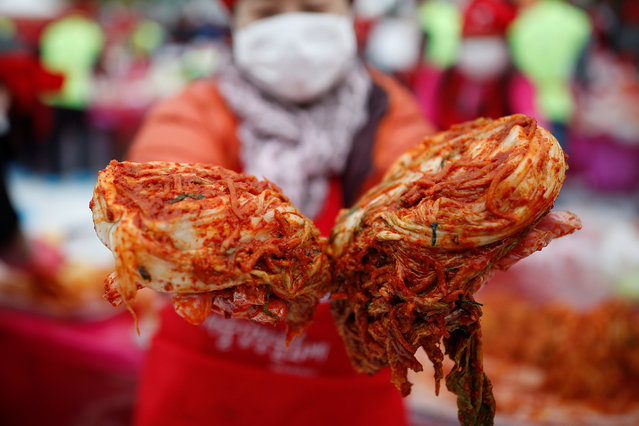
A woman poses for photographs with traditional side dish Kimchi during the Seoul Kimchi Festival in central Seoul, South Korea, November 4, 2016. (Photo by Kim Hong-Ji/Reuters)

A woman poses for photographs with traditional side dish Kimchi during the Seoul Kimchi Festival in central Seoul, South Korea, November 4, 2016. Kimchi made with cabbage, other vegetables and chili sauce and kimchi is the most popular traditional food in Korea. (Photo by Kim Hong-Ji/Reuters)
Details
05 Nov 2016 12:36:00
Young women sit at a doorway during the annual San Antonio Abad (Saint Anton Abbott) festival in Trigueros, southwest Spain January 25, 2015. (Photo by Marcelo del Pozo/Reuters)

Young women sit at a doorway during the annual San Antonio Abad (Saint Anton Abbott) festival in Trigueros, southwest Spain January 25, 2015. Thousands of people arrived in Trigueros to participate in this annual catching of food and presents, part of a traditional three-day religious festival. (Photo by Marcelo del Pozo/Reuters)
Details
26 Jan 2015 11:20:00


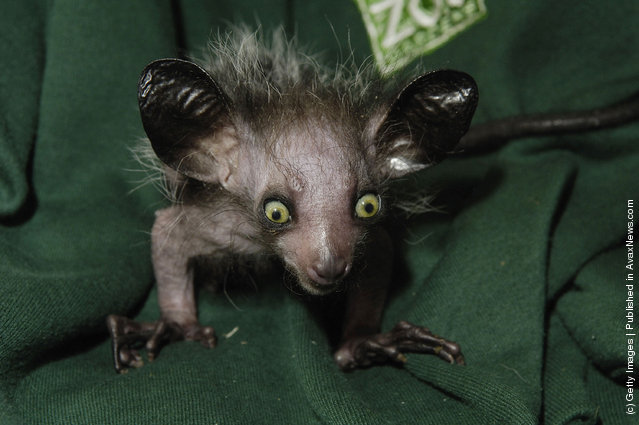
“The aye-aye (Daubentonia madagascariensis) is a lemur, a strepsirrhine primate native to Madagascar that combines rodent-like teeth and a special thin middle finger to fill the same ecological niche as a woodpecker. It is the world's largest nocturnal primate, and is characterized by its unusual method of finding food; it taps on trees to find grubs, then gnaws holes in the wood and inserts its narrow middle finger to pull the grubs out. The only other animal species known to find food in this way is the striped possum. From an ecological point of view the aye-aye fills the niche of a woodpecker as it is capable of penetrating wood to extract the invertebrates within”. – Wikipedia

Photo: In this handout image from Bristol Zoo is seen the first captive bred aye-aye in the UK named “Kintana” (meaning star in Malagasy) April 15, 2005 at Bristol Zoo Gardens, England. The zoo announced today only the second baby aye-aye to be hand-reared in the world (the first was in Jersey Zoo) and has now made his first public appearance since his birth on 11 February 2005. (Photo by Rob Cousins/Bristol Zoo via Getty Images)
Details
13 Apr 2011 13:33:00
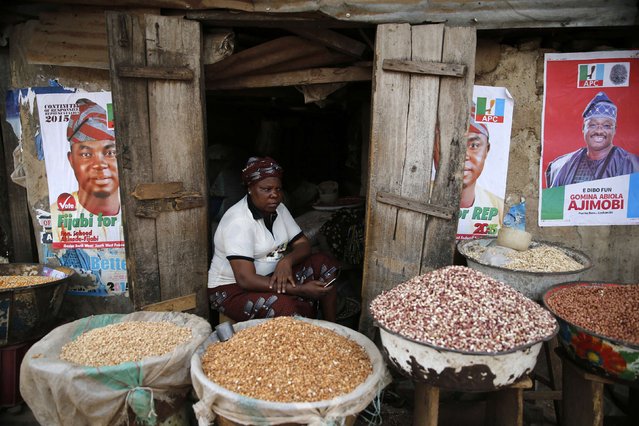
Latefat Alao, 56, a ethnic Yoruba Muslim woman, waits for customers in front of her in Beere market in Ibadan, southwest Nigeria, January 29, 2015. Much of the grain and wheat traders like Alao sell comes from the north and Boko Haram's campaign has negatively affected farmers and food markets. (Photo by Akintunde Akinleye/Reuters)

Latefat Alao, 56, a ethnic Yoruba Muslim woman, waits for customers in front of her in Beere market in Ibadan, southwest Nigeria, January 29, 2015. Much of the grain and wheat traders like Alao sell comes from the north and Boko Haram's campaign has negatively affected farmers and food markets. Reuters photographer Akintunde Akinleye photographed Nigerians and asked them about their views on the elections as well as their hopes and concerns for the country. (Photo by Akintunde Akinleye/Reuters)
Details
12 Feb 2015 12:44:00