Loading...
Done
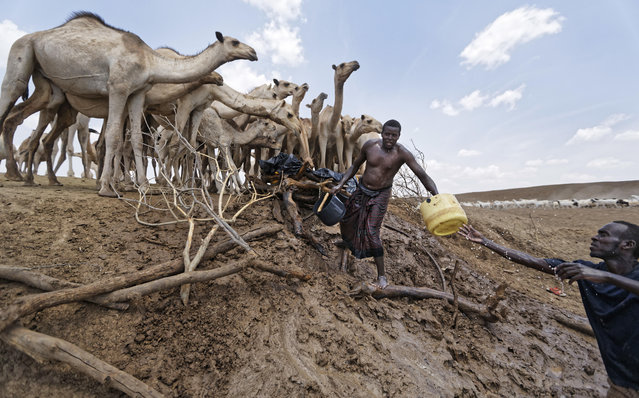
Camel herders scoop up water in plastic buckets from one of the few watering holes in the area, to water their animals near the drought-affected village of Bandarero, near Moyale town on the Ethiopian border, in northern Kenya, Friday, March 3, 2017. The U.N. humanitarian chief, Stephen O'Brien, toured Bandarero village on Friday and called on the international community to act to “avert the very worst of the effects of drought and to avert a famine to make sure we don't go from what is deep suffering to a catastrophe”. (Photo by Ben Curtis/AP Photo)

Camel herders scoop up water in plastic buckets from one of the few watering holes in the area, to water their animals near the drought-affected village of Bandarero, near Moyale town on the Ethiopian border, in northern Kenya, Friday, March 3, 2017. The U.N. humanitarian chief, Stephen O'Brien, toured Bandarero village on Friday and called on the international community to act to “avert the very worst of the effects of drought and to avert a famine to make sure we don't go from what is deep suffering to a catastrophe”. (Photo by Ben Curtis/AP Photo)
Details
05 Mar 2017 00:03:00
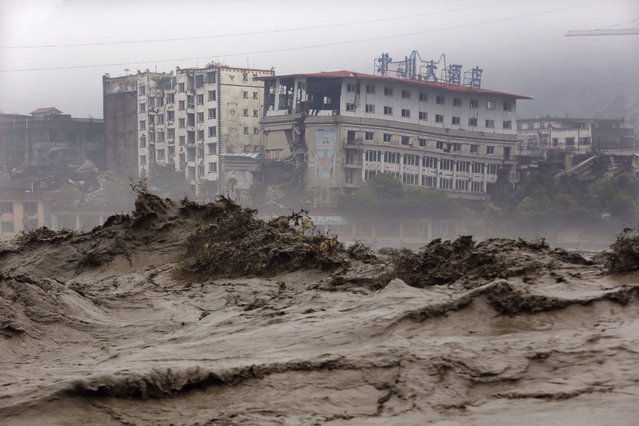
his picture taken on July 9, 2013 shows heavy flood waters sweeping through Beichuan in southwest China´s Sichuan province. Rainstorms sweeping across parts of China have affected millions, causing landslides and disabling transportation in provinces such as Sichuan and Yunnan, state media reported. (Photo by AFP Photo)

This picture taken on July 9, 2013 shows heavy flood waters sweeping through Beichuan in southwest China´s Sichuan province. Rainstorms sweeping across parts of China have affected millions, causing landslides and disabling transportation in provinces such as Sichuan and Yunnan, state media reported. (Photo by AFP Photo)
Details
12 Jul 2013 10:37:00
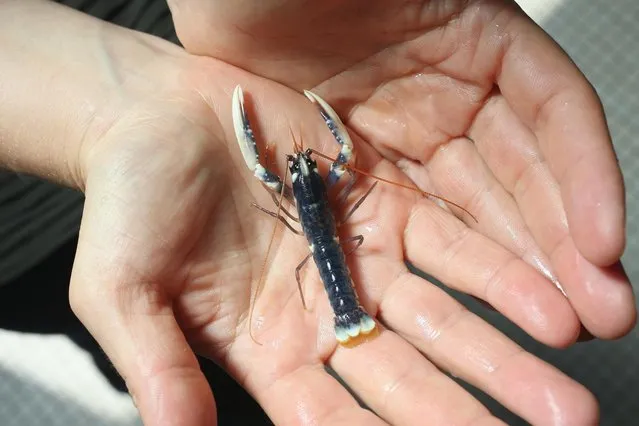
Isabel Schmalenbach, an environmental scientist with the Helgoland Biological Institute (Biologische Anstalt Helgoland), part of the Alfred Wegener Institute for Polar and Marine Research, holds a one-year old baby European lobster (Homarus gammarus) raised at the institute on August 3, 2013 on Helgoland Island, Germany. (Photo by Sean Gallup/Getty Images)

Isabel Schmalenbach, an environmental scientist with the Helgoland Biological Institute (Biologische Anstalt Helgoland), part of the Alfred Wegener Institute for Polar and Marine Research, holds a one-year old baby European lobster (Homarus gammarus) raised at the institute on August 3, 2013 on Helgoland Island, Germany. Later in the day Schmalenbach and her colleagues released a total of 415 one-year old lobsters into the North Sea as part of an effort to repopulate the lobster population around Helgoland (also called Heligoland). In the 19th century local fishermen caught up to 80,000 lobsters a year in the surrounding waters, combined with the heavy allied bombing of the island during and after World War II, as well as other environmental factors, decimated the lobster population. (Photo by Sean Gallup)
Details
05 Aug 2013 08:39:00
An armoured vehicle surrounded by Chicago cops at the time of the American depression, 1933. (Photo by Rolls Press/Popperfoto/Getty Images)

An armoured vehicle surrounded by Chicago cops at the time of the American depression, 1933. (Photo by Rolls Press/Popperfoto/Getty Images)
Details
10 Feb 2017 00:02:00
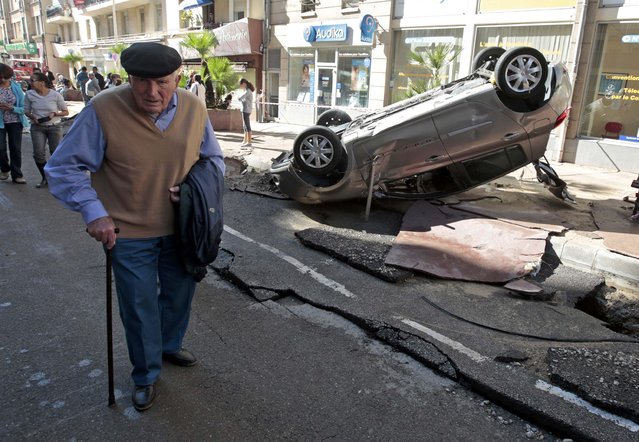
A man walks past an overturned car in the street that was damaged in flooding caused by torrential rain in Cannes, France, October 4, 2015. (Photo by Eric Gaillard/Reuters)

A man walks past an overturned car in the street that was damaged in flooding caused by torrential rain in Cannes, France, October 4, 2015. (Photo by Eric Gaillard/Reuters)
Details
07 Oct 2015 08:00:00
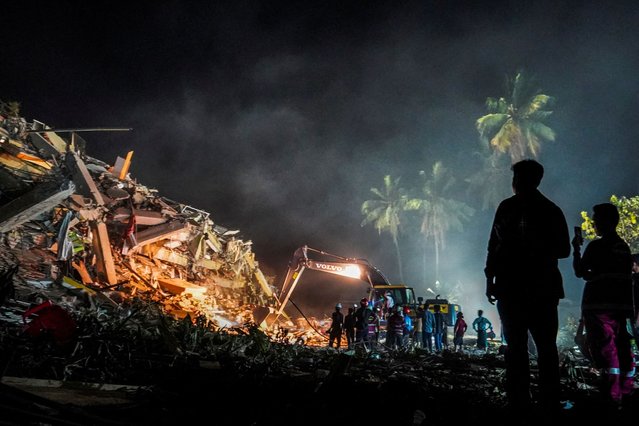
People look on as search and rescue operations continue in the aftermath of a strong earthquake, in Mandalay, Myanmar, on March 31, 2025. (Photo by Reuters/Stringer)

People look on as search and rescue operations continue in the aftermath of a strong earthquake, in Mandalay, Myanmar, on March 31, 2025. (Photo by Reuters/Stringer)
Details
19 Apr 2025 00:12:00
A Filipino dancer performs with fire to mark the Chinese Lunar New Year in Manila's Chinatown, Philippines, 28 January 2017. Chinese around the world celebrate the Lunar New Year on 28 January 2017, the first day of the year of rooster. (Photo by Francis R. Malasig/EPA)

A Filipino dancer performs with fire to mark the Chinese Lunar New Year in Manila's Chinatown, Philippines, 28 January 2017. Chinese around the world celebrate the Lunar New Year on 28 January 2017, the first day of the year of rooster. (Photo by Francis R. Malasig/EPA)
Details
29 Jan 2017 12:02:00
A reveller covered in tomato pulp participates in the annual “Tomatina” festival in the eastern town of Bunol, on August 28, 2019. The iconic fiesta, which is billed at “the world's biggest food fight” has become a major draw for foreigners, in particular from Britain, Japan and the United States. (Photo by Jaime Reina/AFP Photo)

A reveller covered in tomato pulp participates in the annual “Tomatina” festival in the eastern town of Bunol, on August 28, 2019. The iconic fiesta, which is billed at “the world's biggest food fight” has become a major draw for foreigners, in particular from Britain, Japan and the United States. (Photo by Jaime Reina/AFP Photo)
Details
30 Aug 2019 00:01:00