Loading...
Done
Florin Bors, aged 8 from Bacau, northern Romania, wearing a bear fur takes a break from performing a holiday season ritual in Bucharest, Romania, Tuesday, December 16, 2014. In pre-Christian rural traditions, dancers wearing colored costumes or animal furs, touring house to house in villages singing and dancing to ward off evil. (Photo by Octav Ganea/AP Photo/Mediafax)

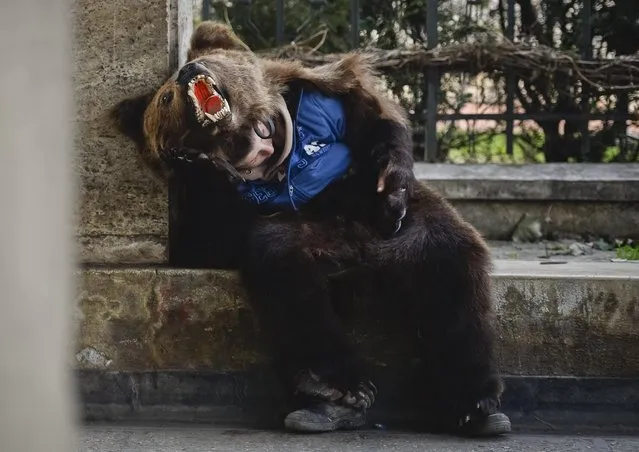
Florin Bors, aged 8 from Bacau, northern Romania, wearing a bear fur takes a break from performing a holiday season ritual in Bucharest, Romania, Tuesday, December 16, 2014. In pre-Christian rural traditions, dancers wearing colored costumes or animal furs, touring house to house in villages singing and dancing to ward off evil. In recent years following the economic downturn in Romania, a European Union member since 2007, the tradition has moved to Romania's cities where dancers travel to perform the ritual for money. (Photo by Octav Ganea/AP Photo/Mediafax)
Details
20 Dec 2014 12:07:00
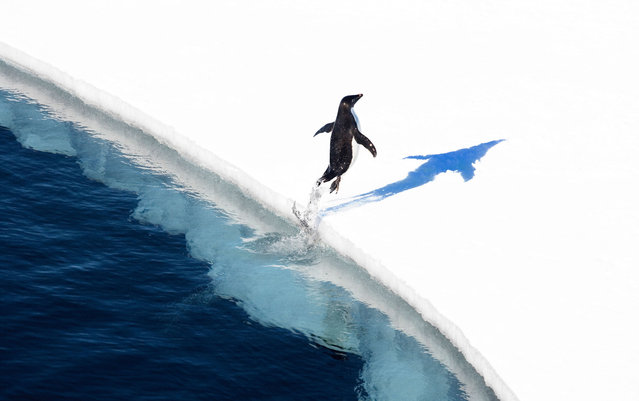
This undated handout photo received from the Antarctic Ocean Alliance on October 28, 2016 shows a adelie penguin jumping onto the ice in the Ross Sea in Antarctica. The world's largest marine reserve aimed at protecting the pristine wilderness of Antarctica will be created after a “momentous” agreement was finally reached on October 28, 2016 with Russia dropping its long-held opposition. A remote and largely pristine stretch of ocean off Antarctica received international protection on Friday, becoming the world's largest marine reserve as a broad coalition of countries came together to protect 598,000 square miles of water. The new marine protected area in the Ross Sea was created by a unanimous decision of the international body that oversees the waters around Antarctica – the Commission for the Conservation of Antarctic Marine Living Resources – and was announced at the commission's annual meeting in Tasmania. The commission comprises 24 countries, including the United States, and the European Union. (Photo by John Weller/AFP Photo/Antarctic Ocean Alliance)

This undated handout photo received from the Antarctic Ocean Alliance on October 28, 2016 shows a adelie penguin jumping onto the ice in the Ross Sea in Antarctica. The world's largest marine reserve aimed at protecting the pristine wilderness of Antarctica will be created after a “momentous” agreement was finally reached on October 28, 2016 with Russia dropping its long-held opposition. (Photo by John Weller/AFP Photo/Antarctic Ocean Alliance)
Details
29 Oct 2016 11:43:00
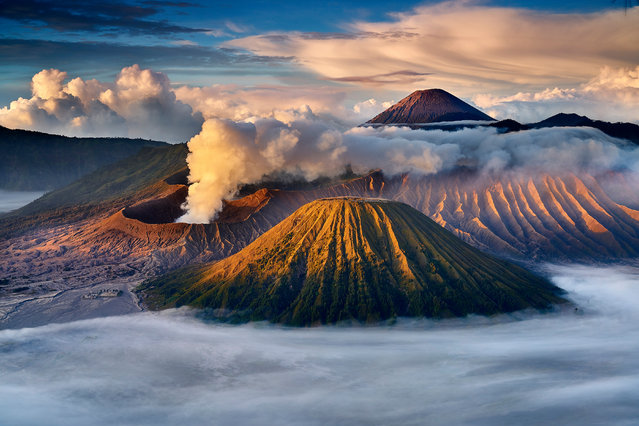
Myanmar national award second-place winner: Kyaw Win Hlaing. “Mount Bromo is an active volcano in East Java, Indonesia. The name Bromo derives from the Javanese pronunciation of Brahma, the Hindu creator god”. (Photo by Kyaw Win Hlaing/Sony World Photography Awards 2018)

Myanmar national award second-place winner: Kyaw Win Hlaing. “Mount Bromo is an active volcano in East Java, Indonesia. The name Bromo derives from the Javanese pronunciation of Brahma, the Hindu creator god”. (Photo by Kyaw Win Hlaing/Sony World Photography Awards 2018)
Details
22 Mar 2018 00:03:00
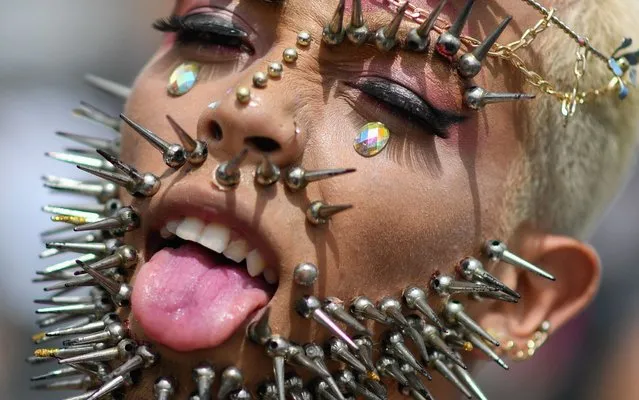
A reveler takes part in the 19th Gay Pride Parade at downtown Caracas, Venezuela on June 30, 2019. (Photo by Federico Parra/AFP Photo)

A reveler takes part in the 19th Gay Pride Parade at downtown Caracas, Venezuela on June 30, 2019. (Photo by Federico Parra/AFP Photo)
Details
03 Jul 2019 00:05:00
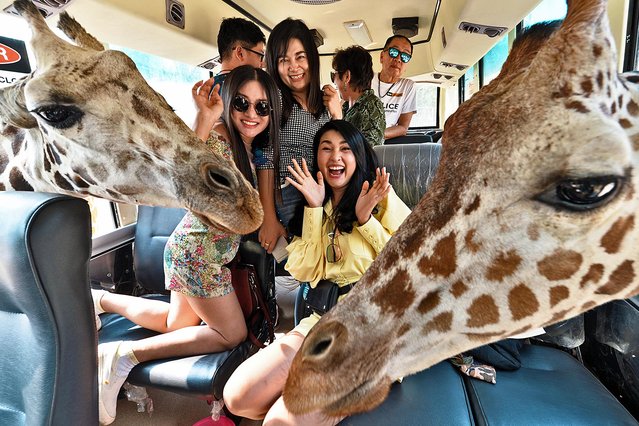
Visitors are seen with giraffes on a bus at Safari Park in Kanchanaburi Province, Thailand, January 19, 2020. Kanchanaburi in western Thailand an area known for its waterfalls and caves. (Photo by Rachen Sageamsak/Xinhua News Agency/Eyevine)

Visitors are seen with giraffes on a bus at Safari Park in Kanchanaburi Province, Thailand, January 19, 2020. Kanchanaburi in western Thailand an area known for its waterfalls and caves. (Photo by Rachen Sageamsak/Xinhua News Agency/Eyevine)
Details
23 Feb 2020 00:03:00
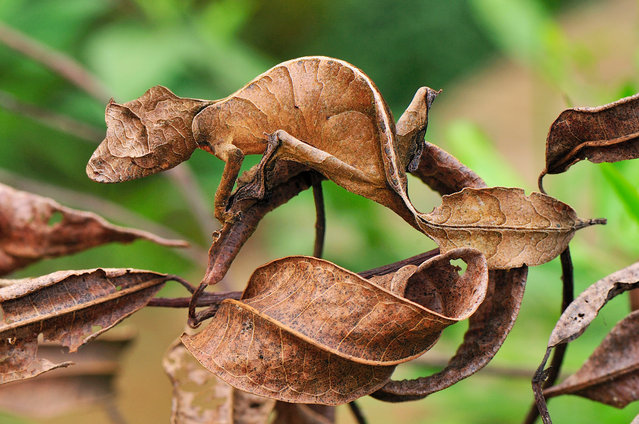
Is it a leaf? Is it tree bark? No, it’s the Satanic leaf-tailed gecko. Cleverly disguised as a rotting leaf, Madagascar’s camouflage king has red eyes, pointy horns and a taste for night hunting: it’s nature’s most devilish deceiver. (Photo by Thomas Marent/ARDEA)

Is it a leaf? Is it tree bark? No, it’s the Satanic leaf-tailed gecko. Cleverly disguised as a rotting leaf, Madagascar’s camouflage king has red eyes, pointy horns and a taste for night hunting: it’s nature’s most devilish deceiver. The twisted body and veiny skin echo the detail of a dry leaf, which ensures the gecko blends in with its forest home. The mottled tail appears to have sections missing, as though it has withered over time. This mini-monster epitomises survival of the fittest, having adapted gradually to become today’s extraordinary leaf impersonator. (Photo by Thomas Marent/ARDEA)
Details
20 Nov 2015 08:03:00
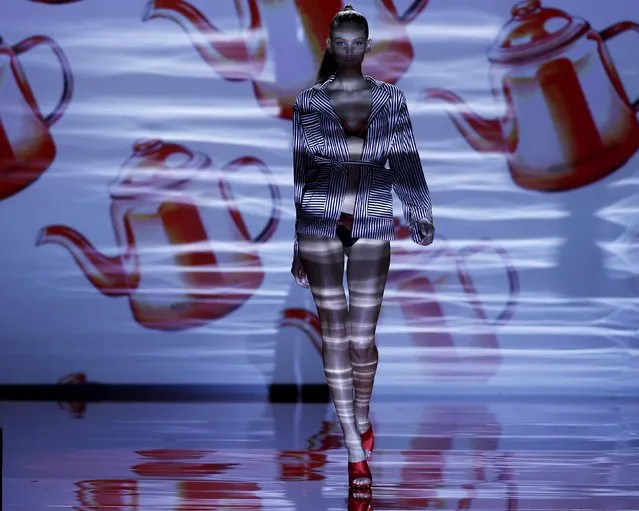
A model displays a creation for designer Andres Sarda's Fall/Winter 2015 collection, during the Mercedes-Benz Fashion Week in Madrid, February 7, 2015. (Photo by Javier Barbancho/Reuters)

A model displays a creation for designer Andres Sarda's Fall/Winter 2015 collection, during the Mercedes-Benz Fashion Week in Madrid, February 7, 2015. (Photo by Javier Barbancho/Reuters)
Details
08 Feb 2015 12:25:00
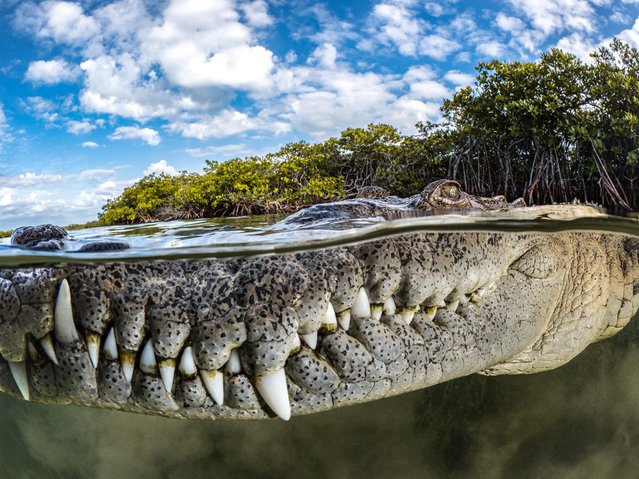
Guardian of the Mangroves – Overall Winner. Tanya Houppermans, Cuba. A curious American crocodile (Crocodylus acutus) swims right up to Tanya, at Gardens of the Queen (Jardines De La Reina), an archipelago off the coast of Cuba. It has been strictly protected since 1996, and is one of the most untouched marine ecosystems in the world. ‍ “The healthy population of American crocodiles is down to the pristine condition of the mangroves and I wanted to capture close ups of this gentle giant in its natural habitat. I hope this image can illustrate that protecting areas like this is so critical”. (Photo by Tanya Griffin Houppermans/Mangrove Photographer of the Year)

Guardian of the Mangroves – Overall Winner. Tanya Houppermans, Cuba. A curious American crocodile (Crocodylus acutus) swims right up to Tanya, at Gardens of the Queen (Jardines De La Reina), an archipelago off the coast of Cuba. It has been strictly protected since 1996, and is one of the most untouched marine ecosystems in the world. ‍ “The healthy population of American crocodiles is down to the pristine condition of the mangroves and I wanted to capture close ups of this gentle giant in its natural habitat. I hope this image can illustrate that protecting areas like this is so critical”. (Photo by Tanya Griffin Houppermans/Mangrove Photographer of the Year)
Details
05 Nov 2022 04:24:00