Loading...
Done
Aesthetic Movement

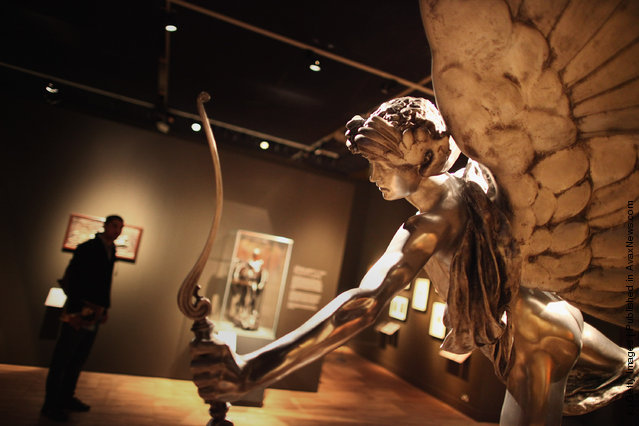
A visitor to ''The Cult of Beauty: The Aesthetic Movement 1860-1900'' exhibition at The V&A Museum looks at sculptures by Thornycroft (L) and Watts on March 30, 2011 in London, England. This exhibition brings together for the first time many masterpieces in painting, sculpture, design and furniture as well as fashion and literature and runs from April 2nd to July 17th 2011.
Details
30 Mar 2011 17:10:00
US model Bella Hadid poses as she arrives for the screening of the film “Rocketman” at the 72nd edition of the Cannes Film Festival in Cannes, southern France, on May 16, 2019. (Photo by Antonin Thuillier/AFP Photo)

US model Bella Hadid poses as she arrives for the screening of the film “Rocketman” at the 72nd edition of the Cannes Film Festival in Cannes, southern France, on May 16, 2019. (Photo by Antonin Thuillier/AFP Photo)
Details
20 May 2019 00:01:00
Flying pigeons pass over Nepalese street vendors near the earthquake damaged UNESCO World Heritage Site, Durbar Square in Kathmandu on May 20, 2015. Nearly 8,500 people have now been confirmed dead in the disaster, which destroyed more than half a million homes and left huge numbers of people without shelter with just weeks to go until the monsoon rains. (Photo by Ishara S. Kodikara/AFP Photo)

Flying pigeons pass over Nepalese street vendors near the earthquake damaged UNESCO World Heritage Site, Durbar Square in Kathmandu on May 20, 2015. Nearly 8,500 people have now been confirmed dead in the disaster, which destroyed more than half a million homes and left huge numbers of people without shelter with just weeks to go until the monsoon rains. (Photo by Ishara S. Kodikara/AFP Photo)
Details
23 May 2015 10:25:00
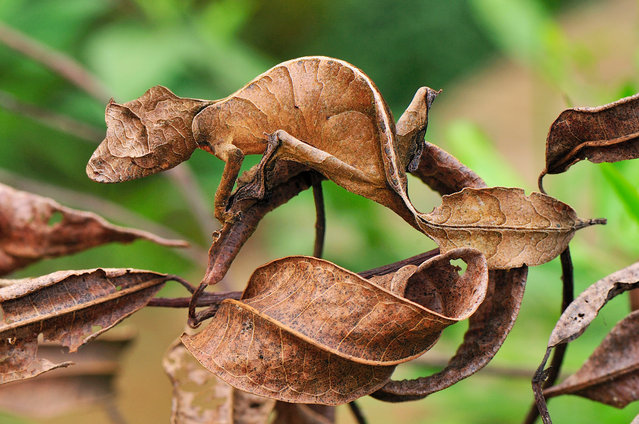
Is it a leaf? Is it tree bark? No, it’s the Satanic leaf-tailed gecko. Cleverly disguised as a rotting leaf, Madagascar’s camouflage king has red eyes, pointy horns and a taste for night hunting: it’s nature’s most devilish deceiver. (Photo by Thomas Marent/ARDEA)

Is it a leaf? Is it tree bark? No, it’s the Satanic leaf-tailed gecko. Cleverly disguised as a rotting leaf, Madagascar’s camouflage king has red eyes, pointy horns and a taste for night hunting: it’s nature’s most devilish deceiver. The twisted body and veiny skin echo the detail of a dry leaf, which ensures the gecko blends in with its forest home. The mottled tail appears to have sections missing, as though it has withered over time. This mini-monster epitomises survival of the fittest, having adapted gradually to become today’s extraordinary leaf impersonator. (Photo by Thomas Marent/ARDEA)
Details
20 Nov 2015 08:03:00
Abandoned cars are seen around a cross in the village of Tbeti near Tskhinvali, the capital of the breakaway region of South Ossetia, Georgia, July 4, 2015. President Vladimir Putin signed a treaty with Georgia's rebel South Ossetia region on March 18 that almost completely integrates it with Russia, alarming Georgia and the West a year after Moscow took over Crimea. (Photo by Kazbek Basaev/Reuters)

Abandoned cars are seen around a cross in the village of Tbeti near Tskhinvali, the capital of the breakaway region of South Ossetia, Georgia, July 4, 2015. President Vladimir Putin signed a treaty with Georgia's rebel South Ossetia region on March 18 that almost completely integrates it with Russia, alarming Georgia and the West a year after Moscow took over Crimea. Russia won a five-day war with Georgia in 2008 over the fate of South Ossetia and another rebel region, Abkhazia. It formally recognizes both regions as independent states and signed a similar treaty with Abkhazia last year. (Photo by Kazbek Basaev/Reuters)
Details
09 Jul 2015 11:43:00
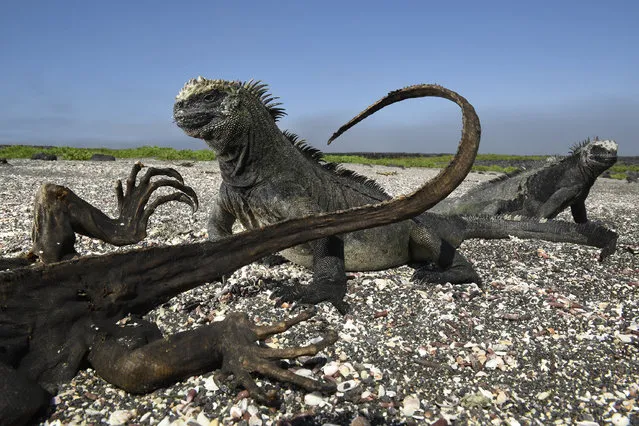
Galapagos – Rocking the Cradle: Four major ocean currents converge along the Galapagos archipelago, creating the conditions for an extraordinary diversity of animal life, April 25, 2016. The islands are home to at least 7,000 flora and fauna species, of which 97 percent of the reptiles, 80 percent of the land birds, 50 percent of the insects and 30 percent of the plants are endemic. The local ecosystem is highly sensitive to the changes in temperature, rainfall and ocean currents that characterize the climatic events known as El Niño and La Niña. These changes cause marked fluctuations in weather and food availability. Many scientists expect the frequency of El Niño and La Niña to increase as a result of climate change, making the Galapagos a possible early-warning location for its effects. (Photo by Thomas P. Peschak for National Geographic/World Press Photo)

Galapagos – Rocking the Cradle: Four major ocean currents converge along the Galapagos archipelago, creating the conditions for an extraordinary diversity of animal life, April 25, 2016. The islands are home to at least 7,000 flora and fauna species, of which 97 percent of the reptiles, 80 percent of the land birds, 50 percent of the insects and 30 percent of the plants are endemic. (Photo by Thomas P. Peschak for National Geographic/World Press Photo)
Details
16 Apr 2018 00:01:00
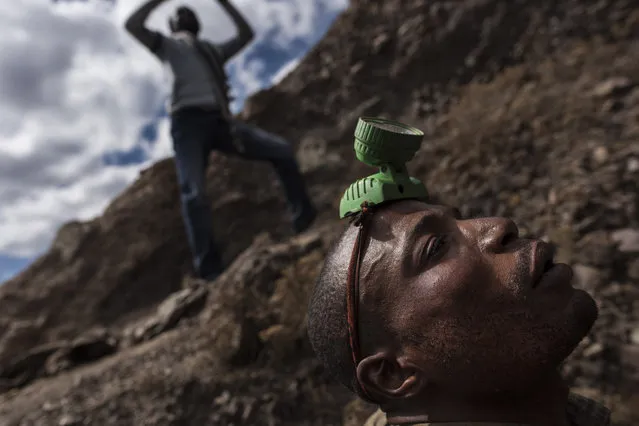
A “creuseur”, or digger, a plastic lantern on his head, readies to enter a copper and cobalt mine in Kawama, Democratic Republic of Congo on June 8, 2016. Cobalt is used in the batteries for electric cars and mobile phones. Working conditions are dangerous, often with no safety equipment or structural support for the tunnels. The diggers say they are paid on average US$2-3/day. (Photo by Michael Robinson Chavez/The Washington Post)

A “creuseur”, or digger, a plastic lantern on his head, readies to enter a copper and cobalt mine in Kawama, Democratic Republic of Congo on June 8, 2016. Cobalt is used in the batteries for electric cars and mobile phones. Working conditions are dangerous, often with no safety equipment or structural support for the tunnels. The diggers say they are paid on average US$2-3/day. (Photo by Michael Robinson Chavez/The Washington Post)
Details
30 Dec 2016 10:29:00
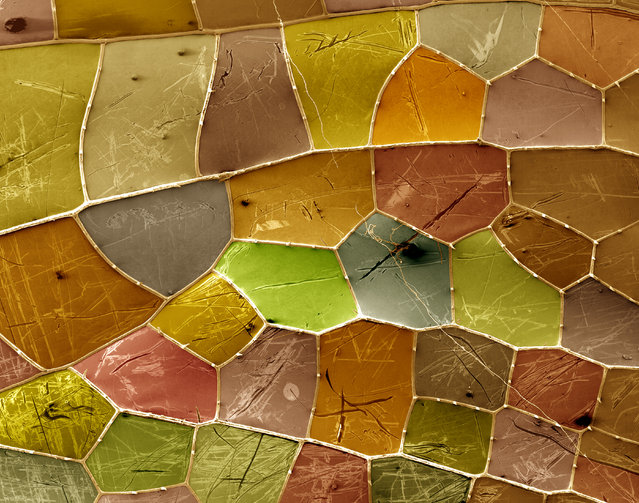
Micro or Macro? It's micro: this is an electron microscope image of the wing of a Green Darner dragonfly. (Photo by P. Kelly)

Macro or Micro? Scientists’ pictures baffle our sense of scale. It began when Stephen Young, a geography professor at Salem State University in Massachusetts, tricked his biologist colleague Paul Kelly into thinking a satellite image was one of his electron microscope scans. Can you guess whether they are close-up or very far away? (Photo by Paul Kelly)
Details
21 Apr 2014 10:24:00