Loading...
Done
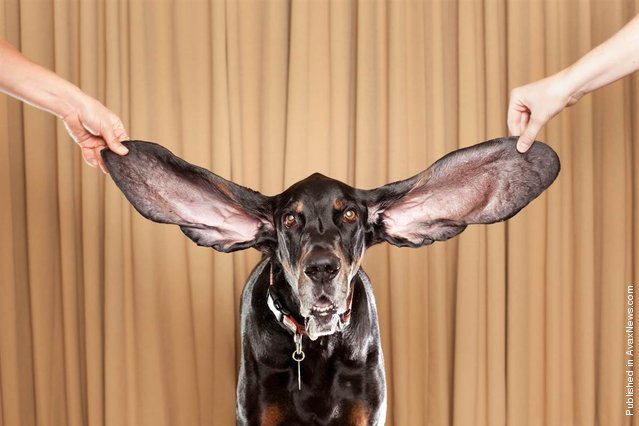
A Black and Tan Coonhound named Harbor has the longest ears of any living dog, with measurements of 12.25 (31,12 cm) inches for the left ear and 13.5 (34,29 cm) inches for the right

A Black and Tan Coonhound named Harbor has the longest ears of any living dog, with measurements of 12.25 (31,12 cm) inches for the left ear and 13.5 (34,29 cm) inches for the right. (Photo by Ryan Schude/Guinness World Records via AP)
Details
14 Apr 2012 11:24:00
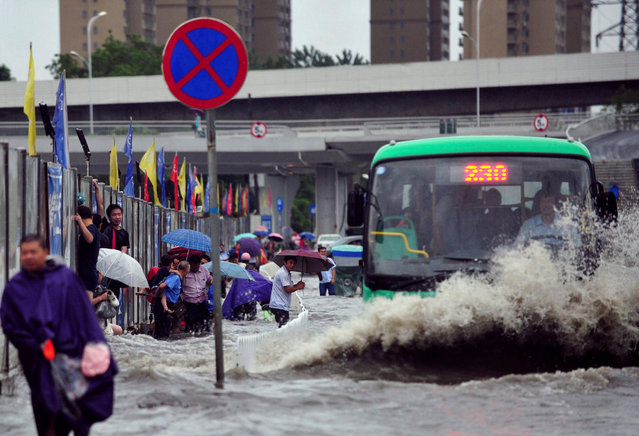
A bus goes through a flooded street in Wuhan, Hubei province, China July 6, 2016. (Photo by Reuters/China Daily)

A bus goes through a flooded street in Wuhan, Hubei province, China July 6, 2016. (Photo by Reuters/China Daily)
Details
11 Jul 2016 12:29:00
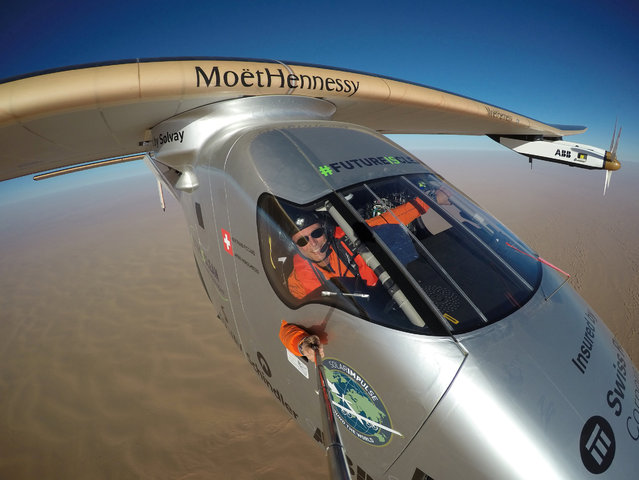
Selfie picture shows Swiss pioneer Bertrand Piccard during the last leg of the round the world trip with Solar Impulse 2 over the Arab peninsula July 25, 2016. (Photo by Jean Revillard/Bertrand Piccard/Reuters/SI2)

Selfie picture shows Swiss pioneer Bertrand Piccard during the last leg of the round the world trip with Solar Impulse 2 over the Arab peninsula July 25, 2016. (Photo by Jean Revillard/Bertrand Piccard/Reuters/SI2)
Details
27 Jul 2016 09:18:00
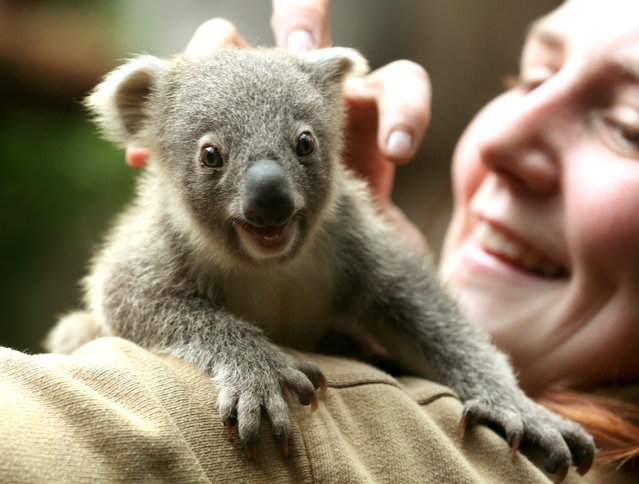
The six-months-old female koala cub holds on to the back of zoo keeper Lena at the zoo in Duisburg, Germany, 23 October 2015. The yet unnamed baby weighs 580 grams. (Photo by Roland Weihrauch/EPA)

The six-months-old female koala cub holds on to the back of zoo keeper Lena at the zoo in Duisburg, Germany, 23 October 2015. The yet unnamed baby weighs 580 grams. (Photo by Roland Weihrauch/EPA)
Details
26 Oct 2015 08:03:00
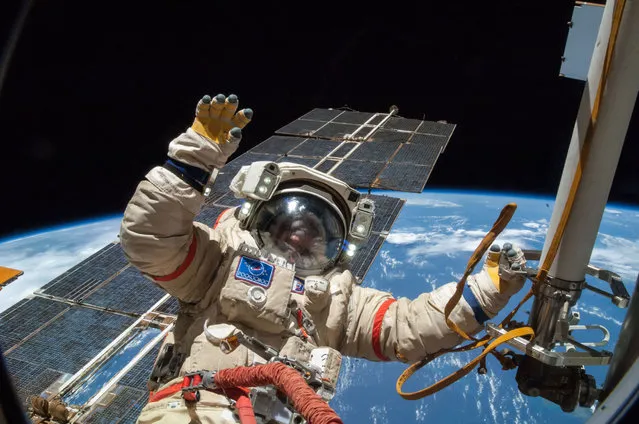
Russian cosmonaut Alexander Skvortsov, Expedition 40 flight engineer, attired in a Russian Orlan spacesuit, participates in a session of extravehicular activity (EVA) in support of science and maintenance on the International Space Station on August 18, 2014. During the five-hour, 11-minute spacewalk, Skvortsov and cosmonaut Oleg Artemyev (out of frame) deployed a small science satellite, retrieved and installed experiment packages and inspected components on the exterior of the orbital laboratory. (Photo by NASA)

Russian cosmonaut Alexander Skvortsov, Expedition 40 flight engineer, attired in a Russian Orlan spacesuit, participates in a session of extravehicular activity (EVA) in support of science and maintenance on the International Space Station on August 18, 2014. During the five-hour, 11-minute spacewalk, Skvortsov and cosmonaut Oleg Artemyev (out of frame) deployed a small science satellite, retrieved and installed experiment packages and inspected components on the exterior of the orbital laboratory. (Photo by NASA)
Details
13 Apr 2022 06:53:00
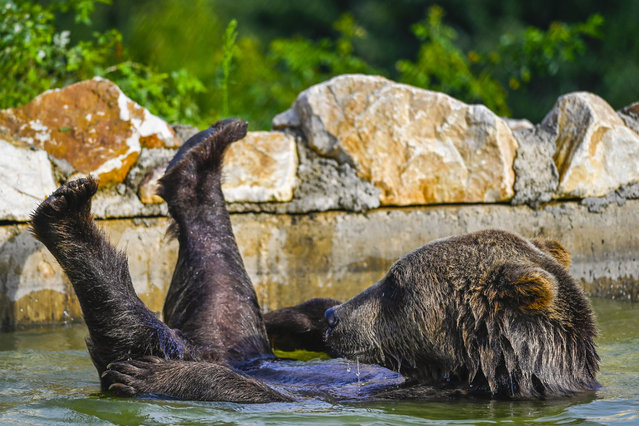
A brown bears cools off in a pool at the bear sanctuary near the village of Mramor, on August 18, 2020. The bear sanctuary was closed for visitors on August 18, as part of safety measures to curb the spread of the COVID-19 (novel coronavirus) disease. (Photo by Armend Nimani/AFP Photo)

A brown bears cools off in a pool at the bear sanctuary near the village of Mramor, on August 18, 2020. The bear sanctuary was closed for visitors on August 18, as part of safety measures to curb the spread of the COVID-19 (novel coronavirus) disease. (Photo by Armend Nimani/AFP Photo)
Details
23 Aug 2020 00:03:00
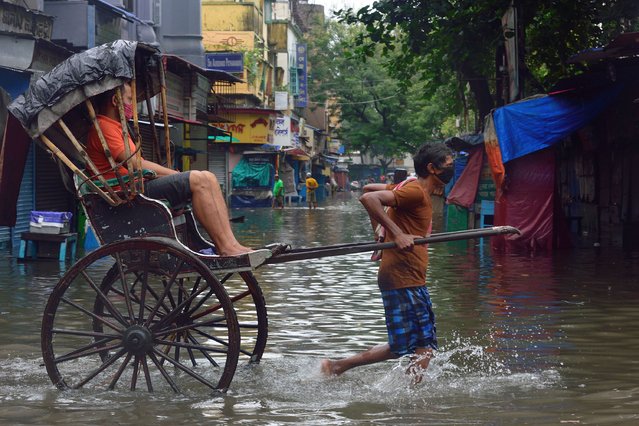
Heavy monsoon rains cause floods in several parts of Kolkata, West Bengal, India on June 17, 2021. (Photo by Sumit Sanyal/Anadolu Agency via Getty Images)

Heavy monsoon rains cause floods in several parts of Kolkata, West Bengal, India on June 17, 2021. (Photo by Sumit Sanyal/Anadolu Agency via Getty Images)
Details
25 Jun 2021 10:12:00
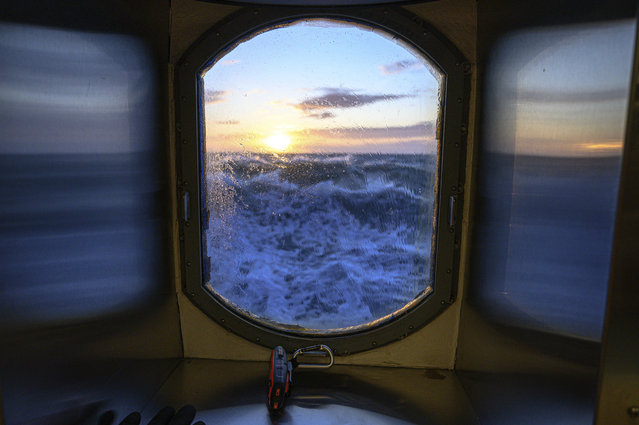
This November 8, 2019, photo provided by John Guillote shows a view from the main lab of the Sikuliaq in the Chukchi Sea. University of Washington scientists onboard the research vessel are studying the changes and how less sea ice will affect coastlines, which already are vulnerable to erosion because increased waves delivered by storms. More erosion would increase the chance of winter flooding in villages and danger to hunters in small boats. (Photo by John Guillote via AP Photo)

This November 8, 2019, photo provided by John Guillote shows a view from the main lab of the Sikuliaq in the Chukchi Sea. University of Washington scientists onboard the research vessel are studying the changes and how less sea ice will affect coastlines, which already are vulnerable to erosion because increased waves delivered by storms. More erosion would increase the chance of winter flooding in villages and danger to hunters in small boats. (Photo by John Guillote via AP Photo)
Details
26 Aug 2021 08:22:00