Loading...
Done
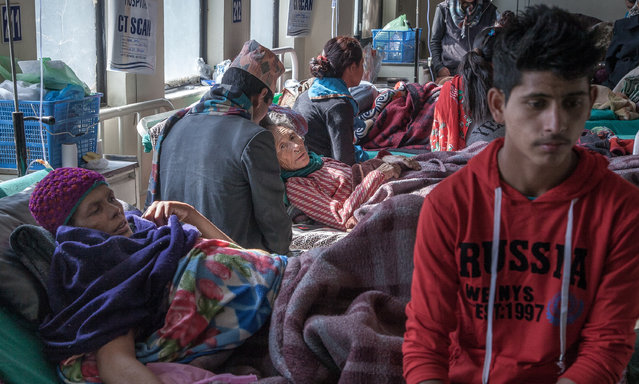
One of the most significant challenges related to cancer in Nepal is the lack of awareness around the prognosis of the disease, as many patients, their families and even healthcare professionals consider cancer to be an incurable disease at any stage. This results in significant delays in bringing patients to hospitals, and high rates of advanced stage cancers and mortality. (Photo by Omar Havana)

One of the most significant challenges related to cancer in Nepal is the lack of awareness around the prognosis of the disease, as many patients, their families and even healthcare professionals consider cancer to be an incurable disease at any stage. This results in significant delays in bringing patients to hospitals, and high rates of advanced stage cancers and mortality. (Photo by Omar Havana)
Details
06 Mar 2016 09:44:00
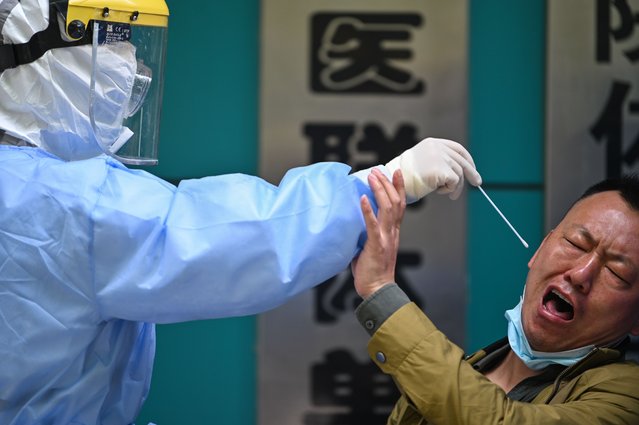
A man being tested for the COVID-19 novel coronavirus reacts as a medical worker takes a swab sample in Wuhan in China's central Hubei province on April 16, 2020. China has largely brought the coronavirus under control within its borders since the outbreak first emerged in the city of Wuhan late last year. (Photo by Hector Retamal/AFP Photo)

A man being tested for the COVID-19 novel coronavirus reacts as a medical worker takes a swab sample in Wuhan in China's central Hubei province on April 16, 2020. China has largely brought the coronavirus under control within its borders since the outbreak first emerged in the city of Wuhan late last year. (Photo by Hector Retamal/AFP Photo)
Details
18 Apr 2020 00:03:00
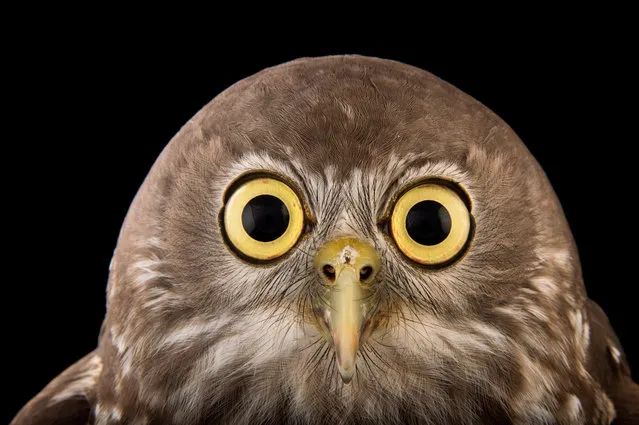
The National Geographic Photo Ark is a travelling exhibition of photographer Joel Sartore’s quest to create a photo archive of biodiversity around the world. So far, Sartore has captured studio portraits of more than 6,000 species – a number that he hopes to double. On 1 July, the ark will open at Melbourne zoo – the first time it has been exhibited in the southern hemisphere. More than 50 portraits will be on display, including many of Australian endangered animals being protected by programs at the zoo itself. These captions have been edited from text supplied by Melbourne zoo. Here: Barking owl. So-named because its call sounds like a barking dog, these birds are native to Australia, Indonesia and Papua New Guinea. In Victoria they are listed as an endangered species, and in 2003 there were estimated to be fewer than 50 breeding pairs. The main threat to the species in Victoria is loss of habitat, especially large trees with hollows in which they can nest and on which many of their prey depend. Apart from a bark, they may utter a chilling scream when they feel threatened. (Photo by Joel Sartore/National Geographic Photo Ark/The Guardian)

The National Geographic Photo Ark is a travelling exhibition of photographer Joel Sartore’s quest to create a photo archive of biodiversity around the world. So far, Sartore has captured studio portraits of more than 6,000 species – a number that he hopes to double. On 1 July, the ark will open at Melbourne zoo – the first time it has been exhibited in the southern hemisphere. More than 50 portraits will be on display, including many of Australian endangered animals being protected by programs at the zoo itself. These captions have been edited from text supplied by Melbourne zoo. Here: Barking owl. (Photo by Joel Sartore/National Geographic Photo Ark/The Guardian)
Details
01 Jul 2017 07:45:00


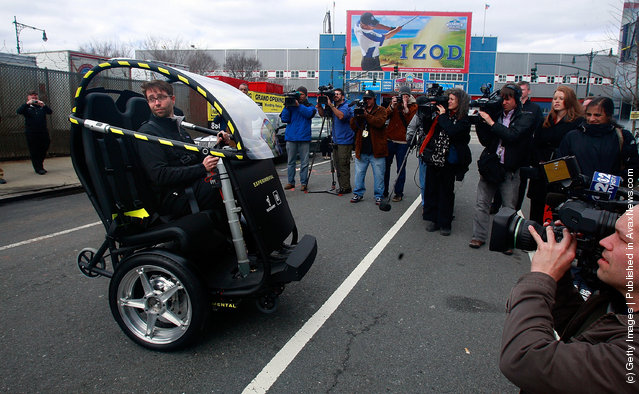
“The Personal Urban Mobility and Accessibility (PUMA) is an experimental electrically powered road vehicle created by Segway and adopted by General Motors as a concept vehicle representing the future of urban transportation. It operates on two wheels placed side-by-side, a layout that differs in placement from motorcycles which instead have their two wheels placed at the front and rear”. – Wikipedia

The Project P.U.M.A. (Personal Urban Mobility and Accessibility) prototype is displayed for the media April 7, 2009 in New York City. (Photo by Mario Tama/Getty Images)
Details
21 Jul 2011 14:32:00
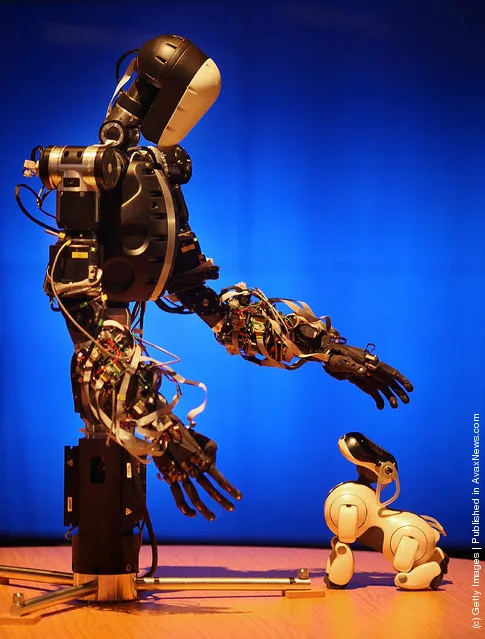
BERTI the robot interacts with a Sony AIBO robot dog

“Life-size humanoid robot BERTI (Bristol EluMotion Robotic Torso number 1 or RT-1) is a self contained, fully automated Robotic Torso, designed and built by Elumotion to provide a robotic platform based on human anatomy. RT-1 is a highly articulated manipulating platform and includes novel dexterous hands that allow emulation of human gesturing”. – Elumotion.com

Photo: BERTI the robot interacts with a Sony AIBO robot dog at The Science Museum's Antenna Gallery on February 17, 2009 in London. (Photo by Peter Macdiarmid/Getty Images)
Details
12 Sep 2011 10:53:00
British-based Ukrainians gather outside the Russian Embassy in London to protest against the build-up of troops in the Crimea region, on March 2, 2014. The demonstrators chanted and held banners demanding “Hands off Ukraine”. (Photo by John Stillwell/PA Wire)

British-based Ukrainians gather outside the Russian Embassy in London to protest against the build-up of troops in the Crimea region, on March 2, 2014. The demonstrators chanted and held banners demanding “Hands off Ukraine”. (Photo by John Stillwell/PA Wire)
Details
03 Mar 2014 08:12:00
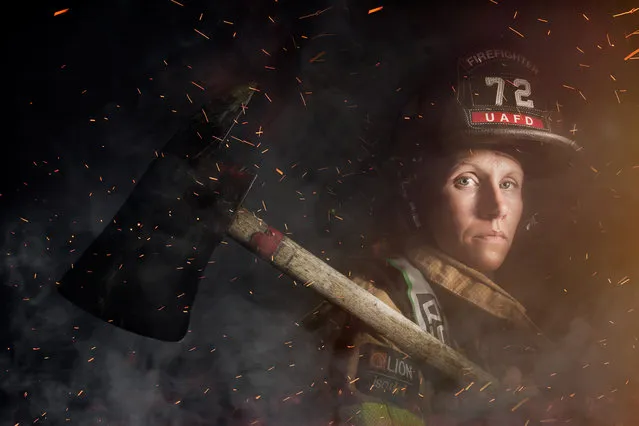
A truck driver, butcher and firefighter are some of the subjects in the latest project by the photographer Chris Crisman. This series portrays women at work and focuses on occupations traditionally seen as male dominated. Here: Firefighter Mindy Gabriel, from Upper Arlington, Ohio. (Photo by Chris Crisman/The Guardian)

A truck driver, butcher and firefighter are some of the subjects in the latest project by the photographer Chris Crisman. This series portrays women at work and focuses on occupations traditionally seen as male dominated. Here: Firefighter Mindy Gabriel, from Upper Arlington, Ohio. (Photo by Chris Crisman/The Guardian)
Details
13 Dec 2016 06:59:00
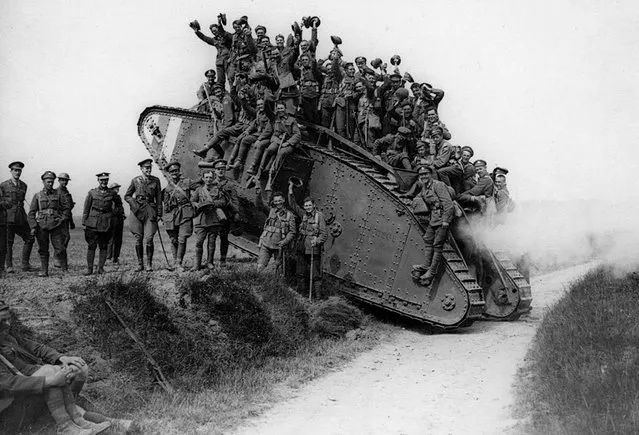
These black-and-white photos are taken from the new book “Armoured Warfare in the First World War 1916 – 1918” by Anthony Tucker-Jones and published by Pen & Sword Military. “Interestingly the British, French and Germans took completely different approaches with varying results”. The British military produced “Little Willie” in Autumn 1915 weighing 18 tonnes, which had a crew of two plus four gunners. “Inspired by a tracked artillery tractor “Little Willie” was referred to as a water tank – hence the name tank – to ensure secrecy”, said Anthony. “This led to the strange looking Mark I with its peculiar rhomboid shape, designed to cross trenches with guns in sponsons on either side. The Germans saw the tank as unchivalrous and were slow to grasp its utility. They favoured the Stormtrooper (specialist soldiers used to infiltrate enemy trenches) and artillery, not the tank”, said Anthony. “However, they didn’t hesitate to make use of captured British tanks. Although the tank helped secure victory and German soldiers dubbed it “Germany’s Downfall” the country was ultimately brought to its knees by the Allies blockade”. Here: British troops hitch a ride on a Mark IV after the massed tank fleet spearheading attack at Cambrai on November 20, 1917. (Photo by Anthony Tucker-Jones/Mediadrumworld.com)

These black-and-white photos are taken from the new book “Armoured Warfare in the First World War 1916 – 1918” by Anthony Tucker-Jones and published by Pen & Sword Military. Here: British troops hitch a ride on a Mark IV after the massed tank fleet spearheading attack at Cambrai on November 20, 1917. (Photo by Anthony Tucker-Jones/Mediadrumworld.com)
Details
23 Feb 2017 00:02:00