Loading...
Done
The Aurora Australis, also known as the Southern Lights, glow on the horizon over waters of Lake Ellesmere on the outskirts of Christchurch on May 11, 2024. (Photo by Sanka Vidanagama/AFP Photo)

The Aurora Australis, also known as the Southern Lights, glow on the horizon over waters of Lake Ellesmere on the outskirts of Christchurch on May 11, 2024. (Photo by Sanka Vidanagama/AFP Photo)
Details
16 May 2024 05:49:00
Swans from the state Ballet of Georgia production of Swan Lake arrive in London on August 27, 2024 ahead of opening night at London Coliseum venue on 28th August. (Photo by Guy Corbishley/Alamy Live News)

Swans from the state Ballet of Georgia production of Swan Lake arrive in London on August 27, 2024 ahead of opening night at London Coliseum venue on 28th August. (Photo by Guy Corbishley/Alamy Live News)
Details
08 Sep 2024 04:53:00
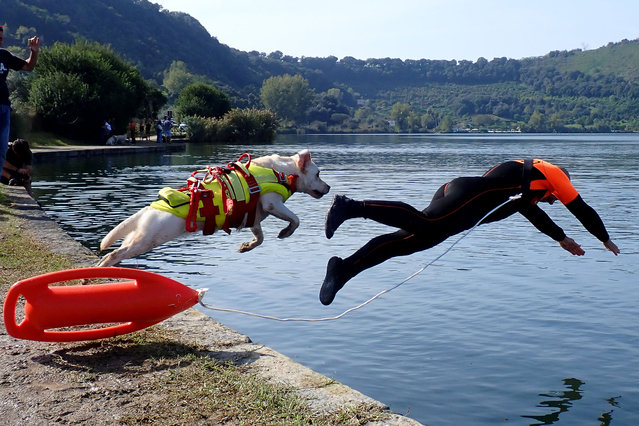
Volunteer of the SICS “Italian rescue dog school”, during a water rescue training session, inside the Averno lake in Pozzuoli. Italy, on October 26, 2024. (Photo by Vincenzo Izzo/Sipa USA)

Volunteer of the SICS “Italian rescue dog school”, during a water rescue training session, inside the Averno lake in Pozzuoli. Italy, on October 26, 2024. (Photo by Vincenzo Izzo/Sipa USA)
Details
12 May 2025 03:59:00


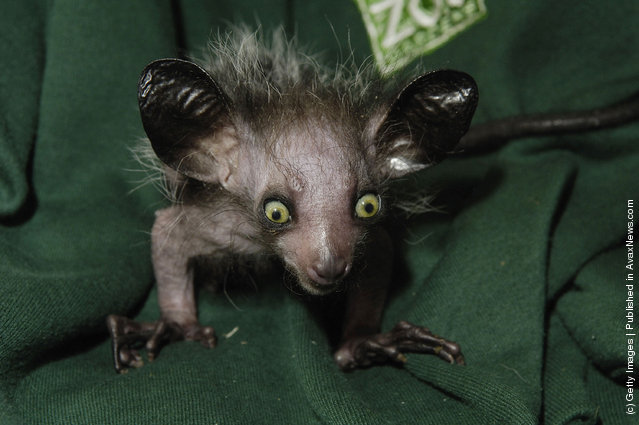
“The aye-aye (Daubentonia madagascariensis) is a lemur, a strepsirrhine primate native to Madagascar that combines rodent-like teeth and a special thin middle finger to fill the same ecological niche as a woodpecker. It is the world's largest nocturnal primate, and is characterized by its unusual method of finding food; it taps on trees to find grubs, then gnaws holes in the wood and inserts its narrow middle finger to pull the grubs out. The only other animal species known to find food in this way is the striped possum. From an ecological point of view the aye-aye fills the niche of a woodpecker as it is capable of penetrating wood to extract the invertebrates within”. – Wikipedia

Photo: In this handout image from Bristol Zoo is seen the first captive bred aye-aye in the UK named “Kintana” (meaning star in Malagasy) April 15, 2005 at Bristol Zoo Gardens, England. The zoo announced today only the second baby aye-aye to be hand-reared in the world (the first was in Jersey Zoo) and has now made his first public appearance since his birth on 11 February 2005. (Photo by Rob Cousins/Bristol Zoo via Getty Images)
Details
13 Apr 2011 13:33:00
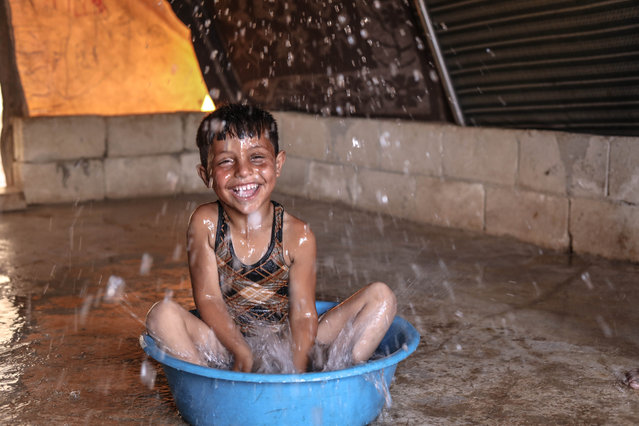
A child sitting in a washbowl filled with water cools himself as civilians struggle with protecting themselves from the dangers of extreme heat at the refugee camp, in Idlib, Syria on July 13, 2023. The civilians, who fled from the attacks of the Syrian Army, live under harsh conditions without infrastructure and electricity while the temperature reaches 47 Celsius in the region. (Photo by Izzeddin Kasim/Anadolu Agency via Getty Images)

A child sitting in a washbowl filled with water cools himself as civilians struggle with protecting themselves from the dangers of extreme heat at the refugee camp, in Idlib, Syria on July 13, 2023. The civilians, who fled from the attacks of the Syrian Army, live under harsh conditions without infrastructure and electricity while the temperature reaches 47 Celsius in the region. (Photo by Izzeddin Kasim/Anadolu Agency via Getty Images)
Details
02 Aug 2023 03:13:00
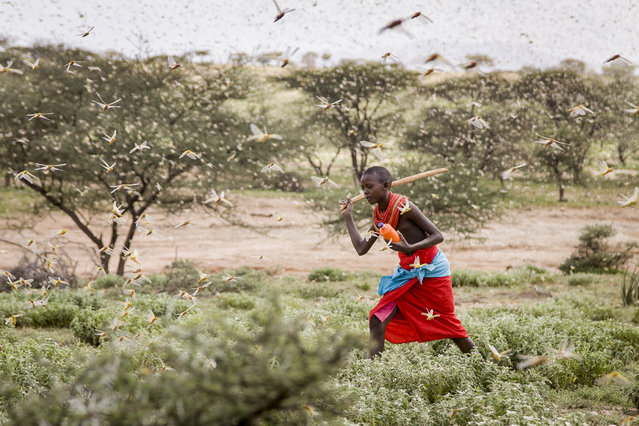
In this photo taken Thursday, January 16, 2020, a Samburu boy uses a wooden stick to try to swat a swarm of desert locusts filling the air, as he herds his camel near the village of Sissia, in Samburu county, Kenya. The most serious outbreak of desert locusts in 25 years is spreading across East Africa and posing an unprecedented threat to food security in some of the world's most vulnerable countries, authorities say, with unusual climate conditions partly to blame. (Photo by Patrick Ngugi/AP Photo)


In this photo taken Thursday, January 16, 2020, a Samburu boy uses a wooden stick to try to swat a swarm of desert locusts filling the air, as he herds his camel near the village of Sissia, in Samburu county, Kenya. The most serious outbreak of desert locusts in 25 years is spreading across East Africa and posing an unprecedented threat to food security in some of the world's most vulnerable countries, authorities say, with unusual climate conditions partly to blame. (Photo by Patrick Ngugi/AP Photo)

Details
19 Jan 2020 00:07:00
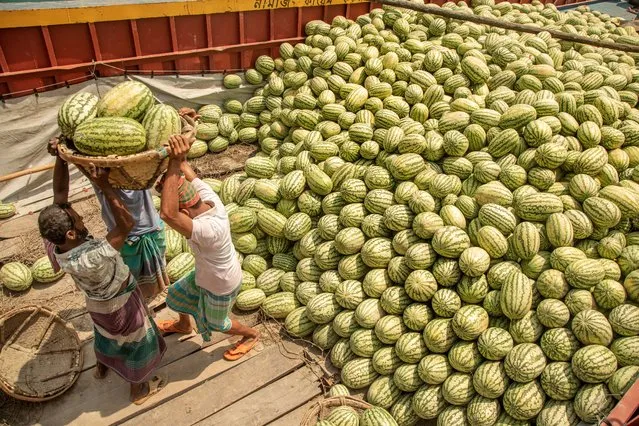
Bangladeshi laborers unload watermelons from a boat at the Buriganga River in Dhaka, Bangladesh, 03 April 2024. Watermelon is in harvesting season and is filling the city markets as it arrives from the southern part of Bangladesh. According to the Department of Agriculture Extension (DAE), Barishal has set an ambitious goal to expand watermelon cultivation to 54,002 hectares across six high-yielding districts in the division, which is 14 percent higher than last year. (Photo by Monirul Alam/EPA/EFE)

Bangladeshi laborers unload watermelons from a boat at the Buriganga River in Dhaka, Bangladesh, 03 April 2024. Watermelon is in harvesting season and is filling the city markets as it arrives from the southern part of Bangladesh. According to the Department of Agriculture Extension (DAE), Barishal has set an ambitious goal to expand watermelon cultivation to 54,002 hectares across six high-yielding districts in the division, which is 14 percent higher than last year. (Photo by Monirul Alam/EPA/EFE)
Details
19 Apr 2024 00:22:00
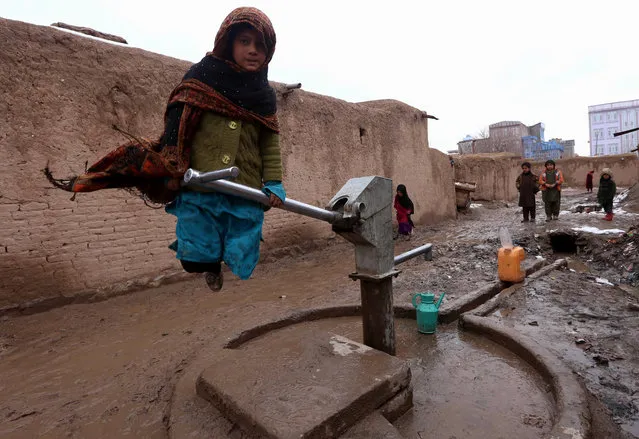
An Afghan woman fills containers with water near her temporary shelter at an internally displaced person's (IDP) camp on the outskirts of Herat, Afghanistan, January 21, 2015. Dozens of families are living in temporary shelters even in harsh winters and most depend on aid distributions by the United Nations High Commissioner for Refugees (UNHCR). (Photo by Jalil Rezayee/EPA)

An Afghan woman fills containers with water near her temporary shelter at an internally displaced person's (IDP) camp on the outskirts of Herat, Afghanistan, January 21, 2015. Dozens of families are living in temporary shelters even in harsh winters and most depend on aid distributions by the United Nations High Commissioner for Refugees (UNHCR). (Photo by Jalil Rezayee/EPA)
Details
23 Jan 2015 12:35:00