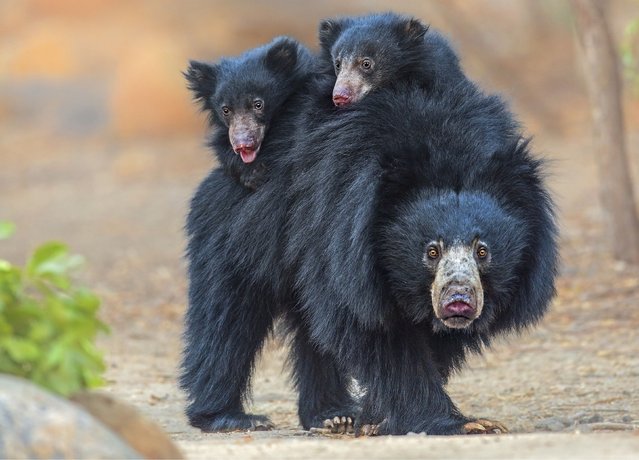
Two sloth bear cubs save their paws from the hot ground during a search for food in the Daroji Bear Sanctuary in Karnataka, India in the second decade of January 2025. (Photo by Baiju Patil/Solent News)
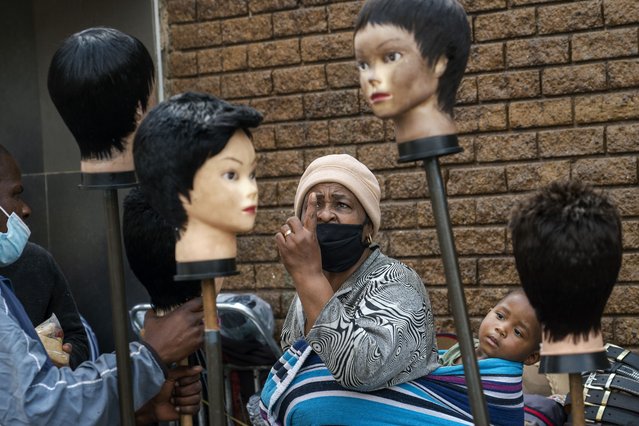
A woman carrying a child on her back looks at wigs on sale at the Baragwanath Taxi Rank in Soweto, South Africa, Wednesday, September 16, 2020. South African president Cyril Ramaphosa is scheduled to address the nation later in the day, as case numbers and death from COVID-19 hit the lowest in months. (Photo by Jerome Delay/AP Photo)
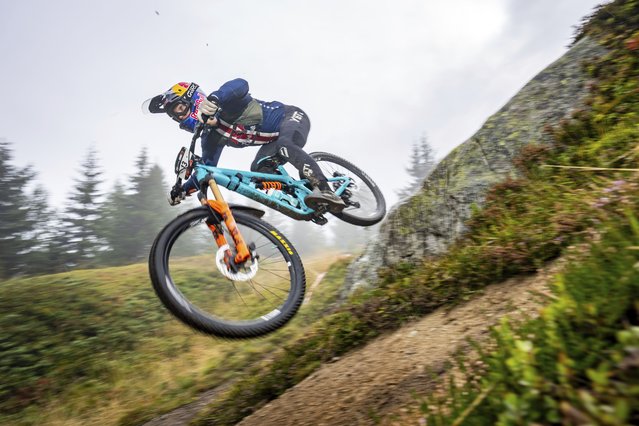
Richard Rude Junior of the United States, competes on his way to win the UCI MTB Enduro Men Elite, Mountain Bike World Championship, Monday, September 1, 2025, in Fiesch, Switzerland. (Photo by Maxime Schmid/Keystone via AP Photo)
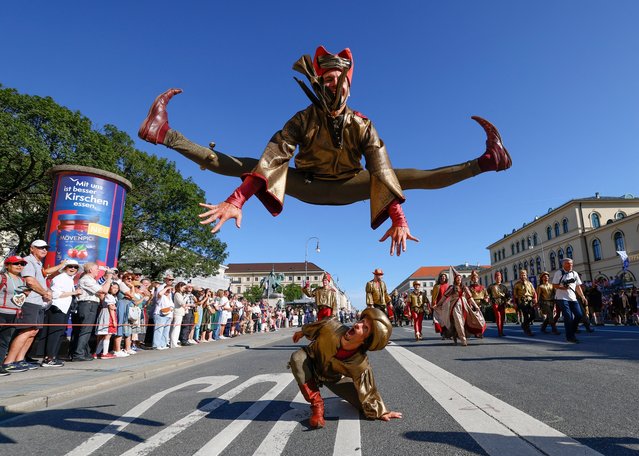
Artists perform during the traditional costume parade during the 190th edition of the Oktoberfest beer festival in Munich, southern Germany on September 21, 2025. The world's biggest beer festival Oktoberfest runs until October 5, 2025. (Photo by Michaela Stache/AFP Photo)
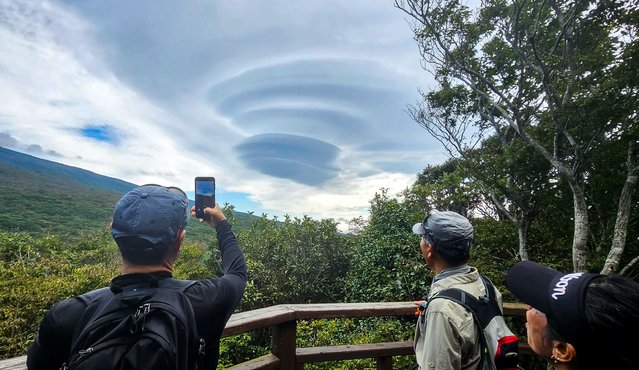
On the morning of the October 4, 2025, the second day of the Chuseok holiday, a lenticular cloud resembling an unidentified flying object (UFO) appeared in the northeastern sky as seen from the Healing Forest in Hogun-dong, Seogwipo-si, Jeju-do, creating a spectacular sight. (Photo by Newsis)
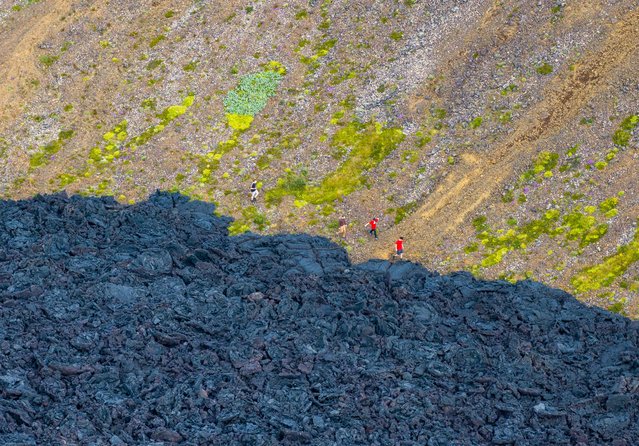
An aerial view taken with a drone shows people walking past dried lava (L) from a previous volcanic eruption as they make their way to a location closer to watch the fresh volcano eruption near Grindavik, Reykjanes, Iceland, 17 July 2025. According to the Icelandic Meteorological Office, a magma flow has begun at the Sundhnuk crater range on 16 July. (Photo by Jakob Vegerfors/EPA)
Aryna Sabalenka of Belarus takes a selfie with fans after winning against Madison Keys of the United States during their women's singles match of the China Open tennis tournament, at the National Tennis Center in Beijing, Wednesday, October 2, 2024. (Photo by Achmad Ibrahim/AP Photo)
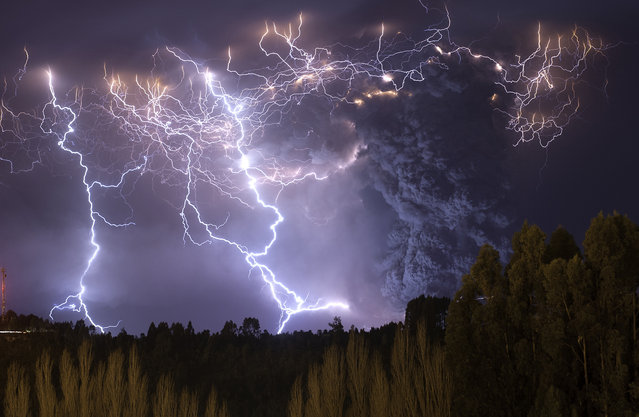
The eruption of Cordon Caulle began on June 4, 2011, located in the Region of Los Rios in Chile. For about 12 months, people and animals became accustomed to living with the daily fall of ash, which also caused problems in the air traffic in South America. The explosions and lightning during first days of the eruption could be seen from hundreds of miles around. This photograph was taken on the second night of eruption from the town of Lago Ranco. (Photo and caption by Francisco Negroni/National Geographic Traveler Photo Contest)
ATTENTION! All pictures are presented in high resolution. To see Hi-Res images – just TWICE click on any picture. In other words, click small picture – opens the BIG picture. Click BIG picture – opens VERY BIG picture.