Loading...
Done


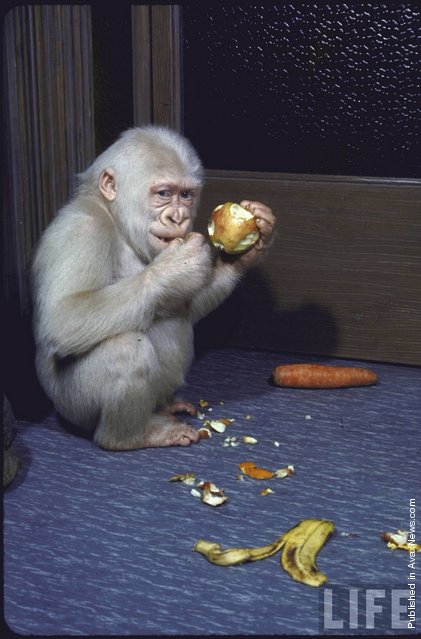
“Snowflake (c. 1964 – November 24, 2003) was an albino gorilla. He was the only known albino gorilla so far, and the most popular resident of the Barcelona Zoo in Catalonia, Spain. Originally named Nfumu Ngui in Fang language ("white gorilla") by his captor, he was then nicknamed Floquet de Neu (Catalan for little snowflake) by his keeper Jordi Sabater Pi. On his arrival to Barcelona where he was given an official reception by the then Mayor of Barcelona, Josep Maria de Porcioles, in November 1966, he was called Blancanieves (“Snow White”) in the newspaper Tele/Exprés. But he became famous with the name given to him by Sabater when National Geographic Magazine featured him on the main page in March 1967, with the English name Snowflake. This name spread among the press (Stern, Life, Paris-Match) and was later translated to Spanish as Copito de Nieve. Sabater himself called the gorilla Floquet or Copi, and in the later years Nfumu. The asteroid 95962 Copito, discovered by Catalan astronomer J. Manteca, is named in his honour”.
Details
07 Mar 2011 15:50:00
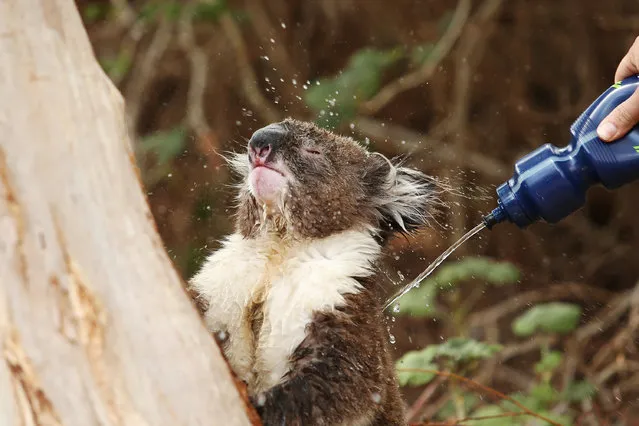
A heat-stressed koala waits as a resident pours water on its back on December 19, 2015 in Adelaide, Australia. Adelaide is experiencing an extreme heatwave, with temperatures reaching over 40 degrees for five consecutive days. (Photo by Morne de Klerk/Getty Images)

A heat-stressed koala waits as a resident pours water on its back on December 19, 2015 in Adelaide, Australia. Adelaide is experiencing an extreme heatwave, with temperatures reaching over 40 degrees for five consecutive days. (Photo by Morne de Klerk/Getty Images)
Details
26 Dec 2015 08:03:00
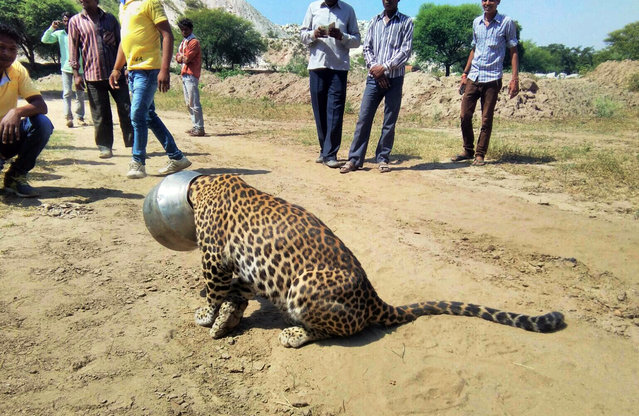
People stand around a leopard with its head stuck in a vessel in Rajsamand district of Rajasthan state, India, Wednesday, September 30, 2015. The leopard's head got stuck when it attempted to drink water from the pot, according to news reports. Forest officials tranquilized the animal and sawed off the vessel later in the day. (Photo by Kabir Jethi/AP Photo)

People stand around a leopard with its head stuck in a vessel in Rajsamand district of Rajasthan state, India, Wednesday, September 30, 2015. The leopard's head got stuck when it attempted to drink water from the pot, according to news reports. Forest officials tranquilized the animal and sawed off the vessel later in the day. (Photo by Kabir Jethi/AP Photo)
Details
31 Dec 2015 08:00:00
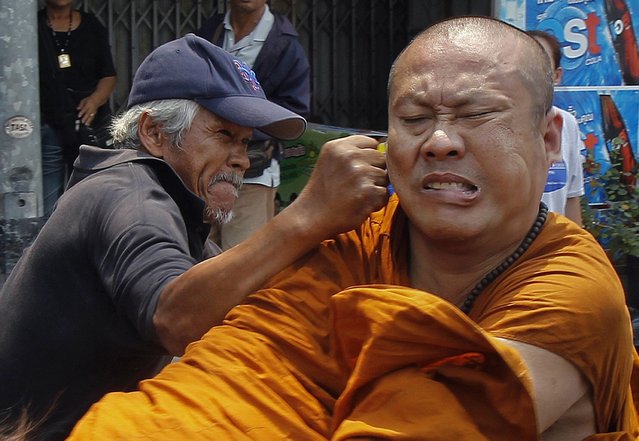
A member of the pro-government “red shirt” movement attacks a Buddhist monk outside the National Anti-Corruption Commission office in Nonthaburi province, on the outskirts of Bangkok March 24, 2014. Members of the movement attacked the monk after he shouted complaints to the group blocking a road near the National Anti-Corruption Commission. (Photo by Chaiwat Subprasom/Reuters)

A member of the pro-government “red shirt” movement attacks a Buddhist monk outside the National Anti-Corruption Commission office in Nonthaburi province, on the outskirts of Bangkok March 24, 2014. Members of the movement attacked the monk after he shouted complaints to the group blocking a road near the National Anti-Corruption Commission. (Photo by Chaiwat Subprasom/Reuters)
Details
29 Mar 2014 13:50:00
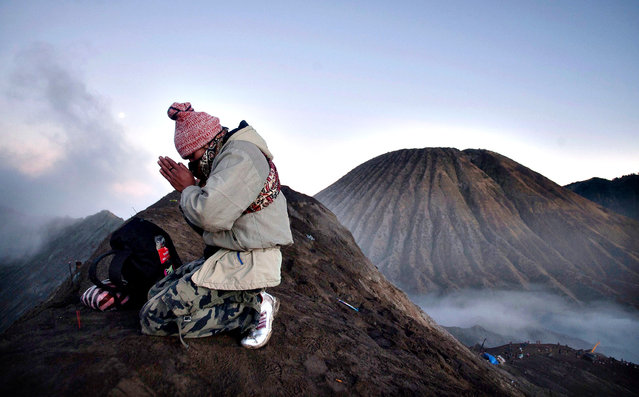
A Tengger tribesman prays at Mount Bromo during the annual Kasada ceremony in East Java on August 12, 2014. The Kasada ceremony is a festival held every 14th day of the Kasada month in the traditional Hindu lunar calender to honour Sang Hyang Widhi (God Almighty) and is based on the legend of Roro Anteng and Joko Seger from the Majapahit Kingdom, from which their Tengger tribe name originates. (Photo by Juni Kriswanto/AFP Photo)

A Tengger tribesman prays at Mount Bromo during the annual Kasada ceremony in East Java on August 12, 2014. The Kasada ceremony is a festival held every 14th day of the Kasada month in the traditional Hindu lunar calender to honour Sang Hyang Widhi (God Almighty) and is based on the legend of Roro Anteng and Joko Seger from the Majapahit Kingdom, from which their Tengger tribe name originates. Hundreds of worshippers from the Tengger tribe offer food and livestock as a symbolic sacrifice which they throw into the crater for the blessings of safety and prosperity to their familyies and community. (Photo by Juni Kriswanto/AFP Photo)
Details
16 Aug 2014 11:19:00
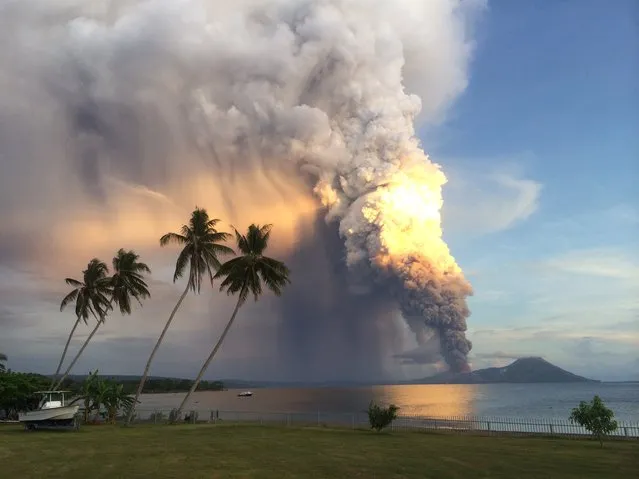
A photo taken on August 29, 2014, shows Mount Tavurvur erupting in eastern Papua New Guinea, spewing rocks and ash into the air, forcing the evacuation of local communities and international flights to be re-routed. Mount Tavurvur, which destroyed the town of Rabaul when it erupted simultaneously with nearby Mount Vulcan in 1994, rumbled to life early in the morning on the tip of the remote island of New Britain. (Photo by Oliver Bluett/AFP Photo)

A photo taken on August 29, 2014, shows Mount Tavurvur erupting in eastern Papua New Guinea, spewing rocks and ash into the air, forcing the evacuation of local communities and international flights to be re-routed. Mount Tavurvur, which destroyed the town of Rabaul when it erupted simultaneously with nearby Mount Vulcan in 1994, rumbled to life early in the morning on the tip of the remote island of New Britain. (Photo by Oliver Bluett/AFP Photo)
Details
30 Aug 2014 10:51:00
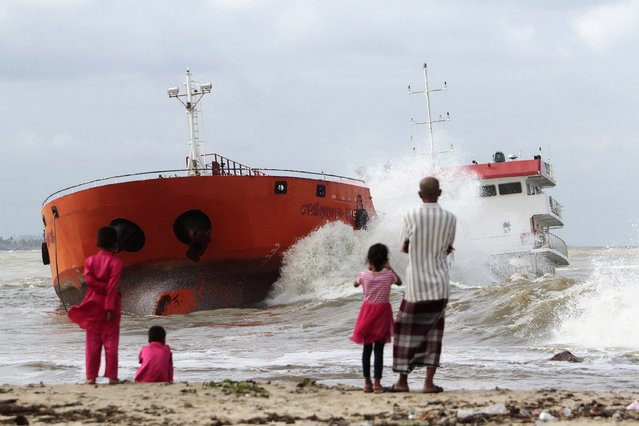
Locals watch from the beach as waves hit an Indonesian tanker that ran aground near Narathiwat in southern Thailand December 19, 2014. The tanker loaded with palm oil, previously hijacked by its crew members and then seized by Thai authorities, was anchored some 400 meters from the beach but strong wind and waves broke it free, according to local media. (Photo by Surapan Boonthanom/Reuters)

Locals watch from the beach as waves hit an Indonesian tanker that ran aground near Narathiwat in southern Thailand December 19, 2014. The tanker loaded with palm oil, previously hijacked by its crew members and then seized by Thai authorities, was anchored some 400 meters from the beach but strong wind and waves broke it free, according to local media. (Photo by Surapan Boonthanom/Reuters)
Details
20 Dec 2014 11:58:00
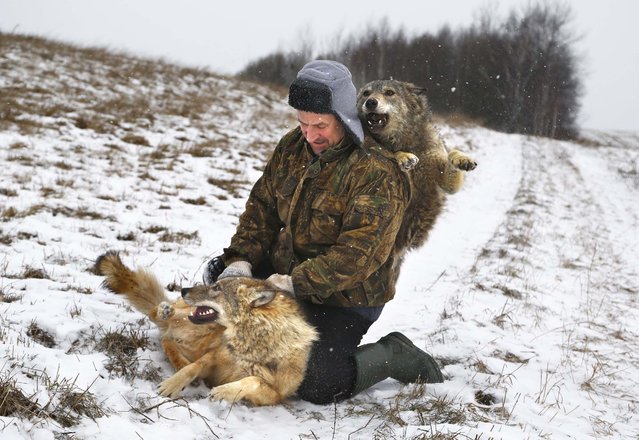
Belarusian Sergei Selekh plays with his 6-month-old tamed wolves on the outskirts of the village of Gaina, 45 kilometers (28 miles) north of Belarus capital Minsk, Wednesday, December 31, 2014. Selekh owns a farmstead, where sheep, wolves and an ethnographic museum serve as entertainment for guests. (Photo by Sergei Grits/AP Photo)

Belarusian Sergei Selekh plays with his 6-month-old tamed wolves on the outskirts of the village of Gaina, 45 kilometers (28 miles) north of Belarus capital Minsk, Wednesday, December 31, 2014. Selekh owns a farmstead, where sheep, wolves and an ethnographic museum serve as entertainment for guests. (Photo by Sergei Grits/AP Photo)
Details
03 Jan 2015 12:51:00