Loading...
Done
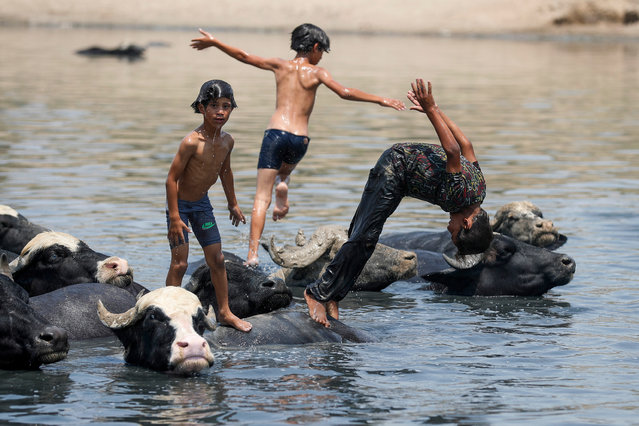
Iraqi boys swim with a herd of buffaloes in the Diyala River in the Faziliah district, east of Baghdad on August 2, 2021, amid extreme summer temperatures. As Iraq bakes under a blistering summer heat wave, its hard-scrabble farmers and herders are battling severe water shortages that are killing their animals, fields and way of life. (Photo by Ahmad Al-Rubaye/AFP Photo)

Iraqi boys swim with a herd of buffaloes in the Diyala River in the Faziliah district, east of Baghdad on August 2, 2021, amid extreme summer temperatures. As Iraq bakes under a blistering summer heat wave, its hard-scrabble farmers and herders are battling severe water shortages that are killing their animals, fields and way of life. (Photo by Ahmad Al-Rubaye/AFP Photo)
Details
21 Aug 2021 09:28:00
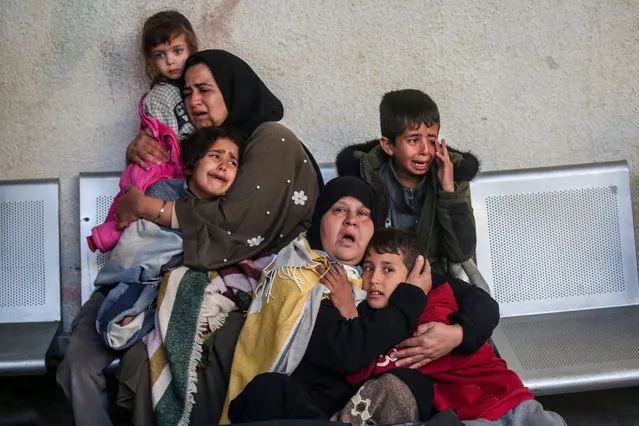
People mourn as they receive the dead bodies of victims of an Israeli strike on March 3, 2024 in Rafah, Gaza. As of Thursday February 29th, more than 30,000 people had been killed in Gaza since the start of the war on Oct. 7, according to the territory's health ministry. Also this week, more details have emerged of a potential new ceasefire deal that could start before Ramadan, pending further negotiations by Israel, Hamas and foreign mediators. (Photo by Ahmad Hasaballah/Getty Images)

People mourn as they receive the dead bodies of victims of an Israeli strike on March 3, 2024 in Rafah, Gaza. As of Thursday February 29th, more than 30,000 people had been killed in Gaza since the start of the war on Oct. 7, according to the territory's health ministry. Also this week, more details have emerged of a potential new ceasefire deal that could start before Ramadan, pending further negotiations by Israel, Hamas and foreign mediators. (Photo by Ahmad Hasaballah/Getty Images)
Details
13 Mar 2024 07:56:00
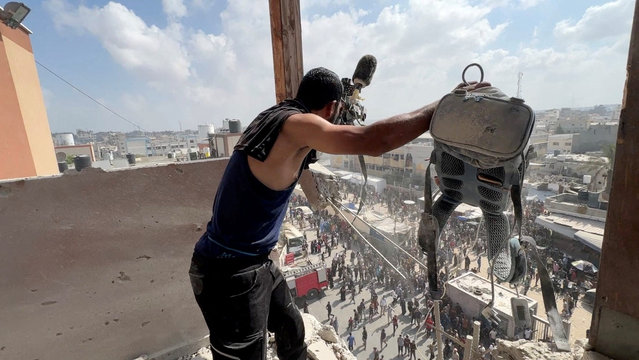
A man reacts as he holds the equipment used by Palestinian cameraman Hussam al-Masri, who was a contractor for Reuters, at the site where he was killed along with other journalists and people in Israeli strikes on Nasser hospital, in Khan Younis in the southern Gaza Strip, in this still image taken from a video shot by Reuters contractor Hatem Khaled, who was wounded shortly afterwards in another strike while he was filming the site on August 25, 2025. (Photo by Hatem Khaled/Reuters)

A man reacts as he holds the equipment used by Palestinian cameraman Hussam al-Masri, who was a contractor for Reuters, at the site where he was killed along with other journalists and people in Israeli strikes on Nasser hospital, in Khan Younis in the southern Gaza Strip, in this still image taken from a video shot by Reuters contractor Hatem Khaled, who was wounded shortly afterwards in another strike while he was filming the site on August 25, 2025. (Photo by Hatem Khaled/Reuters)
Details
19 Sep 2025 02:56:00


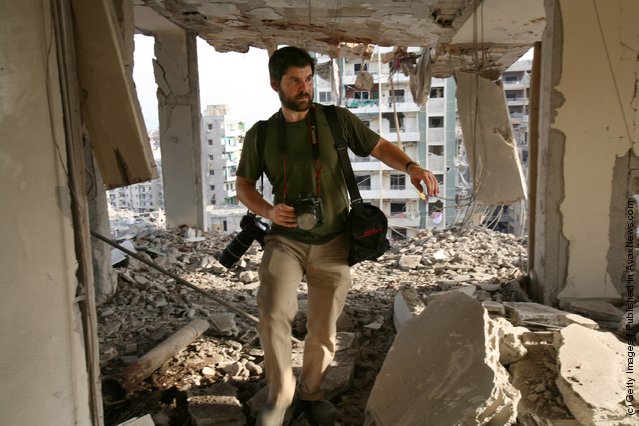
In this publication you can see some best pictures of photographer Chris Hondros, who was killed on April 20, 2011 by a rocket-propelled grenade (RPG) in Misrata, Libya.

Photo: “Getty Images” photographer Chris Hondros (1970–2011) walks the ruins of a building August 21, 2006 in southern Beirut, Lebanon. (Photo by Getty Images)
Details
23 Apr 2011 11:13:00
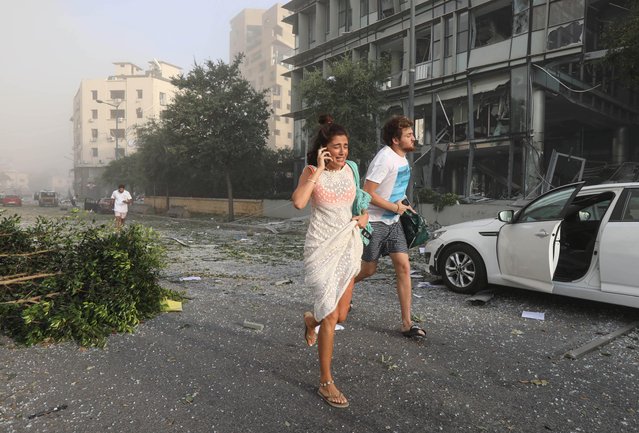
People run for cover following an explosion in Beirut's port area, Lebanon on August 4, 2020. (Photo by Mohamed Azakir/Reuters)

People run for cover following an explosion in Beirut's port area, Lebanon on August 4, 2020. A mega-blast tore through the harbour in the heart of the Lebanese capital with the force of an earthquake, killing more than 100 people and injuring over 4,000. (Photo by Mohamed Azakir/Reuters)
Details
07 Aug 2020 00:01:00
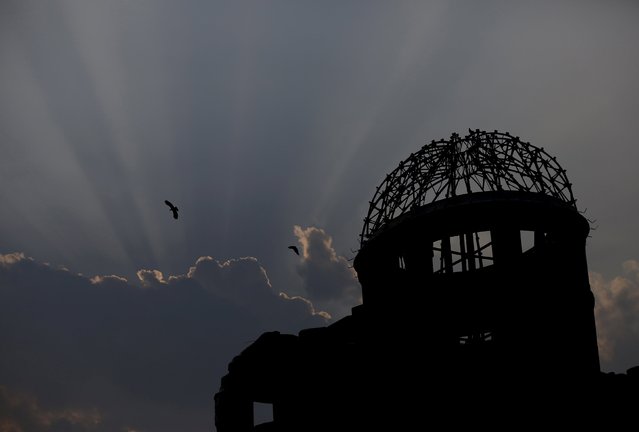
Birds fly over the Atomic Bomb Dome in Hiroshima, western Japan July 29, 2015. On August 6, 1945, the U.S. dropped the atomic bomb on Hiroshima, killing about 140,000 by the end of the year in a city of 350,000 residents, in the world's first nuclear attack. (Photo by Issei Kato/Reuters)

Birds fly over the Atomic Bomb Dome in Hiroshima, western Japan July 29, 2015. On August 6, 1945, the U.S. dropped the atomic bomb on Hiroshima, killing about 140,000 by the end of the year in a city of 350,000 residents, in the world's first nuclear attack. Three days later, a second atomic bomb was dropped on Nagasaki. Influenced by the shadows scorched into outdoor surfaces by the heat of the blasts 70 years ago, Reuters photographer Issei Kato pays homage to survivors, residents and historic buildings in both cities in a personal project that captures the shadows of today. (Photo by Issei Kato/Reuters)
Details
04 Aug 2015 12:01:00
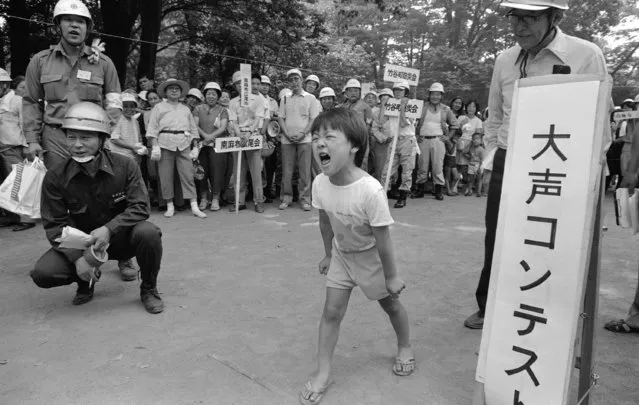
A little boy shouts “Earthquake!” during a shouting contest, part of the annual evacuation drill on the National Disaster Prevention Day on September 1, 1986. The contest was aimed at teaching youngsters the importance of telling neighbors quickly and loudly of a disaster when it hits. The drill is annually conducted through out the country on the day marking the anniversary of the Great Kanto Earthquake that hit the Japanese capital and its vicinity on September 1, 1923, killing more than 104,000 people. (Photo by Sadayuki Mikami/AP Photo)

A little boy shouts “Earthquake!” during a shouting contest, part of the annual evacuation drill on the National Disaster Prevention Day on September 1, 1986. The contest was aimed at teaching youngsters the importance of telling neighbors quickly and loudly of a disaster when it hits. The drill is annually conducted through out the country on the day marking the anniversary of the Great Kanto Earthquake that hit the Japanese capital and its vicinity on September 1, 1923, killing more than 104,000 people. (Photo by Sadayuki Mikami/AP Photo)
Details
02 Sep 2015 11:58:00
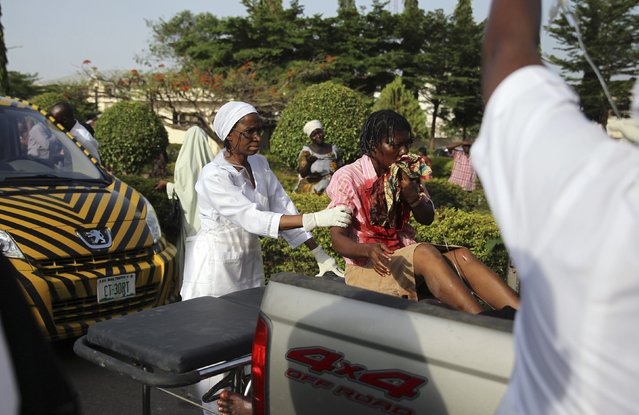
A nurse helps an injured bomb victim sitting at the back of a pickup truck at the Asokoro General Hospital in Abuja, April 14, 2014. A morning rush-hour bomb killed at least 35 people at a Nigerian bus station near the capital on Monday, raising concerns about the spread of an Islamist insurgency after the first such attack on Abuja for two years. (Photo by Afolabi Sotunde/Reuters)

A nurse helps an injured bomb victim sitting at the back of a pickup truck at the Asokoro General Hospital in Abuja, April 14, 2014. A morning rush-hour bomb killed at least 35 people at a Nigerian bus station near the capital on Monday, raising concerns about the spread of an Islamist insurgency after the first such attack on Abuja for two years. Suspicion fell on Boko Haram, though there was no immediate claim of responsibility from the Islamist group mainly active in the northeast. Five hours after the blast, officials had given no death toll. Reuters journalists counted at least 35 bodies. (Photo by Afolabi Sotunde/Reuters)
Details
16 Apr 2014 10:05:00