Loading...
Done
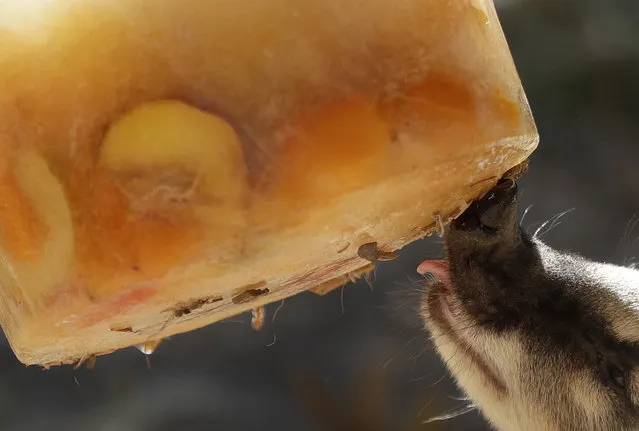
A lemur licks a block of ice containing fruit at Rome's Bioparco zoo, Wednesday, July 5, 2017. Zookeepers at the Bioparco often give animals ice blocks with either fruit or meat on hot summer days. (Photo by Gregorio Borgia/AP Photo)

A lemur licks a block of ice containing fruit at Rome's Bioparco zoo, Wednesday, July 5, 2017. Zookeepers at the Bioparco often give animals ice blocks with either fruit or meat on hot summer days. (Photo by Gregorio Borgia/AP Photo)
Details
09 Jul 2017 07:44:00
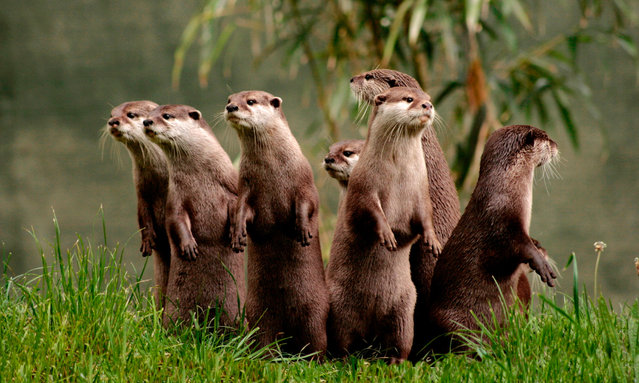
These Eurasian Otters seem ready for any danger as they all stand up on thier hind legs alert to any threats near to the English river bank. Amateur photographer and retired MOD worker Tony Moir, 57, spotted the otters whilst looking for kingfishers to photograph near the river Trent in East Yorkshire, UK. He was able to take just a couple of pictures before the excited animals spotted the photographer and ran away. (Photo by Tony Moir/Solent News)

These Eurasian Otters seem ready for any danger as they all stand up on thier hind legs alert to any threats near to the English river bank. Amateur photographer and retired MOD worker Tony Moir, 57, spotted the otters whilst looking for kingfishers to photograph near the river Trent in East Yorkshire, UK. He was able to take just a couple of pictures before the excited animals spotted the photographer and ran away. (Photo by Tony Moir/Solent News)
Details
23 Jul 2017 07:35:00
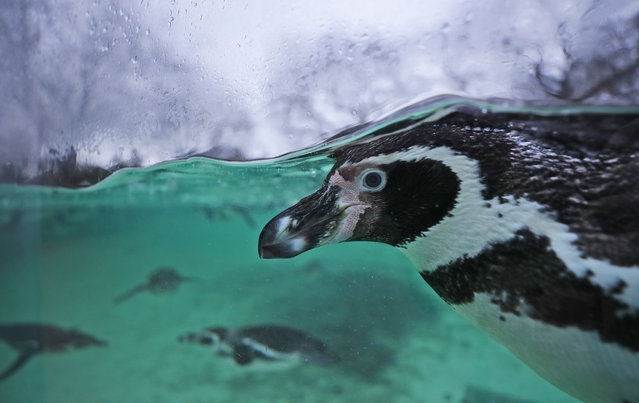
A Humboldt penguin swims in a pool during the annual stock take at ZSL London Zoo in London, Thursday, January 2, 2020. Caring for more than 500 different species, ZSL London Zoo's keepers face the challenging task of tallying up every animal large and small, every mammal, bird, reptile, fish and invertebrate at the Zoo. (Photo by Frank Augstein/AP Photo)

A Humboldt penguin swims in a pool during the annual stock take at ZSL London Zoo in London, Thursday, January 2, 2020. Caring for more than 500 different species, ZSL London Zoo's keepers face the challenging task of tallying up every animal large and small, every mammal, bird, reptile, fish and invertebrate at the Zoo. (Photo by Frank Augstein/AP Photo)
Details
05 Jan 2020 00:03:00
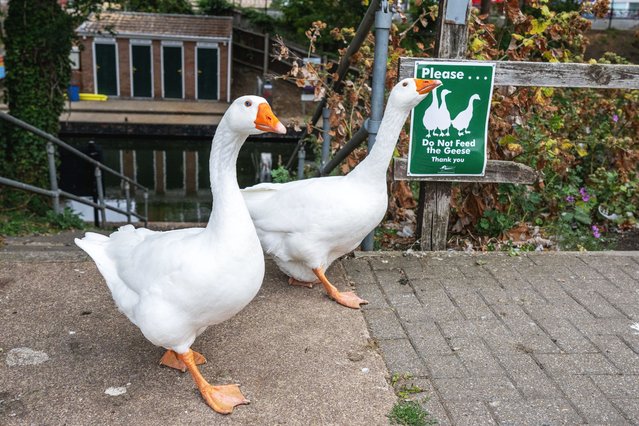
The geese in March, Cambs, UK on August 25, 2025. The family of around 20 white waterfowl have been a fixture in March, Cambs, for years and have made their mark by regularly waddling to the high street. (Photo by South West News Service)

The geese in March, Cambs, UK on August 25, 2025. The family of around 20 white waterfowl have been a fixture in March, Cambs, for years and have made their mark by regularly waddling to the high street. (Photo by South West News Service)
Details
07 Sep 2025 04:38:00
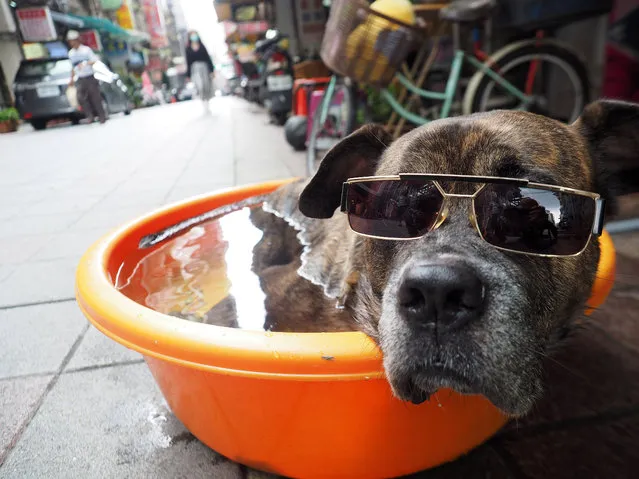
A dog sits in a plastic tub filled with water in Taipei, Taiwan, 28 July 2020. Betel nut seller Mr Luo, the dog's owner, said he puts his dog, a 12-year-old mixed breed called Ah Dai (Stupid), in a plastic tub filled with water whenever the weather gets hot. Ah Dai enjoys the bath and can sit in the basin for hours, according to Mr Luo. Luo has a dozen pairs of glasses for Ah Dai, so the dog wears different glasses every day and many tourists take photos of Ah Dai. (Photo by David Chang/EPA/EFE)

A dog sits in a plastic tub filled with water in Taipei, Taiwan, 28 July 2020. Betel nut seller Mr Luo, the dog's owner, said he puts his dog, a 12-year-old mixed breed called Ah Dai (Stupid), in a plastic tub filled with water whenever the weather gets hot. Ah Dai enjoys the bath and can sit in the basin for hours, according to Mr Luo. Luo has a dozen pairs of glasses for Ah Dai, so the dog wears different glasses every day and many tourists take photos of Ah Dai. (Photo by David Chang/EPA/EFE)
Details
15 Aug 2020 00:05:00
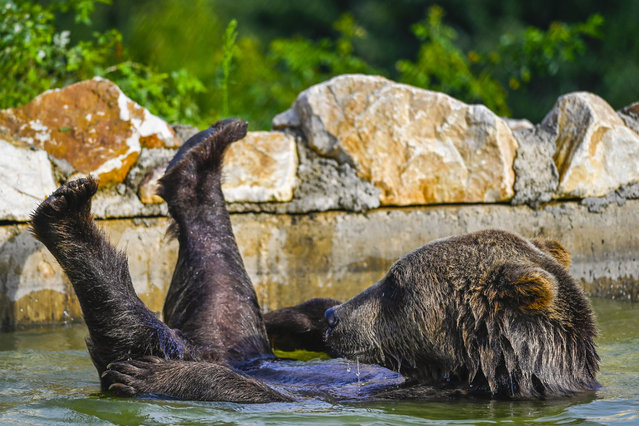
A brown bears cools off in a pool at the bear sanctuary near the village of Mramor, on August 18, 2020. The bear sanctuary was closed for visitors on August 18, as part of safety measures to curb the spread of the COVID-19 (novel coronavirus) disease. (Photo by Armend Nimani/AFP Photo)

A brown bears cools off in a pool at the bear sanctuary near the village of Mramor, on August 18, 2020. The bear sanctuary was closed for visitors on August 18, as part of safety measures to curb the spread of the COVID-19 (novel coronavirus) disease. (Photo by Armend Nimani/AFP Photo)
Details
23 Aug 2020 00:03:00
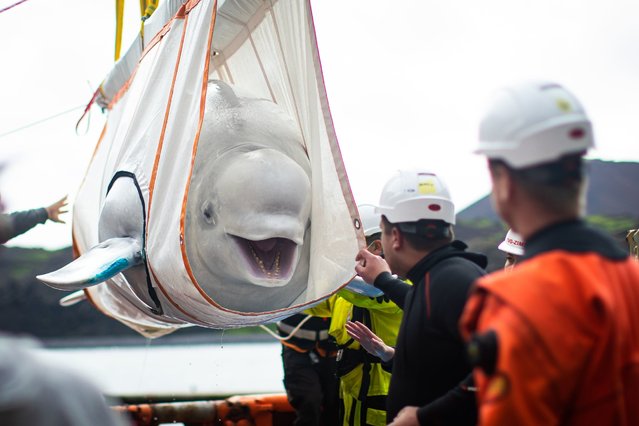
The Sea Life Trust team move Beluga Whale Little Gray from a tugboat during transfer to the bayside care pool where they will be acclimatised to the natural environment of their new home at the open water sanctuary in Klettsvik Bay in Iceland on August 7, 2020. The two Beluga whales, named Little Grey and Little White, are being moved to the world's first open-water whale sanctuary after travelling from an aquarium in China 6,000 miles away in June 2019. (Photo by Aaron Chown/PA Images via Getty Images)

The Sea Life Trust team move Beluga Whale Little Gray from a tugboat during transfer to the bayside care pool where they will be acclimatised to the natural environment of their new home at the open water sanctuary in Klettsvik Bay in Iceland on August 7, 2020. The two Beluga whales, named Little Grey and Little White, are being moved to the world's first open-water whale sanctuary after travelling from an aquarium in China 6,000 miles away in June 2019. (Photo by Aaron Chown/PA Images via Getty Images)
Details
28 Aug 2020 00:03:00
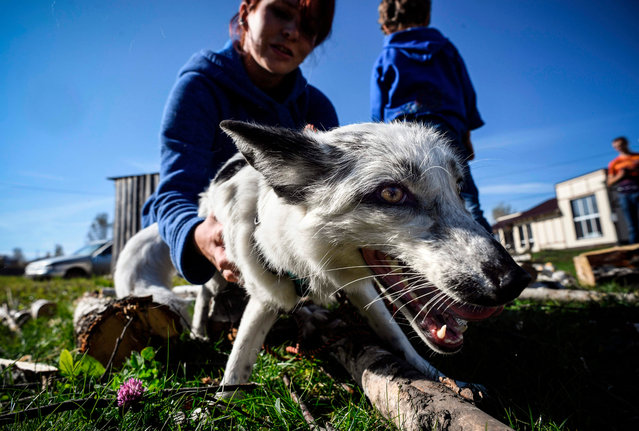
Tatyana Abramova, 33, plays with her home fox Plombir at her countryside house outside Siberian city of Novosibirsk on September 12, 2020. The official start of the Soviet experiment to better understand the domestication of animals by humans began in 1959, and was initiated by geneticists Dmitri Beliaiev and Lioudmila Trout on a farm in Akademgorodok, the scientific center of excellence in Siberia. Their primary objective was to domesticate foxes, to understand how the ancestor of wolves, another canine, evolved into a loyal and loving dog. And understand what this domestication tells us about the genetic evolution of species. (Photo by Alexander Nemenov/AFP Photo)

Tatyana Abramova, 33, plays with her home fox Plombir at her countryside house outside Siberian city of Novosibirsk on September 12, 2020. The official start of the Soviet experiment to better understand the domestication of animals by humans began in 1959, and was initiated by geneticists Dmitri Beliaiev and Lioudmila Trout on a farm in Akademgorodok, the scientific center of excellence in Siberia. Their primary objective was to domesticate foxes, to understand how the ancestor of wolves, another canine, evolved into a loyal and loving dog. And understand what this domestication tells us about the genetic evolution of species. (Photo by Alexander Nemenov/AFP Photo)
Details
25 Oct 2020 00:05:00