Loading...
Done
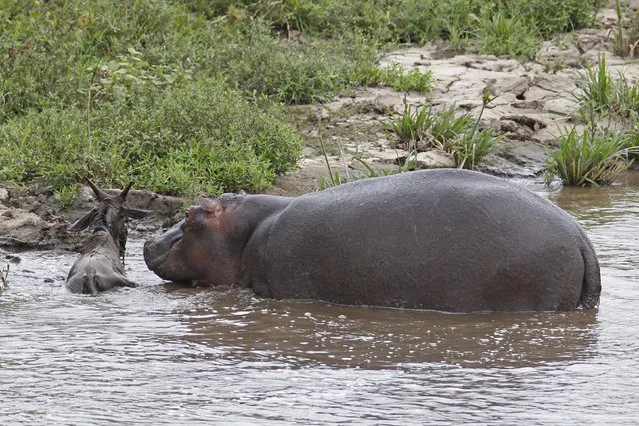
One of the biggest hippos protects the gnu as it makes its way back to the shoreline, guarding it from any further attacks. (Photo by Vadim Onishchenko/Caters News)

This is the amazing moment a heroic hippo saved a gnu from certain death. After being bitten by a crocodile, the large antelope is seen being dragged slowly under the water. But in a miraculous turn of events, a nearby hippo is seen making its way across the water to help the animal in its hour of need. Photo: One of the biggest hippos protects the gnu as it makes its way back to the shoreline, guarding it from any further attacks. (Photo by Vadim Onishchenko/Caters News)
Details
12 Mar 2014 06:09:00
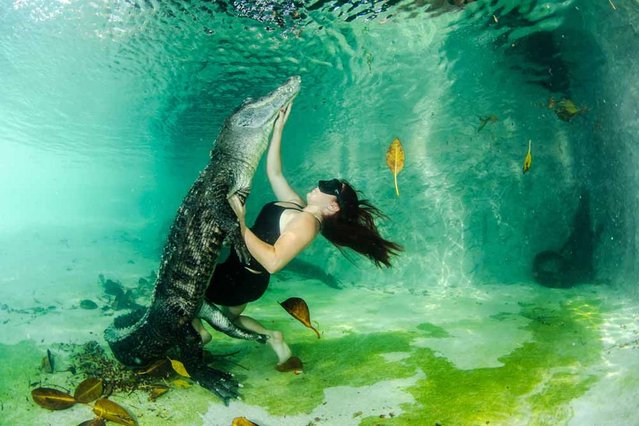
Assistant photographer Adriana Canargo dives with a wild alligator. (Photo by John Chapa/Barcroft Media)

Daredevil Christopher Gillette writhes around with a huge alligator he has saved from death. He works at a Florida sanctuary that rescues the wild beasts if they stroll into neighbourhoods where residents can legally kill them. To raise cash for the centre at Homestead, staff put on shows to feed and wrestle the alligators. Photographer John Chapa, 41, and girlfriend Adriana Canargo, 30, took these shots. Photo: Assistant photographer Adriana Canargo dives with a wild alligator. (Photo by John Chapa/Barcroft Media)
Details
22 Jun 2014 10:35:00
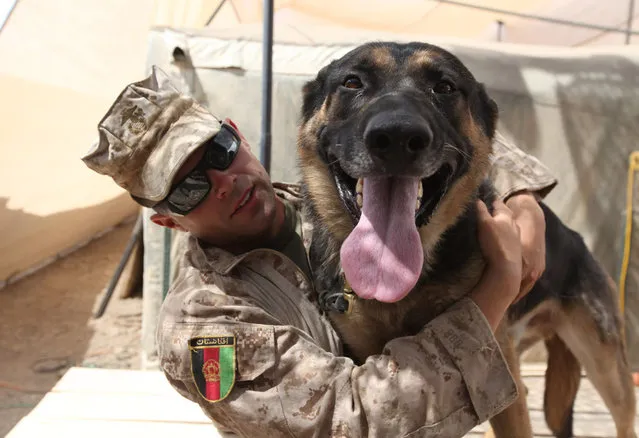
Afghanistan: Dogs of War Part 1

Throughout the course of the long war in Afghanistan, Coalition troops have relied on thousands of military working dogs to help keep them safe, and make their jobs easier. The dogs are trained to detect explosives, to find illegal drugs, to search for missing comrades, or target enemy combatants. Not only are they active on the front lines, but behind the lines they serve as therapy dogs, service dogs, and loyal companions. They also share the same risks as the ground troops, suffering injuries and sometimes death on the battlefields. Gathered here are images of these dogs and their handlers in Afghanistan and back home, from over the past several years, part of the ongoing series here on Afghanistan.
Details
03 Jun 2014 21:02:00
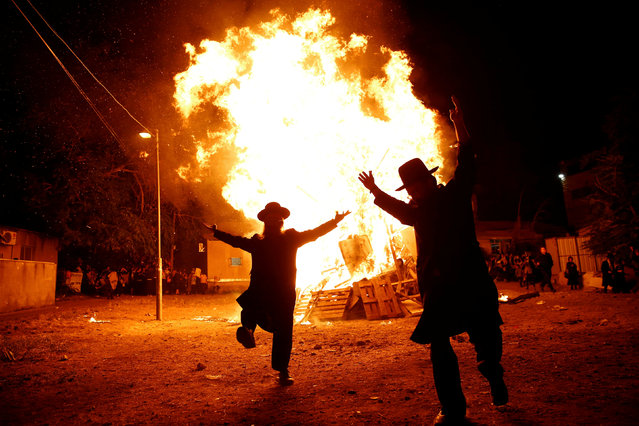
Ultra-Orthodox Jews dance next to a bonfire during celebrations for the Jewish holiday of Lag Ba-Omer in Jerusalem's Mea Shearim neighbourhood May 25, 2016. (Photo by Ronen Zvulun/Reuters)

Ultra-Orthodox Jews dance next to a bonfire during celebrations for the Jewish holiday of Lag Ba-Omer in Jerusalem's Mea Shearim neighbourhood May 25, 2016. This day marks the hillula (celebration, interpreted by some as anniversary of death) of Rabbi Shimon bar Yochai, a Mishnaic sage and leading disciple of Rabbi Akiva in the 2nd century, and the day on which he revealed the deepest secrets of kabbalah in the form of the Zohar (Book of Splendor), a landmark text of Jewish mysticism. (Photo by Ronen Zvulun/Reuters)
Details
26 May 2016 12:54:00
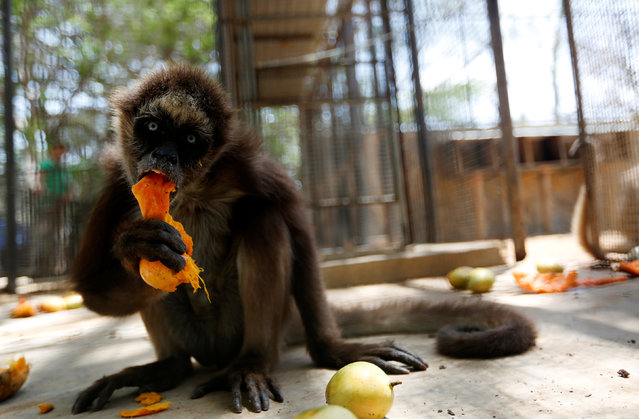
A spider monkey eats a mango at the Paraguana zoo in Punto Fijo, Venezuela July 22, 2016. (Photo by Carlos Jasso/Reuters)

A spider monkey eats a mango at the Paraguana zoo in Punto Fijo, Venezuela July 22, 2016. Some 50 animals have starved to death in the last six months at one of Venezuela's main zoos due to chronic food shortages that have plagued the crisis-stricken South American nation. (Photo by Carlos Jasso/Reuters)
Details
28 Jul 2016 13:48:00
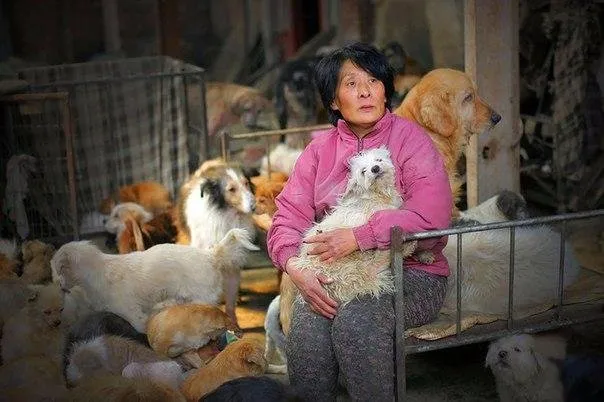
Yang Xiaoyun Saved 100 Dogs From Meat Festival

Yulin, a city in southern China, celebrates the summer solstice by throwing a festival that involves the slaughter and consumption of as many as 10,000 dogs. Not everyone in China supports such practices, however; 65-year-old Yang Xiaoyun, a retired teacher who runs an animal shelter in Tianjin, traveled more than 2,400 km (1,500 miles) and spent more than 7,000 yuan ($1,100 or €990) to save 100 dogs from certain death.
Details
25 Jun 2015 07:24:00
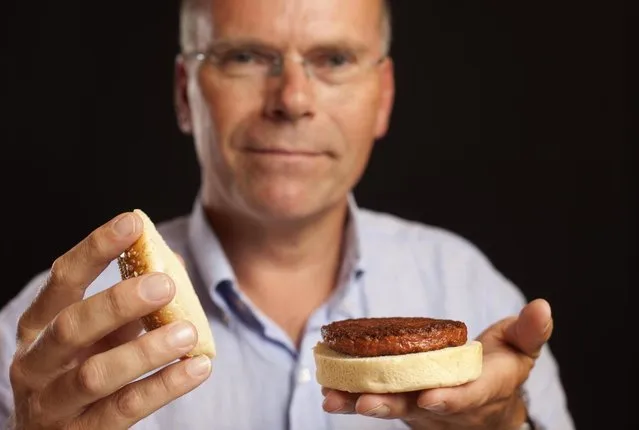
In this handout image provided by Ogilvy, a burger made from cultured beef, which has been developed by Professor Mark Post of Maastricht University in the Netherlands (pictured) is shown to the media during a press conference on August 5, 2013 in London, England. Cultured Beef could help solve the coming food crisis and combat climate change with commercial production of Cultured Beef beginning within ten to twenty years. (Photo by David Parry via Getty Images)

In this handout image provided by Ogilvy, a burger made from cultured beef, which has been developed by Professor Mark Post of Maastricht University in the Netherlands (pictured) is shown to the media during a press conference on August 5, 2013 in London, England. The in-vitro burger, cultured from cattle stem cells, the first example of what its creator says could provide an answer to global food shortages and help combat climate change, was fried in a pan and tasted by two volunteers. The burger is the result of years of research by Dutch scientist Mark Post, a vascular biologist at the University of Maastricht, who is working to show how meat grown in petri dishes might one day be a true alternative to meat from livestock.The meat in the burger has been made by knitting together around 20,000 strands of protein that has been cultured from cattle stem cells in Post's lab. (Photo by David Parry)
Details
06 Aug 2013 08:48:00


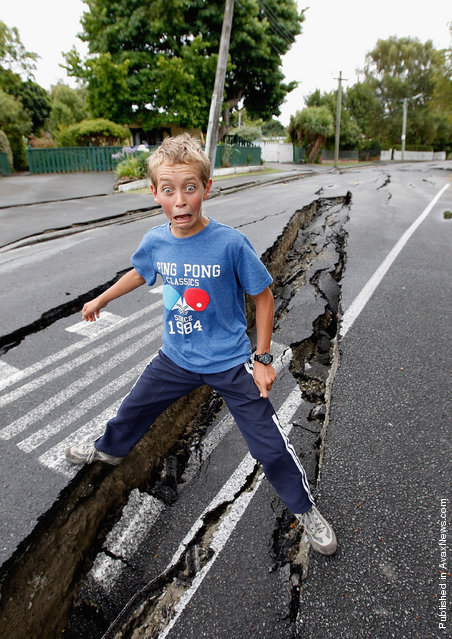
Cole Yeoman steps over a large crack along River Road, Avonside on February 25, 2011 in Christchurch, New Zealand. The death toll has risen to 113 and the hope for finding survivors is fading as rescuers search through debris for over 200 still missing following a 6.3 magnitude earthquake that struck Christchurch on Tuesday. The quake, which was an aftershock of a 7.1 magnitude quake that struck the South Island city on September 4, 2010, has seen damage and fatalities far exceeding those of the original. (Photo by Martin Hunter/Getty Images). CHRISTCHURCH, NEW ZEALAND – FEBRUARY 25
Details
06 Mar 2011 13:00:00